Artwork
Healing of Tobit
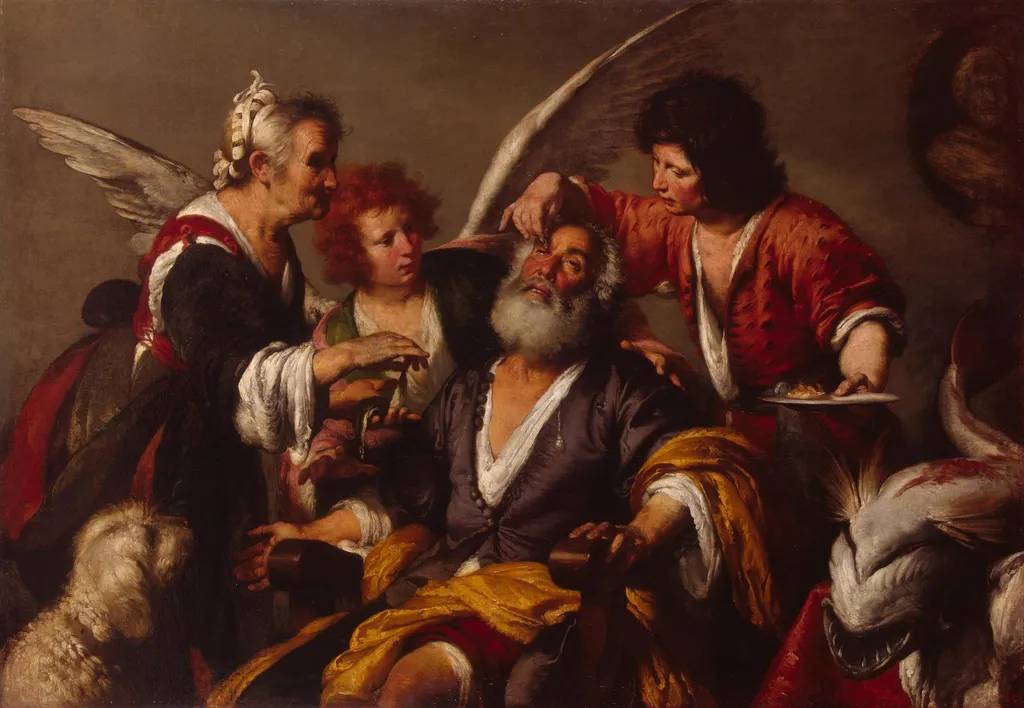
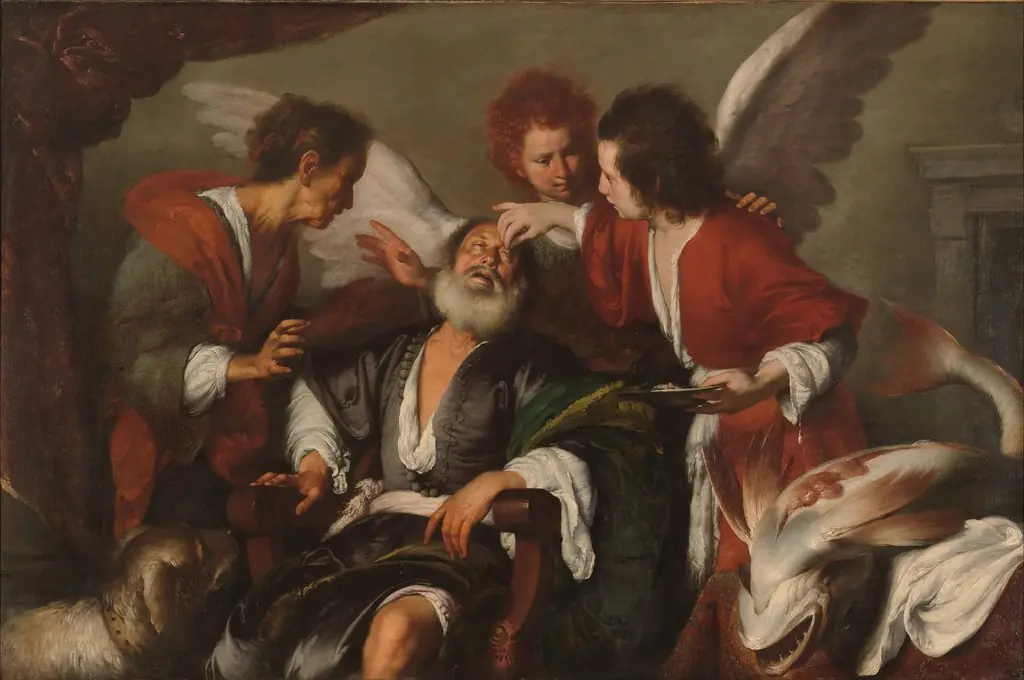
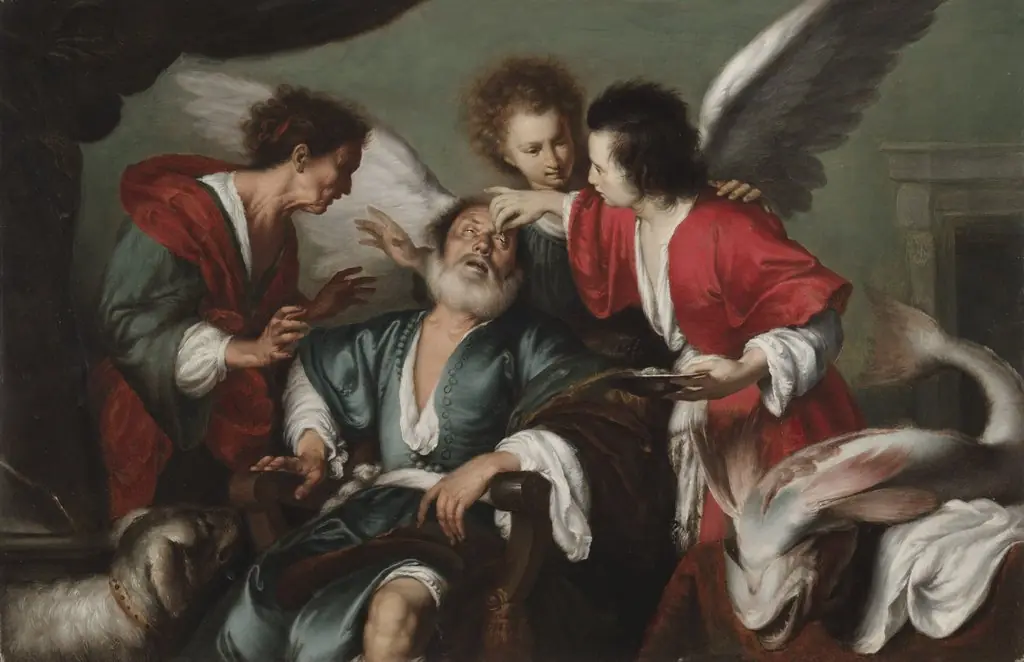
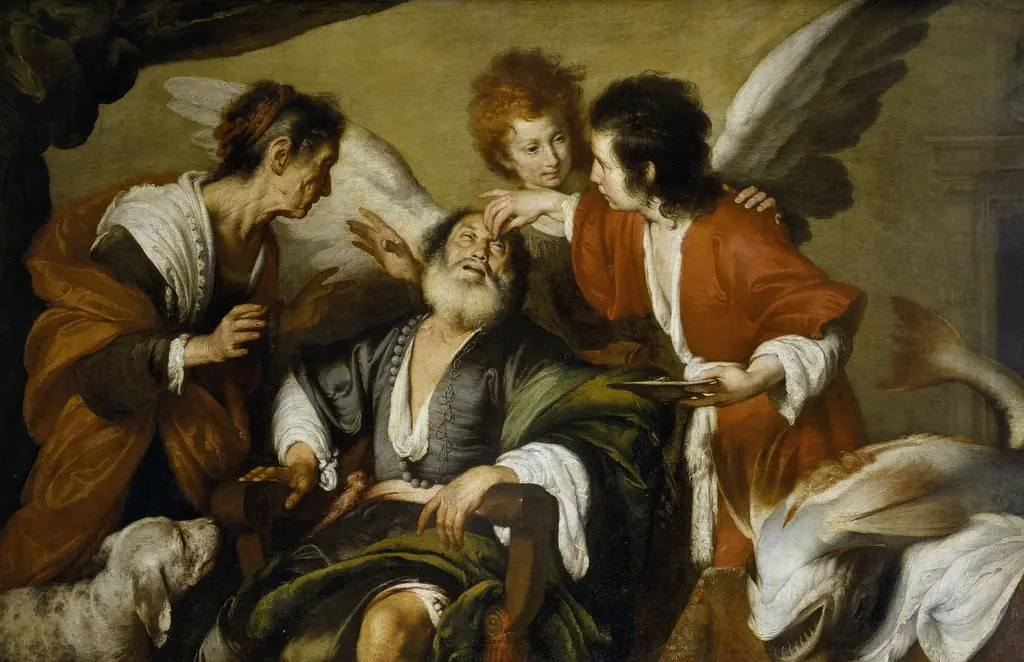
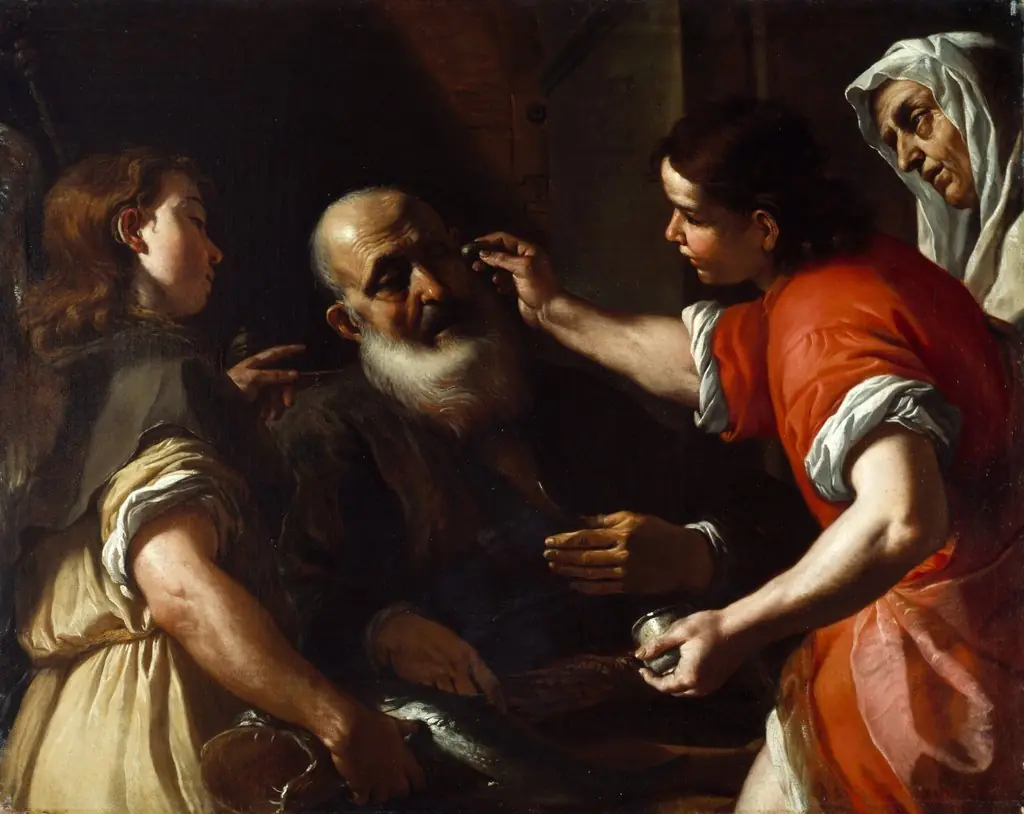
Healing of Tobit is an oil painting by the Early Baroque Italian artist Bernardo Strozzi. It dates from 1632 and is held in the collection of the Hermitage Museum.
About this work
Overview
Strozzi, a Genoese priest and painter active in both Genoa and Venice, rendered the scene with a quiet intensity characteristic of early Baroque religious art.
Painted in 1632 by Bernardo Strozzi, this oil-on-canvas work depicts a biblical moment from the Book of Tobit. Strozzi, a Genoese priest and painter active in both Genoa and Venice, rendered the scene with a quiet intensity characteristic of early Baroque religious art. The painting is now part of the State Hermitage Museum’s collection, reflecting its enduring presence in European collections since the 17th century.
Subject & Meaning
The scene illustrates the angel Raphael healing Tobit’s blindness, as described in the deuterocanonical Book of Tobit. The angel, identified by his large white wings, gently touches Tobit’s head while Tobit, bearded and seated, looks upward in anticipation. Two companions stand nearby—one holding food, the other a small vessel—suggesting the ritual context of the miracle. The moment captures divine intervention through humility and touch, not spectacle.
Technique & Style
Strozzi employs a restrained palette dominated by earth tones, with selective use of vivid hues—yellow sash, red garment—to draw attention to key figures. The angel’s wings dominate the composition, their scale emphasizing spiritual presence. Brushwork is fluid yet controlled, blending chiaroscuro with soft modeling to define form without theatricality. The plain brown background focuses attention on the intimate human and divine interaction.
History & Provenance
Commissioned during Strozzi’s mature period, the painting entered the Hermitage collection in the 18th or early 19th century, likely through imperial acquisitions of Italian art. Its survival in good condition reflects careful preservation. Though not widely exhibited in its early years, it gained scholarly recognition in the 20th century as a representative example of Strozzi’s synthesis of Genoese and Venetian Baroque traditions.
Context
Strozzi worked amid the transition from Mannerism to Baroque, absorbing influences from Caravaggio’s naturalism and Titian’s colorism. In Venice, where he spent his later years, he helped shift local painting toward greater emotional immediacy and physical presence. This work reflects that evolution: a sacred narrative rendered with psychological subtlety, avoiding the grandeur of Roman Baroque in favor of quiet, personal revelation.
Legacy
Though less famous than contemporaries like Rubens or Guercino, Strozzi’s influence on Venetian painting of the mid-17th century is acknowledged in his ability to merge narrative clarity with tonal harmony. *Healing of Tobit* exemplifies his role in adapting Counter-Reformation themes into intimate, human-centered compositions, paving the way for later Venetian religious painters who prioritized emotional resonance over spectacle.
Own this work as a print
Artist & collection
Artist
Bernardo Strozzi, named il Cappuccino and il Prete Genovese (c. 1581 – 2 August 1644), was an Italian Baroque artist who was a painter and engraver. A canvas and fresco artist, his wide subject range included history,…