Artwork
Japanese Woman
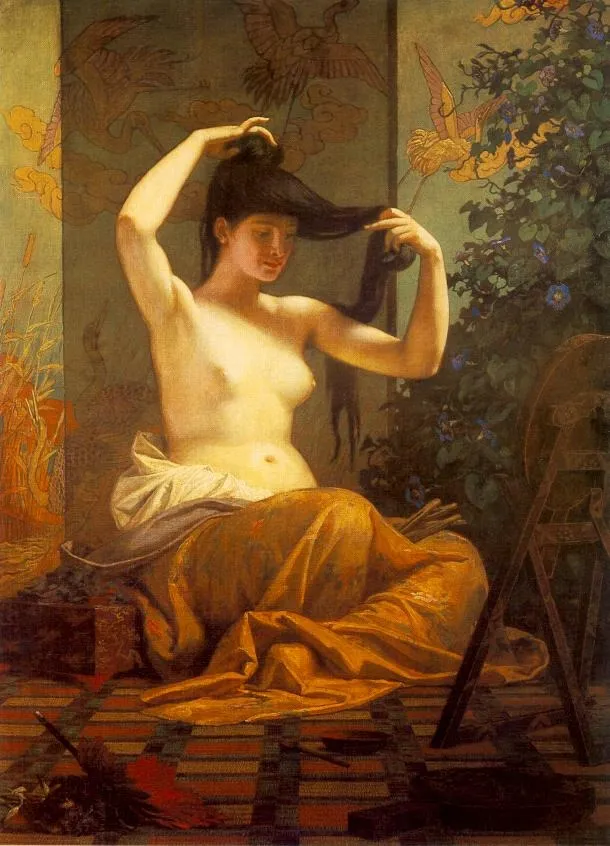
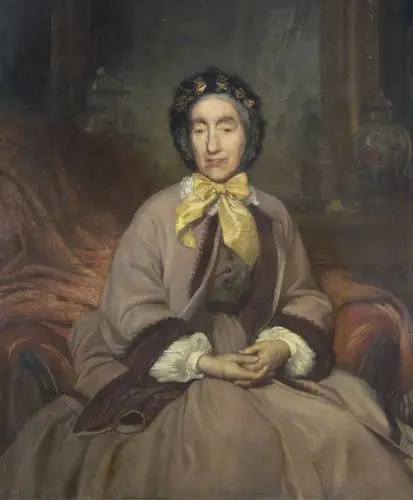
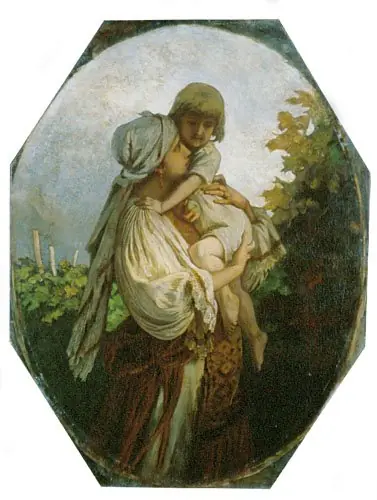
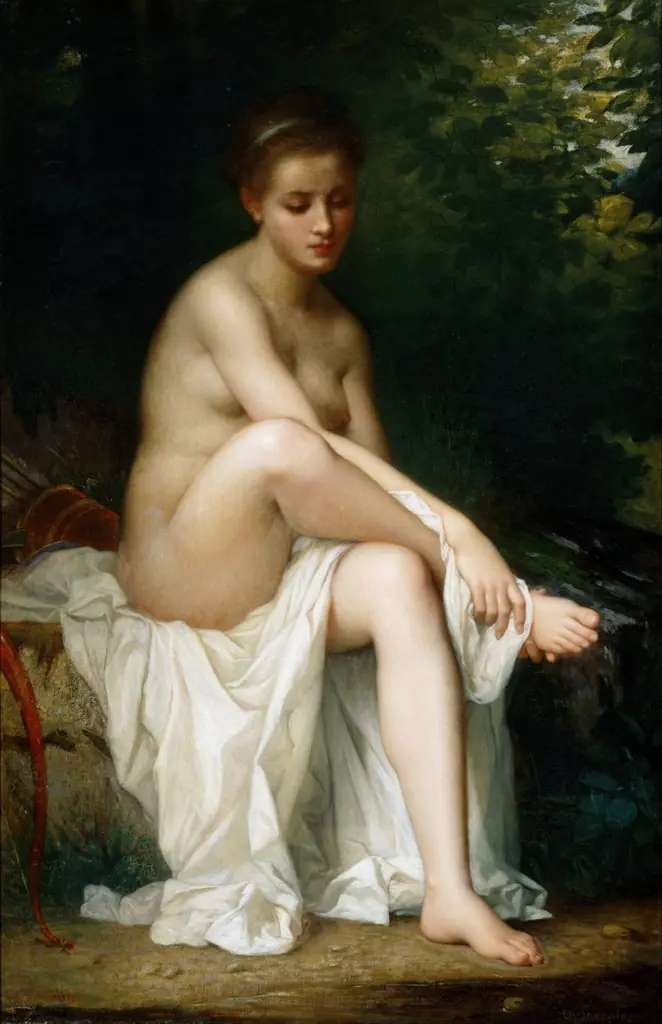
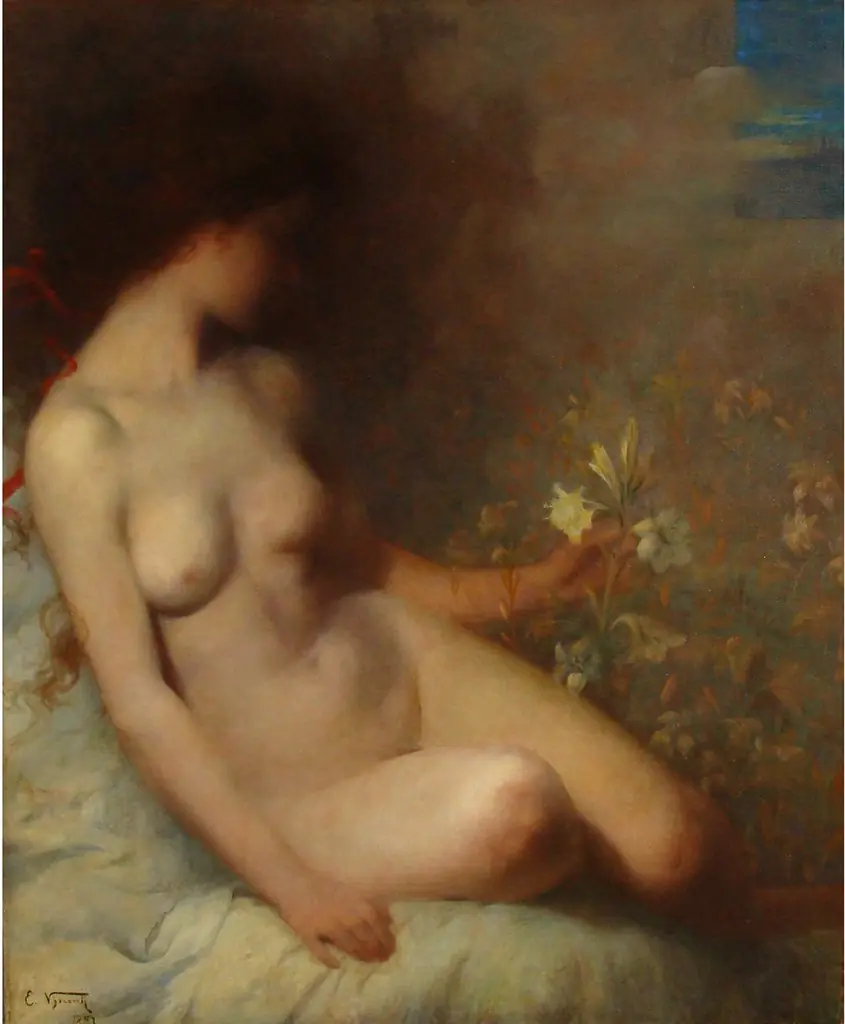
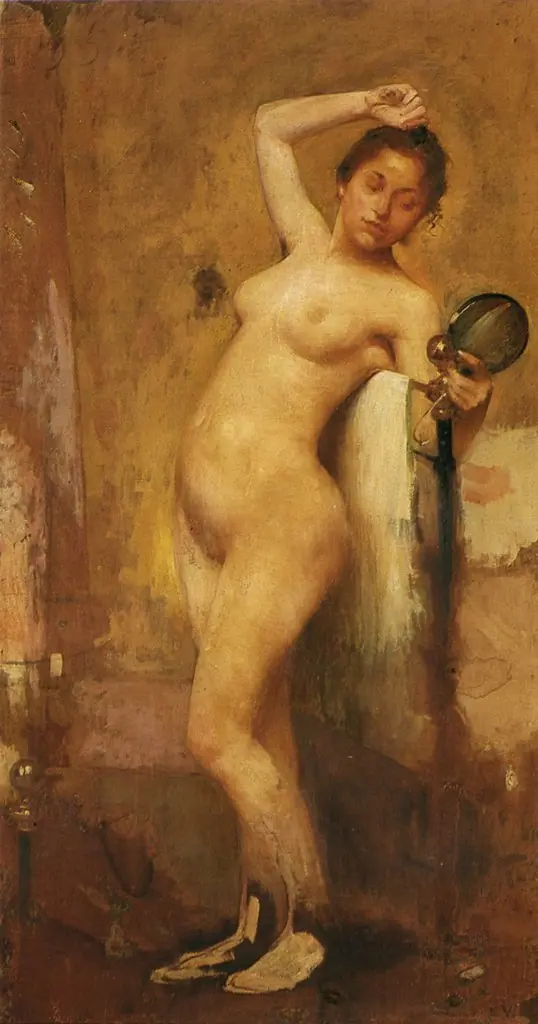
Japanese Woman is an oil painting by the Biedermeier artist Bertalan Székely. It dates from 1871 and is held in the collection of the Hungarian National Gallery.
About this work
Overview
Japanese Woman is an 1871 oil-on-canvas portrait by Hungarian artist Bertalan Székely, executed in the Romantic and Academic styles, with affiliations to the Biedermeier movement.
Subject & Meaning
The painting depicts a nude Japanese woman in a contemplative pose, combing her hair while draped in a loose, yellowish robe. The subject's nudity and serene demeanor suggest an emphasis on intimate, everyday life, characteristic of the Biedermeier's focus on domesticity.
Technique & Style
Székely employed chiaroscuro to create depth, with pronounced light and shadow accents on the subject's skin and robe. The overall style blends Romantic sensibility with Academic precision, evident in the detailed rendering of textures, from the woman's hair to the patterned floor tiles.
History & Provenance
Created in 1871, Japanese Woman is part of the Hungarian National Gallery's collection, reflecting Székely's contribution to Hungarian art during this period.
Context
While the Biedermeier movement often focused on European middle-class life, Székely's choice of a Japanese subject introduces an exotic element, possibly influenced by the era's growing interest in Orientalism.
Legacy
Japanese Woman remains a notable work in Székely's oeuvre, illustrating his technical skill and the broader artistic trends of his time, though its specific influence on subsequent art movements is not prominently documented.
Artist & collection
Artist
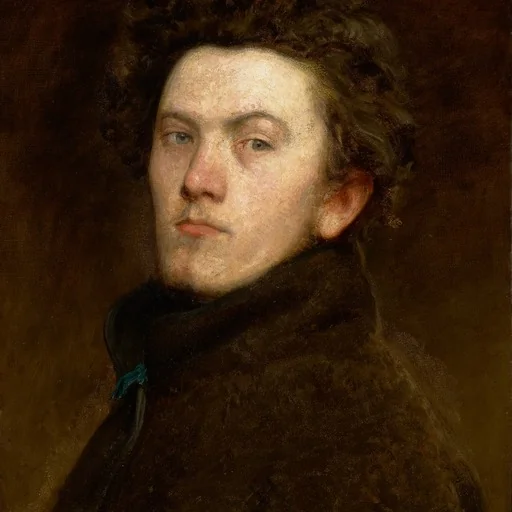
Bertalan Székely (8 May 1835, Kolozsvár, Transylvania, Kingdom of Hungary (now Cluj-Napoca, Romania) – 21 August 1910, Budapest, Transleithania, Austria-Hungary) was a Hungarian history and portrait painter who worked in the Romantic and…