Artwork
Gabriele D'Annunzio
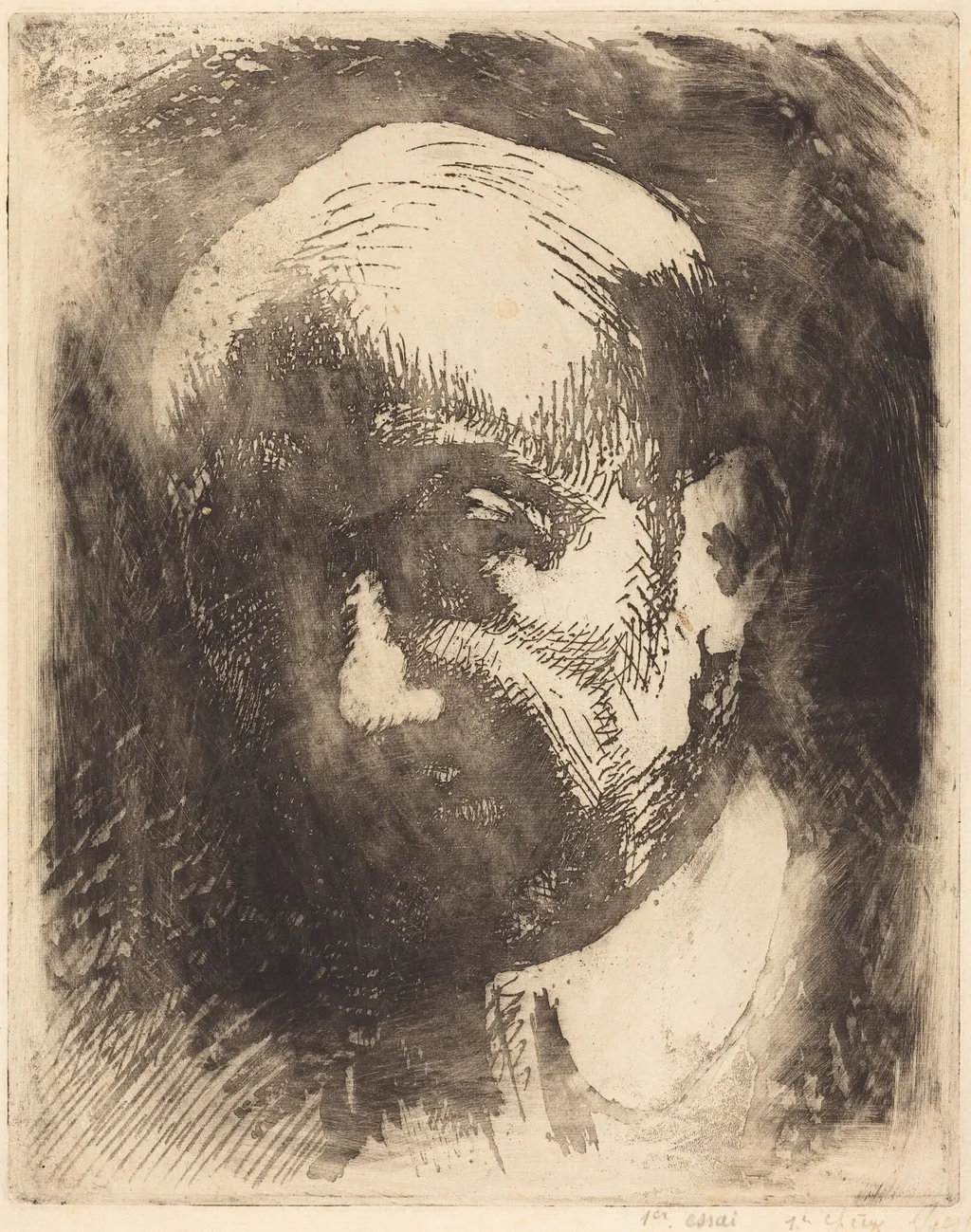
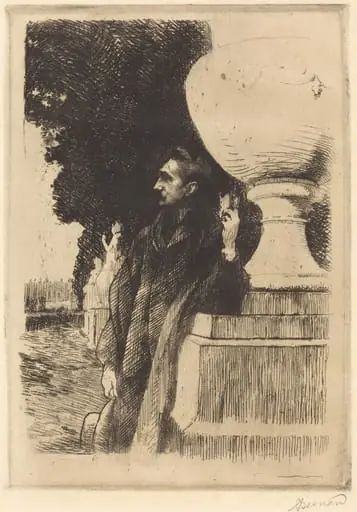
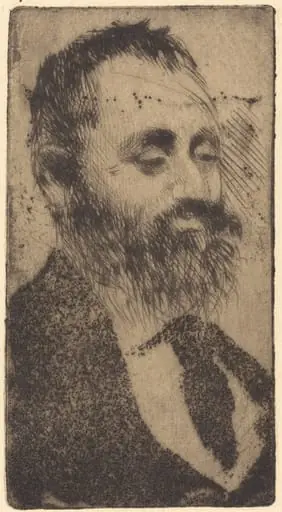
Gabriele D'Annunzio is an ink print by Paul-Albert Besnard. It dates from 1917 and is held in the collection of the National Gallery of Art. This 1917 etching by Albert Besnard depicts Gabriele D’Annunzio in profile, rendered through a stark interplay of light and shadow.
About this work
Overview
Executed on Van Gelder laid paper, the print employs plate tone to enhance atmospheric depth, yielding a surface that appears both deliberate and spontaneous.
This 1917 etching by Albert Besnard depicts Gabriele D’Annunzio in profile, rendered through a stark interplay of light and shadow. The composition isolates the subject’s facial contours—nose, jaw, and brow—while obscuring much of the face in dense, velvety darkness. Executed on Van Gelder laid paper, the print employs plate tone to enhance atmospheric depth, yielding a surface that appears both deliberate and spontaneous.
Subject & Meaning
Besnard’s portrait captures the Italian poet and nationalist Gabriele D’Annunzio at a moment of heightened public prominence. The cropped framing and dramatic chiaroscuro emphasize the subject’s intellectual intensity rather than conventional likeness. By reducing the face to essential planes, the artist evokes a psychological presence, suggesting both defiance and introspection characteristic of D’Annunzio’s persona during World War I.
Technique & Style
The print exemplifies etching’s capacity for expressive immediacy. Acid-bitten lines vary in depth, producing a raw, almost abrasive texture that contrasts with the smooth tonal passages achieved through plate tone. Areas of selective wiping mimic erasure, lending the image an unfinished quality. This approach aligns with early 20th-century experimentation in printmaking, where technical precision coexisted with gestural freedom.
History & Provenance
Created in 1917, the etching reflects Besnard’s engagement with prominent European figures of the era. Little is documented about its early circulation, though impressions likely entered private collections or print cabinets shortly after production. The use of Van Gelder paper, favored for its durability and fine surface, indicates an intention for longevity, distinguishing it from ephemeral works on lesser stock.
Context
D’Annunzio’s notoriety as a writer and political provocateur made him a compelling subject during the war years. Besnard, a French portraitist with Symbolist leanings, often depicted intellectuals and artists, aligning this work with broader cultural dialogues about modernity and identity. The etching’s stark style resonates with contemporaneous movements that privileged emotional directness over polished finish.
Own this work as a print
Artist & collection
Artist
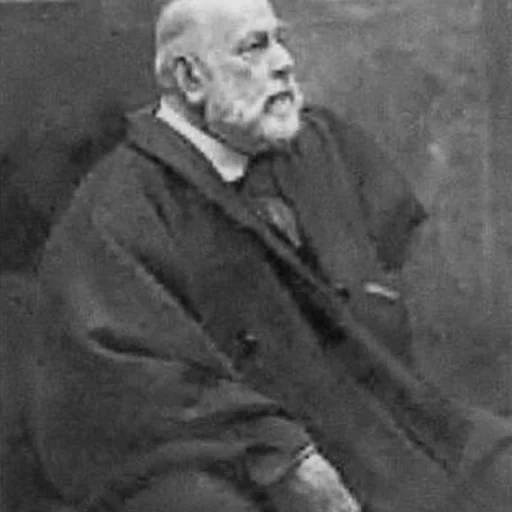
Paul-Albert Besnard (1849–1934) was a French artist, born in 7th arrondissement of Paris.

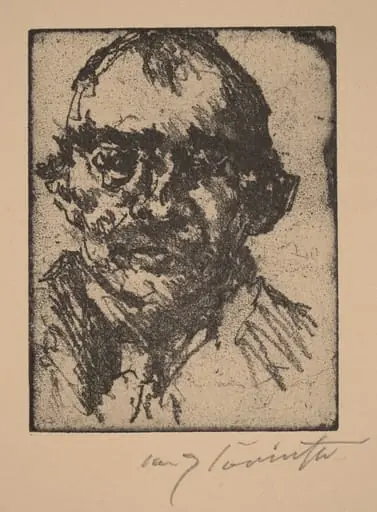 Selbstbildnis (Self-Portrait)
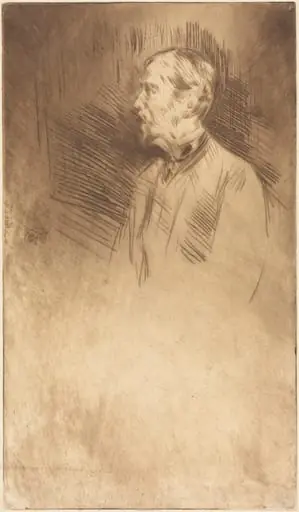 Lord Wolseley
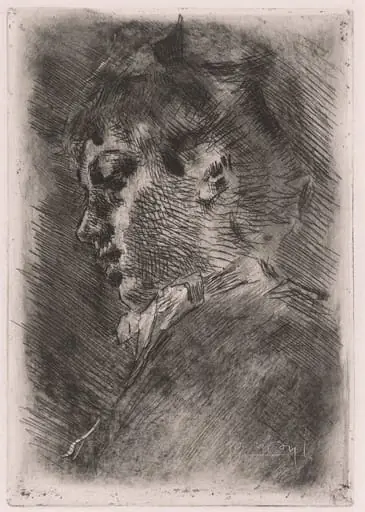 Portrait of a Young Woman in Profile
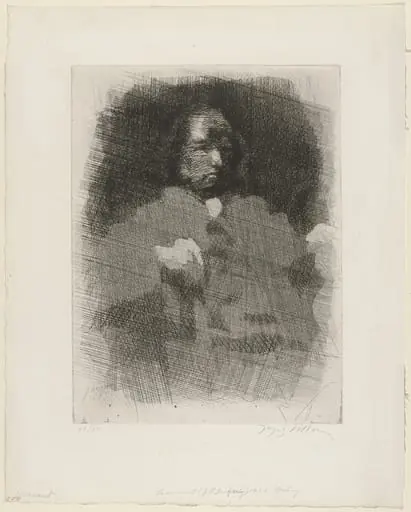 Untitled
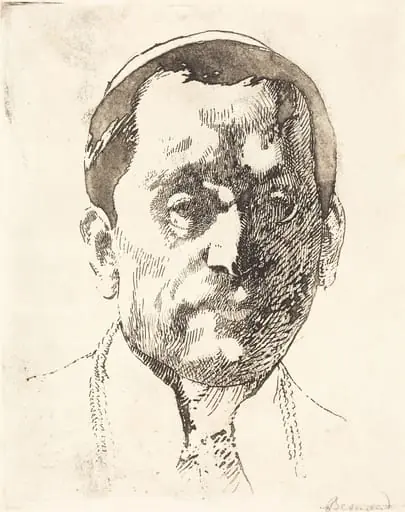 Pope Benedict XV (Benoit XV)
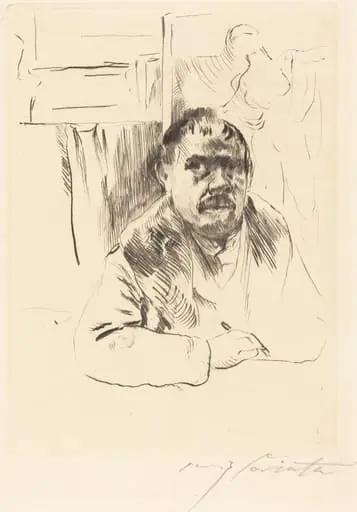 Selbstbildnis im Pelz (Self-Portrait in a Fur Coat)
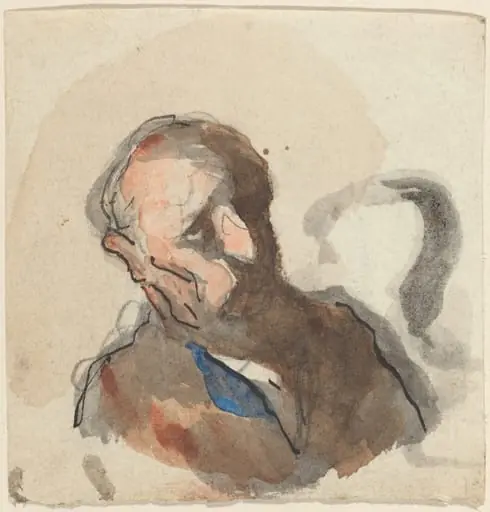 Head of a Man
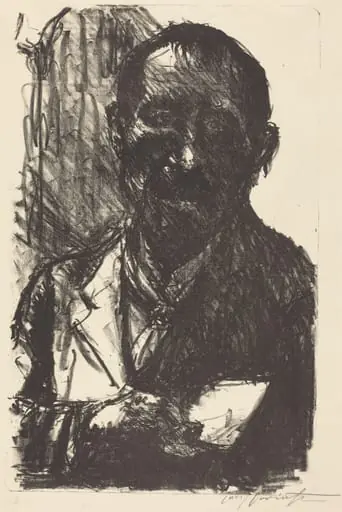 Selbstbildnis 1919 (Self-Portrait 1919)
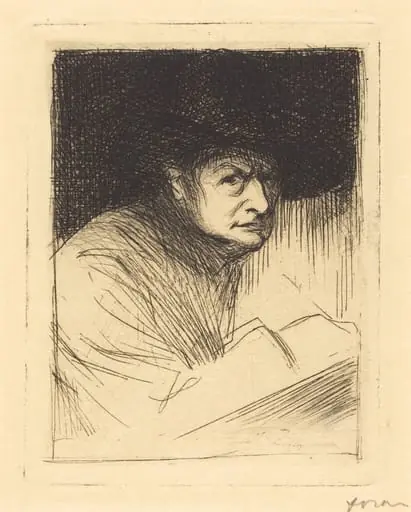 Portrait de Forain (Portrait of Forain)
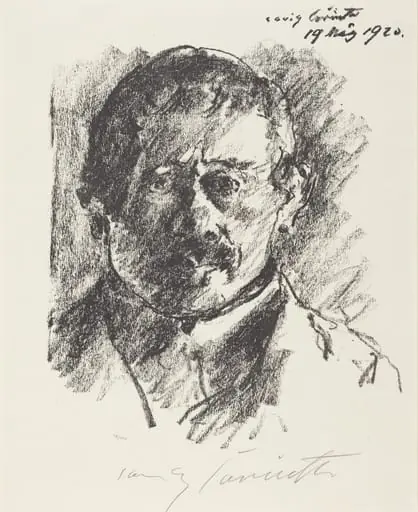 Selbstbildnis (Self-Portrait)
 Alphonse Hirsch