Artwork
The Rape (Le Viol)
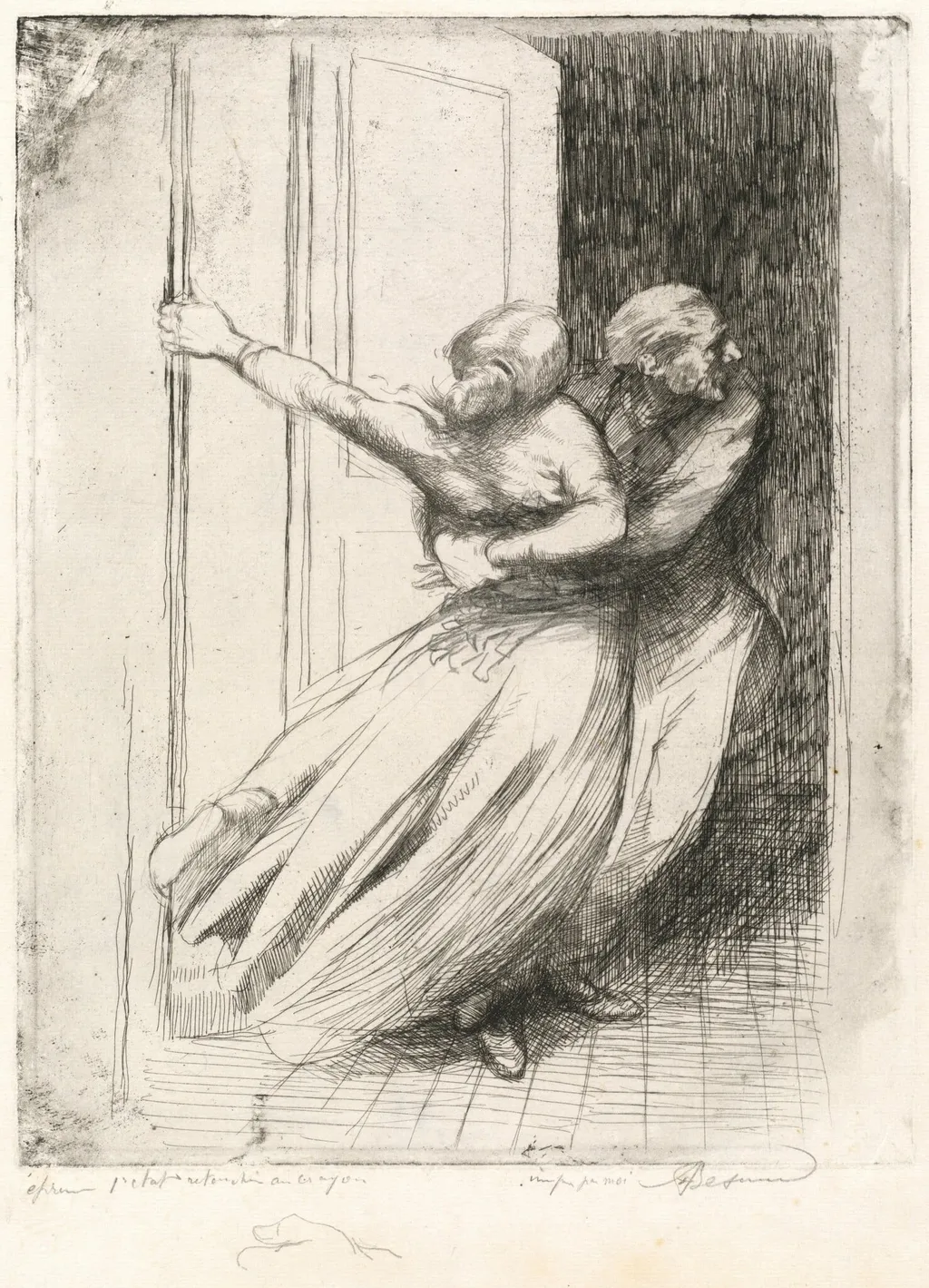
The Rape (Le Viol) is a graphite print by the Impressionist artist Paul-Albert Besnard. It dates from 1886 and is held in the collection of the National Gallery of Art.
About this work
This etching shows a bare-chested woman with wild hair being grabbed by a shadowy man.
This etching shows a bare-chested woman with wild hair being grabbed by a shadowy man. His hand clamps her wrist while she twists away. The background is just rough paper and dark lines—no scenery at all.
Albert Besnard made this in 1886. He used etching first, then added pencil to soften edges and deepen shadows. The result feels raw, like a quick sketch but deliberately unsettling.
It’s a hard image to look at. Check the same artist’s later portraits at the National Gallery of Art, Washington.
Overview
Created around 1886, The Rape (Le Viol) is an etching by Albert Besnard on laid paper, enhanced with graphite. The work stands as a stark, emotionally charged print, stripped of contextual detail. Its minimal background and intense focus on the figures convey a moment of violent confrontation, rendered with immediacy and psychological weight rather than narrative elaboration.
Subject & Meaning
The image depicts a bare-chested woman in a posture of resistance, her wrist seized by a looming male figure whose form remains partially obscured. The absence of setting or identifiers universalizes the scene, emphasizing power imbalance and physical coercion. The rawness of the composition invites interpretation as a commentary on vulnerability and dominance, without explicit moral or symbolic framing.
Technique & Style
Besnard employed etching to establish the primary forms, then introduced graphite to modulate tone and texture. The pencil work softens contours and deepens shadows, creating a sense of ambiguity and motion. The rough paper surface is left partially exposed, contributing to the work’s unfinished, urgent quality. This hybrid technique bridges the precision of printmaking with the spontaneity of drawing.
History & Provenance
Made in 1886, the print emerged during Besnard’s early career, before his later recognition for portraiture and mural work. It was not widely exhibited at the time and remains a lesser-known piece within his oeuvre. Its survival in private and institutional collections suggests quiet, enduring interest, though it was never part of a major published series.
Context
In the late 19th century, French artists increasingly explored psychological and social tensions through intimate, unidealized subjects. Besnard’s print aligns with this trend, reflecting broader cultural anxieties about gender, agency, and violence. Unlike more theatrical depictions of mythological rape, this work strips away allegory, presenting a private moment with unsettling realism.
Legacy
The Rape (Le Viol) is not frequently reproduced or discussed in mainstream art histories, yet it endures as a compelling example of Besnard’s capacity for emotional intensity. Its directness and technical economy have influenced later artists interested in the expressive potential of printmaking beyond traditional narrative forms. It remains a quiet but forceful presence in studies of gender and representation in late 19th-century art.
Artist & collection
Artist
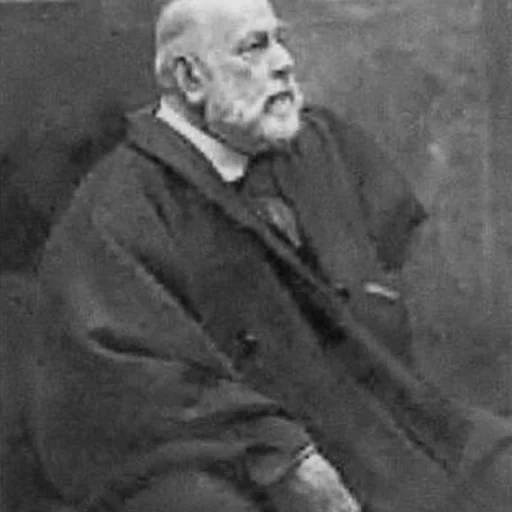
Paul-Albert Besnard (1849–1934) was a French artist, born in 7th arrondissement of Paris.

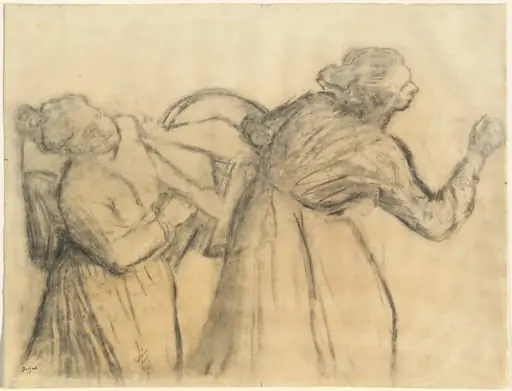 Laundress Carrying Linen
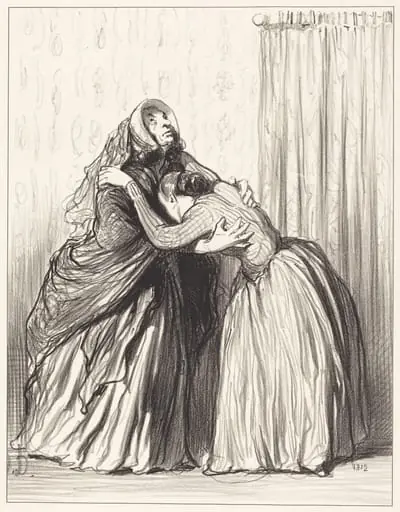 Oui, ma chère, mon mari a ravalé ma dignité...
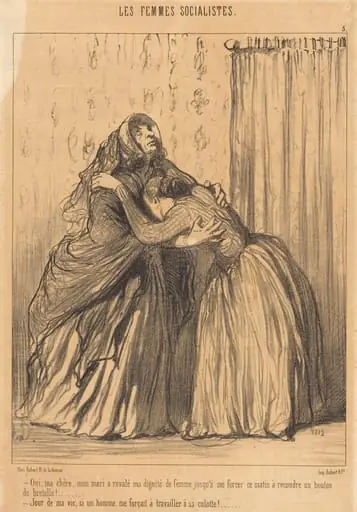 Oui, ma chère, mon mari a ravalé ma dignité...
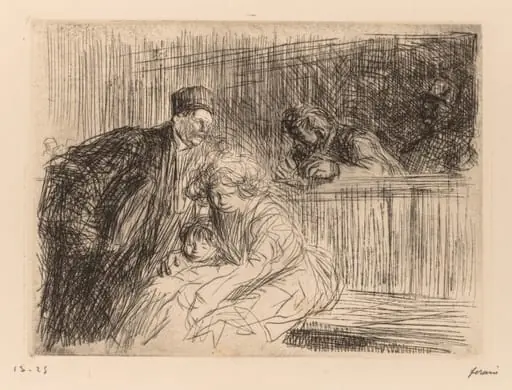 L'Avocat Parlant au prevenu
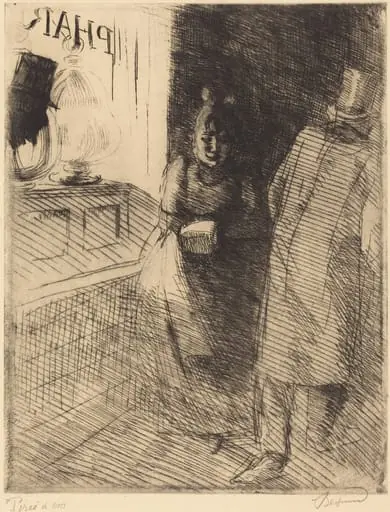 Prostitution (La Prostitution)
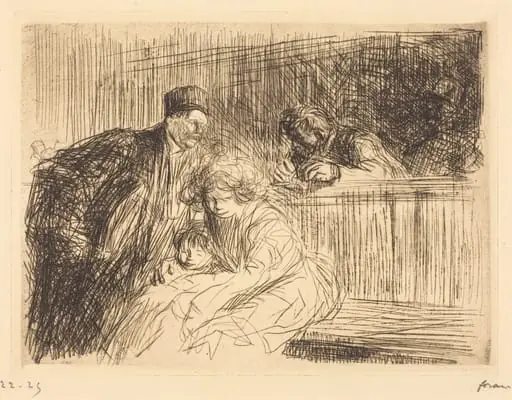 L'avocat parlant au prévenu (2e planche) (The Lawyer Talking to the Prisoner) (second plate)
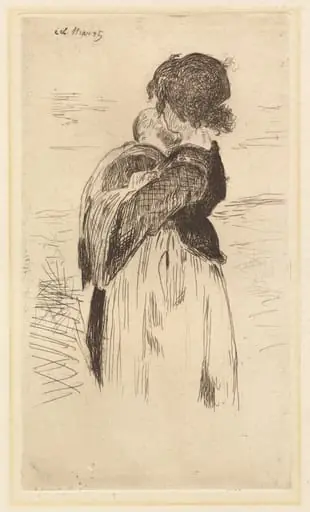 The Little Girl (Le petite fille)
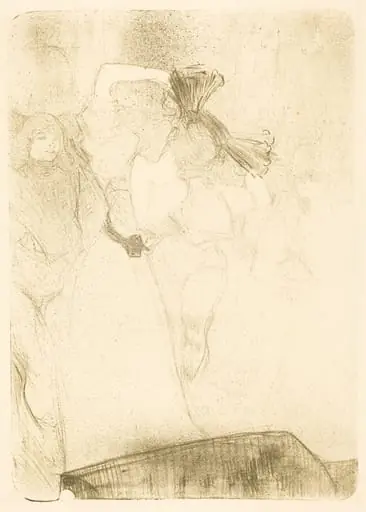 Lender from the Back Dancing the Bolero in "Chilperic" (Lender de dos, dansant le boléro dans "Chilpéric")
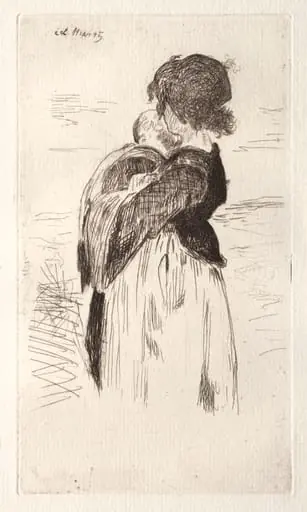 La petite fille tenant un bébé
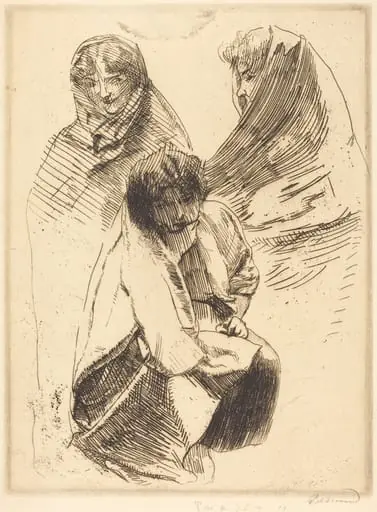 Three Veiled Women (Trois femmes voilées)