Artwork
Old Point Comfort and the Hygeia Hotel
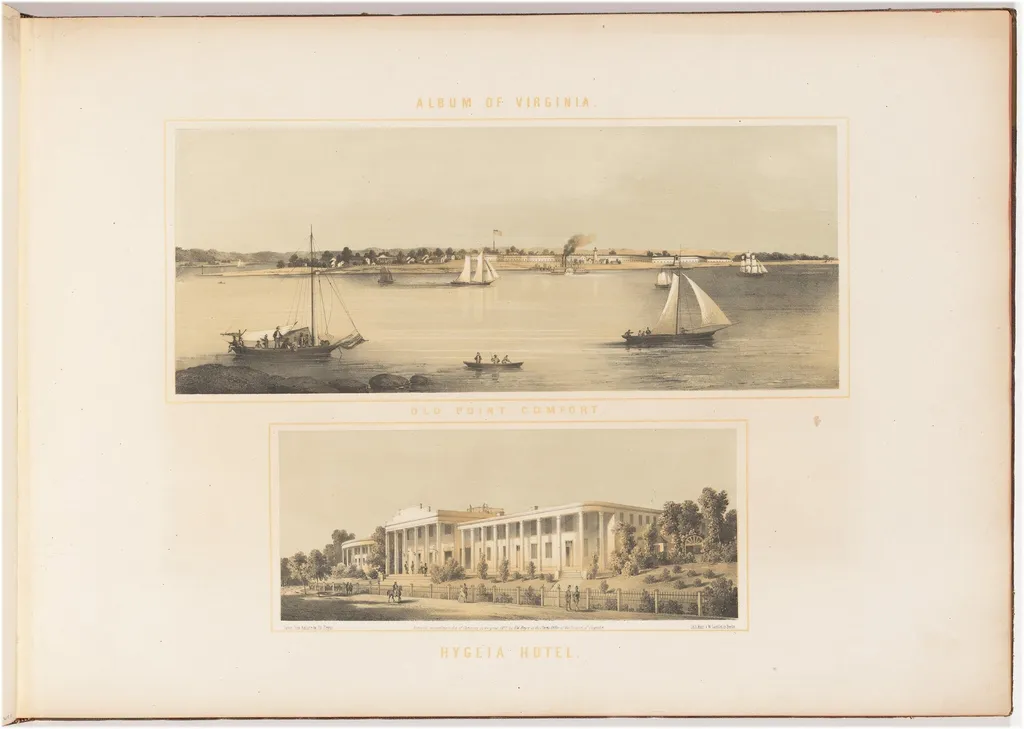
Old Point Comfort and the Hygeia Hotel is an ink print by the Impressionist artist Edward Beyer. It dates from 1857 and is held in the collection of the National Gallery of Art.
About this work
Overview
The work was produced as part of a travel album, combining landscape and architectural imagery to document a coastal resort area during the Antebellum period.
Created in 1857 by German-born artist Edward Beyer, this color lithograph depicts two views of Old Point Comfort, Virginia. The work was produced as part of a travel album, combining landscape and architectural imagery to document a coastal resort area during the Antebellum period. Beyer’s technique combined lithographic precision with hand-applied color to convey both natural and built environments with clarity and calm detail.
Subject & Meaning
The print presents two distinct scenes: a quiet harbor with small vessels and distant shorelines, labeled 'Old Point Comfort,' and the Hygeia Hotel, a grand white structure with classical columns, set among trees and fencing. Together, they frame the site as a destination for leisure and escape, reflecting the era’s growing interest in seaside resorts among the Southern elite. The separation of scenes suggests a journey from arrival to accommodation.
Technique & Style
Beyer employed color lithography, a method allowing multiple ink layers to be printed from stone surfaces, to achieve subtle tonal variations and naturalistic hues. The composition is orderly and restrained, with careful attention to architectural detail and atmospheric perspective. The absence of human activity in the hotel scene emphasizes its monumental presence, while the harbor’s quiet motion suggests daily rhythms rather than spectacle.
History & Provenance
The Hygeia Hotel, constructed in the 1840s, was one of several coastal resorts catering to wealthy visitors seeking health and recreation. Beyer’s lithograph was likely produced for distribution among travelers or as promotional material. The work survives as part of a small body of prints documenting Virginia’s coastal architecture before the Civil War, offering rare visual records of a now-vanished resort culture.
Context
In the 1850s, seaside resorts like the Hygeia Hotel emerged as symbols of Southern gentility and economic confidence. Their construction relied on enslaved labor, though this is absent from Beyer’s idealized imagery. The print aligns with broader trends in American topographical art, where landscape served both documentary and aspirational functions, reinforcing regional identity through carefully curated views of nature and architecture.
Legacy
Beyer’s lithograph remains a valuable record of pre-war coastal Virginia, preserving the appearance of a resort that was later altered or lost. While not widely known today, it contributes to scholarly understanding of how visual media shaped perceptions of leisure and place in the Antebellum South. Its restrained aesthetic contrasts with later romanticized depictions, offering a more grounded view of the period’s social landscape.
Artist & collection
Artist
Edward Beyer (1820–1865) was a German landscape painter who was active in the United States and became known for his depiction of the Antebellum South.

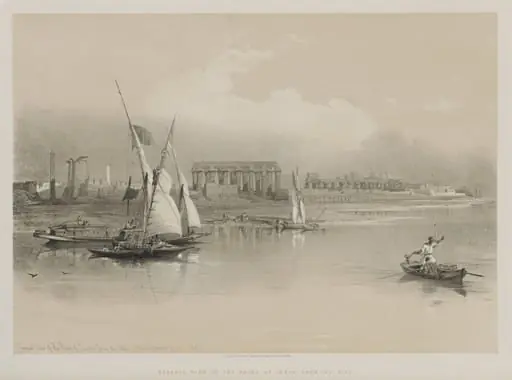 Egypt and Nubia, Volume I: General View of the Ruins of Luxor, From the Nile
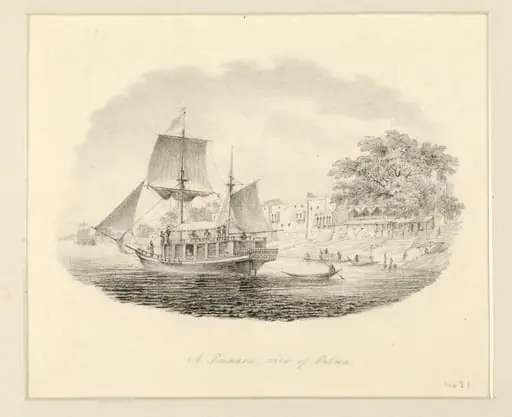 A Pinnace, view of Patna.
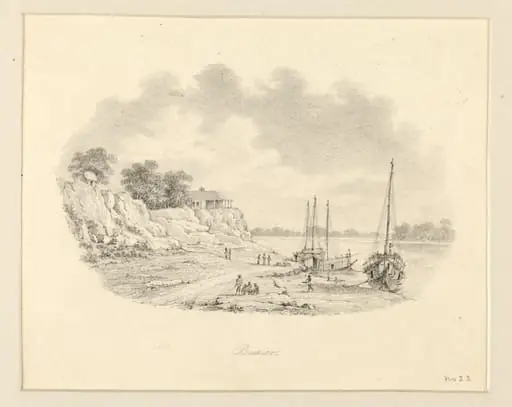 Buxar
Buxar Egypt and Nubia, Volume II: Temple of Amdda, of Hassaya in Nubia
 Cutwah on the Hoogly
 View of Gloucester, Mass.
 Egypt and Nubia, Volume II: Approach to the Fortress of Ibrim, Nubia
 Egypt and Nubia: Volume I - No. 4, Slave Boats on the Nile, View Looking Towards the Pyramids of Dashour and Saccara
 The ViceRoy's Palace on Lake Ismailia
 Untitled
 Vue générale prise à l'angle sud-ouest, Philoe
 Calcutta