Artwork
The Siege of Troy - The Wooden Horse
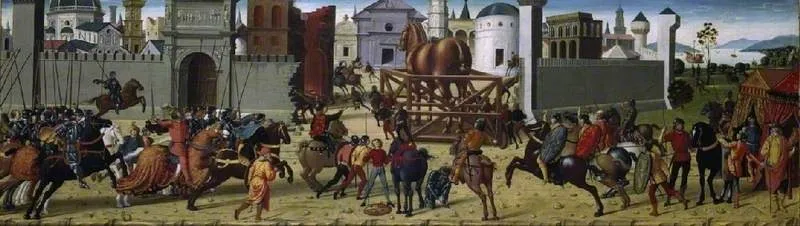
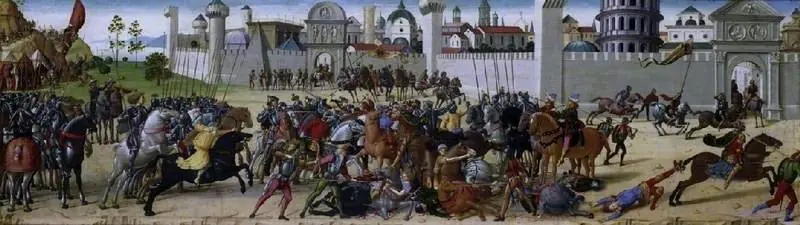
The Siege of Troy - The Wooden Horse is a tempera painting by the Early Renaissance artist Biagio d'Antonio. It is held in the collection of the Fitzwilliam Museum.
About this work
Overview
It resides in the Fitzwilliam Museum’s collection, where it stands as an example of Renaissance historical painting grounded in classical literature.
Painted around 1482 by Biagio d'Antonio, this tempera work illustrates a moment from the mythic Siege of Troy, focusing on the arrival of the wooden horse within the city walls. Executed in a detailed, narrative style typical of late 15th-century Florence, the painting captures a pivotal episode from the Trojan War. It resides in the Fitzwilliam Museum’s collection, where it stands as an example of Renaissance historical painting grounded in classical literature.
Subject & Meaning
The scene portrays the deceptive entry of the Greek army concealed within the wooden horse, a turning point in the Trojan War. Figures scramble around the structure—some hauling it forward, others engaged in combat—while the city’s defenses loom behind. The painting emphasizes treachery and chaos, reflecting Renaissance interest in classical tales as moral and political allegories. The horse, though passive, becomes the focal point of impending destruction.
Technique & Style
Tempera on panel allows for crisp outlines and layered color, which Biagio employs to define individual figures and architectural details. The composition is crowded but carefully organized, with figures arranged in dynamic, overlapping planes to suggest motion. Rich pigments and fine brushwork enhance texture in clothing and armor, while the flat, elevated perspective reflects early Renaissance conventions before full linear perspective became dominant.
History & Provenance
Commissioned during the height of Florentine humanist culture, the painting likely served a private patron interested in classical themes. It entered the Fitzwilliam Museum’s collection in the 19th century, having passed through European private holdings. Its survival is notable, as many tempera works from this period were lost or overpainted. Documentation confirms its attribution to Biagio d'Antonio and its date of creation around 1482.
Context
In late 15th-century Italy, stories from antiquity were revived as subjects for art, blending moral instruction with aesthetic appeal. Biagio, active in Florence and Rome, drew from manuscript illuminations and earlier fresco traditions. This painting reflects a broader trend among artists to visualize classical epics with contemporary detail, making ancient narratives feel immediate to viewers familiar with the political and military conflicts of their own time.
Legacy
Though not widely exhibited outside academic circles, the painting remains a significant example of how Renaissance artists interpreted classical myths through tempera. It contributes to understanding the transition from medieval narrative conventions to more naturalistic storytelling. Its preservation allows scholars to study the visual language of Florentine history painting before the full emergence of High Renaissance ideals.
Artist & collection



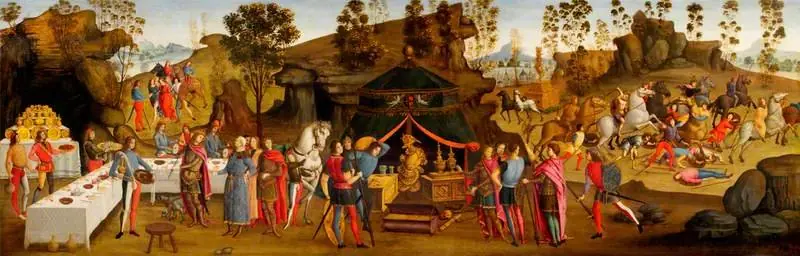 The Magnanimity of Alexander the Great (scene from the story of Alexander the Great)
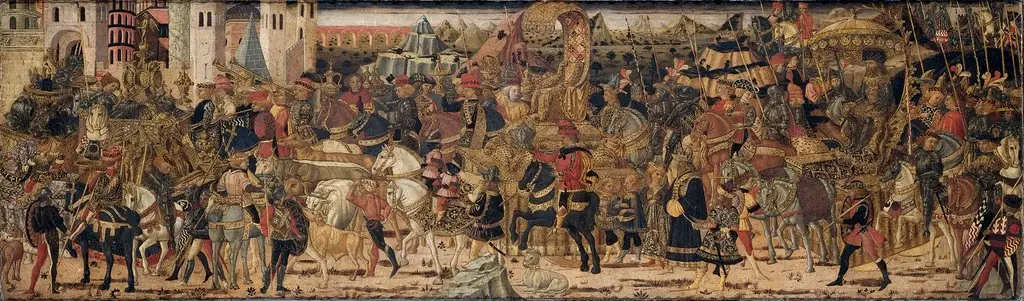 The Triumph of Aemilius Paulus after the Battle of Pydna
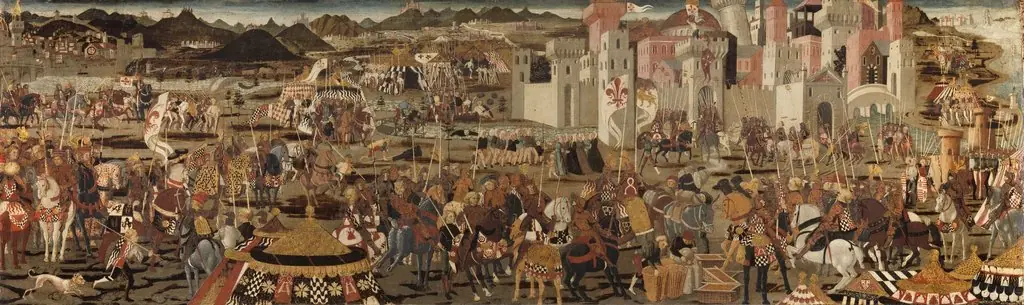 The Taking of Pisa
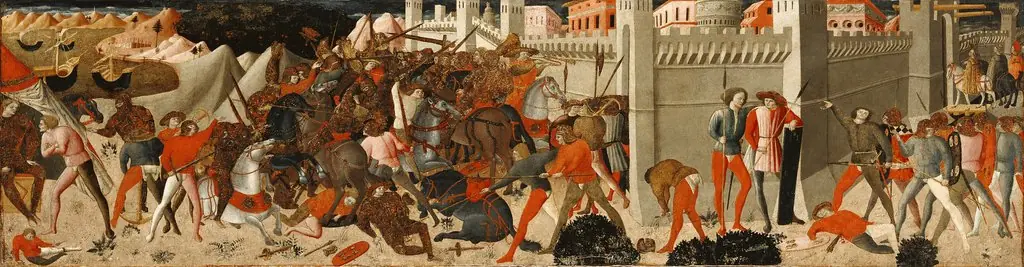 Battle Before a Walled City
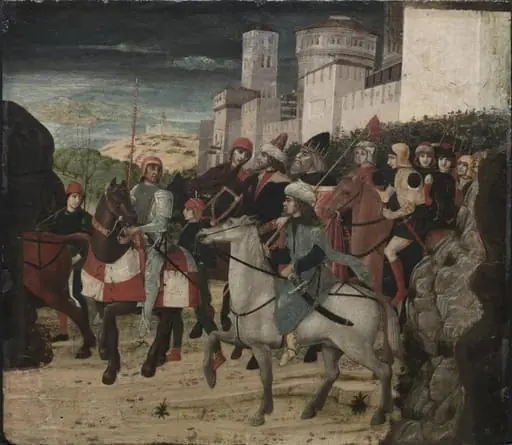 Procession of the Magi
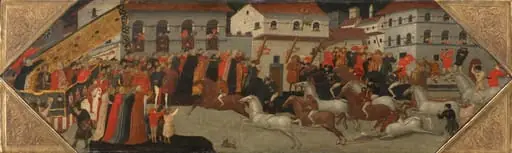 Panel from a Cassone: The Race of the Palio in the Streets of Florence
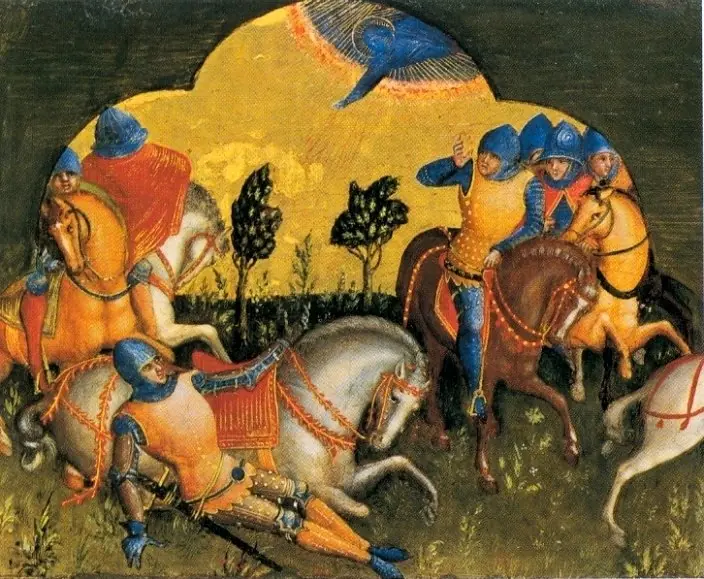 The Conversion of Paul
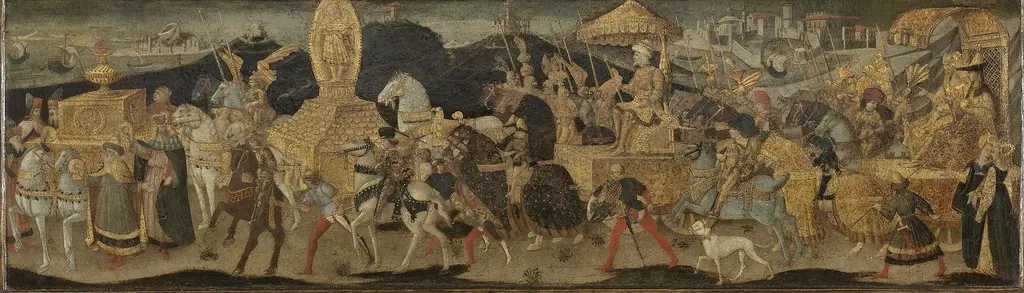 Darius Marching to the Battle of Issus
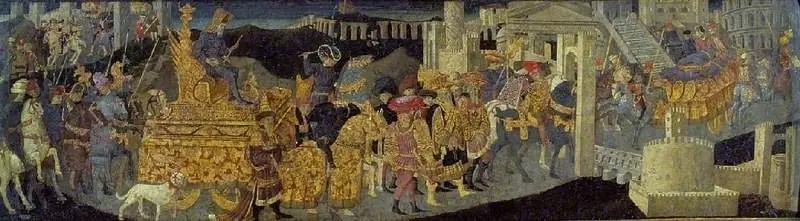 The Triumph of Scipio Africanus
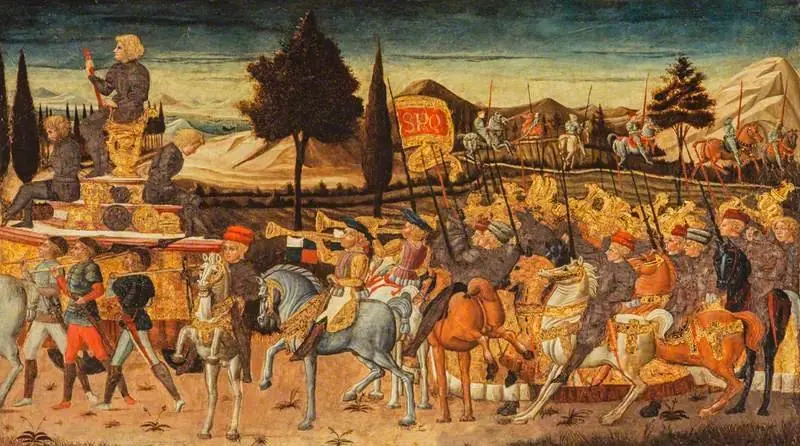 The Triumph of a Roman General