Artwork
Poem
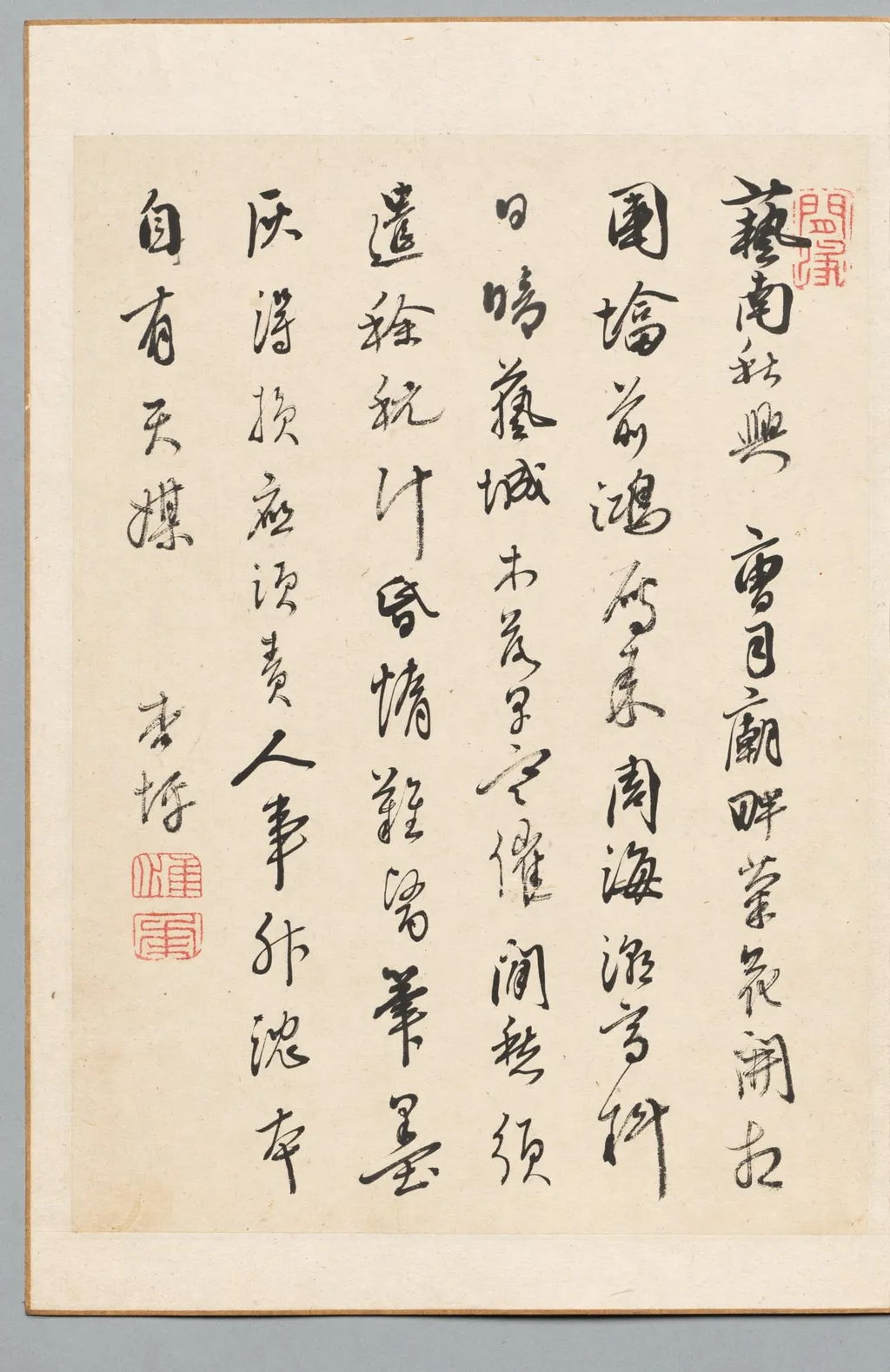
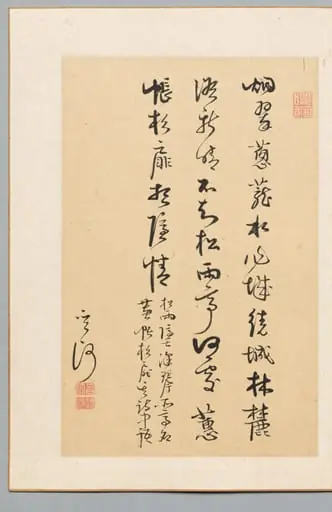
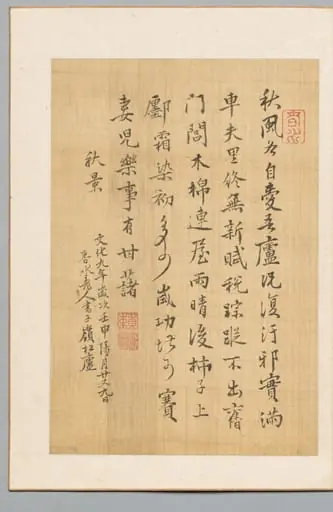
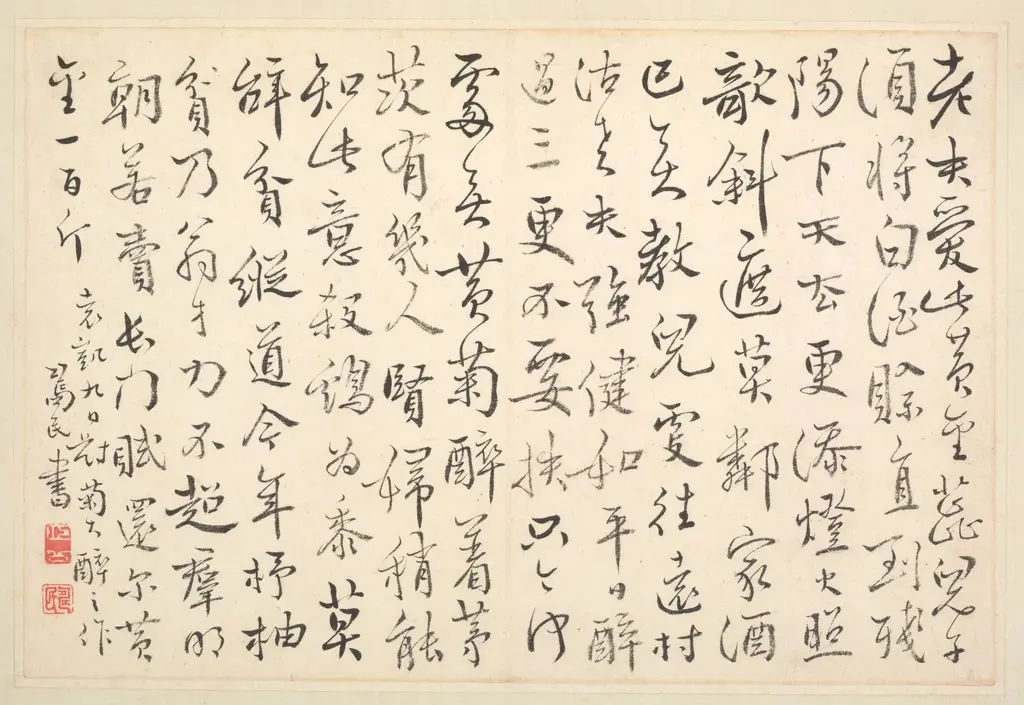
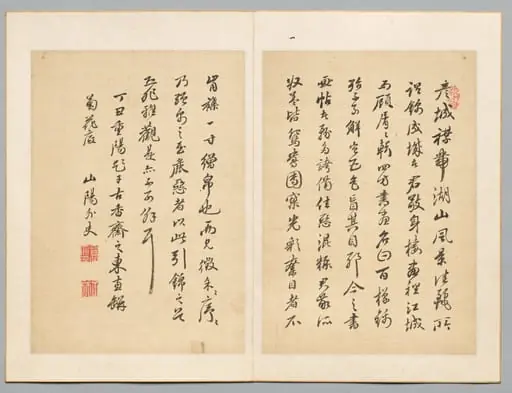
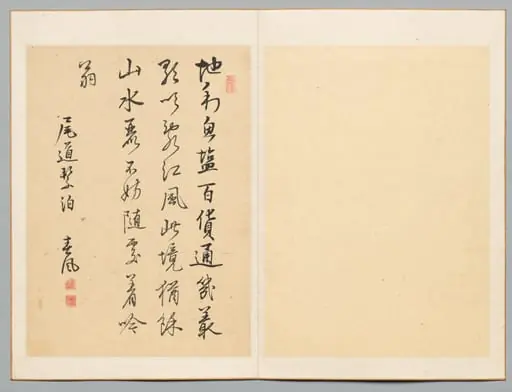
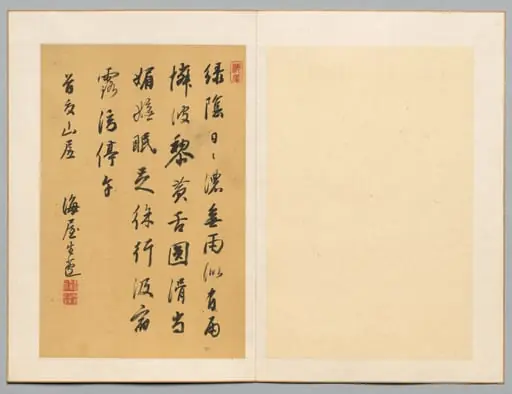
Poem is a work on paper by the Romanticist artist Rai Kyōhei. It dates from 1802 and is held in the collection of the Cleveland Museum of Art.
About this work
Overview
The composition blends poetic expression with calligraphic experimentation, inviting close reading rather than immediate comprehension.
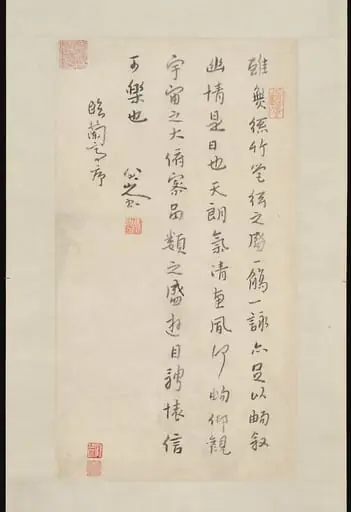
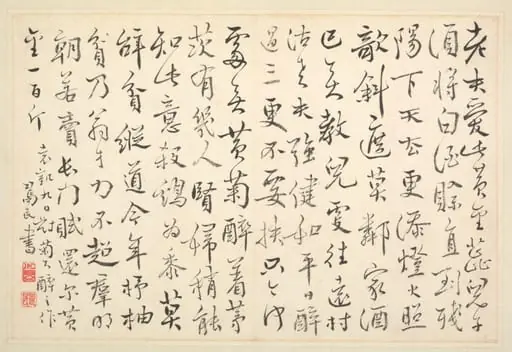
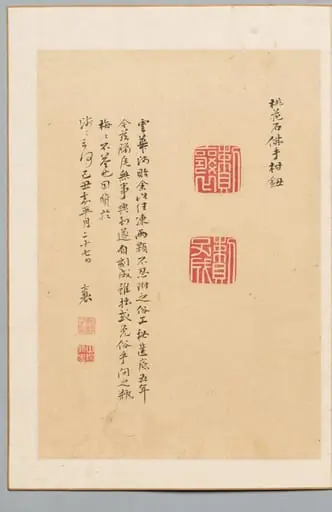
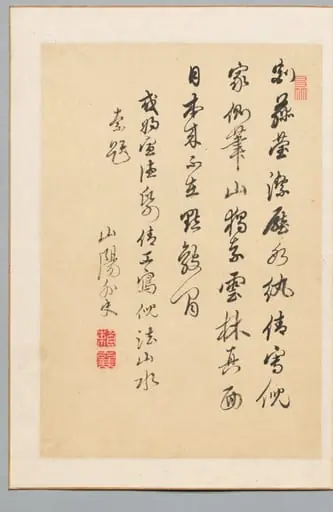
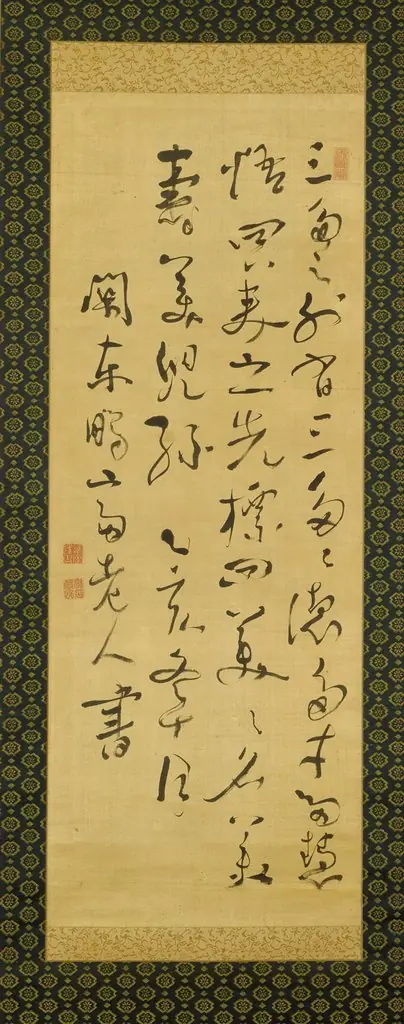
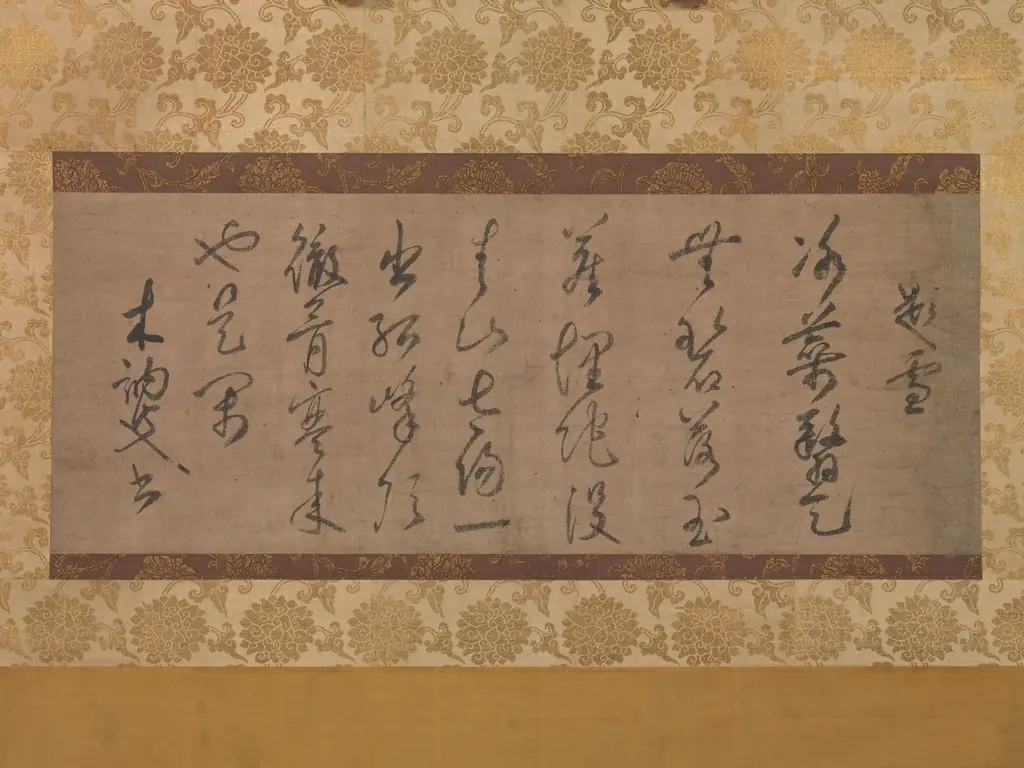
Created in 1802 by the Japanese artist Rai Kyōhei, this ink-on-paper work is part of a personal portfolio. Executed in bold, fluid brushstrokes, the piece features densely arranged vertical columns of Japanese script. Two small red seals, typical of artist authentication, appear at the corners. The composition blends poetic expression with calligraphic experimentation, inviting close reading rather than immediate comprehension.
Subject & Meaning
The text appears to be a poem, though its precise content remains elusive without linguistic translation. Beyond its literary form, the work functions as a visual puzzle: the arrangement of characters emphasizes rhythm and spatial tension over legibility. The artist’s name is subtly embedded within the script, functioning as a private signature that merges authorship with the text itself, blurring the line between creator and creation.
Technique & Style
Rai Kyōhei employed sumi ink on light paper, using varying pressure to produce strokes that alternate between thick and thin, deliberate and spontaneous. The brushwork conveys a sense of motion, with irregularity suggesting personal expression over formal precision. The vertical format follows traditional East Asian book layout, while the uneven alignment and dynamic ink density reflect an individualistic approach to calligraphy as performative art.
History & Provenance
The work entered the collection of The Cleveland Museum of Art, where it remains today as part of its East Asian holdings. Its journey from 19th-century Japan to a Western institution reflects broader patterns of cultural exchange in the 20th century. Though specific prior owners are undocumented, its preservation suggests it was valued by collectors familiar with literati traditions and private artistic expression.
Context
Produced during the late Edo period, this piece aligns with a tradition of literati artists who valued personal expression over official styles. Poetic composition and calligraphy were deeply intertwined in Japanese intellectual circles, often serving as vehicles for introspection or coded communication. Rai Kyōhei’s integration of his name into the text echoes the practice of scholar-artists who treated writing as both art and identity.
Legacy
This work exemplifies how calligraphy in early 19th-century Japan transcended mere transcription to become a medium for individual voice and visual rhythm. While not widely known outside specialist circles, it contributes to the understanding of how personal expression was encoded within formal traditions. Its presence in a major museum underscores its role as a quiet but significant artifact of artistic autonomy in a structured cultural landscape.
Artist & collection