Artwork
Poem
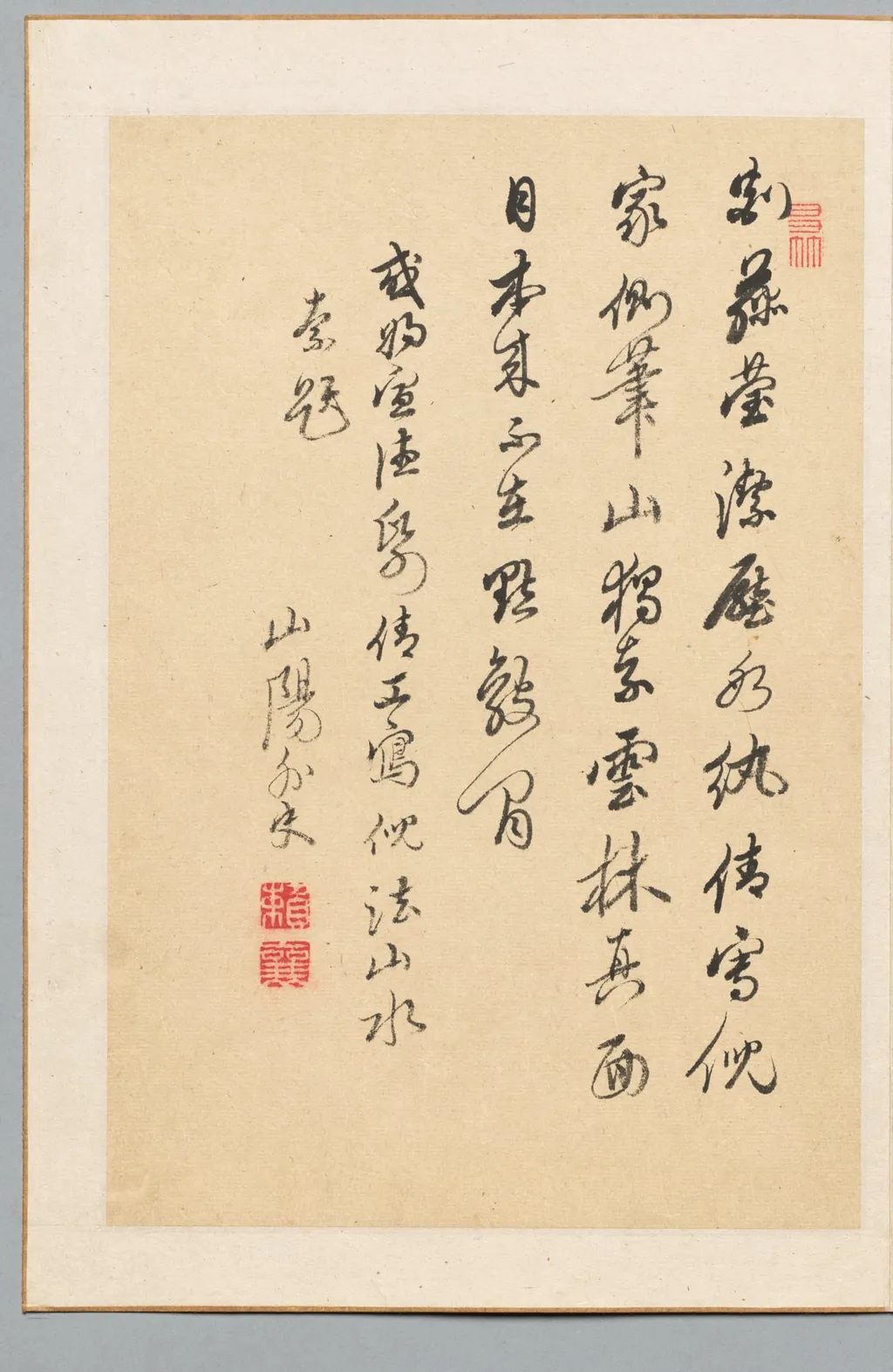
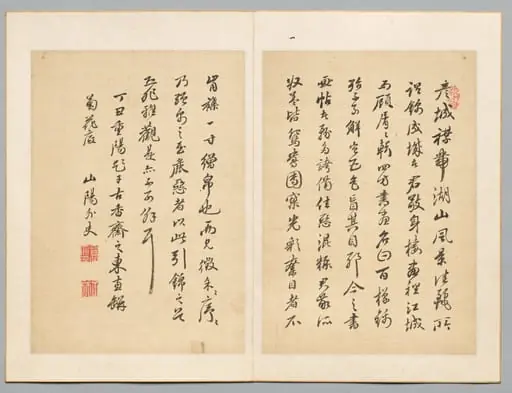
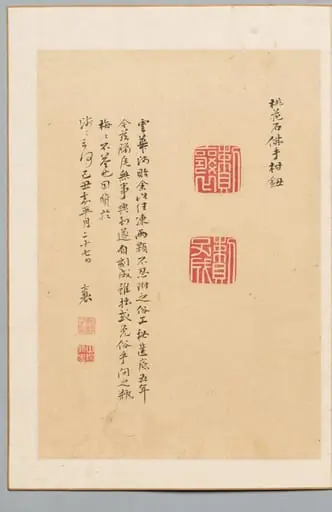
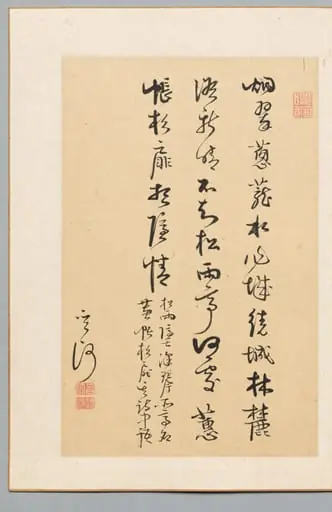
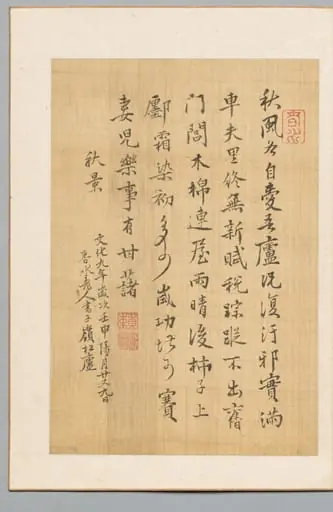
Poem is a work on paper by the Romanticist artist Rai Sanyō. It dates from 1804 and is held in the collection of the Cleveland Museum of Art.
About this work
Overview
The work presents handwritten text in vertical columns, typical of East Asian literary tradition, and includes red seals and a cursive signature.
Created around 1804 by Rai Sanyō, this ink-on-paper scroll is one of many personal writings produced during his time in Kyoto. As a Confucian scholar, historian, and poet, Rai blended intellectual rigor with literary expression. The work presents handwritten text in vertical columns, typical of East Asian literary tradition, and includes red seals and a cursive signature. Its modest materials and intimate scale reflect its function as a private composition rather than a public display.
Subject & Meaning
The text appears to combine poetic reflection with personal observation, possibly drawn from travel or quiet contemplation of nature. Phrases suggest a meditative tone, characteristic of Confucian literary culture, where nature and moral insight intertwine. The variation in stroke weight and rhythm hints at spontaneous composition, as if the poem was written in a single sitting, capturing a fleeting moment of thought rather than a polished literary piece.
Technique & Style
Executed in black ink on light tan paper, the scroll employs traditional brushwork with deliberate variation in pressure and speed. Some characters are bold and deliberate, others light and hurried, conveying the rhythm of thought. Red seals, placed near margins, identify the artist and possibly date or location. The cursive signature at the lower right confirms authorship in a fluid, personal hand, distinguishing this as a private, autographic artifact.
History & Provenance
The scroll entered the collection of The Cleveland Museum of Art through documented acquisition, though its earlier ownership history remains largely unrecorded. As a work by Rai Sanyō, it survived the transition from Edo-period scholarly circles to modern institutional preservation. Its survival in good condition reflects careful handling by collectors who recognized its cultural value, even if it was never intended for public exhibition.
Context
Rai Sanyō operated within Kyoto’s intellectual milieu, where Confucian scholarship, classical poetry, and calligraphy were deeply intertwined. His writings often bridged historical analysis and personal reflection, a practice common among literati of the late Edo period. This scroll exemplifies how scholarly identity was expressed not only through published texts but also through intimate, handwritten compositions shared among peers.
Legacy
Though not widely reproduced or exhibited in his lifetime, Rai Sanyō’s handwritten works like this one are now valued as primary sources of Edo-period intellectual life. They offer insight into the daily practices of scholar-poets, revealing how philosophy and art were lived rather than merely studied. The scroll remains a quiet testament to the enduring connection between writing, thought, and personal expression in Japanese literary tradition.
Artist & collection
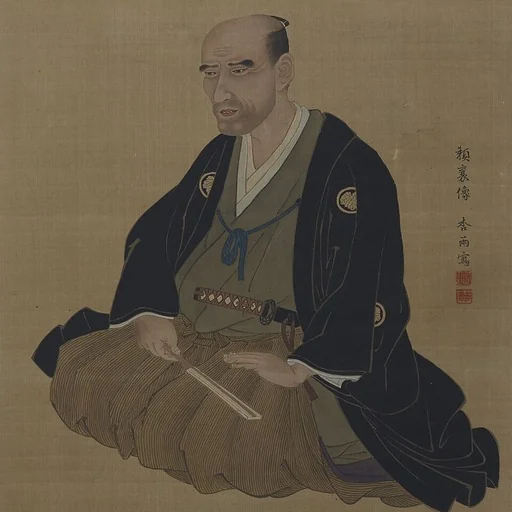
Artist
Rai San'yō (Japanese: 頼 山陽; 21 January 1780, Aki Province – 16 October 1832, Kyoto) was a Japanese Confucianist philosopher, historian, artist and poet of the later Edo period. His true name was Rai Noboru.