Artwork
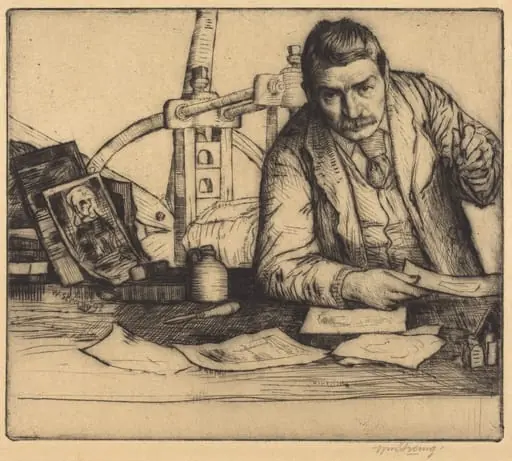
David Strang, No. 1
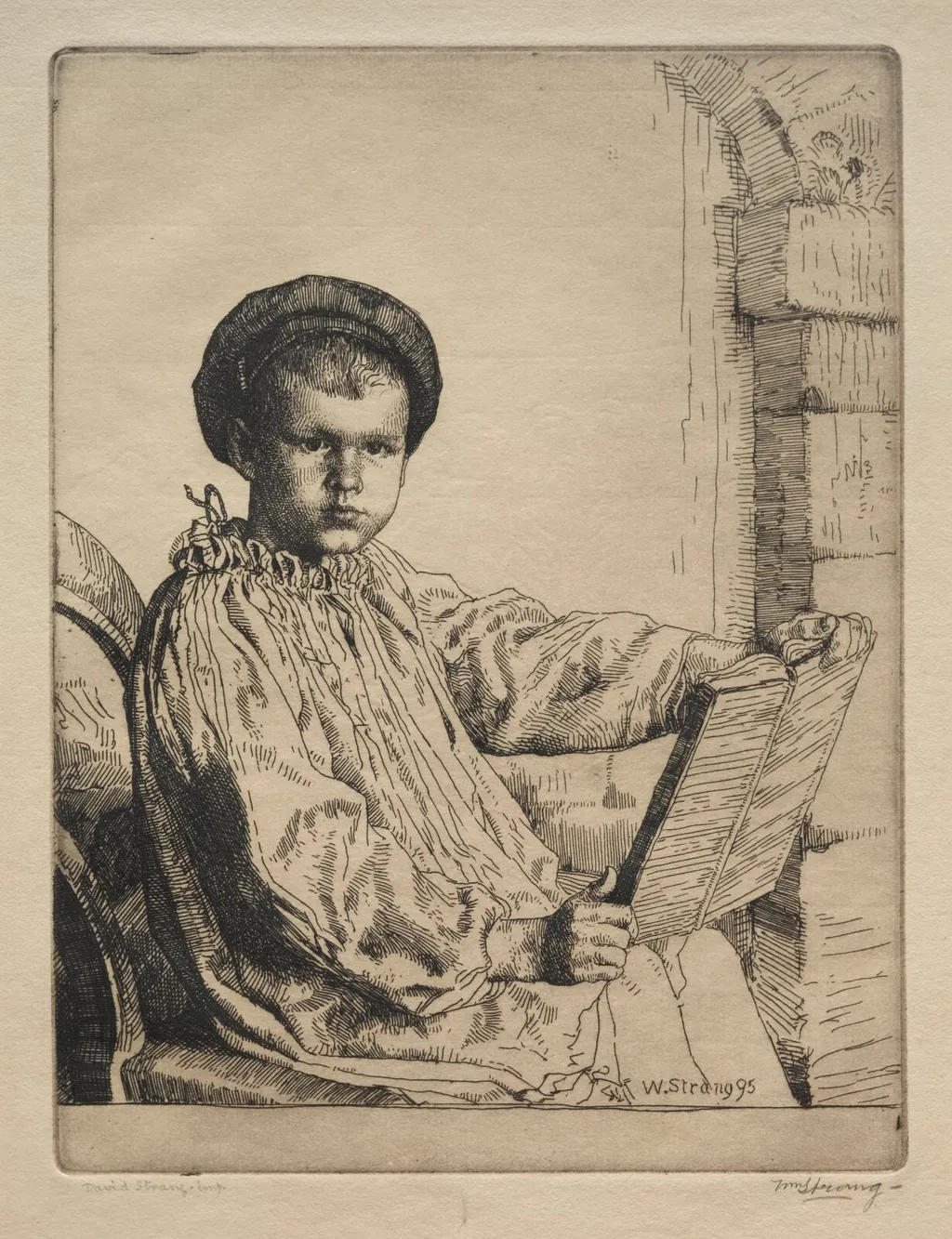
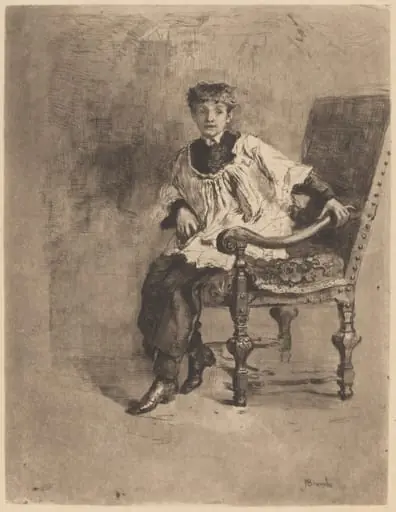
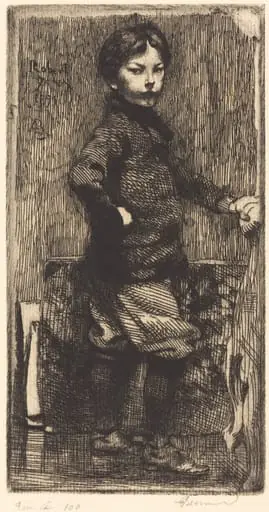
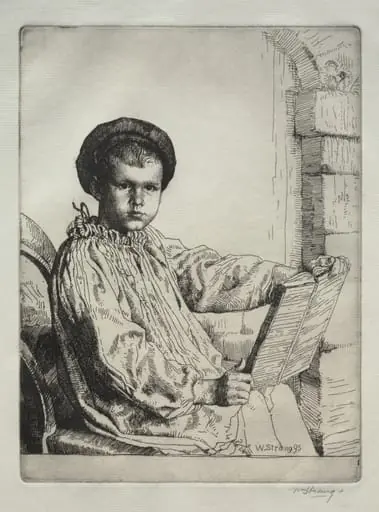
David Strang, No. 1 is a print by the Impressionist artist William Strang. It dates from 1896 and is held in the collection of the Cleveland Museum of Art.
About this work
Overview
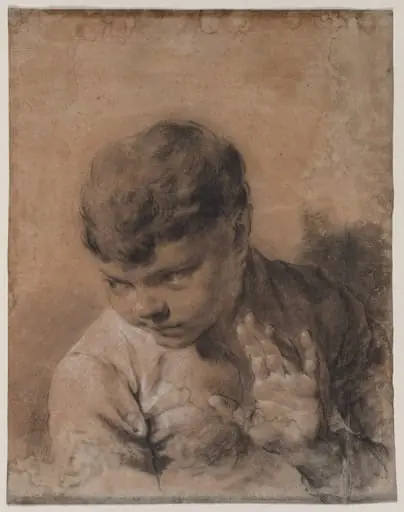
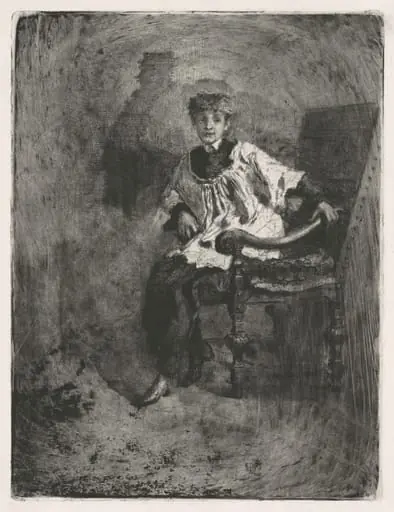
The work captures a solitary youth in period attire, rendered with minimal background elements to focus attention on form and posture.
Created in 1896 by William Strang, this black-and-white print is part of a series of figure studies executed in drypoint. It is held in the collection of The Cleveland Museum of Art. The work captures a solitary youth in period attire, rendered with minimal background elements to focus attention on form and posture. The medium emphasizes tonal contrast over detail, reflecting Strang’s interest in expressive line and atmospheric suggestion.
Subject & Meaning
The figure is a young boy dressed in late 19th-century clothing, including a round hat and ruffled collar, holding a long staff. His stance is still, yet the posture suggests quiet readiness or contemplation. The absence of context or narrative cues invites interpretation, positioning the boy as a symbolic presence rather than a specific individual. The simplicity of the scene underscores themes of solitude and transition.
Technique & Style
Strang employed drypoint engraving to achieve rich, velvety blacks and subtle gradations of gray. Loose, confident lines define the contours of the figure, while hatching and cross-hatching model the face and fabric with chiaroscuro effects. The background is reduced to a few suggestive strokes, enhancing the figure’s presence. The technique balances spontaneity with control, evoking the immediacy of a sketch while maintaining formal precision.
History & Provenance
This print was produced during a period when Strang was deeply engaged with etching and drypoint, influenced by his studies in Paris and exposure to Japanese prints. It was likely made for private circulation or exhibition among print collectors. The Cleveland Museum of Art acquired it as part of its growing collection of British graphic art in the early 20th century, reflecting contemporary interest in the revival of printmaking.
Context
In the 1890s, British artists were redefining printmaking as a fine art medium, moving beyond reproductive techniques. Strang, alongside figures like James McNeill Whistler, championed the expressive potential of etching and drypoint. His focus on solitary figures aligned with broader fin-de-siècle interests in psychological introspection and the quiet dignity of everyday subjects.
Legacy
Strang’s work contributed to the renaissance of British printmaking at the turn of the century. His ability to convey character through minimal means influenced later generations of printmakers. Though less widely known today, his technical innovations and restrained aesthetic remain significant within the history of graphic arts, particularly in the evolution of tonal drawing as an independent art form.
Artist & collection

Artist
William Strang (13 February 1859 – 12 April 1921) was a Scottish painter and printmaker, notable for illustrating the works of Bunyan, Cervantes, Coleridge, Kipling, and others.