Artwork
A Grand Illusionistic Ceiling
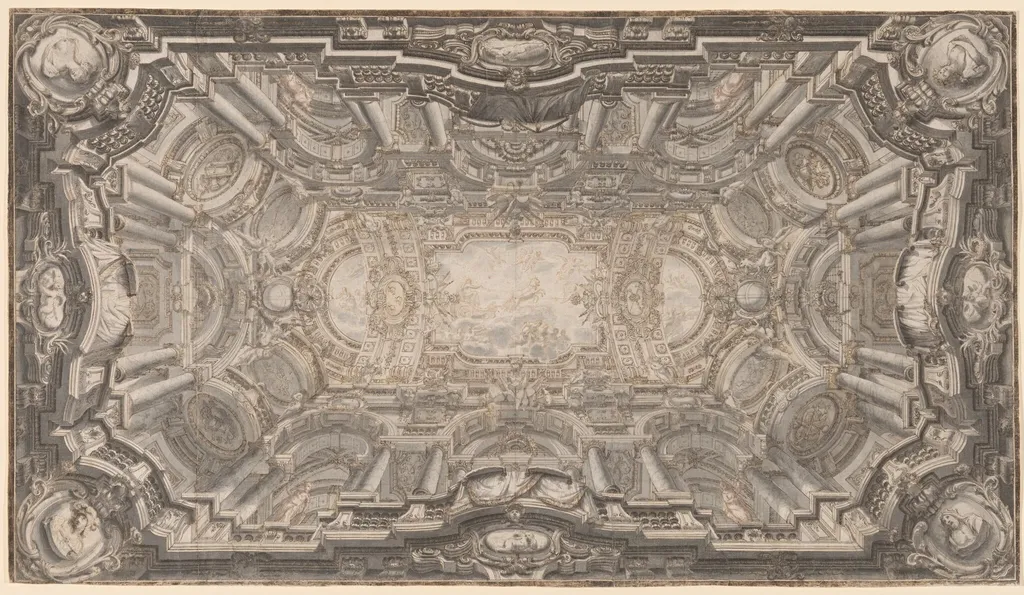
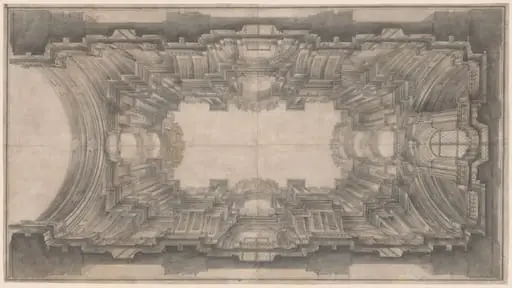
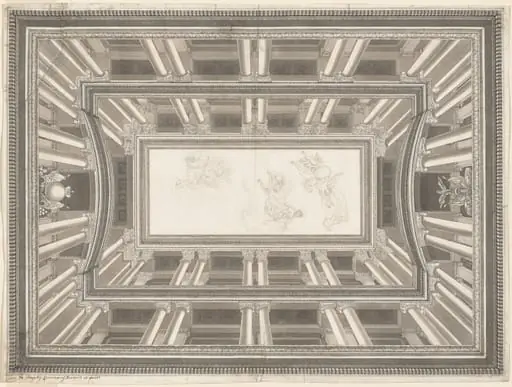
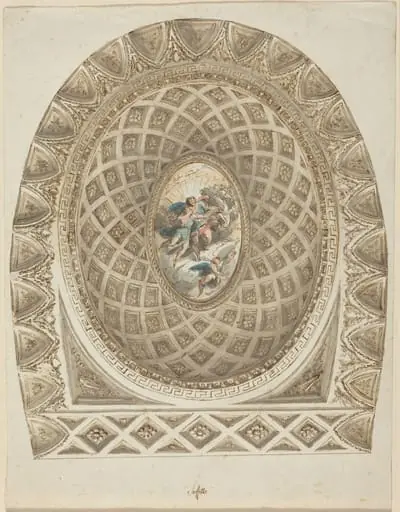
A Grand Illusionistic Ceiling is an ink drawing by the Baroque artist Ferdinando Galli Bibiena. It dates from 1730 and is held in the collection of the National Gallery of Art.
About this work
Overview
Ferdinando Galli Bibiena’s 1730 drawing, titled *A Grand Illusionistic Ceiling*, is executed with pen and brown ink, enhanced by gray and brown washes applied over a graphite underdrawing on laid paper. The composition presents an imagined architectural space turned inside out, with arches, columns, and diminutive figures arranged as if viewed from beneath an unseen ceiling.
Technique & Style
The artist employs meticulous cross‑hatching and layered washes to model light and shadow, creating a convincing illusion of depth on a flat surface. Central zones are illuminated with bright washes that suggest an ethereal light source, while peripheral areas recede into darker, swirling tones. This manipulation of tonal contrast exemplifies the Baroque fascination with trompe‑l’œil effects.
Subject & Meaning
The drawing functions as a visual puzzle of perspective, depicting a fictitious vaulted interior that extends beyond the paper’s borders.
The drawing functions as a visual puzzle of perspective, depicting a fictitious vaulted interior that extends beyond the paper’s borders. By rendering architectural elements in exaggerated recession, Bibiena invites viewers to experience a spatial illusion that challenges the distinction between real and imagined space, reflecting contemporary interests in theatrical spectacle and visual deception.
History & Provenance
Created in 1730, the work belongs to Bibiena’s broader oeuvre of theatrical and architectural designs, which were often used as models for stage sets and grand interiors. While specific ownership records are scarce, the drawing has been recognized as an exemplar of 18th‑century illusionistic drawing practices within European art collections.
Artist & collection