Artwork
Fantasy of a Great Hall with Basketweave Columns
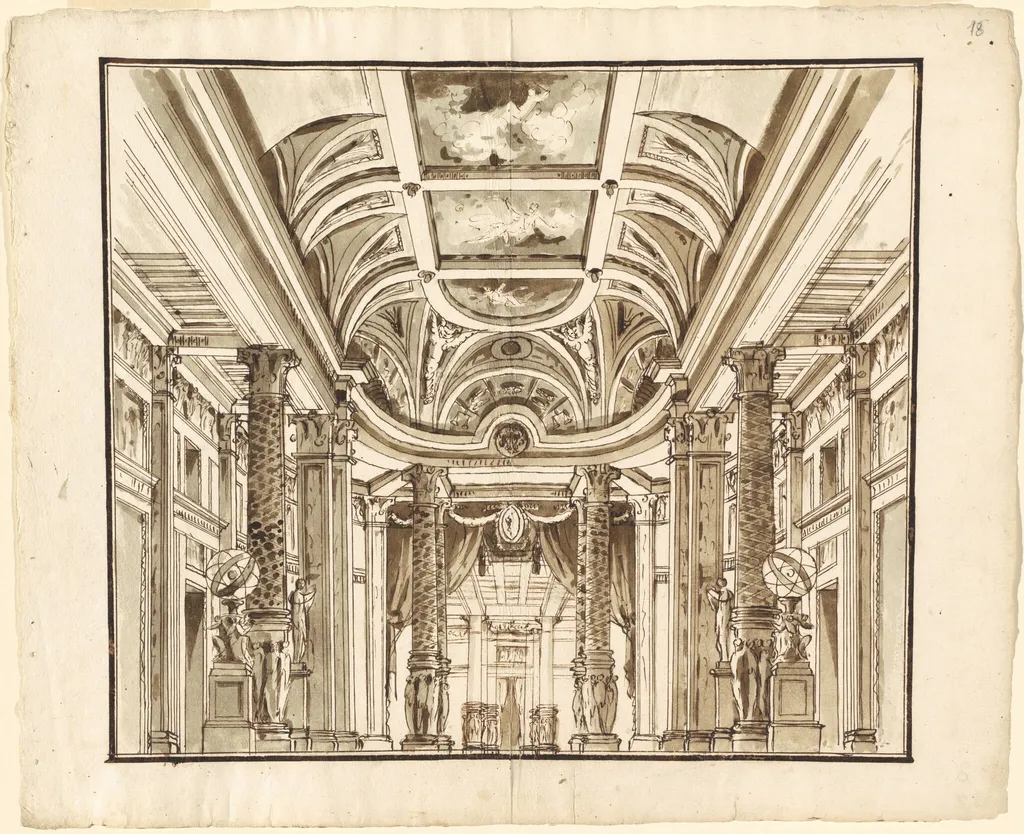
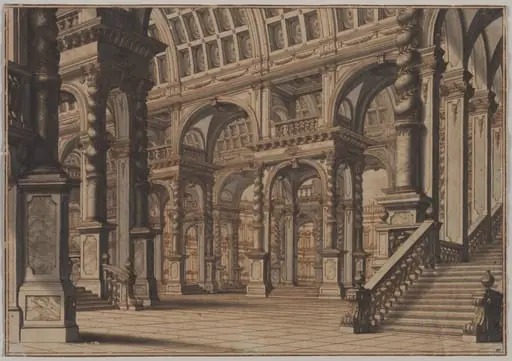
Fantasy of a Great Hall with Basketweave Columns is an ink drawing by the Romanticist artist Pietro Gonzaga. It dates from 1800 and is held in the collection of the National Gallery of Art.
About this work
Overview
Created around 1800 by Pietro Gonzaga, this drawing depicts an imagined interior space that blends architectural realism with imaginative embellishment.
Created around 1800 by Pietro Gonzaga, this drawing depicts an imagined interior space that blends architectural realism with imaginative embellishment. Executed in pen and brown ink with wash on laid paper, it presents a soaring hall defined by ornate columns and layered spatial depth. The composition balances structural precision with poetic liberty, suggesting a theatrical vision rather than a documented building.
Subject & Meaning
The scene portrays an idealized grand hall, its basketweave columns and arched ceiling evoking classical antiquity reimagined through fantasy. Statues on pedestals and a distant balcony imply ceremonial or aristocratic use, while the miniature landscapes visible through upper windows introduce a surreal, dreamlike quality. The space functions less as a literal place than as an emblem of cultivated imagination and architectural aspiration.
Technique & Style
Gonzaga employed fine pen lines and layered brown washes to model volume and shadow, giving the columns and arches a tactile solidity. Cross-hatching defines recesses and transitions, while subtle gradations in ink tone suggest atmospheric perspective. The delicate rendering of distant vistas through small windows contrasts with the dense detail of the foreground, enhancing the illusion of spatial depth.
History & Provenance
The drawing is attributed to Pietro Gonzaga, an Italian stage designer and artist active in the late 18th and early 19th centuries. It likely originated as a preparatory study or standalone fantasy piece, reflecting his professional engagement with theatrical sets and architectural illusion. Its survival suggests it was valued as a work of artistic invention rather than a functional blueprint.
Context
Gonzaga worked during a period when neoclassical ideals intersected with Romantic sensibilities, fostering a fascination with imagined antiquities. His background in theater design informed this drawing’s dramatic scale and lighting effects. Such fantasies were popular among collectors and architects seeking inspiration beyond documented monuments, blending historical reference with creative liberty.
Legacy
This drawing exemplifies the tradition of architectural fantasy in European drawing, where imagination reshaped classical forms into evocative spaces. While not widely reproduced, it contributes to understanding how artists of the era used ink and wash to explore spatial possibilities beyond built reality, influencing later interpretations of interior design and scenography.
Artist & collection


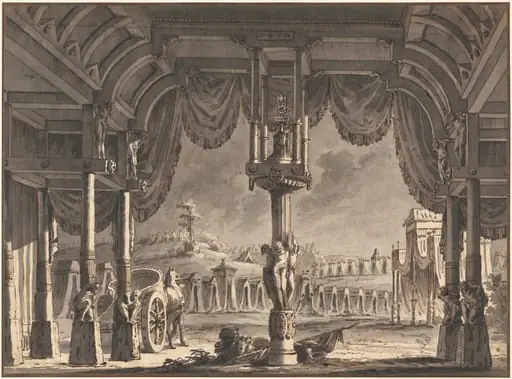 Stage Design of an Ancient Roman Encampment by Night (recto)
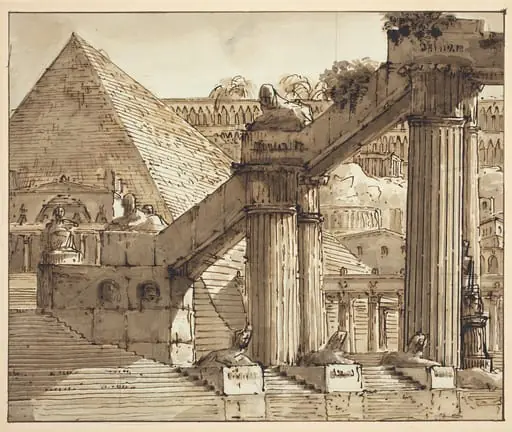 Egyptian Stage Design
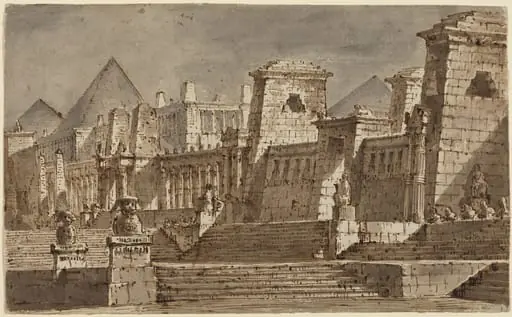 An Egyptian Stage Design
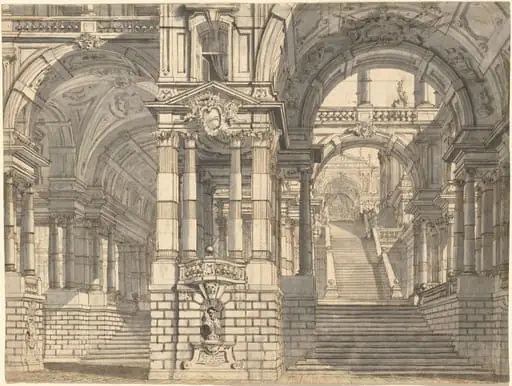 Fantasy of Magnificent Courtyards and Loggie with a Monumental Staircase
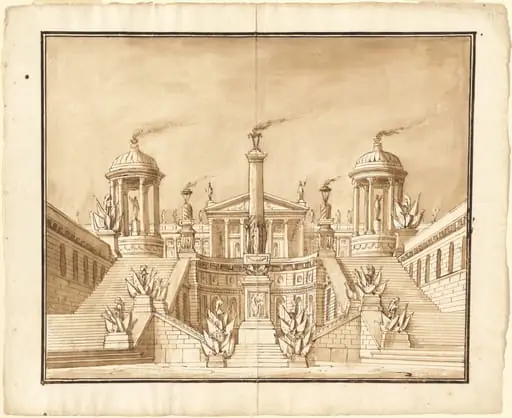 Fantasy of an Ancient Capitol with Trophies and Grand Staircases
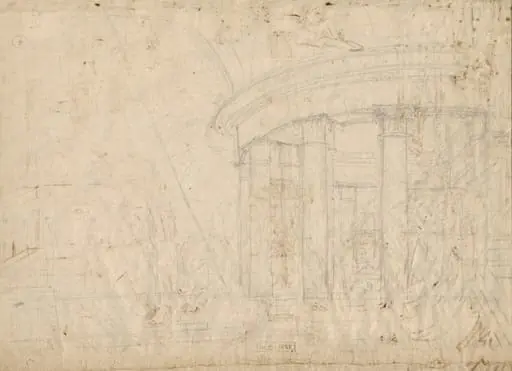 Architectural Fantasy on a Round Temple Enclosed with an Ambulatory (verso)