Artwork
Stage Design of Garden Pavilions
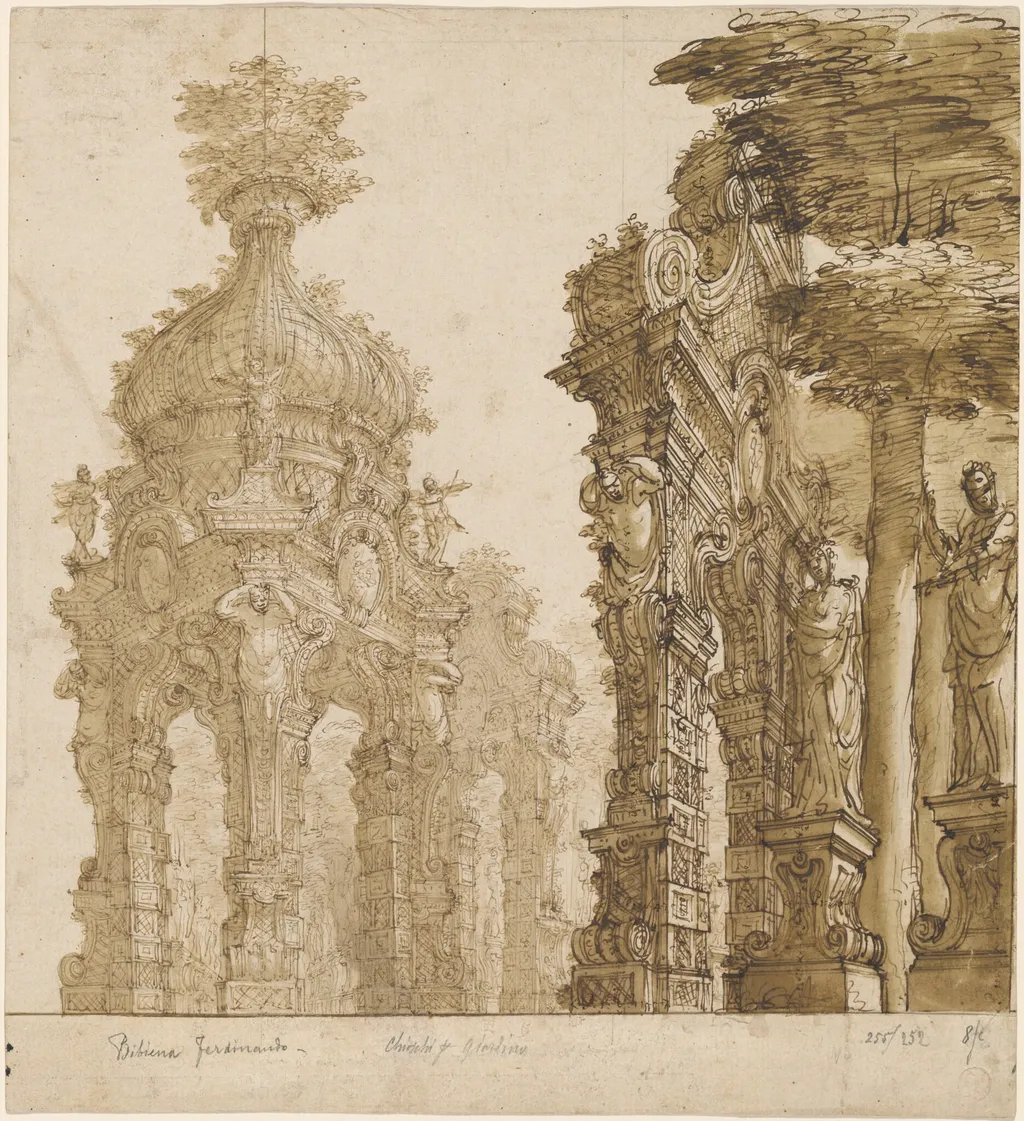
Stage Design of Garden Pavilions is an ink drawing by the Baroque artist Ferdinando Galli Bibiena. It dates from 1711 and is held in the collection of the National Gallery of Art.
About this work
Overview
The composition conveys architectural intent through subtle shading and suggestive strokes, typical of theatrical design practices of the era.
Created around 1711 by Ferdinando Galli Bibiena, this drawing is a preparatory study for a garden pavilion, executed in pen and brown ink with layered washes over graphite. The work appears on cream laid paper with a warm, aged tone, its delicate lines suggesting a functional sketch rather than a finished piece. The composition conveys architectural intent through subtle shading and suggestive strokes, typical of theatrical design practices of the era.
Subject & Meaning
The drawing depicts two slender, ornately carved columns flanking a central pedestal supporting a small statue, all framed by a curved, decorative canopy. The arrangement suggests a ceremonial or contemplative space, likely intended for a noble garden. The leaning columns and elevated roof create an illusion of grandeur, reinforcing the Baroque preference for dramatic spatial effects, even in private outdoor settings.
Technique & Style
Bibiena employed quick, fluid ink lines and graded brown washes to suggest depth, texture, and materiality without detailed rendering. The use of multiple wash tones adds subtle dimension to the columns and canopy, while the graphite underdrawing guides the composition. The soft, faded appearance results from the paper’s aging and the ink’s interaction with the laid surface, enhancing the sketch’s atmospheric quality.
History & Provenance
This drawing originates from the Bibiena family’s workshop, known for designing elaborate stage and garden settings for European courts. Likely commissioned for a private estate, it reflects the family’s specialization in integrating architectural illusion with landscape. Its survival suggests it was valued as a working document, possibly among other designs preserved in aristocratic collections or institutional archives.
Context
In early 18th-century Italy, garden pavilions served as venues for leisure and display, often designed with theatrical flair. Bibiena’s work emerged within a tradition where architecture, sculpture, and performance converged. His designs bridged the gap between stagecraft and landscape, responding to aristocratic tastes for controlled, picturesque environments that evoked myth and majesty.
Legacy
Bibiena’s preparatory drawings influenced later generations of architectural draftsmen and scenic designers, establishing a visual language for spatial illusion. Though not widely exhibited in his lifetime, such works became reference points for the integration of theatrical principles into architectural planning. His approach to suggestion over detail remains a hallmark of Baroque design methodology.
Artist & collection


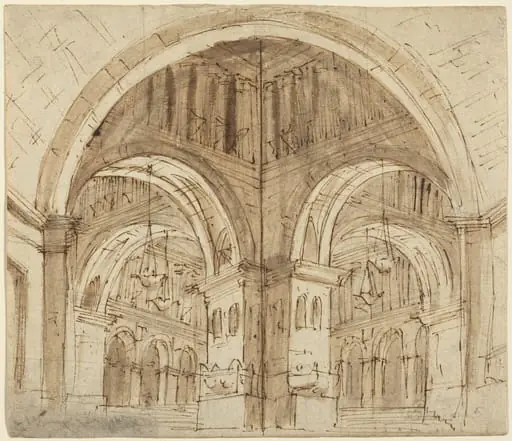 Design for a Vaulted Hall
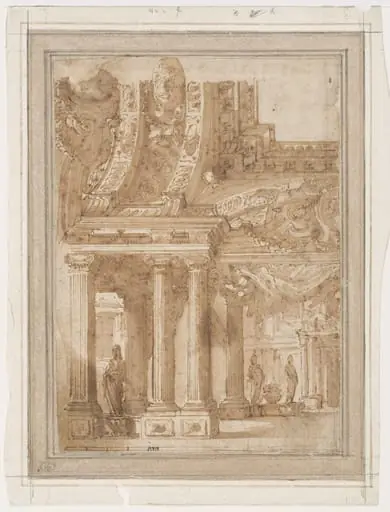 Untitled
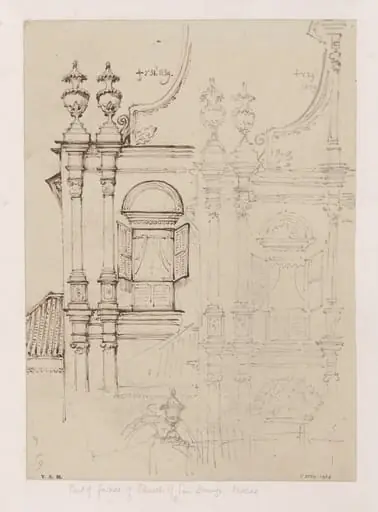 The church of S. Domingos, Macau
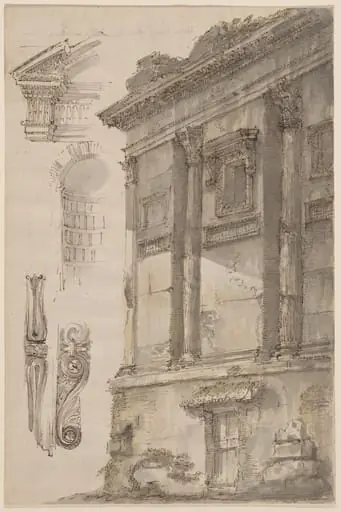 Studies of the Cenotaph of Annia Regilla
 An Elaborate Staircase in a Palace
![Palatial Mantelpiece with Mercury and Hope [recto], by Austrian 16th Century](https://artifactworldgallery.com/img/austrian-16th-century--palatial-mantelpiece-with-mercury-and-hope-recto--35fcb50c5d0e2044-w320.webp) Palatial Mantelpiece with Mercury and Hope [recto]
Palatial Mantelpiece with Mercury and Hope [recto] Fantasy of an Ancient Bath
 Study for "The Seconda Macchina for the Chinea of 1754: An Allegory of Waterworks"
 Fantasy of Magnificent Courtyards and Loggie with a Monumental Staircase