Artwork
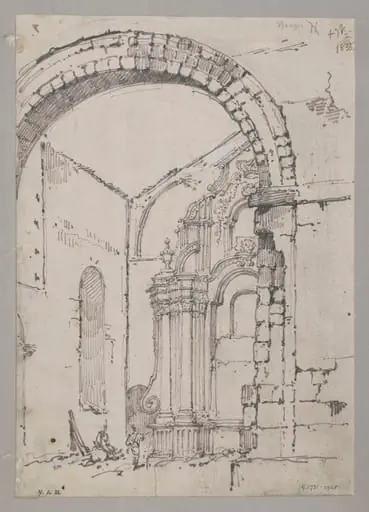
Design for a Vaulted Hall
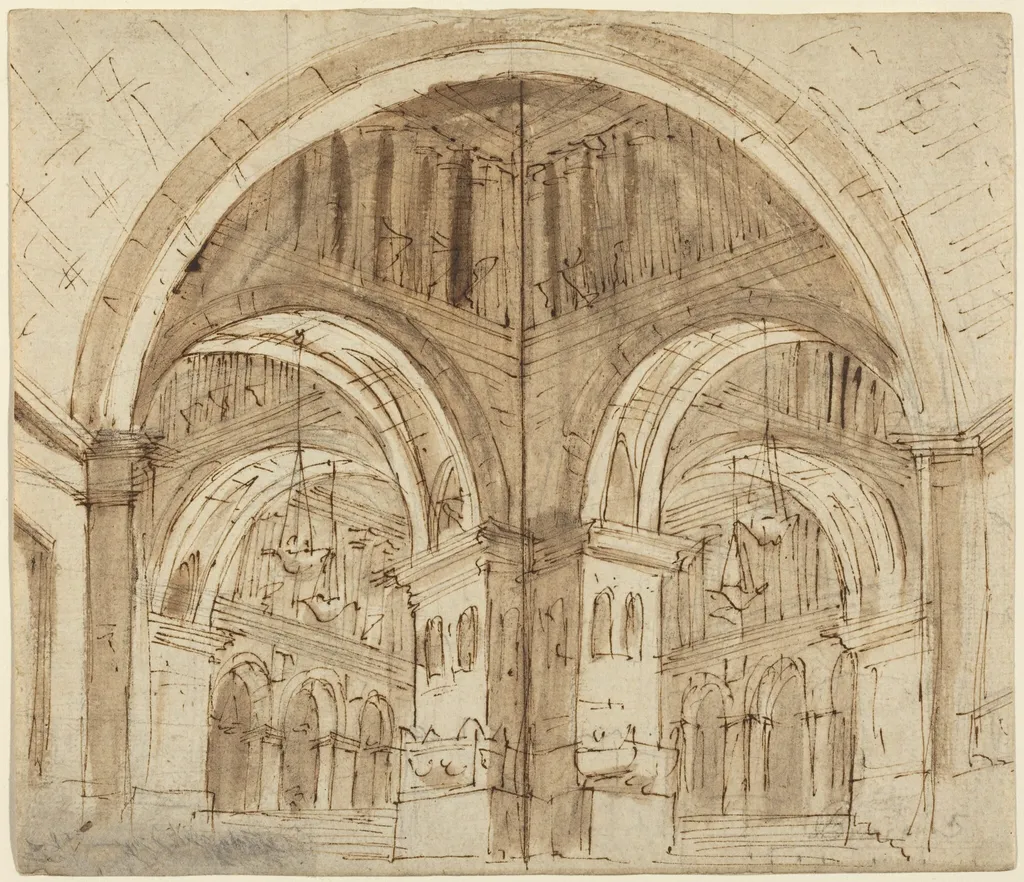
Design for a Vaulted Hall is a chalk drawing by the Romanticist artist Lorenzo Sacchetti. It dates from 1796 and is held in the collection of the National Gallery of Art.
About this work
Overview
Executed in pen and brown ink with brown wash over black chalk on laid paper, it captures the structural rhythm of a vaulted hall.
Created in 1796 by Lorenzo Sacchetti, this drawing is a preparatory study for an architectural interior. Executed in pen and brown ink with brown wash over black chalk on laid paper, it captures the structural rhythm of a vaulted hall. The composition emphasizes spatial depth through layered arches and subtle tonal gradations, suggesting its function as a design proposal rather than a finished work.
Subject & Meaning
The drawing depicts a grand interior composed of three monumental stone arches, each containing smaller openings that may represent doorways or windows. Tiny figures scattered within the space imply human scale and activity, grounding the architecture in use. The focus on light and shadow suggests an interest in how form interacts with atmosphere, hinting at the intended function of the space as a ceremonial or public chamber.
Technique & Style
Sacchetti employed delicate pen lines to define architectural contours, reinforced by soft brown washes that model volume and depth. Black chalk underdrawing provides structural clarity, while the textured laid paper enhances the tactile quality of the surfaces. The shading is built through controlled hatching and tonal layers, not bold strokes, reflecting a methodical, analytical approach to architectural visualization.
History & Provenance
The drawing dates to 1796, a period when Sacchetti was active in Rome, engaging with classical revival trends. Its survival as a standalone sheet suggests it was valued as a working document, possibly retained by the artist or a patron. No definitive record of its commission or intended construction exists, leaving its architectural purpose speculative but grounded in contemporary design practices.
Context
In late 18th-century Italy, architectural drawings like this were essential tools for translating classical ideals into new structures. Sacchetti’s work aligns with the Neoclassical movement’s emphasis on proportion, symmetry, and archaeological accuracy. The sketch’s focus on light and spatial hierarchy reflects broader scholarly interests in Roman vaulting systems, particularly those studied at sites like the Baths of Caracalla.
Legacy
Though no known building was constructed from this design, the drawing exemplifies the role of preparatory sketches in architectural practice. It preserves the intellectual process behind Neoclassical design—where line, shadow, and proportion were tested on paper before stone. As such, it remains a valuable record of how architects visualized monumental space in an era of revival and reform.
Artist & collection


![Designs for Palatial Arches [verso], by Lorenzo Sacchetti](https://artifactworldgallery.com/img/lorenzo-sacchetti--designs-for-palatial-arches-verso--07f8f4d11d000c62-w320.webp)
![Designs for Palatial Staircases [recto], by Lorenzo Sacchetti](https://artifactworldgallery.com/img/lorenzo-sacchetti--designs-for-palatial-staircases-recto--e49f5f8955b9d67b-w320.webp)
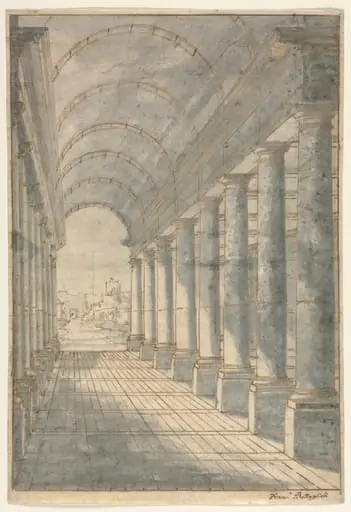 Barrel-Vaulted Arcade Rendered in Perspective
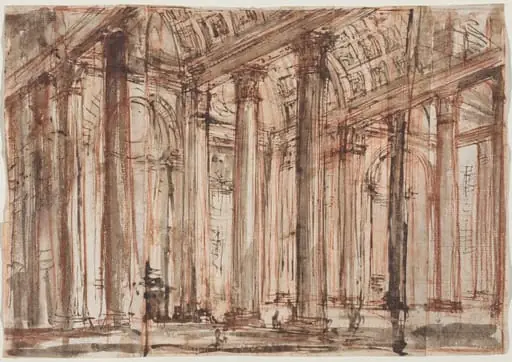 The Portico of the Pantheon
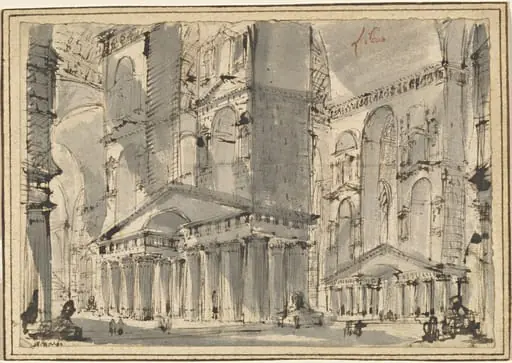 Fantasy of an Ancient Bath
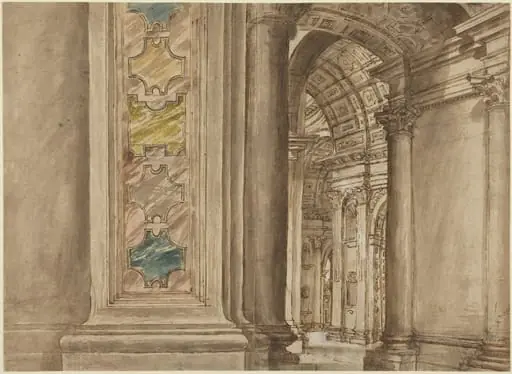 The Interior of Saint Peter's, Rome
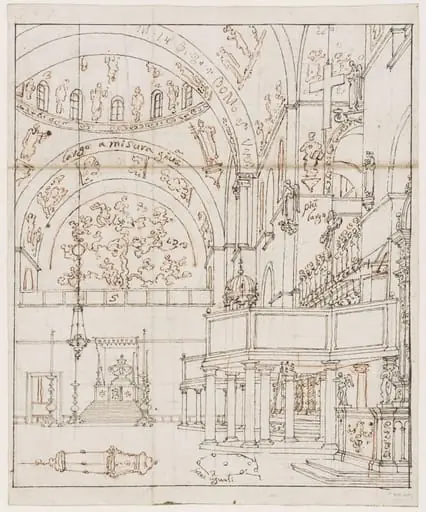 View of the interior of St. Mark's, Venice
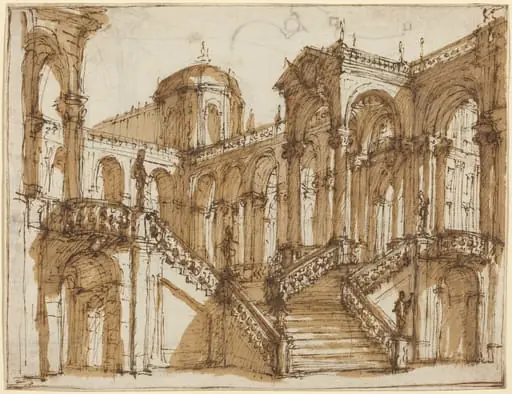 Stage Design
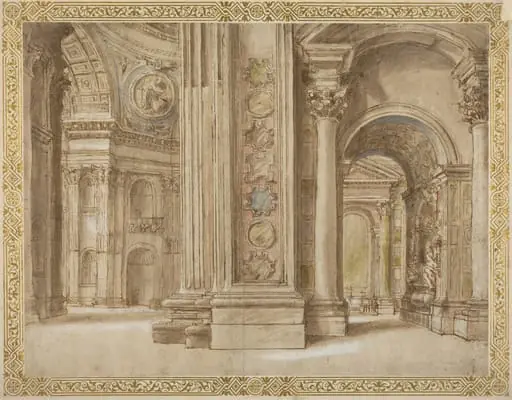 The Interior of Saint Peter's, Rome
 Large archway in the centre nave of St. Paul's Church, Macao, after it was burnt (December 1835)