Artwork
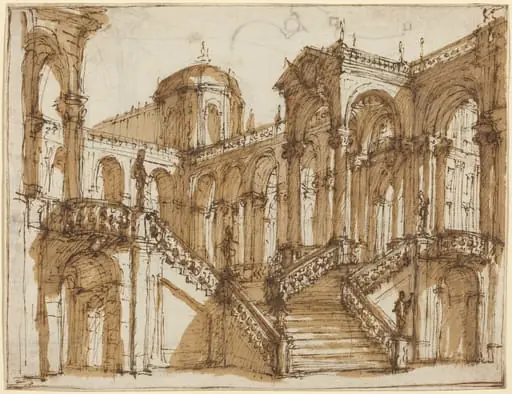
Fantasy of Magnificent Courtyards and Loggie with a Monumental Staircase
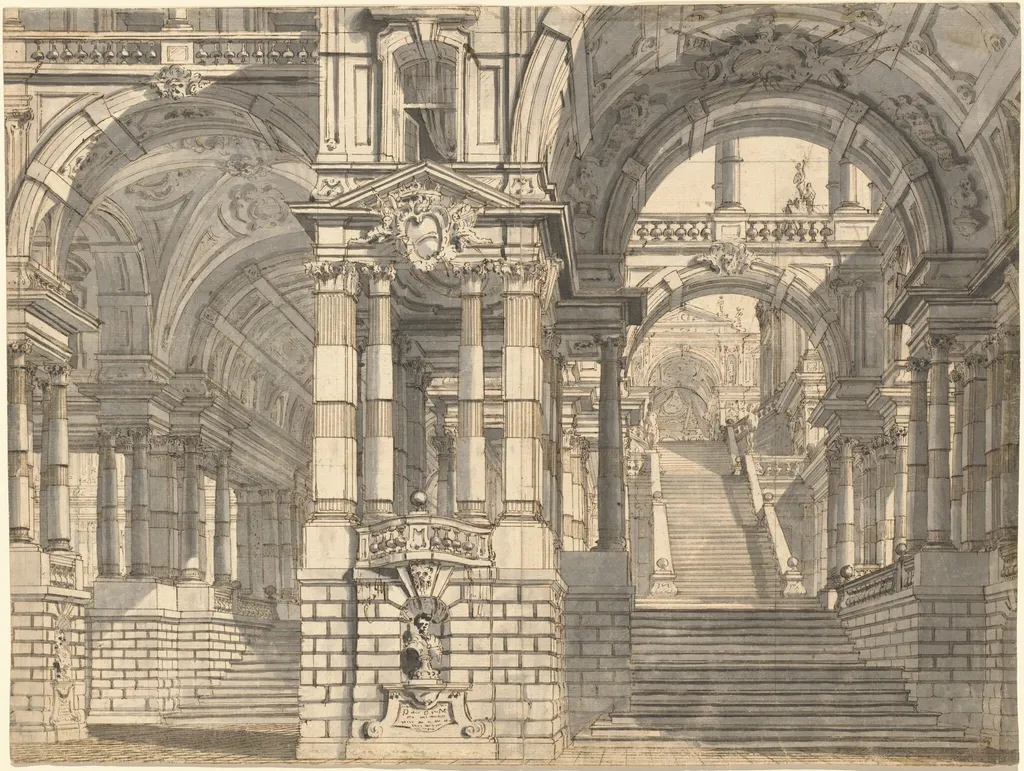
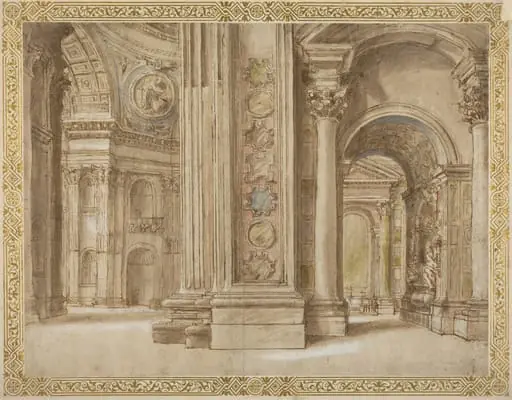
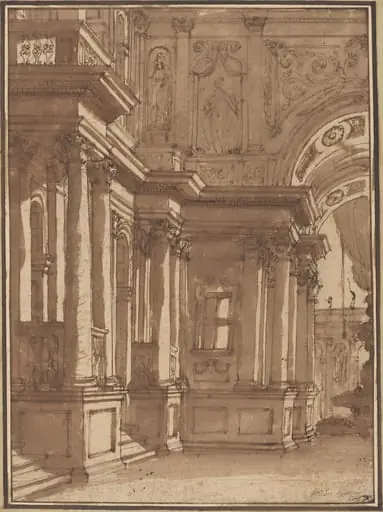
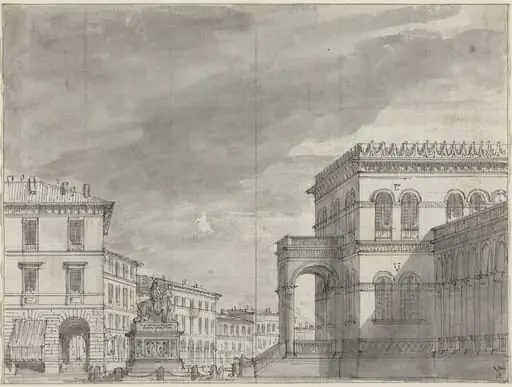
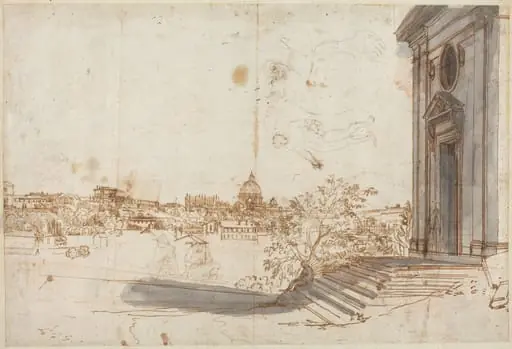
Fantasy of Magnificent Courtyards and Loggie with a Monumental Staircase is an ink drawing by the Romanticist artist Pietro Gonzaga. It dates from 1774 and is held in the collection of the National Gallery of Art.
About this work
Overview
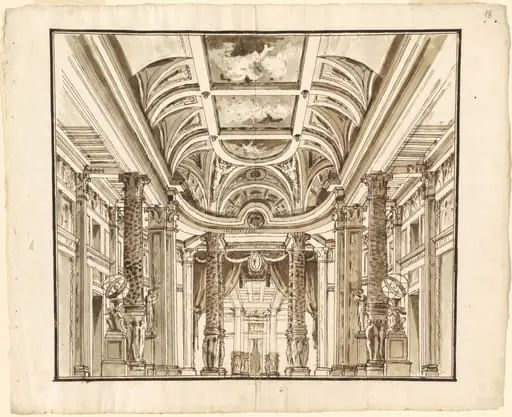
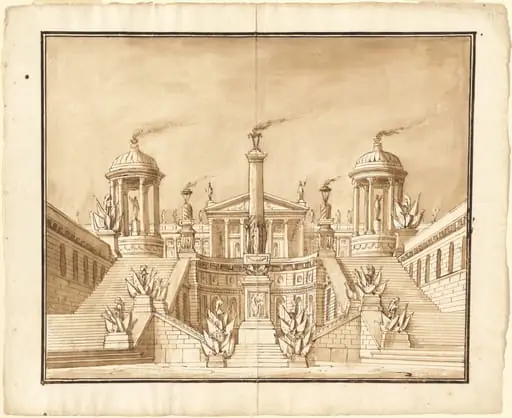
Created around 1774, Pietro Gonzaga’s drawing entitled *Fantasy of Magnificent Courtyards and Loggia with a Monumental Staircase* is executed in pen and brown ink, enhanced with gray and black washes over a graphite underdrawing. The work consists of two joined sheets of laid paper, forming a single expansive architectural fantasy rendered in meticulous detail.
Subject & Meaning
The composition imagines an opulent courtyard framed by towering arches and fluted columns of smooth stone. A broad, ascending staircase leads to a balcony adorned with elaborate railings, while a central statue occupies the courtyard’s focal point. The scene blends architectural precision with imaginative grandeur, reflecting 18th‑century fascination with idealized, monumental spaces.
Technique & Style
The brown ink base, layered with gray and black washes, creates a nuanced tonal range that suggests the weight of stone and the play of light.
Gonzaga employed fine pen lines to delineate structural elements, using cross‑hatching and subtle washes to model depth and surface texture. The brown ink base, layered with gray and black washes, creates a nuanced tonal range that suggests the weight of stone and the play of light. This approach aligns with the early 1770s trend of integrating imaginative design with realistic architectural rendering.
History & Provenance
The drawing is attributed to Gonzaga, a noted Italian architect‑artist active in the late Baroque period. Though specific ownership records are scarce, the work is dated circa 1774 based on stylistic analysis and material examination. It remains an example of Gonzaga’s practice of producing speculative architectural studies for patrons and publications.
Context
During the mid‑18th century, European artists and architects frequently produced fanciful studies of grand interiors and exteriors, often for inclusion in pattern books or as design proposals. Gonzaga’s drawing reflects this cultural milieu, where the synthesis of real architectural principles and imaginative embellishment served both educational and aesthetic purposes.
Artist & collection