Artwork
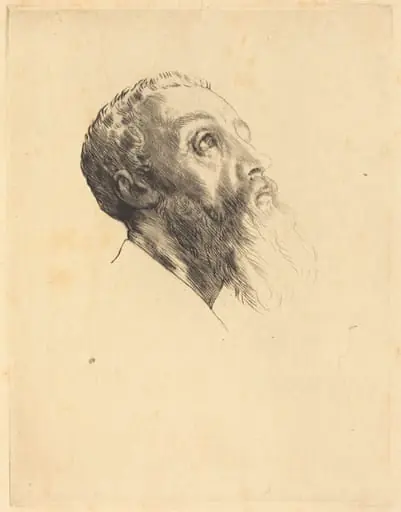
Bearded Man Looking Up
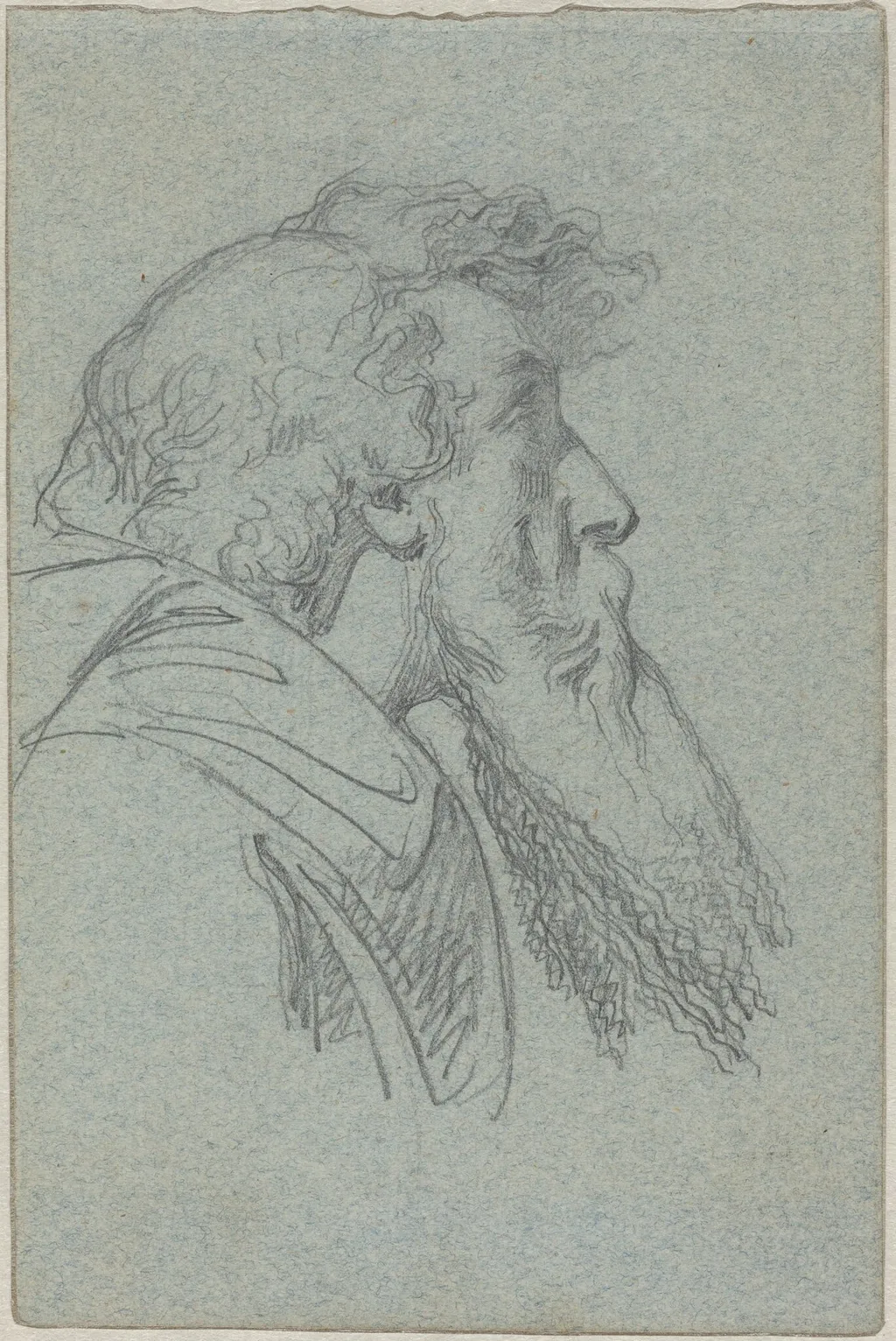
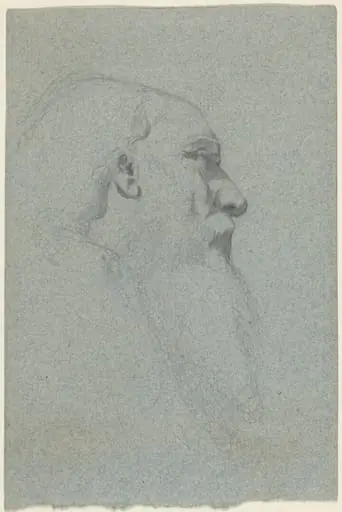
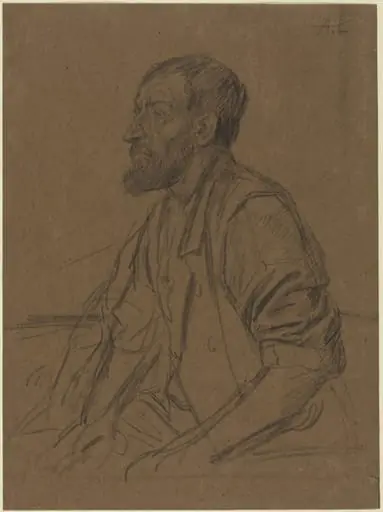
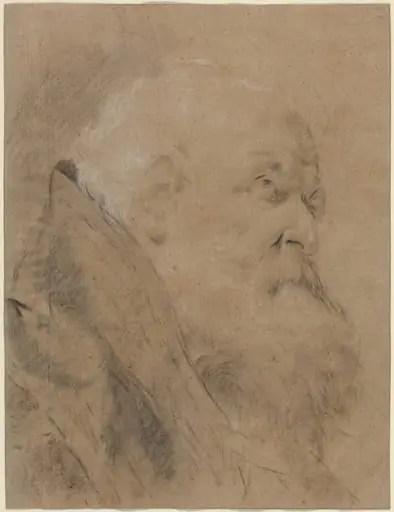
Bearded Man Looking Up is a graphite drawing by the Romanticist artist Alexandre Bida. It dates from 1859 and is held in the collection of the National Gallery of Art.
About this work
Overview
The composition is intimate and restrained, focusing entirely on the figure’s posture and expression without contextual elements.
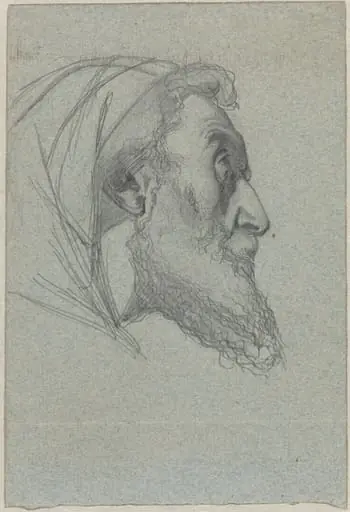
This graphite drawing on blue wove paper, dated 1859, is attributed to Alexandre Bida. It depicts a solitary male figure, bearded and cloaked, with arms raised and head tilted upward. The blue paper provides a muted tonal base, enhancing the contrast of the graphite strokes. The composition is intimate and restrained, focusing entirely on the figure’s posture and expression without contextual elements.
Subject & Meaning
The figure, rendered with quiet intensity, appears absorbed in a moment of inward or upward reflection. The raised arms and upward gaze suggest reverence, supplication, or contemplation of something unseen. The absence of a clear narrative or setting invites interpretation, aligning the work with Romantic-era interests in emotion, solitude, and the sublime. The beard and draped cloak evoke timeless or archetypal qualities rather than a specific identity.
Technique & Style
Bida employed fine, layered graphite strokes to model form and suggest texture, particularly in the beard and folds of the cloak. The blue paper’s tone subtly informs the shadows, reducing the need for heavy darks. Delicate hatching and soft smudging create volume without harsh lines, emphasizing atmosphere over detail. The technique reflects academic training but favors emotional resonance over precision.
History & Provenance
The drawing was executed in 1859 during Bida’s active period in France, though its early ownership history is undocumented. It entered institutional collection at a later date, likely through acquisition or bequest. No exhibition records or contemporary references to this specific work are widely known, suggesting it was a private study rather than a public commission.
Context
Created during the height of Romanticism in France, the drawing aligns with contemporaneous explorations of human emotion and spiritual yearning. Artists like Delacroix and Géricault similarly emphasized expressive gesture and psychological depth. Bida, though less prominent, engaged with these themes through figure studies, often drawing from historical or biblical archetypes to evoke universal states of being.
Legacy
This drawing remains a quiet example of 19th-century academic figure study, valued for its emotional restraint and technical sensitivity. While not widely reproduced or exhibited, it contributes to understanding how lesser-known artists interpreted Romantic ideals through intimate, non-narrative works. Its preservation underscores the continued interest in personal, contemplative drawings from the period.
Artist & collection