Artwork
Mother and Child
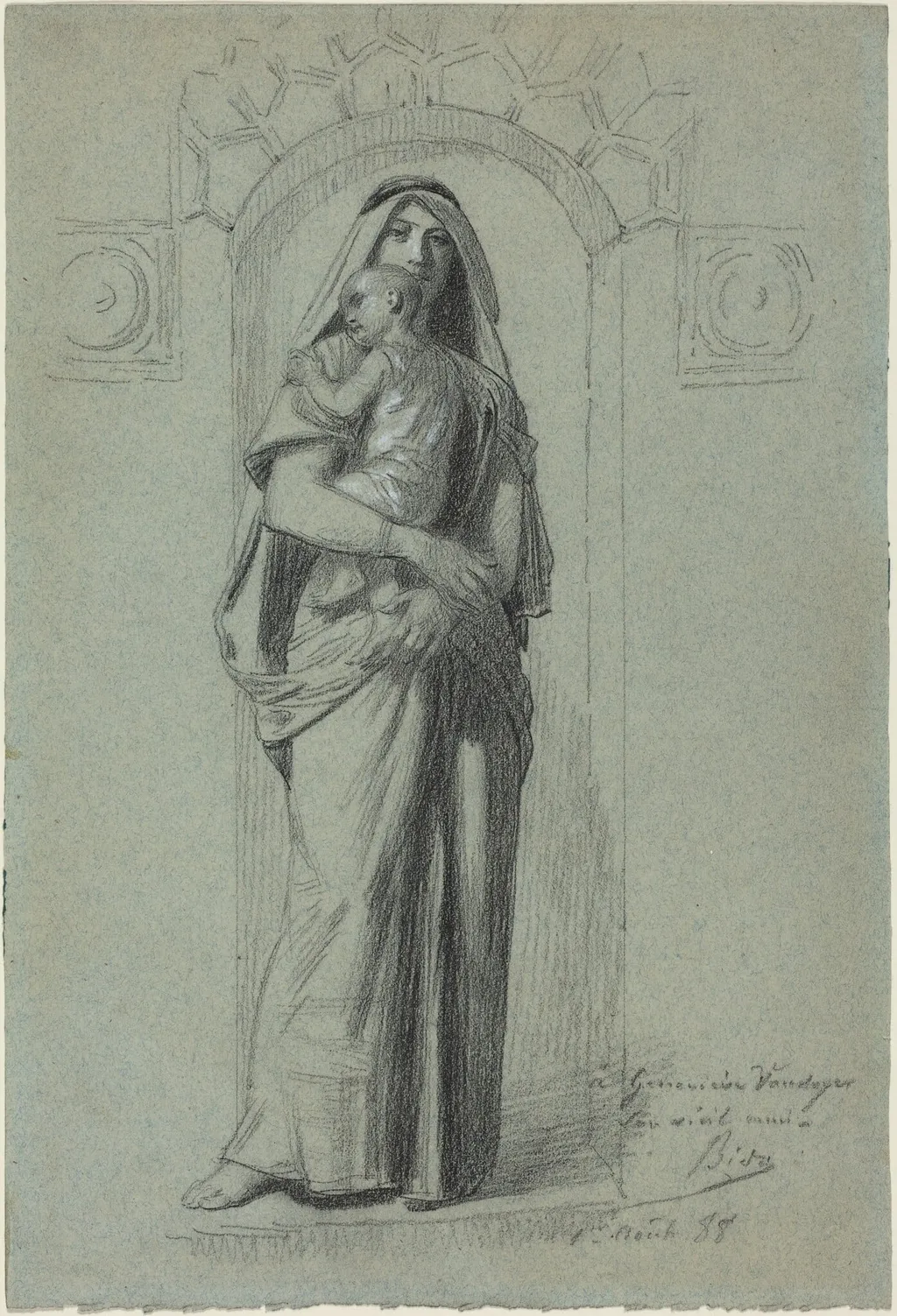
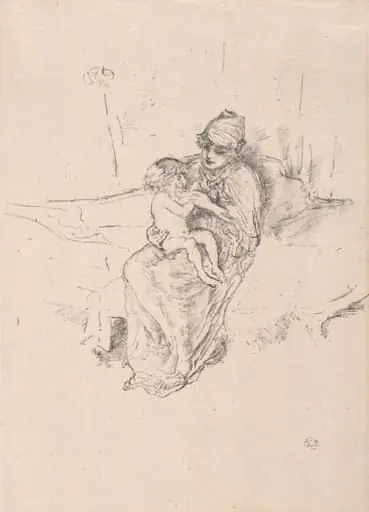
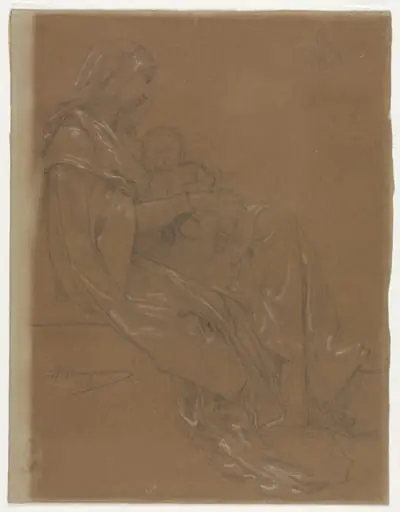
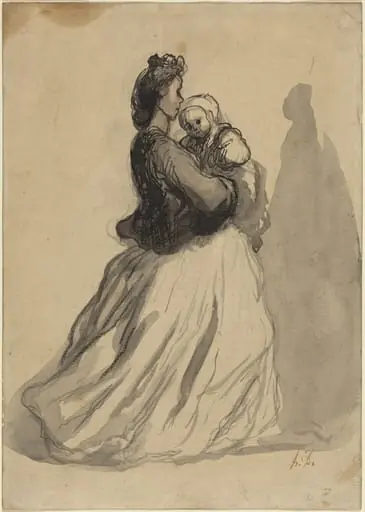
Mother and Child is a chalk drawing by the Impressionist artist Alexandre Bida. It dates from 1888 and is held in the collection of the National Gallery of Art.
About this work
Overview
The choice of blue paper enhances the contrast of the dark strokes, while the white accents suggest light catching fabric, giving the scene a subtle luminosity.
Created in 1888 by Alexandre Bida, this drawing is a delicate study in monochrome, executed in black chalk and white highlights on blue wove paper. The composition captures a mother and infant in a quiet, intimate moment, rendered with minimal detail and fluid lines. The choice of blue paper enhances the contrast of the dark strokes, while the white accents suggest light catching fabric, giving the scene a subtle luminosity.
Subject & Meaning
The figures—a woman cradling her child—are depicted without narrative context, focusing instead on the tenderness of their physical connection. The absence of facial detail and the simplified setting shift emphasis to the gesture of holding, evoking universal themes of care and quiet companionship. The loose drapery and unadorned background reinforce a sense of timelessness rather than specific identity or place.
Technique & Style
Bida employed rapid, light strokes of black chalk to define form, reserving white chalk for highlights along the folds of clothing and contours of the figures. The blue paper serves as a mid-tone ground, reducing the need for full shading. The sketch-like quality—unpolished and immediate—suggests an observational study, prioritizing movement and volume over finish, characteristic of preparatory or personal work.
History & Provenance
The drawing is dated to 1888, placing it within Bida’s later period, though little is documented about its early ownership. It has remained in private or institutional collections since its creation, with no record of public exhibition during the artist’s lifetime. Its survival as a standalone sheet indicates it was valued as a finished work rather than merely a study.
Context
In late 19th-century France, academic artists often produced figure studies as exercises in form and composition. Bida, trained in historical and orientalist themes, here turns to a domestic subject, reflecting a broader trend toward intimate, everyday scenes. The use of colored paper and chalk was common among draftsmen seeking tonal subtlety without full color media.
Legacy
Though Bida is primarily remembered for his large-scale historical paintings, this drawing offers insight into his sensitivity to gesture and texture. Its quiet economy of means has drawn attention among scholars studying the role of preparatory work in 19th-century drawing practices. It remains a quiet example of how modest media could convey emotional depth.
Artist & collection



 Mother and Child, No. 1
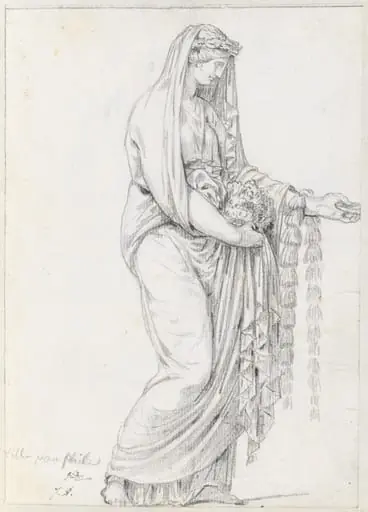 Woman with a Garland, from the Villa Pamphili
 The Virgin and Child
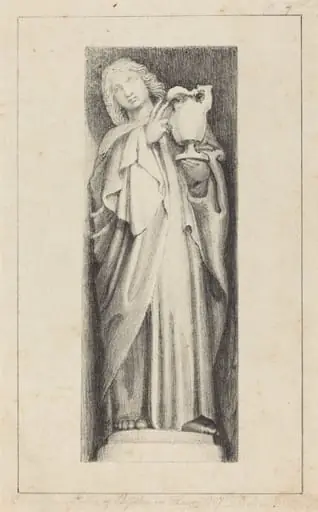 Saint John, from Henry the Seventh's Chapel Westminster Abbey
 Egyptian Mother
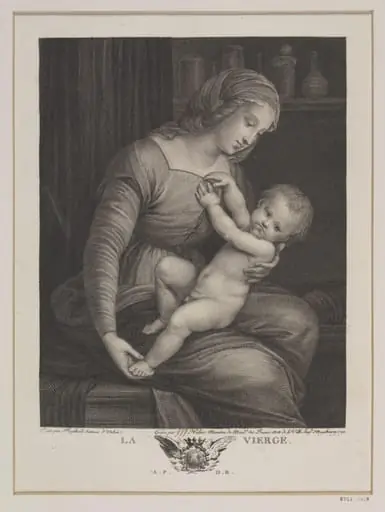 The Virgin Mary
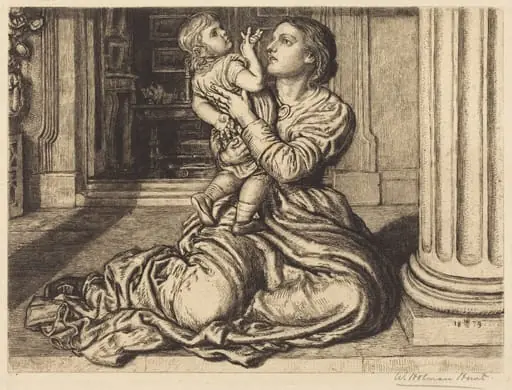 The Father's Leave-Taking
 The Virgin and Child
 Mother and Child, No. 1
 Madonna della seggiola
 Woman and Child with Distaff
 Mother and Baby