Artwork
A Turk
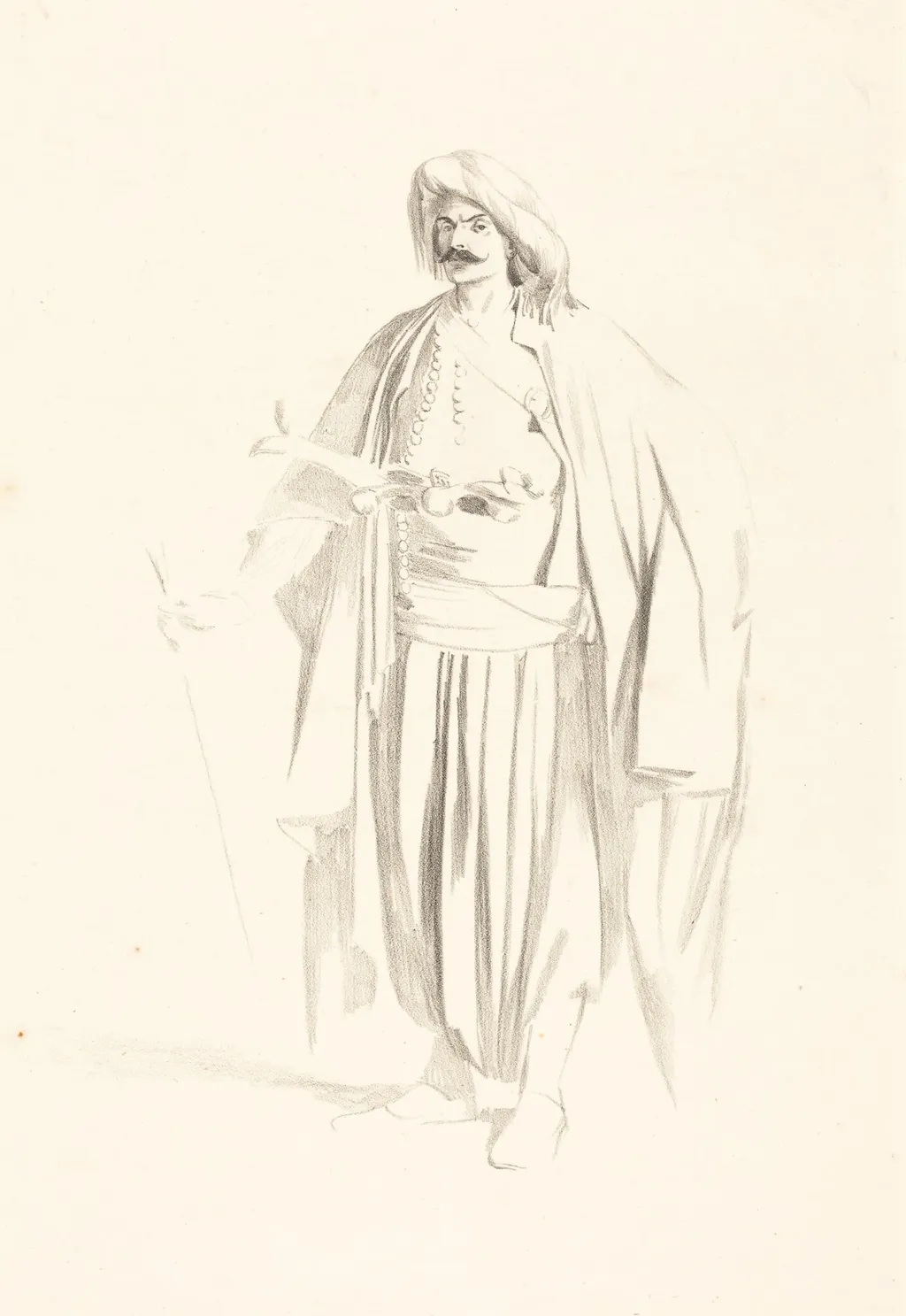
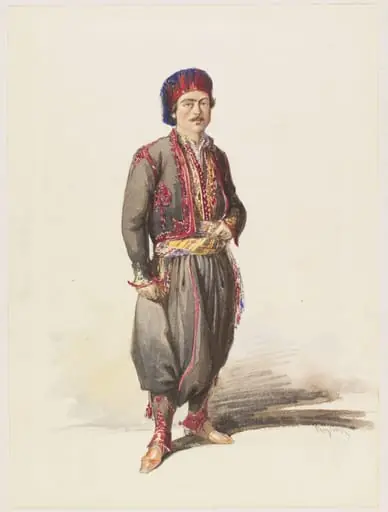
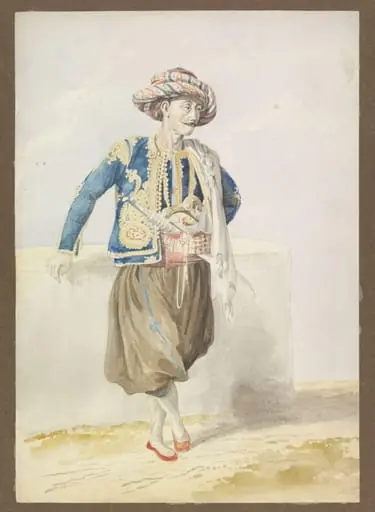
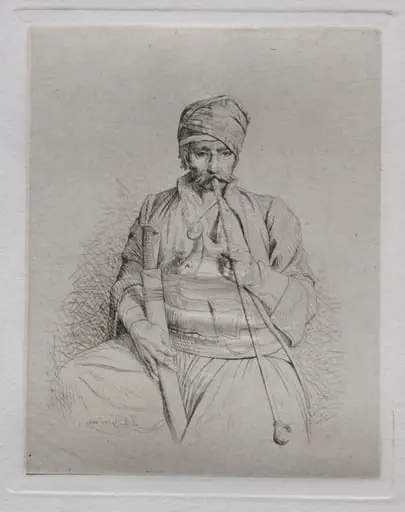
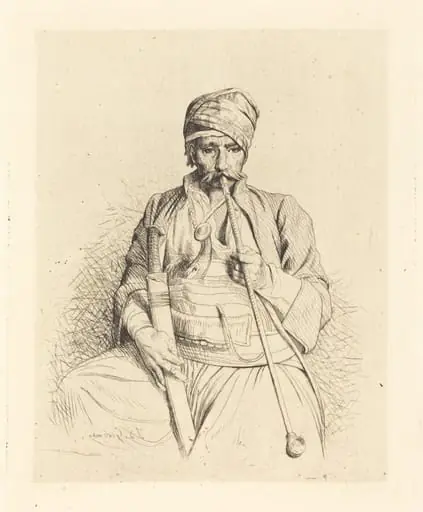
A Turk is an ink print by the Romanticist artist Alexandre Bida. It dates from 1801 and is held in the collection of the National Gallery of Art.
About this work
Overview
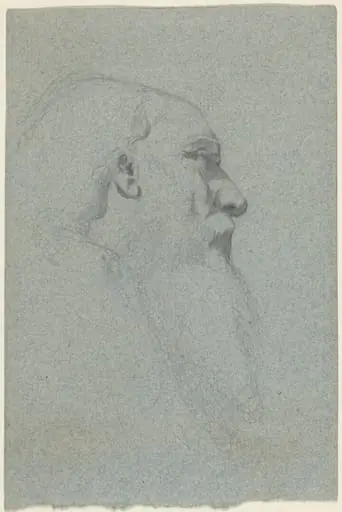
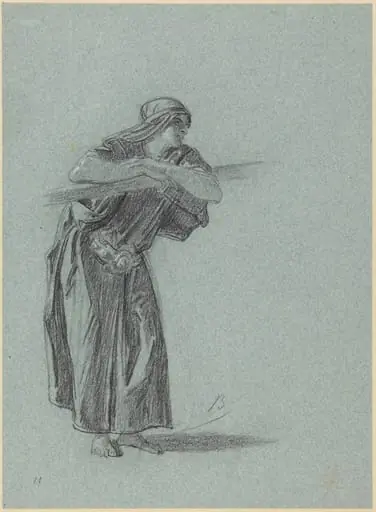
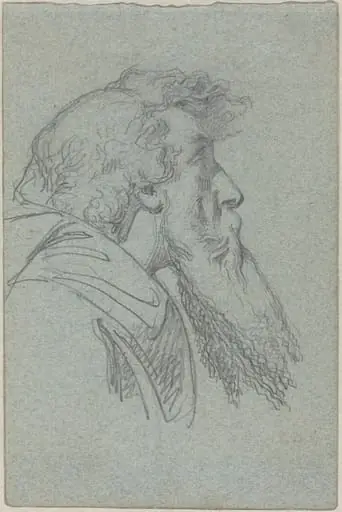
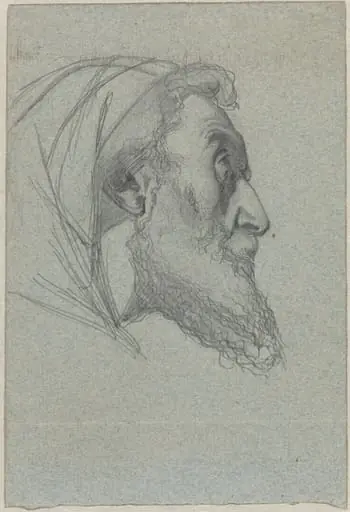
A Turk is a lithograph by Alexandre Bida, dated to 1801, executed on wove paper. The work presents a single male figure in profile, rendered with rapid, fluid lines that suggest observational sketching rather than polished finish. The medium—lithography—allowed the artist to draw directly onto a limestone surface, enabling a spontaneous quality that mirrors the immediacy of a draft.
Subject & Meaning
The portrayal reflects 19th-century European fascination with the Orient, though without overt narrative or symbolic detail.
The figure is depicted as a man wearing a turban and loose garments with a high collar, attire commonly associated with Ottoman or Eastern Mediterranean populations in European visual culture of the period. His left hand holds a small, indistinct object, possibly a vessel or tool, but its purpose remains ambiguous. The portrayal reflects 19th-century European fascination with the Orient, though without overt narrative or symbolic detail.
Technique & Style
Lithography enabled Bida to translate the spontaneity of a sketch directly onto stone, preserving the gestural energy of his hand. The lines are loose and uneven, emphasizing movement over precision. This approach contrasts with more formal engraved portraits of the time, favoring a sense of immediacy. The use of wove paper, smooth and absorbent, enhanced the tonal subtleties of the ink transfer.
History & Provenance
The work originates from Alexandre Bida’s early career, during which he produced numerous lithographic studies of Eastern figures, likely based on travelers’ accounts or studio models. No documented ownership history is widely recorded prior to its inclusion in institutional collections. Its survival suggests it was part of a broader series of ethnographic studies, though few related works are known today.
Context
In the early 1800s, European artists increasingly turned to lithography for its affordability and speed, especially in documenting foreign cultures. Bida’s depiction aligns with a trend of Orientalist imagery, often idealized or stereotyped, circulating in prints and illustrated books. While not politically charged, the image reflects prevailing visual conventions used to represent non-European subjects in Western art.
Legacy
Though not widely exhibited or reproduced, A Turk exemplifies the role of lithography in early 19th-century ethnographic illustration. It stands as a modest but representative artifact of how European artists engaged with perceived ‘otherness’ through direct, unembellished draftsmanship. Its value lies in its quiet documentation of a cultural moment, not in grand artistic ambition.
Artist & collection