Artwork
Presentation in the Temple
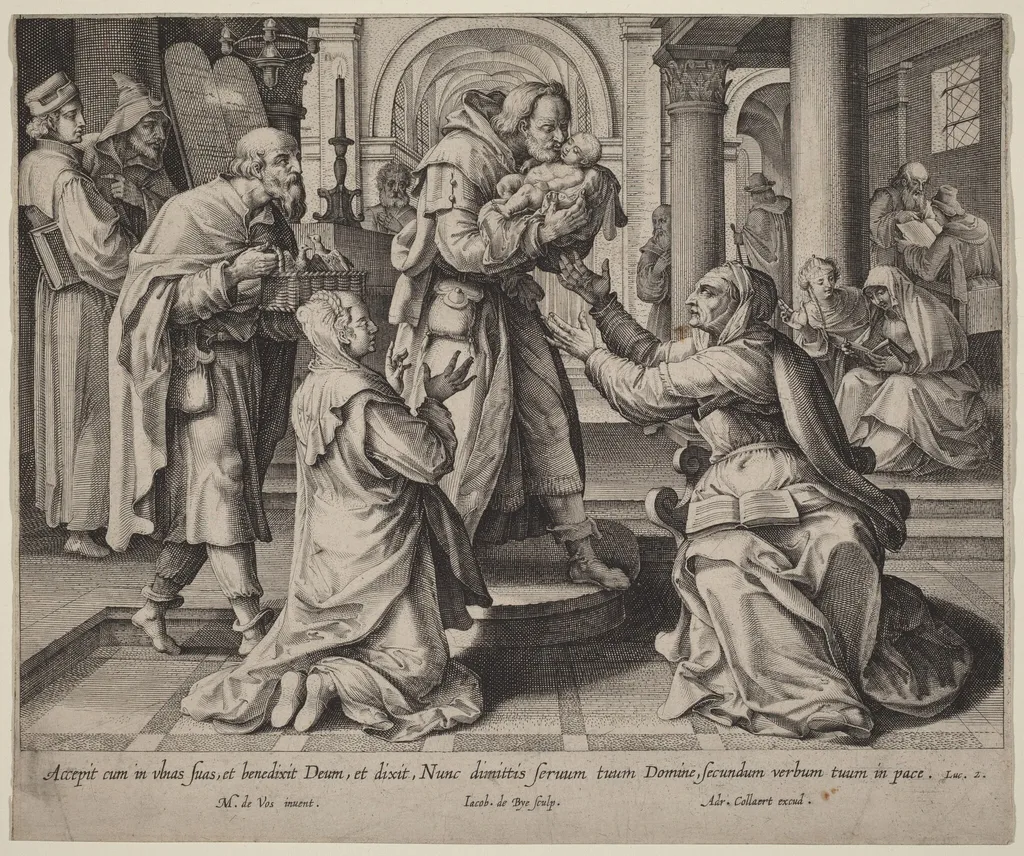
Presentation in the Temple is an ink print by the Renaissance artist Jacques de Bie. It dates from 1610 and is held in the collection of the National Gallery of Art.
About this work
Overview
Rendered in black and white on laid paper, the print captures a ceremonial gathering where figures in period dress surround a central mother holding an infant.
Jacques de Bie’s 1610 engraving titled Presentation in the Temple depicts a densely populated interior reminiscent of a church. Rendered in black and white on laid paper, the print captures a ceremonial gathering where figures in period dress surround a central mother holding an infant. Architectural elements such as towering columns and arched windows frame the scene, giving it a distinctly sacred ambience.
Subject & Meaning
The composition centers on a woman cradling a swaddled child, a motif traditionally associated with the biblical presentation of Jesus at the temple. A haloed male figure, likely representing a priest or priest‑like authority, stands nearby, while other participants kneel or hold lit candles and books, suggesting prayerful observance and the ritual’s theological significance.
Technique & Style
De Bie employed fine, closely spaced lines and cross‑hatching to model volume and convey depth, a hallmark of early‑17th‑century engraving. The meticulous shading renders the figures with a three‑dimensional presence, while the contrast between dark outlines and lighter areas enhances the spatial recession of the architectural backdrop.
History & Provenance
Created in 1610, the print was produced on laid paper, a common support for engravings of the period. While specific ownership records are scarce, the work is catalogued among de Bie’s surviving prints and appears in several collections of early modern religious imagery.
Context
The engraving reflects the broader European interest in biblical narratives during the Counter‑Reformation, when visual representations of sacred events were employed to reinforce devotional practice. Its architectural setting and formal arrangement echo contemporary altar pieces and liturgical scenes that emphasized communal participation in holy rites.
Legacy
Although not as widely reproduced as later prints, Presentation in the Temple illustrates the technical skill and narrative clarity characteristic of early modern engravers. It continues to serve as a reference point for scholars examining the interplay of religious iconography and printmaking techniques in the early 1600s.
Artist & collection


 The Meeting of the Apostles and the Women in the Upper Room
 Esther before Ahasuerus
 The People of Samaria Receive the Word of God
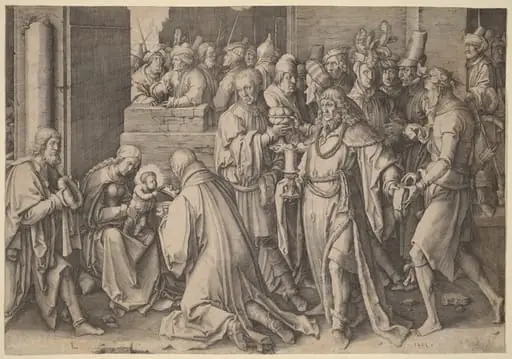 The Adoration of the Magi
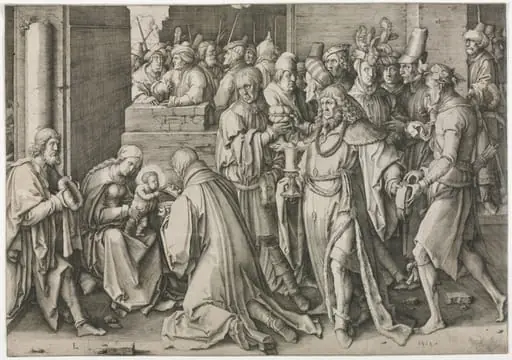 Adoration of the Magi
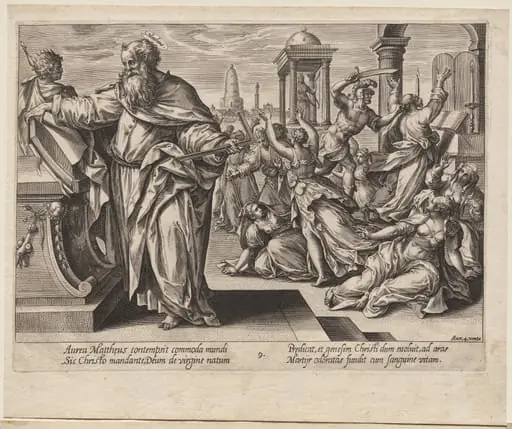 St. Matthew
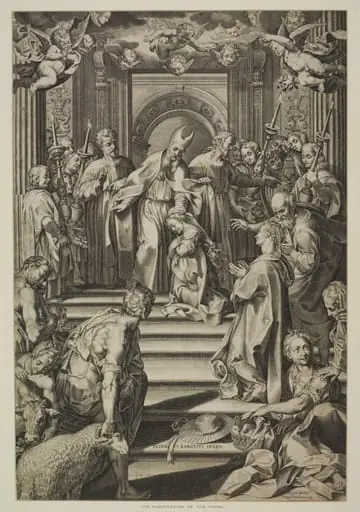 The Purification of the Virgin
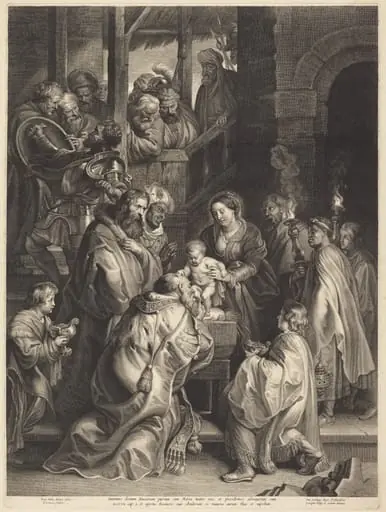 The Adoration of the Magi with Torches
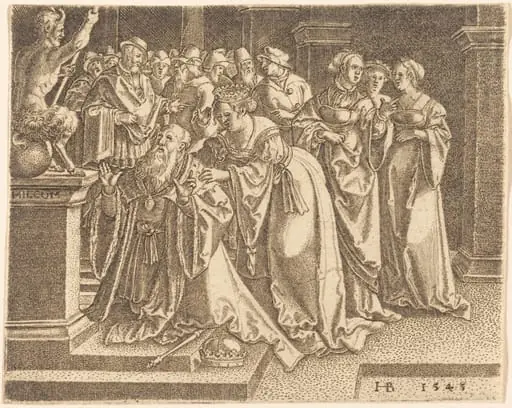 Solomon Worshipping Idols
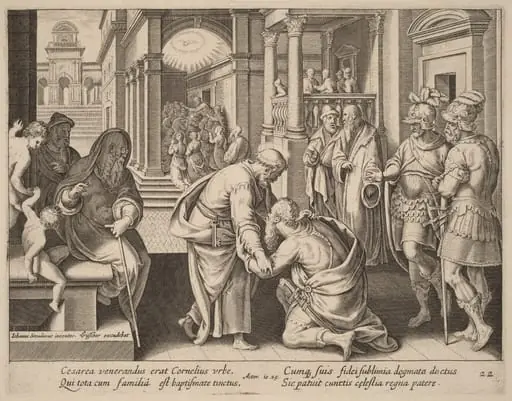 Cornelius Worshipping Saint Peter