Artwork
The People of Samaria Receive the Word of God
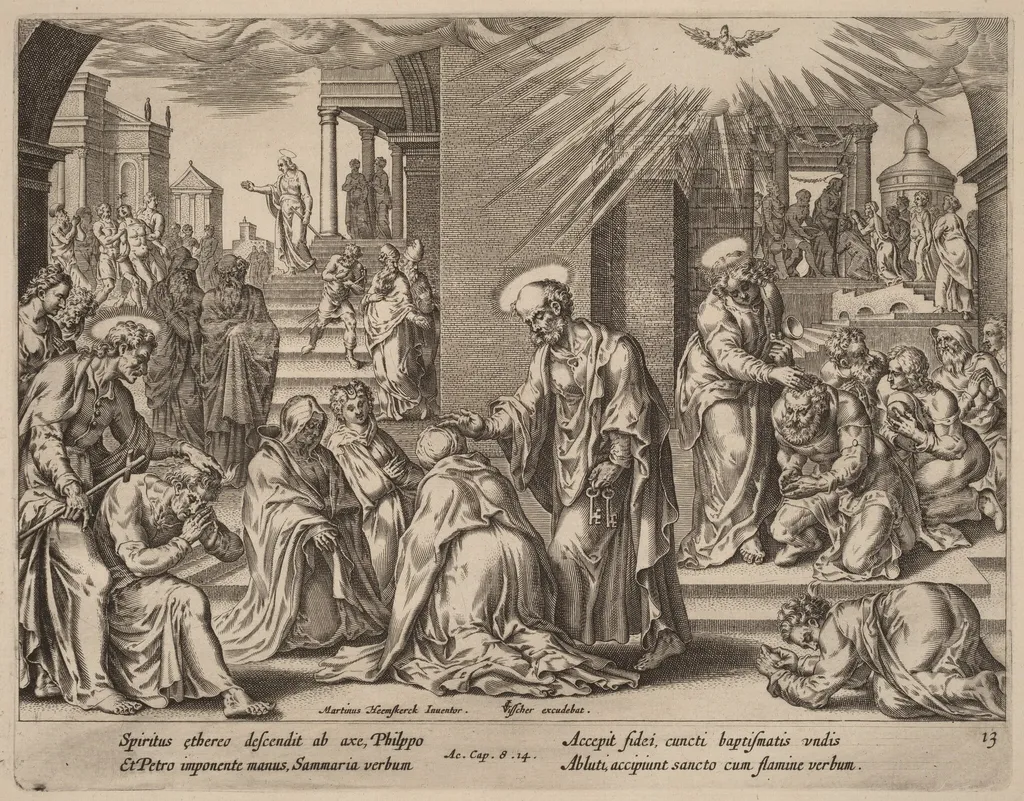
The People of Samaria Receive the Word of God is an ink print by the Renaissance artist Philip Galle. It dates from 1574 and is held in the collection of the National Gallery of Art.
About this work
Overview
Philip Galle’s 1574 engraving titled *The People of Samaria Receive the Word of God* presents a crowded gathering in an urban setting. Central to the composition is a figure holding a key, addressing a group of robed listeners beneath a sky where a solitary bird hovers. Architectural elements suggest a temple or church, framing the biblical moment with a sense of communal attentiveness.
Subject & Meaning
The print illustrates a New Testament episode in which Samaritans receive a messenger bearing divine instruction. The key in the speaker’s hand may symbolize authority or access to spiritual truth, while the bird overhead evokes the Holy Spirit. The attentive crowd, dressed in modest robes, underscores themes of revelation and collective reception of sacred teaching.
Technique & Style
Executed through intaglio engraving, Galle incised fine lines into a copper plate, allowing ink to fill the grooves for printing. Cross‑hatching creates tonal variation, imparting depth to figures and architecture. The meticulous line work renders textures of fabric and stone, while the chiaroscuro achieved by overlapping hatch marks enhances the three‑dimensional illusion within the flat medium.
History & Provenance
The work originates from the Dutch printmaker Philip Galle, a prolific publisher known for reproducing works of earlier masters. Produced in 1574, the engraving circulated among collectors and devotional audiences in the late sixteenth century, reflecting the period’s demand for accessible religious imagery. Surviving copies are documented in several European museum collections.
Context
Galle’s print belongs to a broader tradition of Reformation‑era visual culture that sought to disseminate biblical narratives beyond painted altarpieces. By rendering the Samarian scene in a reproducible format, the image could reach a wider public, aligning with contemporary efforts to promote scriptural literacy and personal engagement with the Word.
Artist & collection
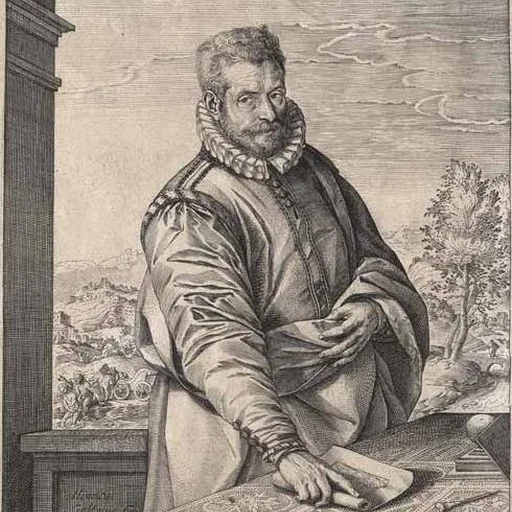
Artist
Philip (or Philips) Galle (1537 – March 1612) was a Dutch publisher, best known for publishing old master prints, which he also produced as designer and engraver. He is especially known for his reproductive engravings of paintings.

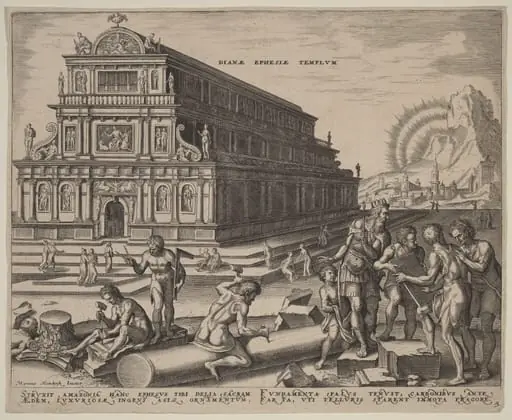 Dianae Ephesiae Templum (The Temple of Diana at Ephesus)
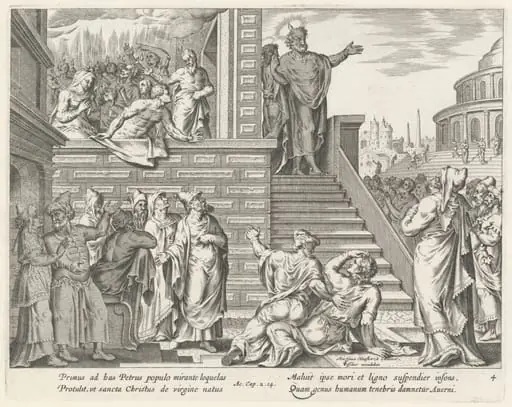 Saint Peter Speaks to the People about Christ
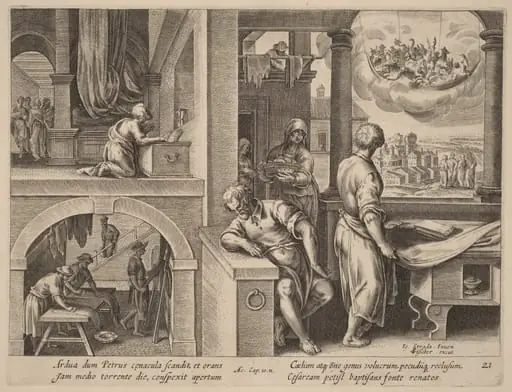 The Vision of Saint Peter
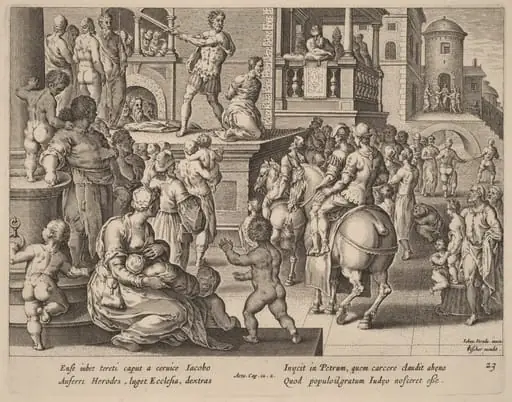 Beheading of Saint James
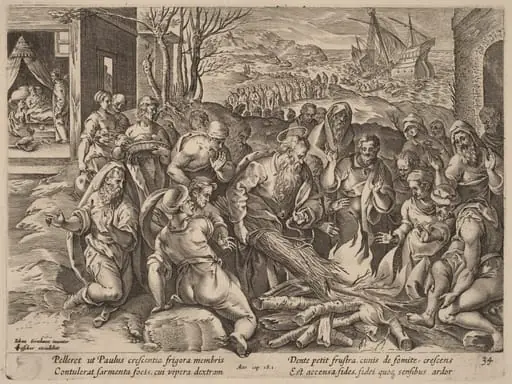 Saint Paul Shipwrecked on the Island of Melita
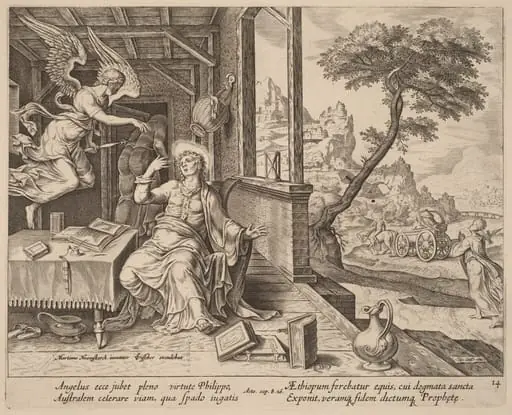 The Angel Orders Saint Philip to Accompany the Ethiopian Eunuch
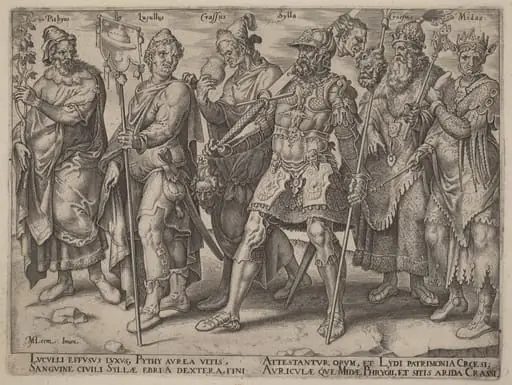 Notorious Examples of Wealth from Antiquity
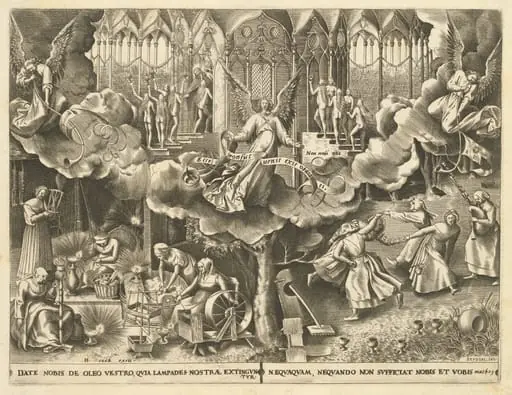 The Parable of the Wise and Foolish Virgins
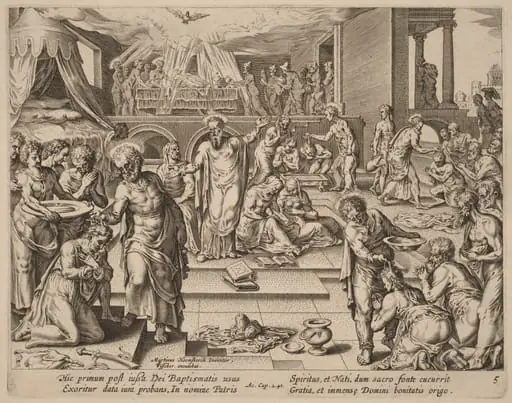 Many are Baptized
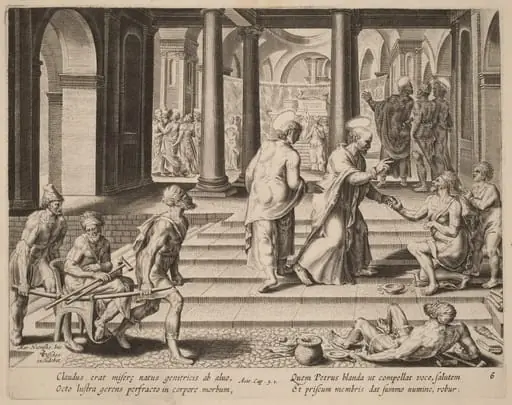 Saints Peter and John Heal a Cripple at the Gate of the Temple
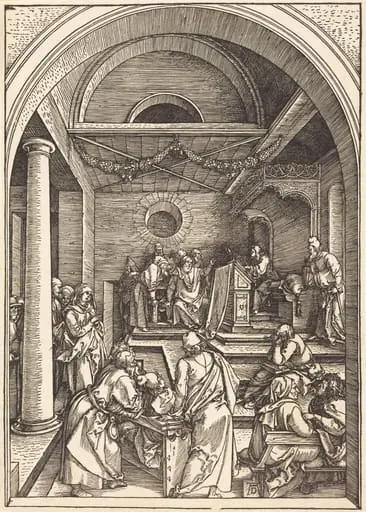 Christ among the Doctors
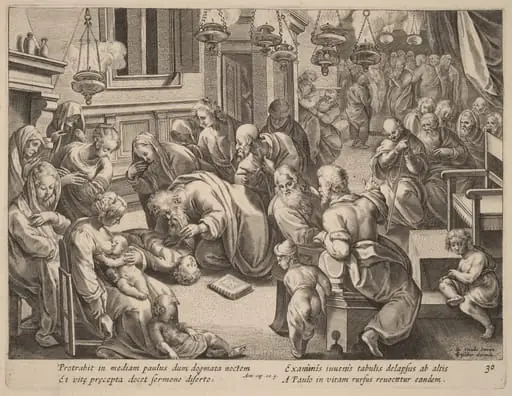 The Fall of Euthychus
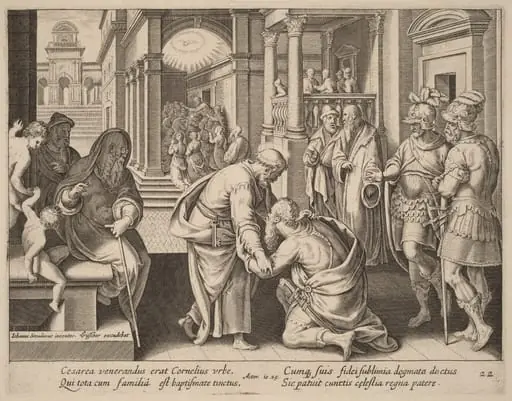 Cornelius Worshipping Saint Peter
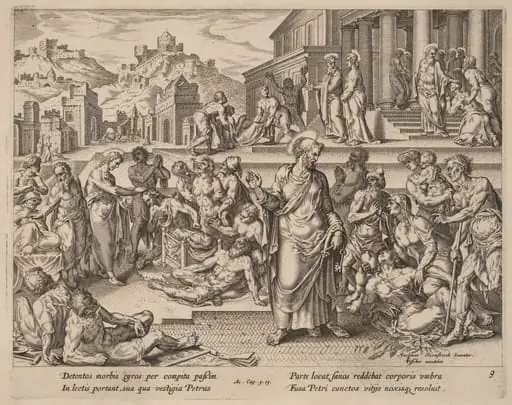 Saint Peter Healing the Sick with His Shadow
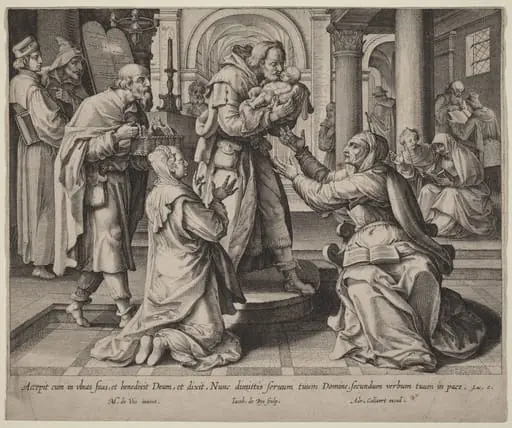 Presentation in the Temple
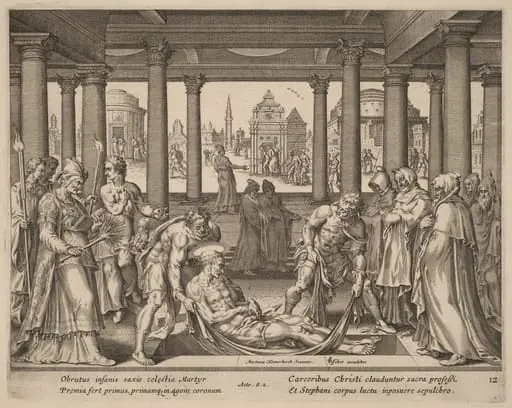 Devout Men Carrying Saint Stephen to His Burial
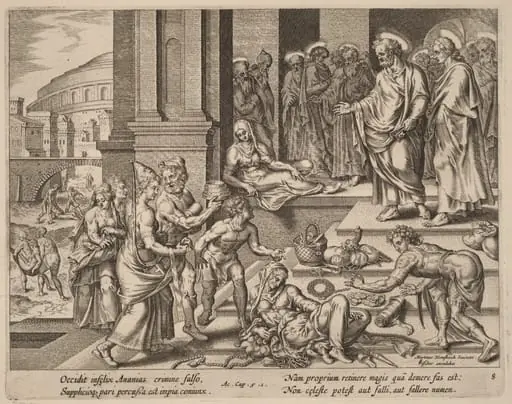 The Deaths of Ananias and Sapphira
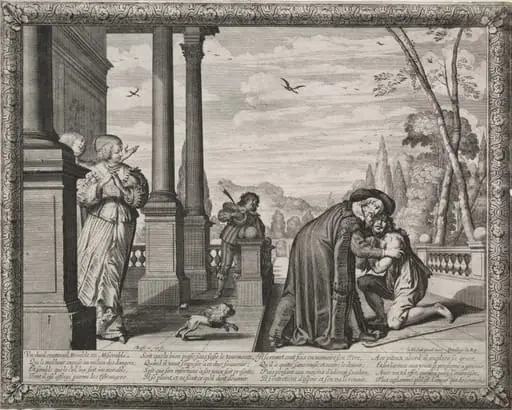 The Prodigal Son: The Return of the Prodigal
 Saint Paul Speaks to the Women of Philippi by a River
 Saint Paul Disputes the Sorcerer