Artwork
The Meeting of the Apostles and the Women in the Upper Room
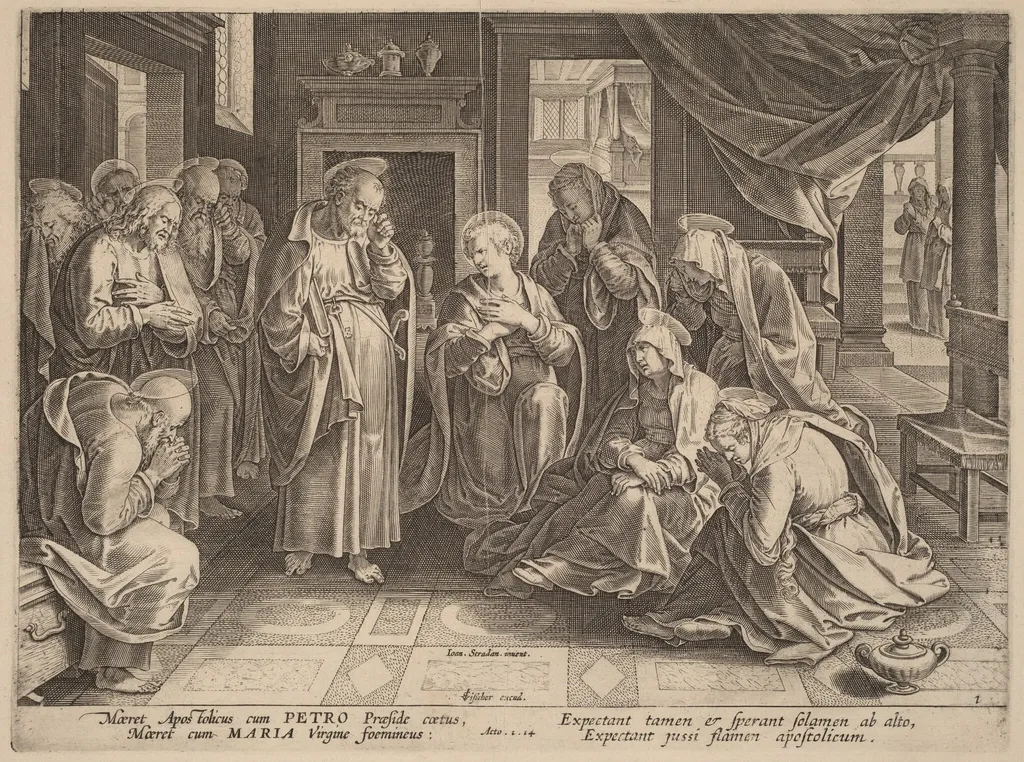
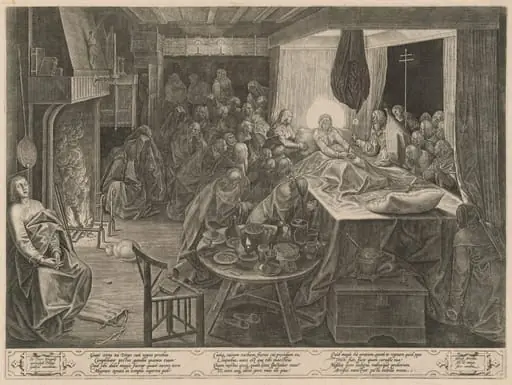
The Meeting of the Apostles and the Women in the Upper Room is an ink print by the Renaissance artist Philip Galle. It dates from 1574 and is held in the collection of the National Gallery of Art.
About this work
Overview
Philip Galle’s 1574 engraving depicts a gathering of apostles and women in an upper room, capturing a moment of communal devotion following Christ’s ascension.
Philip Galle’s 1574 engraving depicts a gathering of apostles and women in an upper room, capturing a moment of communal devotion following Christ’s ascension. As a Dutch printmaker and publisher, Galle specialized in reproducing compositions by other artists, making religious imagery accessible through the medium of print. This work exemplifies the Northern Renaissance tradition, where engraved plates served as vehicles for widespread religious dissemination across Europe.
Subject & Meaning
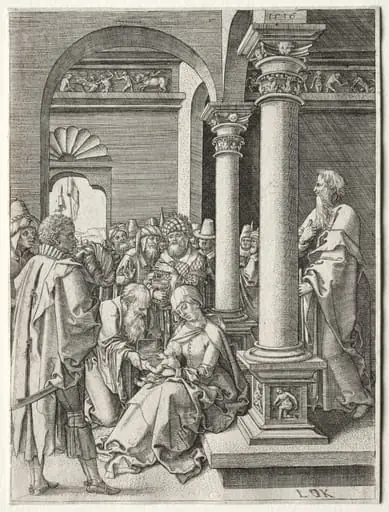
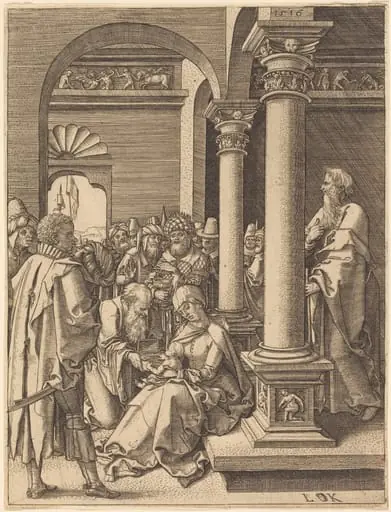
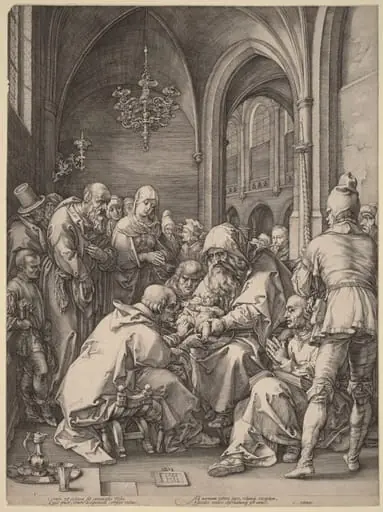
The scene illustrates the early Christian community gathered in prayer, likely referencing the period between the Ascension and Pentecost described in Acts. Figures are arranged with varied postures—some kneeling, others standing with hands raised or clasped—suggesting a collective moment of anticipation or spiritual revelation. The inclusion of women alongside the apostles reflects their documented presence in the upper room, emphasizing their role in the nascent Church.
Technique & Style
Galle employed fine, controlled lines to model form and texture, creating depth in drapery and facial features through subtle hatching and cross-contouring. The chiaroscuro effect, achieved by varying line density, lends volume to the figures and enhances the emotional gravity of the scene. Simple interior elements—a table, a teapot, a draped window—anchor the composition without distracting, allowing focus on the group’s intimate interaction.
History & Provenance
Created in 1574, the engraving was part of Galle’s broader output of reproductive prints, often based on paintings by contemporaries such as Maarten van Heemskerck. It circulated widely through Galle’s Antwerp workshop, reaching collectors and religious institutions across the Low Countries and beyond. No specific early ownership records survive, but its survival in multiple institutional collections indicates enduring interest in its subject and craftsmanship.
Context
In the decades after the Reformation, printed images played a vital role in shaping religious identity, even in Protestant regions. Galle’s work, though Catholic in subject, found audiences across confessional lines due to its focus on communal piety rather than doctrinal specifics. The upper room scene resonated as a symbol of unity and devotion, offering a visual anchor for spiritual reflection amid religious upheaval.
Legacy
Galle’s engraving contributed to the standardization of biblical narratives in print, influencing later depictions of early Christian gatherings. Its precise technique and emotional restraint set a benchmark for reproductive printmaking. Though not widely exhibited today, it remains a reference point in studies of 16th-century religious imagery and the role of print in shaping devotional culture.
Artist & collection
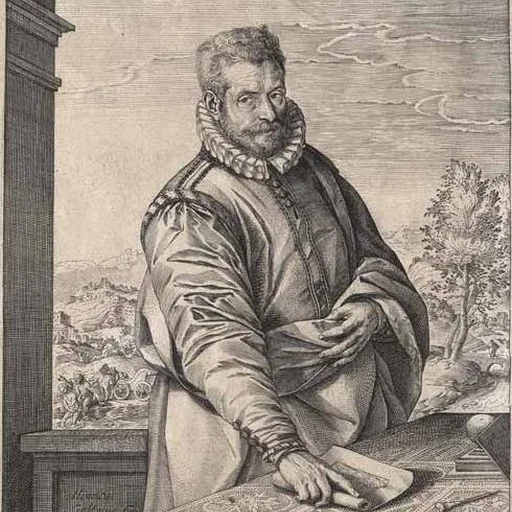
Artist
Philip (or Philips) Galle (1537 – March 1612) was a Dutch publisher, best known for publishing old master prints, which he also produced as designer and engraver. He is especially known for his reproductive engravings of paintings.

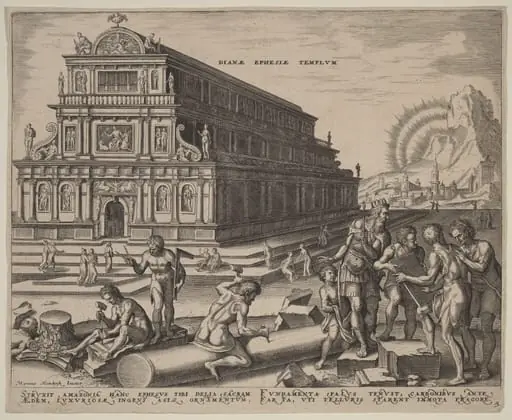 Dianae Ephesiae Templum (The Temple of Diana at Ephesus)
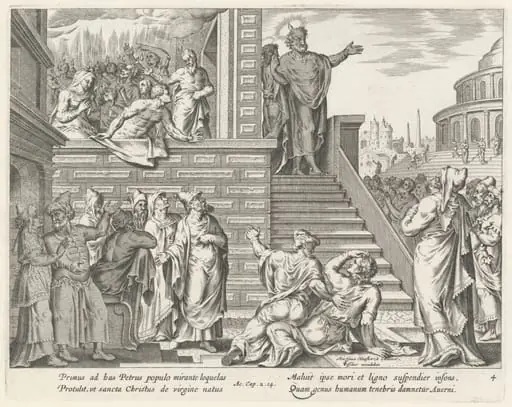 Saint Peter Speaks to the People about Christ
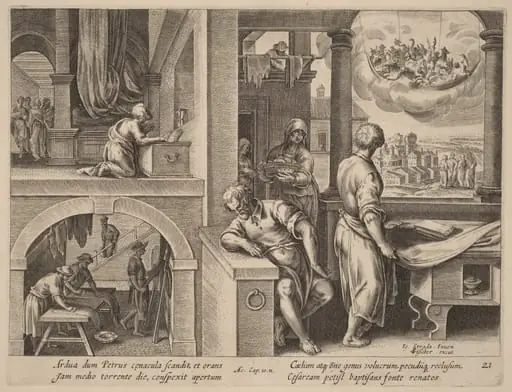 The Vision of Saint Peter
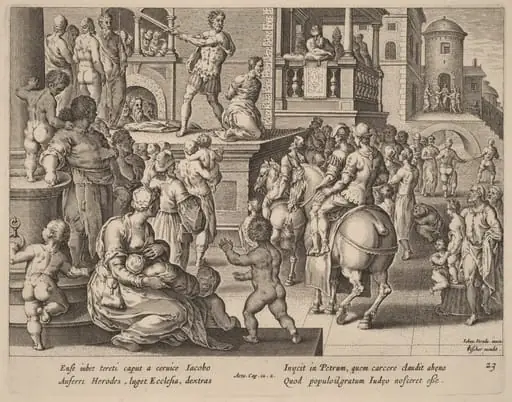 Beheading of Saint James
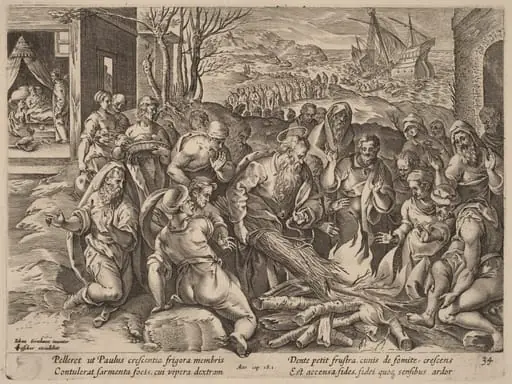 Saint Paul Shipwrecked on the Island of Melita
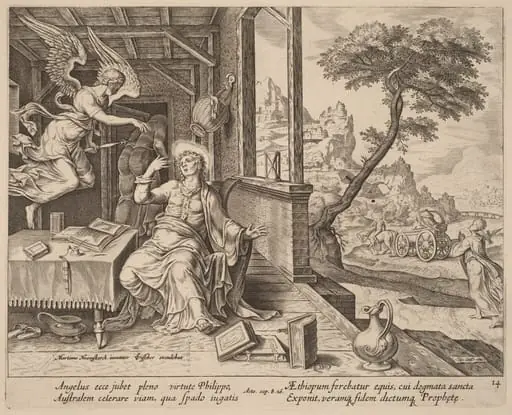 The Angel Orders Saint Philip to Accompany the Ethiopian Eunuch
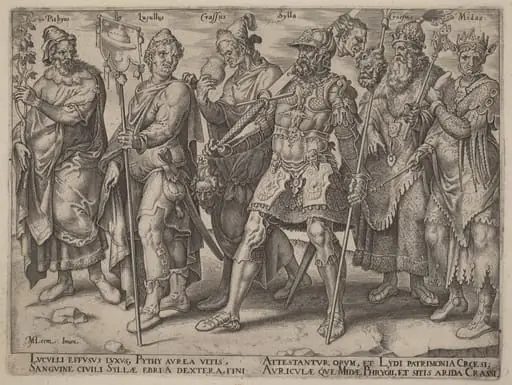 Notorious Examples of Wealth from Antiquity
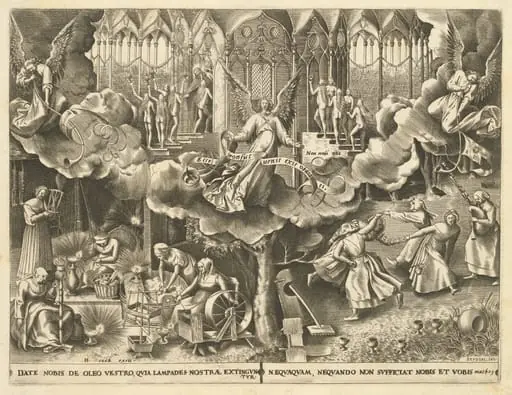 The Parable of the Wise and Foolish Virgins