Artwork
St. Matthew
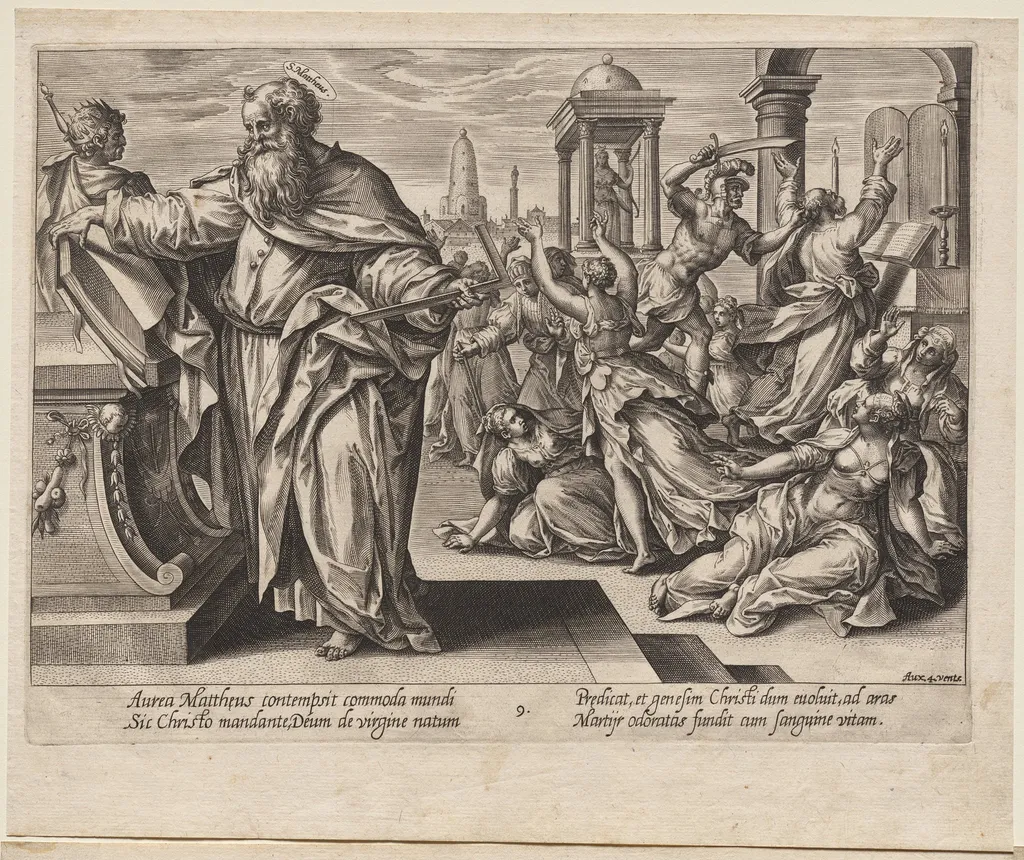
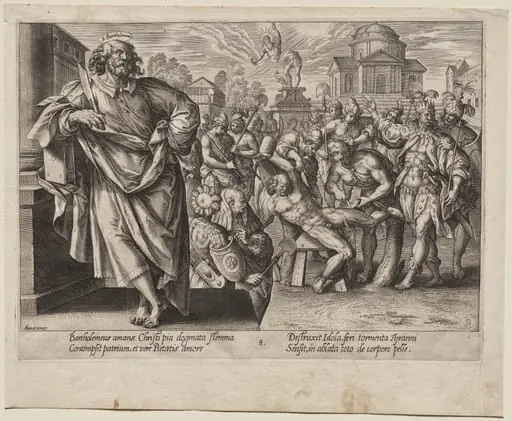
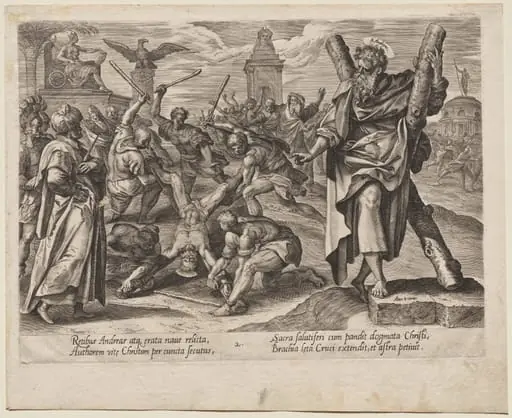
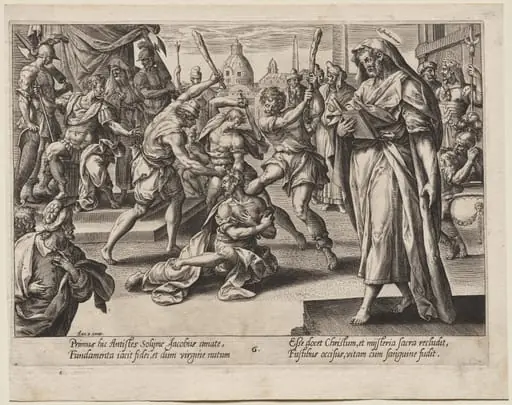
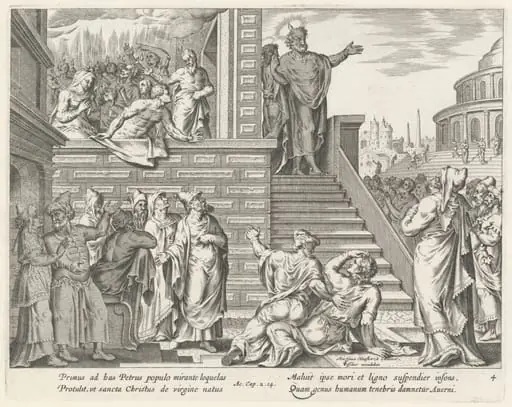
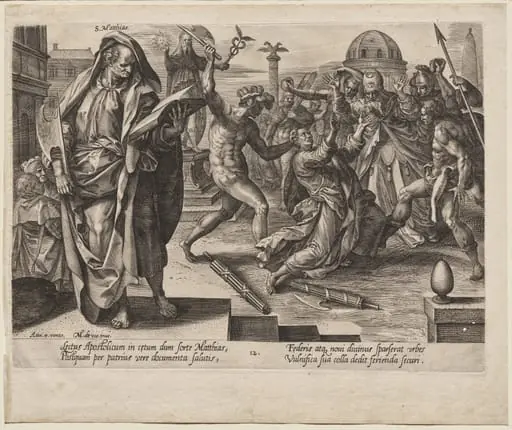
St. Matthew is a print by the Renaissance artist Hendrik Goltzius. It dates from 1578 and is held in the collection of the Cleveland Museum of Art. Created around 1578 by Hendrick Goltzius, this print portrays the martyrdom of St.
About this work
Overview
Executed in engraving, it captures a moment of violent upheaval as the saint stands on a raised platform, sword in hand, amid a throng of figures in conflict.
Created around 1578 by Hendrick Goltzius, this print portrays the martyrdom of St. Matthew. Executed in engraving, it captures a moment of violent upheaval as the saint stands on a raised platform, sword in hand, amid a throng of figures in conflict. The scene unfolds against a distant urban backdrop, with architectural elements suggesting a sacred or civic setting. The work reflects Goltzius’s early mastery of complex composition and expressive human forms.
Subject & Meaning
The print illustrates the traditional account of St. Matthew’s death, traditionally believed to have been killed while celebrating Mass. The saint, depicted as both resolute and suffering, is surrounded by attackers and defenders, symbolizing the spiritual struggle between faith and persecution. The chaos surrounding him underscores the tension between divine calling and earthly violence, a common theme in Counter-Reformation religious imagery.
Technique & Style
Goltzius employed fine-line engraving to render intricate textures and dynamic movement. His use of contrasting light and shadow heightens the drama, directing attention to the central figure’s strained expression and the swirling mass of bodies. The figures are rendered with muscular tension and exaggerated gestures, reflecting Mannerist influences. The precision of the lines conveys both physical force and emotional intensity.
History & Provenance
The print entered the collection of The Cleveland Museum of Art in the 20th century, having passed through several European collections since its creation. It is one of Goltzius’s earliest major works, made before his travels to Italy, and demonstrates his rapid development as a printmaker. Its survival in good condition reflects its early recognition among collectors of Northern Renaissance prints.
Context
Produced during the height of religious conflict in the Low Countries, the image resonated with contemporary anxieties about martyrdom and faith under persecution. Goltzius, working in Haarlem, was influenced by Italian art but retained a Northern emphasis on detail and narrative clarity. This print aligns with broader trends in Protestant and Catholic visual culture seeking to affirm religious conviction through dramatic scenes of sacrifice.
Legacy
This engraving helped establish Goltzius’s reputation as a technical innovator in printmaking. Its complex composition and emotional intensity influenced later Northern artists and contributed to the evolution of narrative engraving. Though less widely known than his later works, this early piece remains a significant example of how religious themes were rendered with psychological depth and formal sophistication in late 16th-century Europe.
Artist & collection
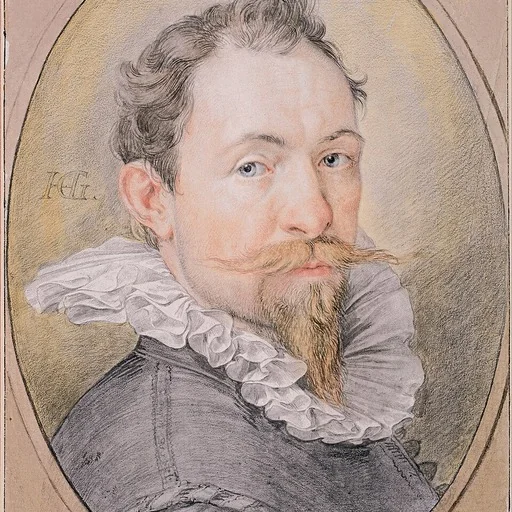
Artist
Hendrick Goltzius (German: , Dutch: ; né Goltz; January or February 1558 – 1 January 1617) was a German-born Dutch printmaker, draftsman, and painter.