Artwork
Birth Place of Daniel Webster, Salisbury, New Hampshire
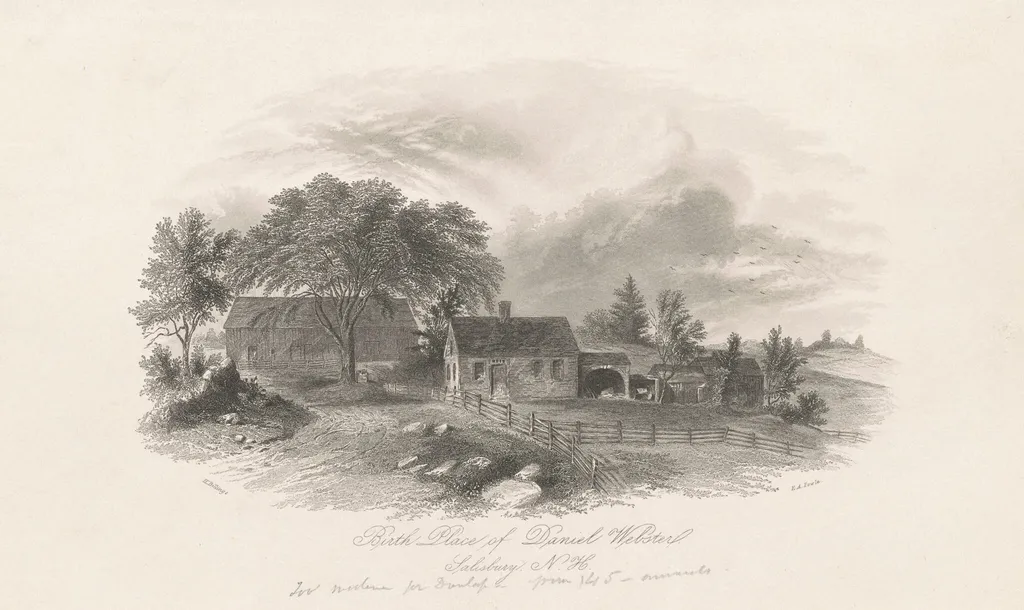
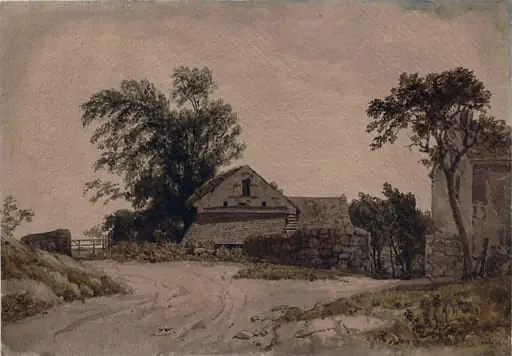
Birth Place of Daniel Webster, Salisbury, New Hampshire is an ink print by the Impressionist artist Hammat Billings. It dates from 1851 and is held in the collection of the National Gallery of Art.
About this work
Overview
Created in 1851 by Hammat Billings, this black‑and‑white engraving presents a modest rural setting identified as the birthplace of Daniel Webster in Salisbury, New Hampshire. Rendered on wove paper, the print captures a tranquil farmstead composed of three small wooden structures, a central tree, and a fence, all under a brooding sky.
Subject & Meaning
The scene portrays a quiet agrarian landscape, emphasizing the everyday environment of Webster’s early life. The clustered houses, a tethered horse, and the expansive canopy of the tree suggest a close‑knit community, while the gathering clouds may hint at the formative challenges faced by the future statesman.
Technique & Style
Billings employed fine, intersecting lines to model depth and texture, typical of mid‑nineteenth‑century engraving. By incising the image onto a metal plate and printing it on paper, he achieved a range of tonal values without color, focusing on simple geometric forms and subtle gradations to convey atmosphere.
History & Provenance
The print was produced shortly after Webster’s death, reflecting contemporary interest in commemorating his origins. It entered private collections in the late 1800s before being acquired by regional historical societies, where it has been used to illustrate biographical narratives of the statesman.
Context
During the 1850s, American engravers often documented notable sites and figures, supplying visual material for newspapers, books, and public lectures. This work fits within that tradition, serving both as a documentary record of a specific New England locale and as a tribute to a prominent political figure.
Legacy
Although not widely reproduced, the engraving remains a reference point for scholars studying visual representations of Webster’s heritage. It also illustrates the role of printmaking in shaping public memory of historical personalities in the pre‑photographic era.
Artist & collection

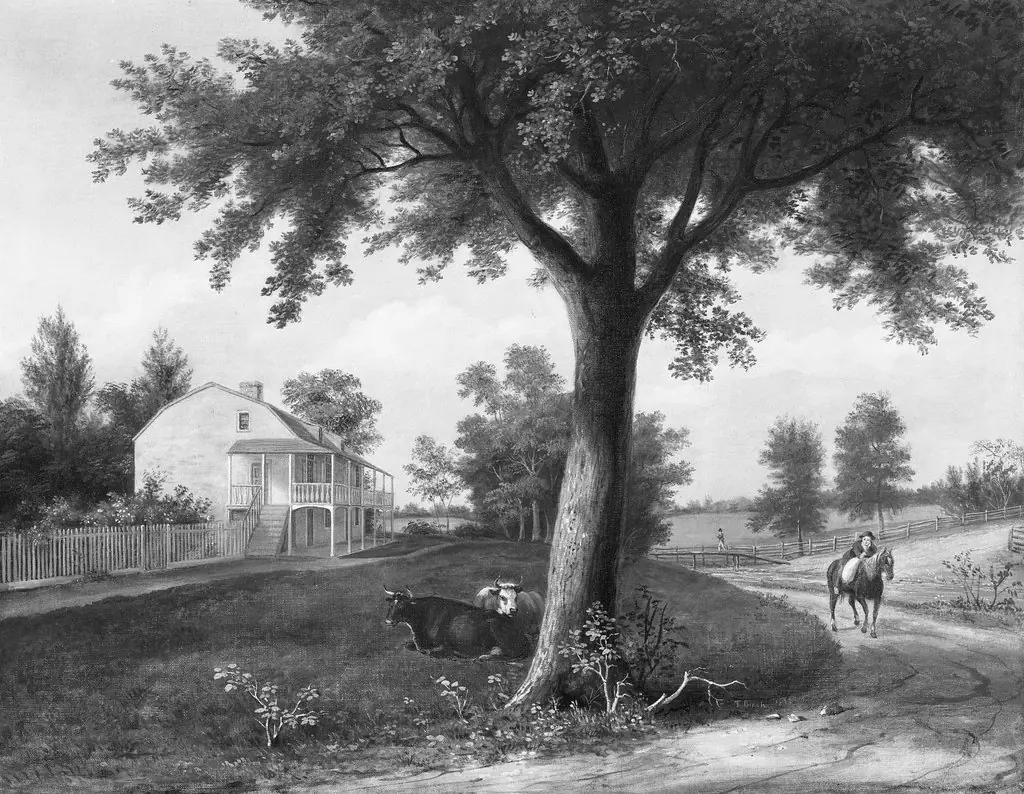 Milford, North Wales, Pennsylvania
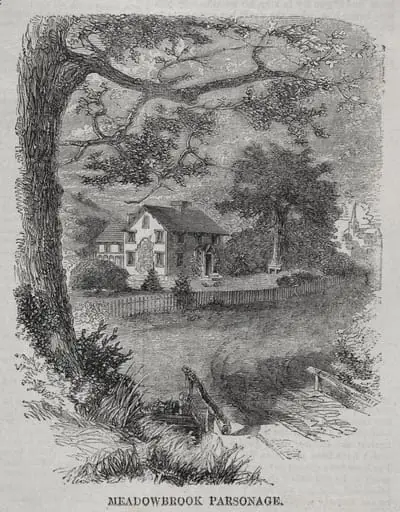 Meadowbrook Parsonage
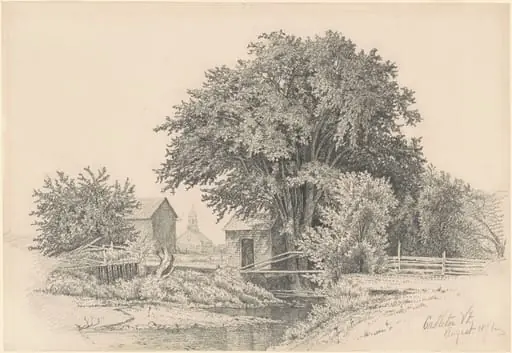 Castleton, Vermont
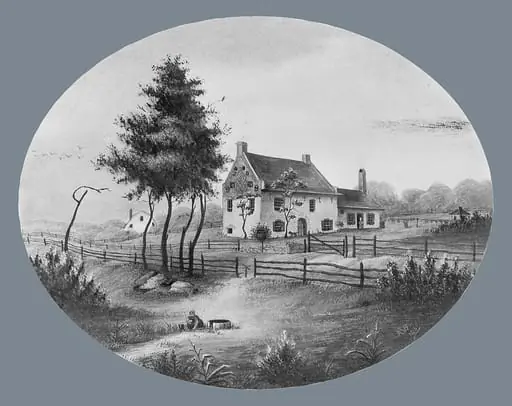 Vechte House at Gowannus, Brooklyn, New York
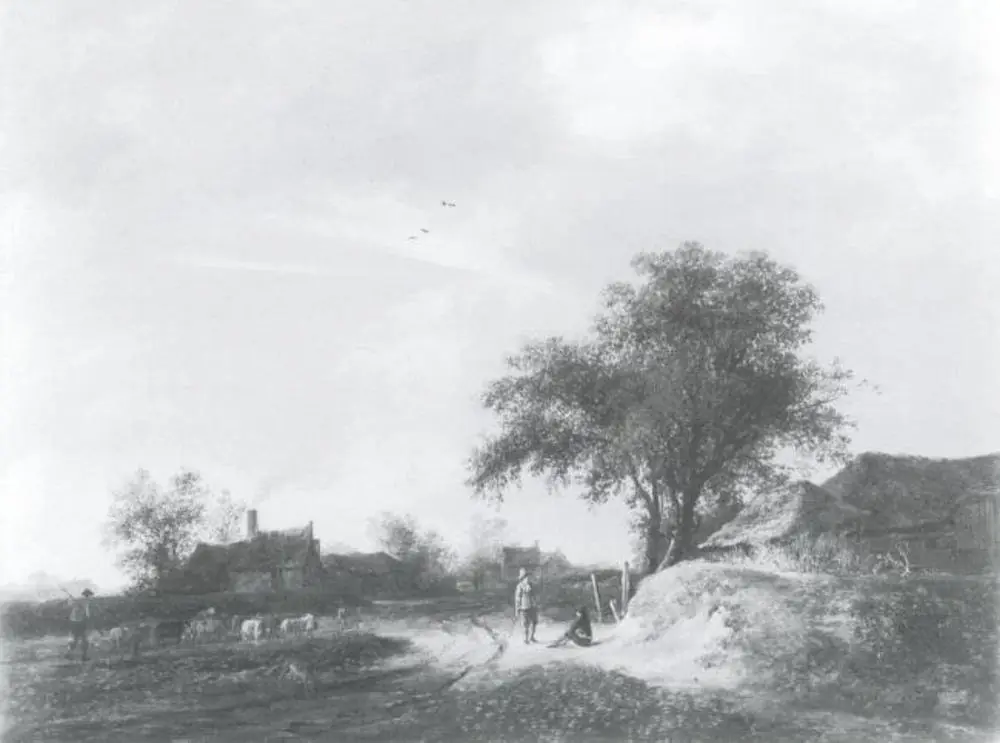 Landscape with a Farm
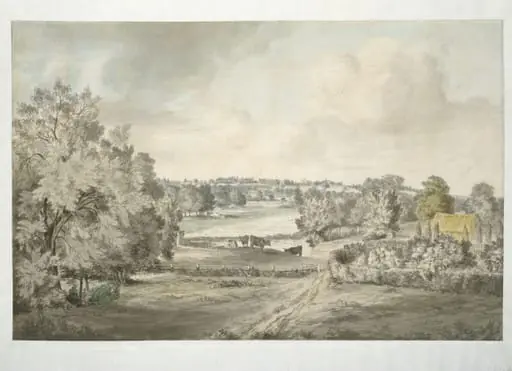 The valley of the Stour, looking towards East Bergholt
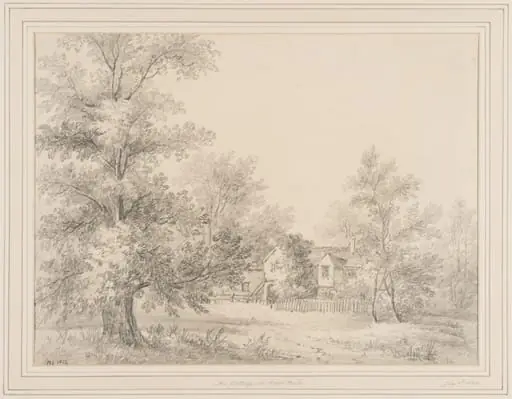 The cottage in Hyde Park
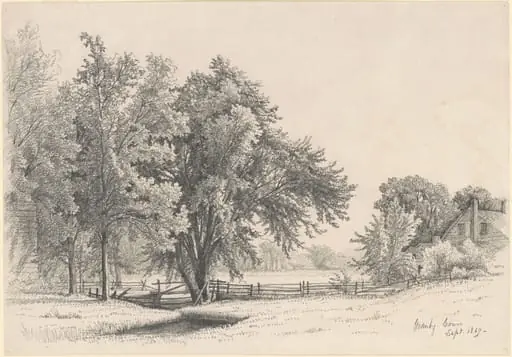 Granby, Connecticut
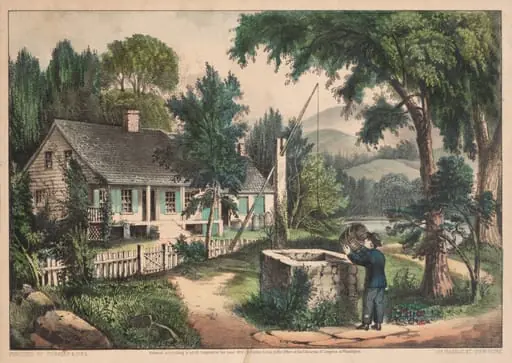 The Old Oaken Bucket
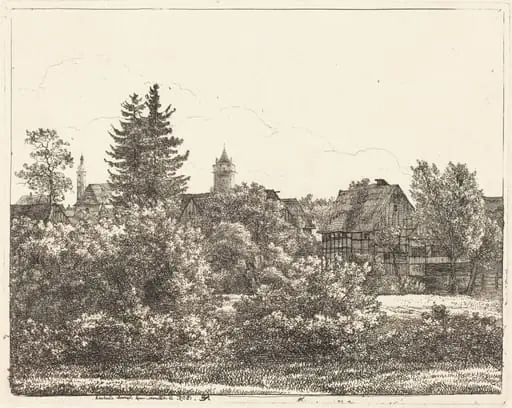 Lauban in Silesia
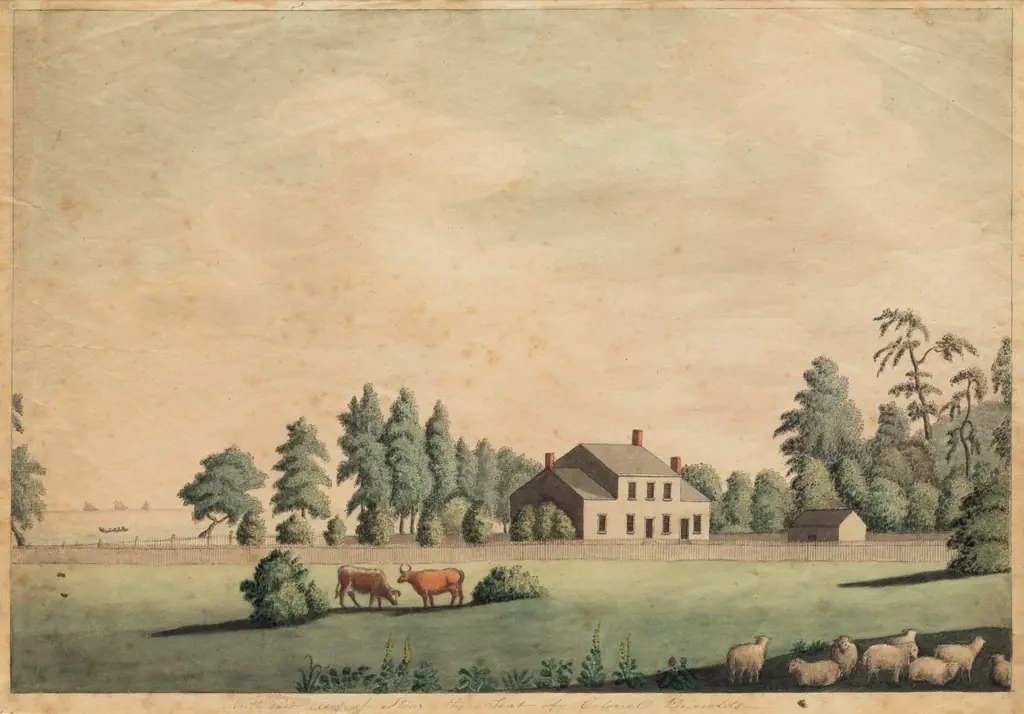 Northeast View of Stowe, the Seat of Colonel Reynolds
 Roadside Cottages