Artwork
National Photographic Record and Survey
National Photographic Record and Survey is a photographic photography by the Impressionist artist Godfrey Bingley. It dates from 10 and is held in the collection of the Victoria and Albert Museum. The work consists of two black‑and‑white photographic prints, each affixed to a card.
About this work
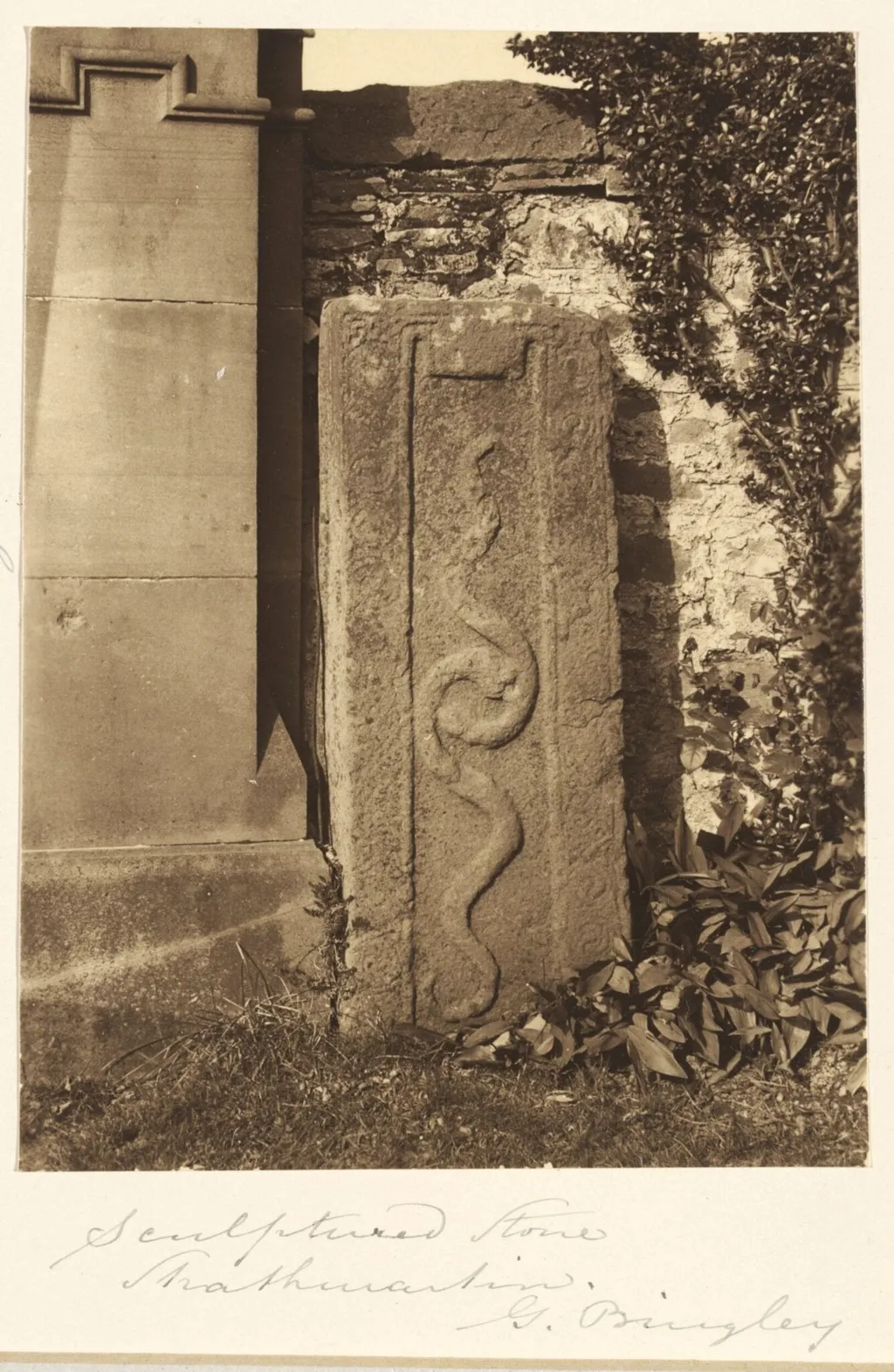
The wall behind it is falling apart, with ivy and grass growing around the edges, and a stone building corner peeks in on the left.
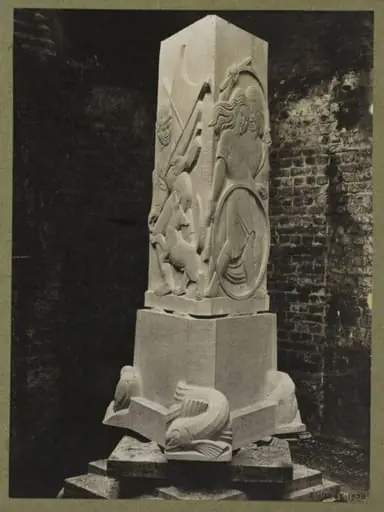
This is a black-and-white photo of a weathered stone slab stuck in a corner of a crumbling brick wall. The stone has a carved shape that looks like a person holding something, maybe a scroll or a staff. The wall behind it is falling apart, with ivy and grass growing around the edges, and a stone building corner peeks in on the left.
The photo was taken in 1895, part of a project to document old carvings before they disappeared. The handwriting at the bottom even says "Sculptured Stone" to mark what it is.
If you like old carvings, check out the Victoria and Albert Museum—they have lots of similar pieces.
Overview
The work consists of two black‑and‑white photographic prints, each affixed to a card. Both images capture a weathered stone slab set into the corner of a deteriorating brick wall within a churchyard. The stone bears a relief carving that suggests a human figure grasping an object, possibly a scroll or staff, while ivy and grass encroach on the surrounding masonry.
Subject & Meaning
The carved stone appears to be a funerary or commemorative monument, its figure likely representing a religious or local dignitary. The gesture of holding an item may indicate a role of authority or literacy, common in late medieval ecclesiastical sculpture, offering insight into the community’s devotional practices and social hierarchy.
Technique & Style
The photographs are monochrome gelatin silver prints typical of the late nineteenth century, emphasizing texture and contrast. The high‑contrast rendering accentuates the stone’s weathered surface and the surrounding decay, allowing the shallow relief to be discerned despite the erosion of detail.
History & Provenance
Taken in 1895, the images were produced as part of a national photographic survey aimed at recording vulnerable stone carvings before they vanished. Handwritten annotations on the prints label the subject as “Sculptured Stone,” confirming their purpose as documentary records within the broader preservation effort.
Context
The photographs belong to a systematic campaign during the Victorian era to catalogue historic architecture and sculpture across the United Kingdom. This initiative responded to increasing industrial development and the consequent threat to medieval churchyard monuments, reflecting contemporary concerns for heritage conservation.
Artist & collection
Artist

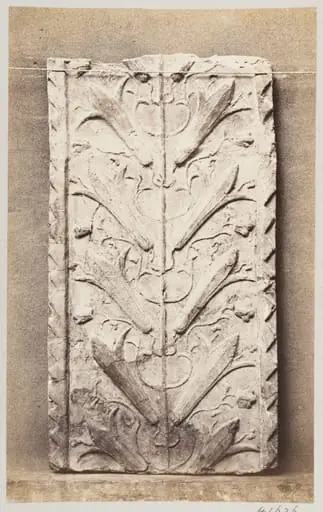 Bas-relief portion of friez of fleur de lys in terra cotta
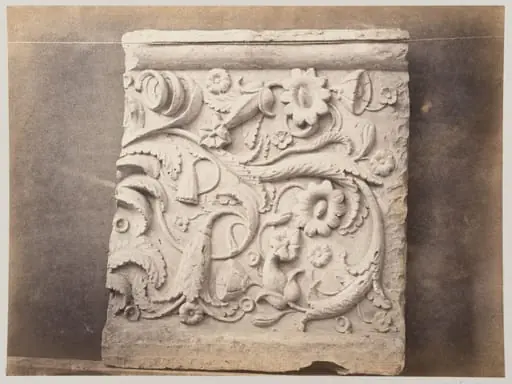 Bas-relief portion of a tomb in marble
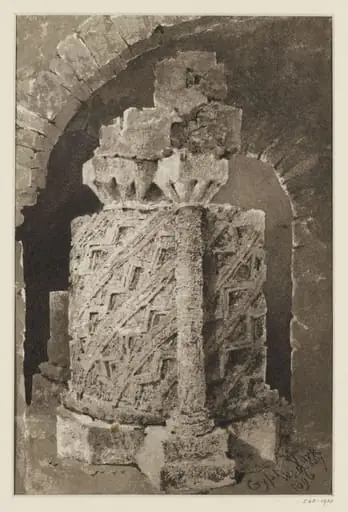 Untitled
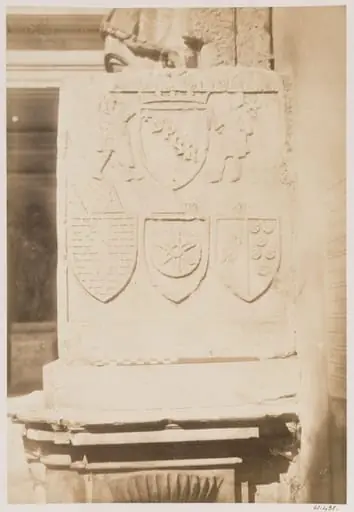 Sculpture - Arms of the Roman Senate from the Tomb of Agrippina, now in the Palazzo de' Conservatori on the Capitol
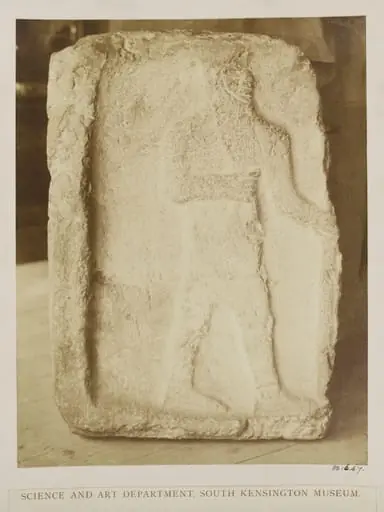 Assyrian sculpture relief of a bearded man
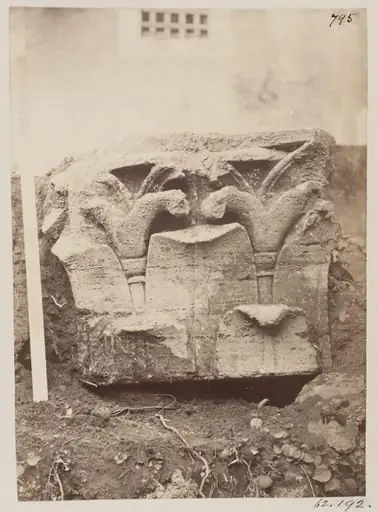 Sculptures - Broken Capital of the third century, found with the Marble Plan in 1867, at SS. Cosmas and Damian
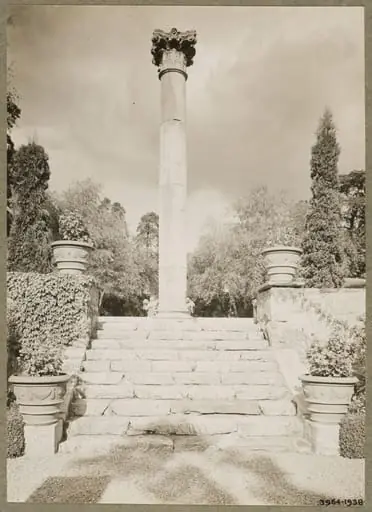 Untitled
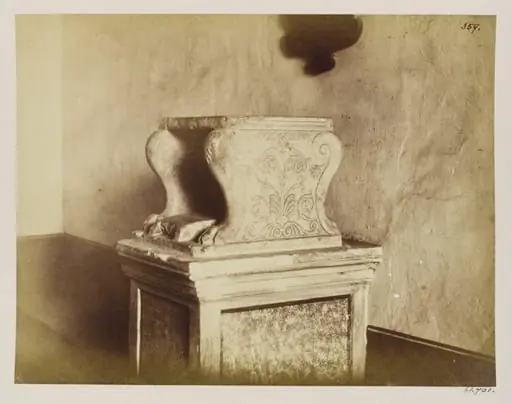 Sculptures - Marble Seat of S. Gregory in the Church of S. Stefano Rotondo, with Shallow Carving, c. A.D. 590.
 Untitled