Artwork
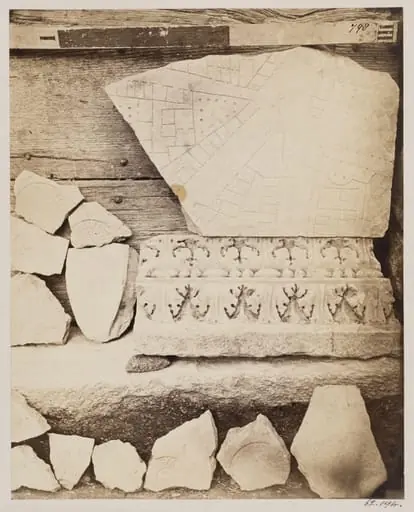
Sculptures - Broken Capital of the third century, found with the Marble Plan in 1867, at SS. Cosmas and Damian
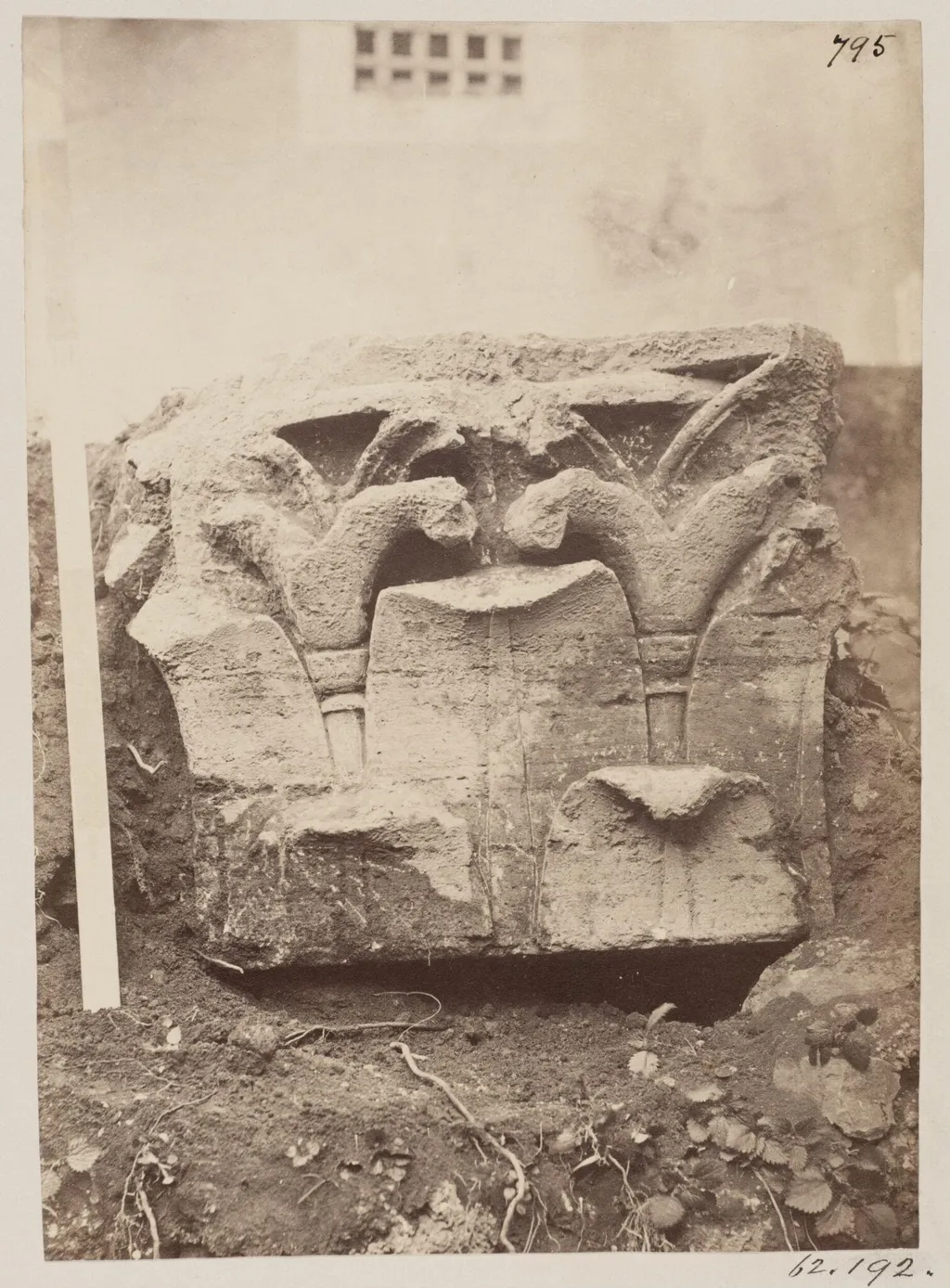
Sculptures - Broken Capital of the third century, found with the Marble Plan in 1867, at SS. Cosmas and Damian is a photographic photography by the Impressionist artist John Henry Parker. It dates from 1866 and is held in the collection of the Victoria and Albert Museum.
About this work
Overview
The image is a mid‑nineteenth‑century black‑and‑white photograph that records the remains of a broken Corinthian capital dating to the third century AD. The stone fragments were uncovered during excavations near the Church of Saints Cosmas and Damian in Rome and are shown lying on uneven ground, their carved details partially visible amid the surrounding soil.
Subject & Meaning
The capital, a decorative element of classical architecture, exemplifies the ornate Corinthian order that was widely employed in Roman buildings. Its fragmented state suggests it was part of a larger structural component—perhaps a column or entablature—now lost, offering a tangible glimpse of the material culture of late antiquity.
Technique & Style
Captured in monochrome, the photograph employs the early photographic processes common in the 1860s, emphasizing contrast between the light stone and the dark earth. The composition presents the broken blocks from a slightly elevated angle, allowing the viewer to discern the remaining acanthus leaf motifs and the rough, unfinished edges of the marble.
History & Provenance
The images were assembled for Parker’s publication *Archaeology of Rome* and were contributed by a range of local and foreign photographers.
The photograph belongs to a systematic survey of more than 3,300 Roman monuments and artifacts undertaken between 1864 and 1879 under the direction of archaeologist John Henry Parker. The images were assembled for Parker’s publication *Archaeology of Rome* and were contributed by a range of local and foreign photographers. The Victoria and Albert Museum now houses a substantial portion of this early photographic archive.
Context
The discovery of the capital occurred during 1860s archaeological work in the vicinity of the ancient church, a site that has yielded numerous fragments of Roman architecture. The excavation reflects the period’s growing interest in documenting antiquities scientifically, a practice that helped establish modern archaeological methodology in Italy.
Artist & collection
Artist
John Henry Parker liked to explore old churches in Rome. He'd photograph the sculptures and carvings he found. One thing that stands out is his attention to detail - he'd capture tiny parts of bigger pieces, like the…

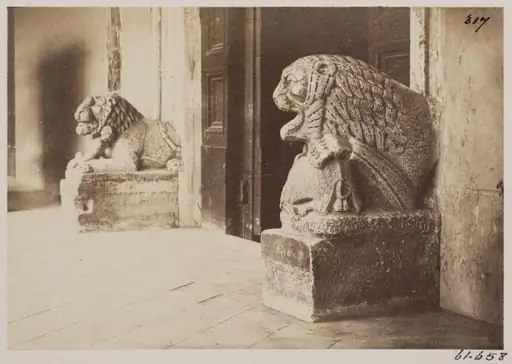 Sculptures - Lions at the Door of the Church of S. Lorenzo
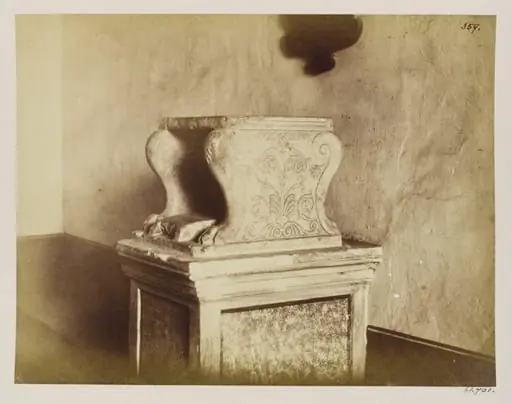 Sculptures - Marble Seat of S. Gregory in the Church of S. Stefano Rotondo, with Shallow Carving, c. A.D. 590.
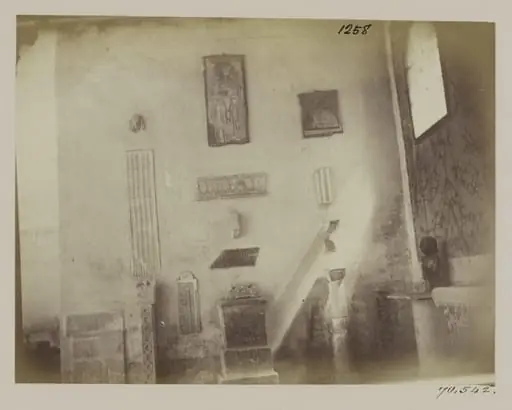 Church of S. Giorgio in Velabro - Fragments of marble sculpture, Tombs, &c., from the old Church, built into the wall.
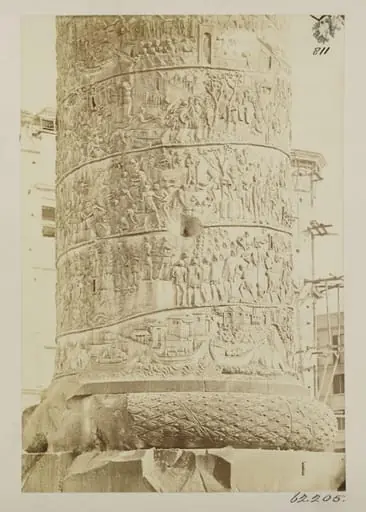 Sculptures - Details of Sculpture from Trajan's Column.
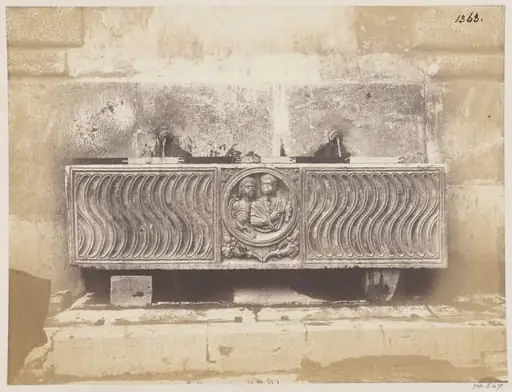 Sculpture - Sarcophagus of the fourth century made into a fountain, near the Church of S. Maria, in the Piazza del Popolo
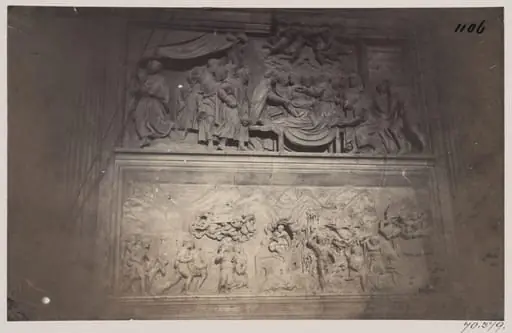 Out of Rome - House of the Blessed Virgin at Loreto. Sculpture of the Santissima Casa carried by Angels, A.D. 1520
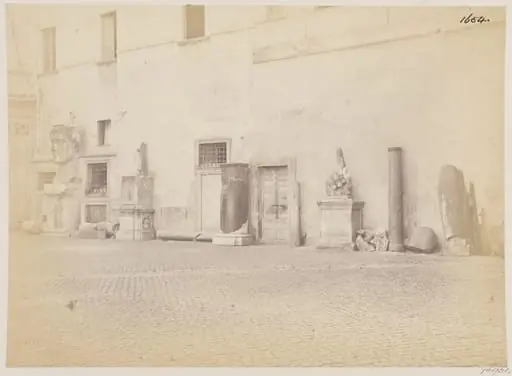 Sculpture - View on the left side of the Court-yard of the Palazzo de' Conservatori on the Capitol, shewing fragments of colossal Statues
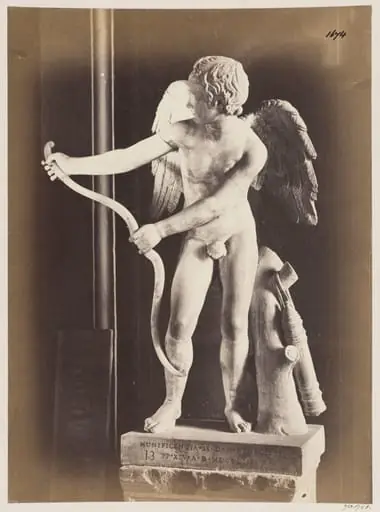 Sculpture - Statue of Cupid with his bow, in the Capitoline Museum.
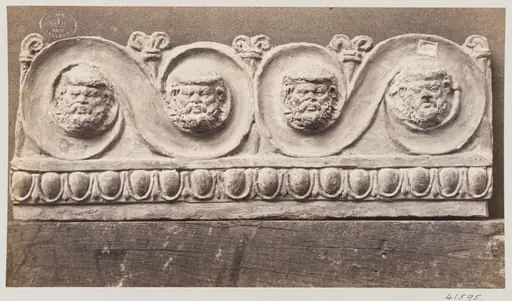 Bas-relief scroll with four masques in terra cotta
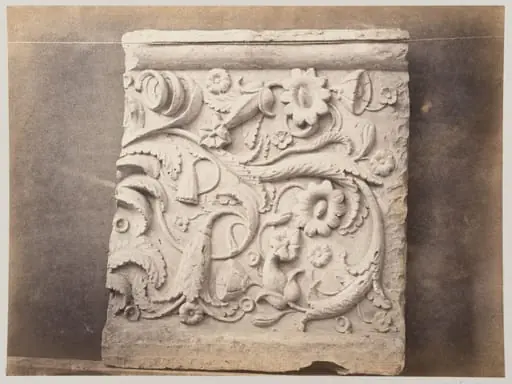 Bas-relief portion of a tomb in marble
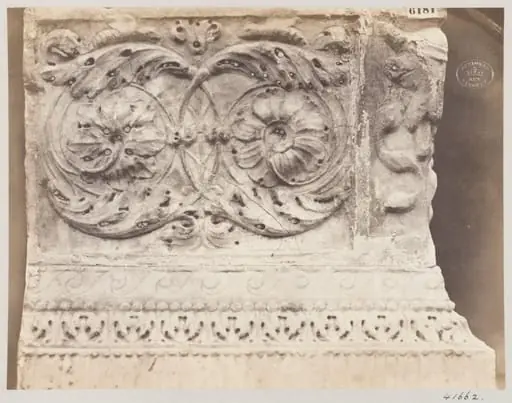 Marble portion of a sacophagus ornamented with bas-relief foliage
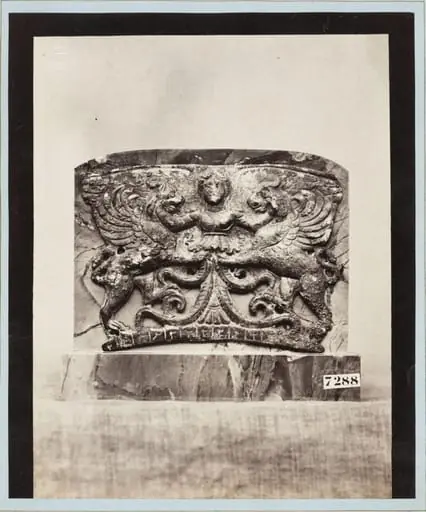 Antique bronze appliqué
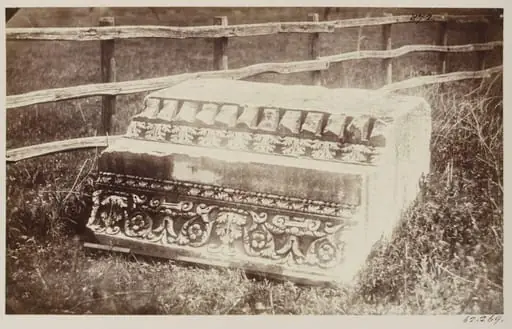 Sculptures - Fragment of a Cornice of the Temple of Mars (?), outside the Porta S. Sebastiano or Appia, said to belong to this Temple when rebuilt in the third century
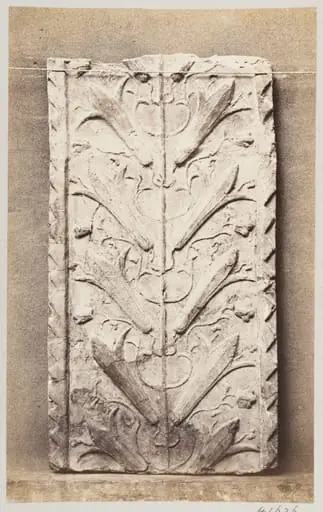 Bas-relief portion of friez of fleur de lys in terra cotta
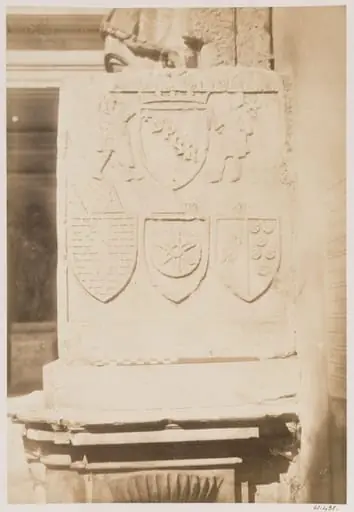 Sculpture - Arms of the Roman Senate from the Tomb of Agrippina, now in the Palazzo de' Conservatori on the Capitol
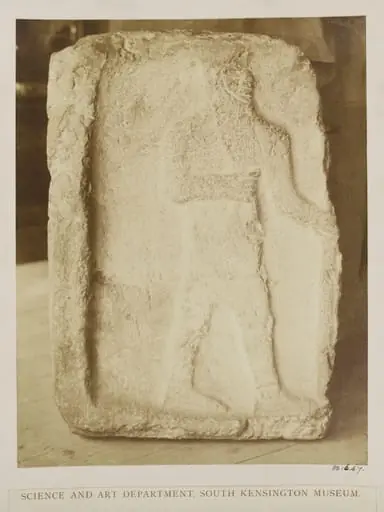 Assyrian sculpture relief of a bearded man
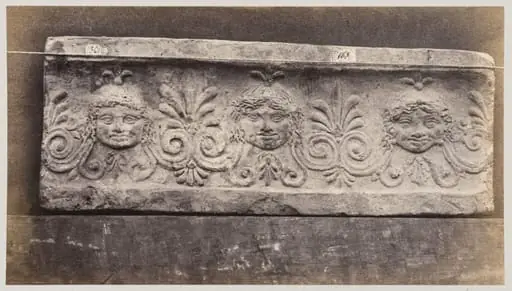 Three masques of gorgons in terra cotta
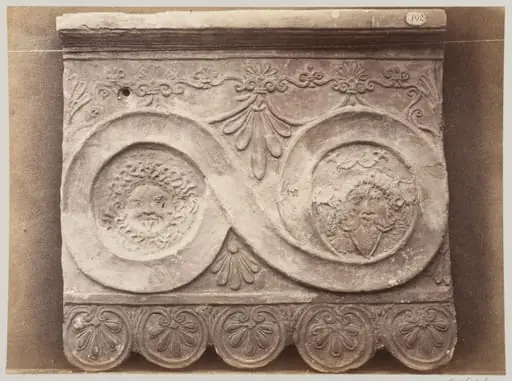 Bas-relief portion of a frieze of scrollwork with masks in terra cotta
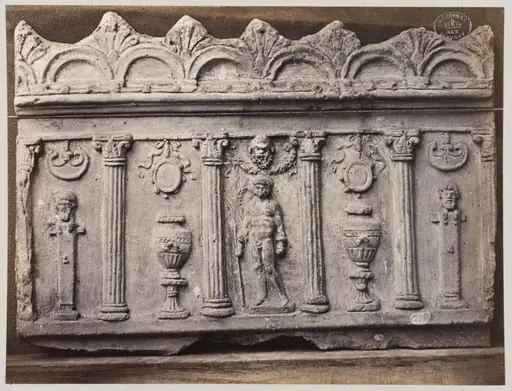 Bas-relief of a figure with bust, vessels and columns in terra cotta
 Sculptures - Cornice and Tiles of the third century, found with the fragments of the Marble Plan in 1867, at SS. Cosmas and Damian.