Artwork
Untitled
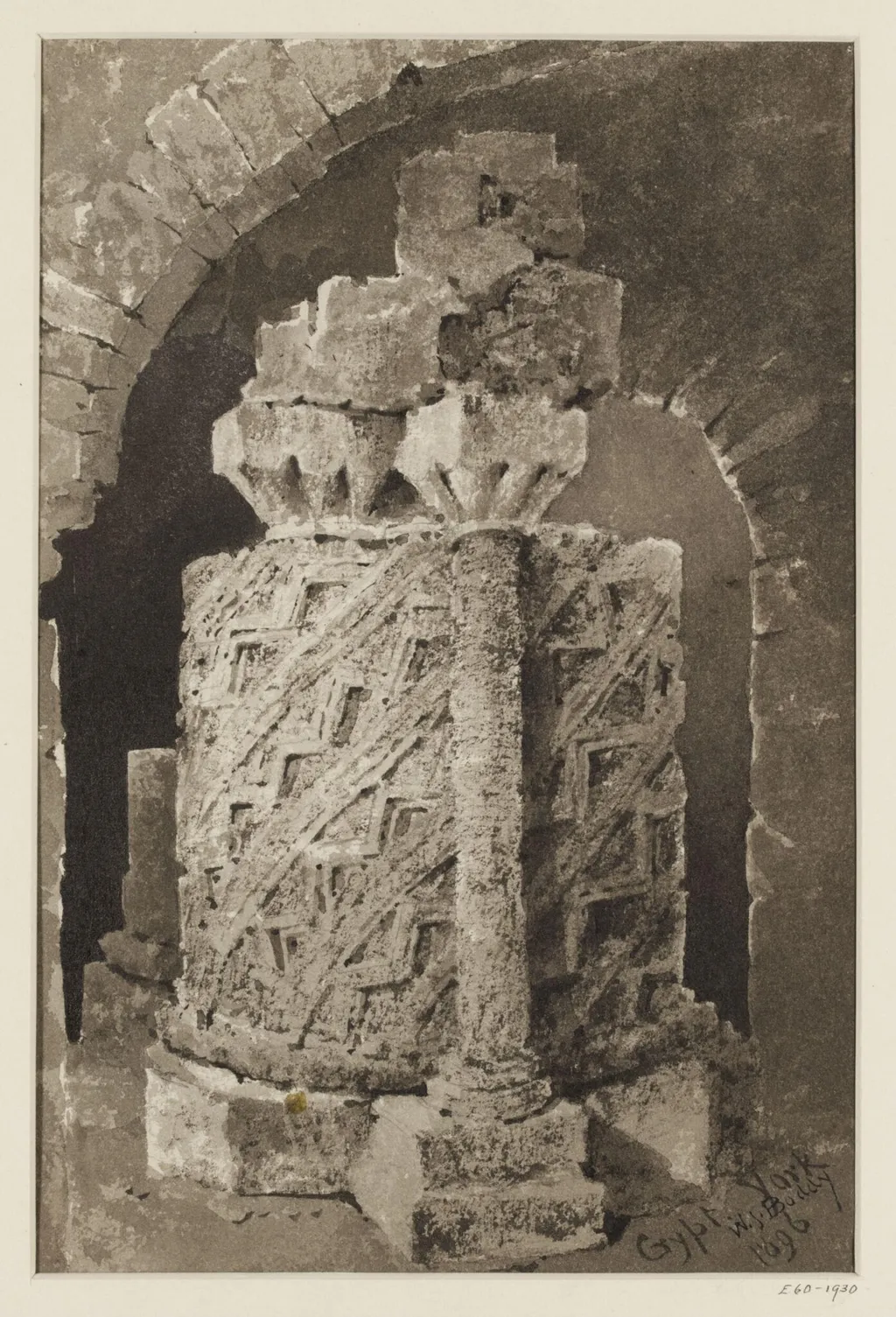
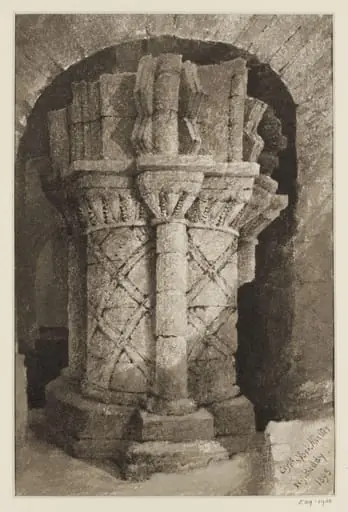
Untitled is a drawing by the Impressionist artist William James Boddy. It dates from 1896 and is held in the collection of the Victoria and Albert Museum.
About this work
Overview
Rendered with precision, it presents the architectural element without embellishment, focusing on form and surface rather than narrative.
Created in 1896 by William James Boddy, this pencil drawing captures a sculpted column within the crypt of York Minster. The work is signed and dated, indicating its origin as a direct observational study. Rendered with precision, it presents the architectural element without embellishment, focusing on form and surface rather than narrative. The dark background isolates the column, enhancing its three-dimensional presence.
Subject & Meaning
The subject is a single stone column from the medieval crypt, likely part of the original 13th-century structure. Boddy’s focus on its carved surfaces suggests an interest in ecclesiastical craftsmanship rather than religious symbolism. The inscription anchors the drawing as a record of place and time, reflecting a 19th-century antiquarian impulse to document historic architecture with fidelity.
Technique & Style
Boddy employed fine hatching and graded tonal shifts to model the column’s textures and recesses. Light areas around the base and shaft suggest ambient illumination, while the dark ground deepens spatial contrast. The rendering is meticulous but restrained, avoiding dramatic lighting or stylization. Each carved motif is carefully observed, conveying materiality through line and shadow rather than color.
History & Provenance
The drawing is one of several by Boddy documenting York Minster’s crypt during the late 19th century, a period of renewed interest in Gothic architecture. Its survival suggests it was retained as a personal study or archival record. No public exhibition history is recorded, and its current location remains within private or institutional collections focused on regional architectural drawings.
Context
Boddy worked during a time when topographical and antiquarian drawing flourished among British artists and architects. His work aligns with efforts by societies like the Society of Antiquaries to preserve visual records of historic sites before industrialization altered them. Unlike romanticized depictions, his approach was systematic, prioritizing accuracy over aesthetic flourish.
Legacy
Boddy’s drawings serve as understated historical documents, offering insight into the condition of York Minster’s crypt in the 1890s. While not widely exhibited, they contribute to the archive of architectural observation in Victorian England. His method reflects a quiet dedication to recording heritage, valued today by conservators and historians studying medieval stonework.
Artist & collection
Artist
William James Boddy made ink-on-paper drawings in the late 1800s. Two of these untitled works from 1895–96 survive: delicate, hatched line studies that feel like quiet snapshots of light and shadow. They sit squarely in…

 Untitled
 Paradigmata Graphics Variorum Artificum
 Cathedral, Santiago, Spain, Portico de la Gloria, detail of column at South wall
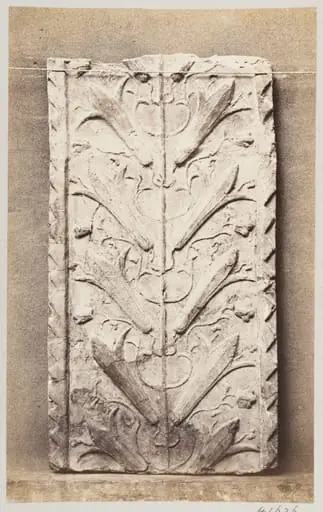 Bas-relief portion of friez of fleur de lys in terra cotta
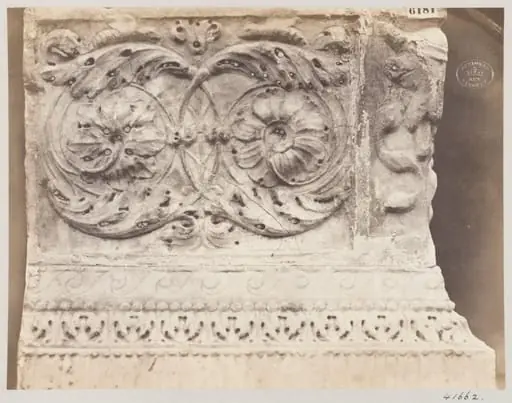 Marble portion of a sacophagus ornamented with bas-relief foliage
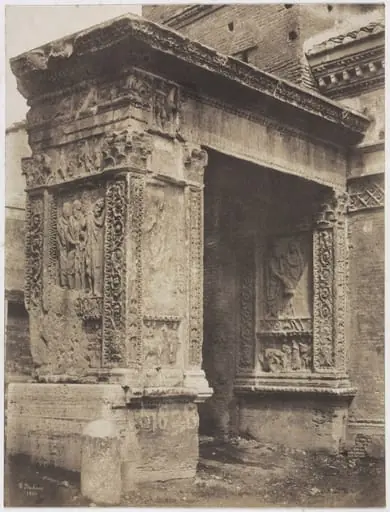 Goldsmith's Arch, Rome
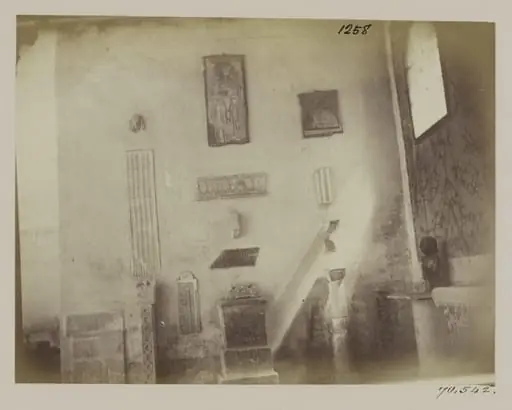 Church of S. Giorgio in Velabro - Fragments of marble sculpture, Tombs, &c., from the old Church, built into the wall.
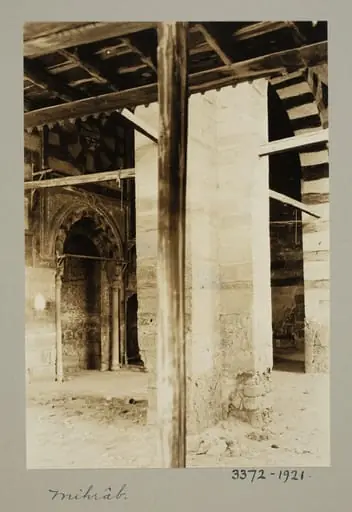 Mihrab of the mosque of Masih Pasha (Nur al-Din), Cairo
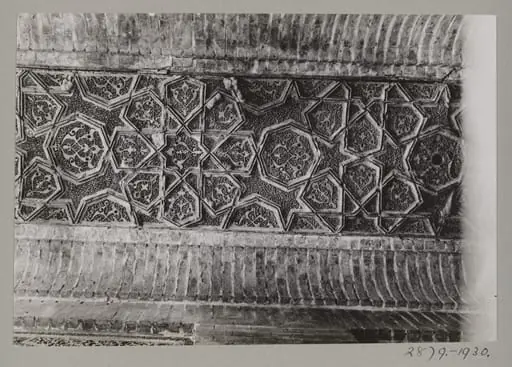 Geometric composition on vaulting, Abbasid Palace in Citadel, Baghdad
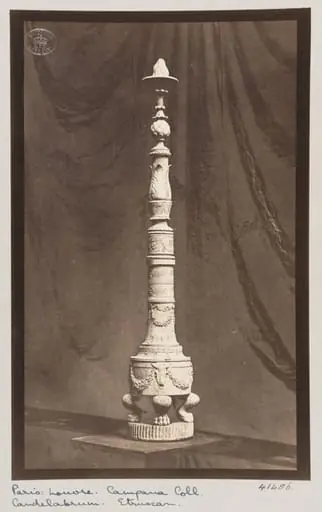 Marble stem from candelabrum
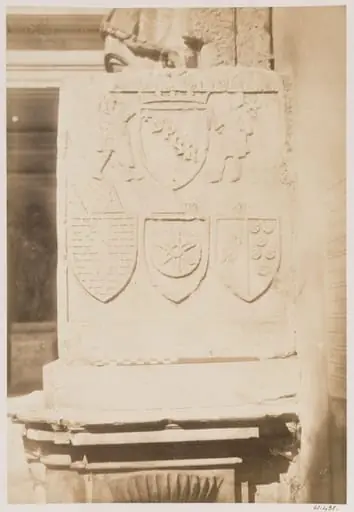 Sculpture - Arms of the Roman Senate from the Tomb of Agrippina, now in the Palazzo de' Conservatori on the Capitol
 Untitled