Artwork
Infant St. John
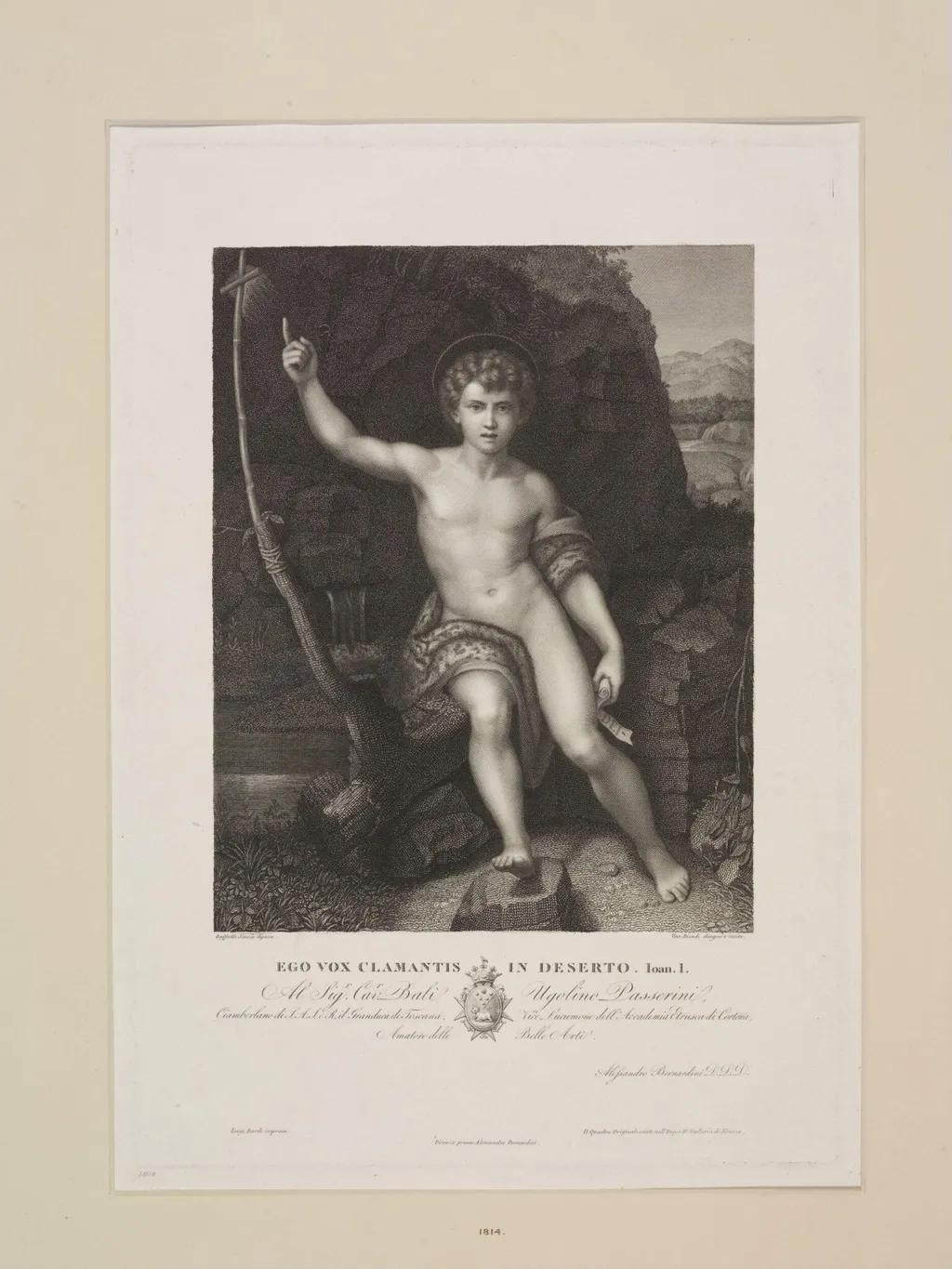
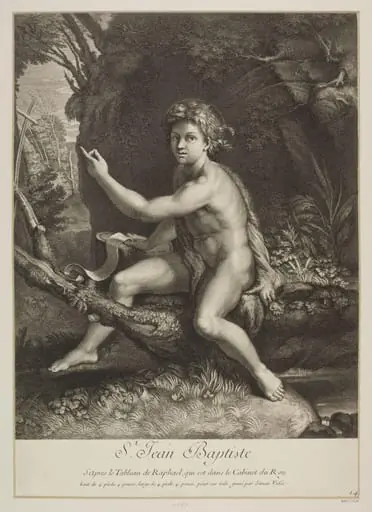
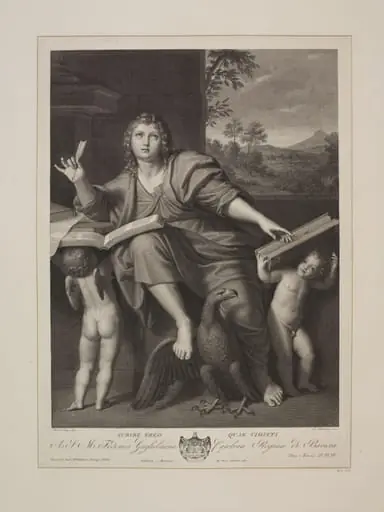
Infant St. John is a print by Vincenzo Biondi. It dates from 1850 and is held in the collection of the Victoria and Albert Museum. This print reproduces a figure of the infant Saint John the Baptist, originally conceived by Raphael.
About this work
Overview
The composition emphasizes his delicate form through strong tonal contrast, isolating him visually from the muted surroundings.
This print reproduces a figure of the infant Saint John the Baptist, originally conceived by Raphael. Executed on paper, it captures the boy in a contemplative pose, set against a dark, barren landscape. The composition emphasizes his delicate form through strong tonal contrast, isolating him visually from the muted surroundings. His bare feet and minimal clothing suggest both humility and divine presence.
Subject & Meaning
The figure represents Saint John as a child, a subject drawn from Christian tradition that emphasizes his prophetic role from an early age. His upward-pointing gesture and faint wings allude to his future mission as the forerunner of Christ. The inclusion of wings, though subtle, aligns him with putti—symbolic cherubic forms in Renaissance art that convey spiritual grace and celestial connection.
Technique & Style
The artist employs chiaroscuro to heighten the figure’s three-dimensionality, using deep shadows to frame the pale skin and drapery. Fine linework defines the curls of his hair and the texture of the cloth, while the background remains loosely rendered, suggesting distance and emptiness. The print’s precision reflects a close adherence to Raphael’s compositional clarity and idealized form.
History & Provenance
This print derives from a lost or little-known drawing by Raphael, likely made during his Roman period. It was reproduced in print form during the 16th or early 17th century, possibly by a follower or workshop member. Its survival suggests it circulated among collectors interested in Raphael’s devotional imagery, though its exact origin and early owners remain undocumented.
Context
In Renaissance Italy, depictions of the infant Saint John were common in religious art, often paired with the Christ Child. The use of putto-like features—wings, youthful innocence, and symbolic gestures—reflected a broader trend of blending sacred narrative with classical aesthetics. This print fits within a tradition that humanized holy figures through tender, naturalistic representation.
Legacy
Though not widely known today, the print preserves a moment in the dissemination of Raphael’s designs beyond painting and fresco. It contributed to the popularization of his compositions among print collectors and artists studying his style. Its quiet dignity and restrained symbolism influenced later devotional imagery in Northern Europe, where such prints were widely circulated.
Artist & collection
Artist
Vincenzo Biondi made religious prints in the late 18th to mid-19th century. His print *Infant St. John* shows a small figure cradled in a tender scene, typical of devotional images from that era. These prints were meant…