Artwork
Gladiator
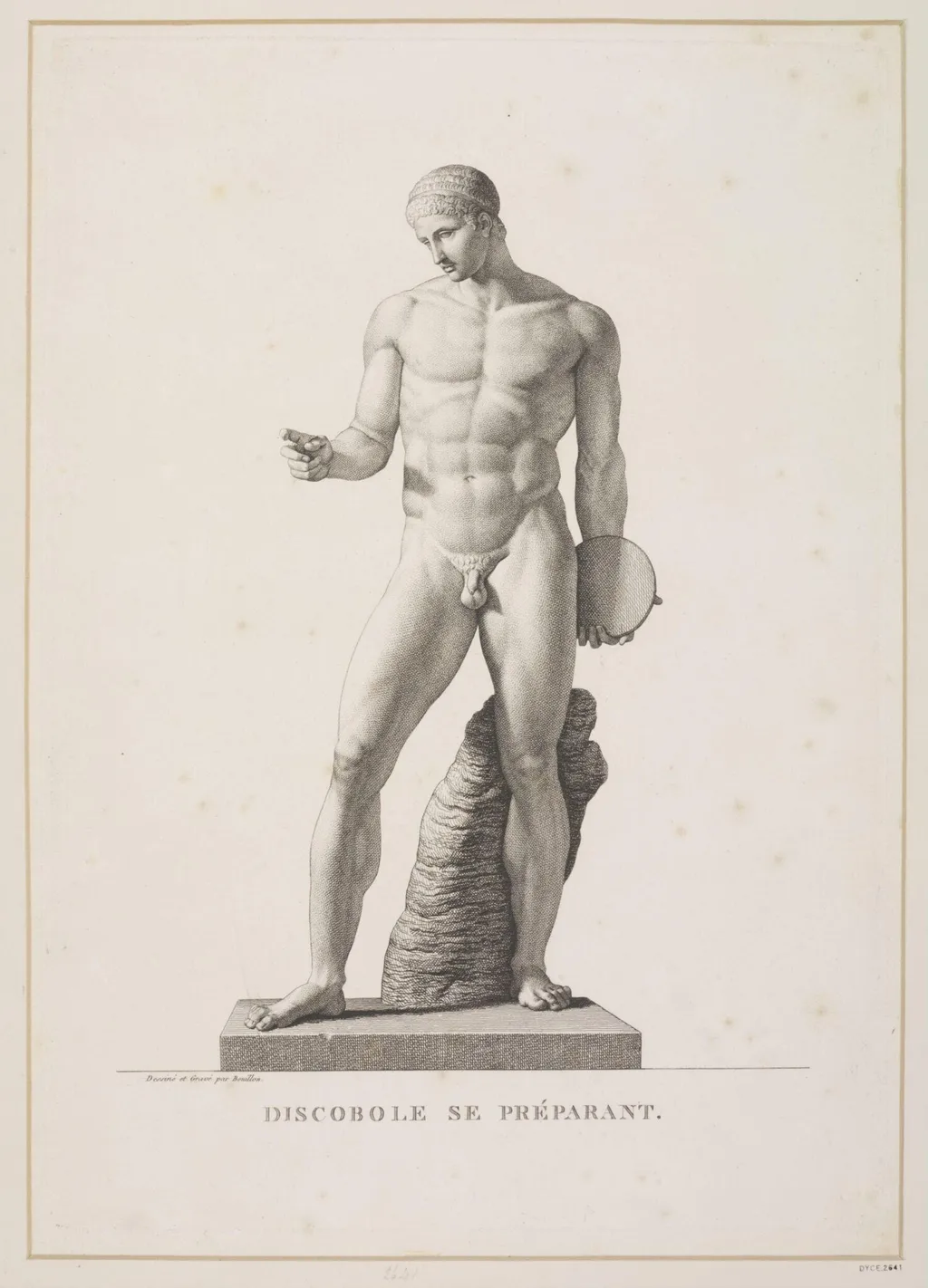
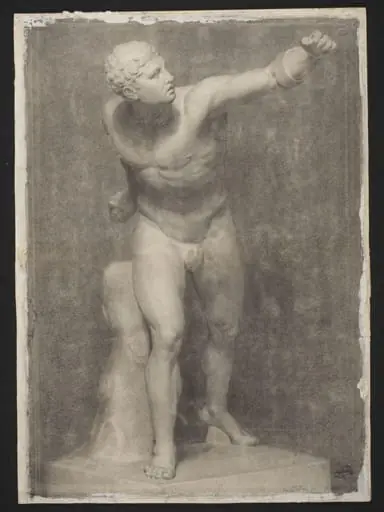
Gladiator is a print by the Romanticist artist Pierre Bouillon. It dates from 1800 and is held in the collection of the Victoria and Albert Museum.
About this work
Overview
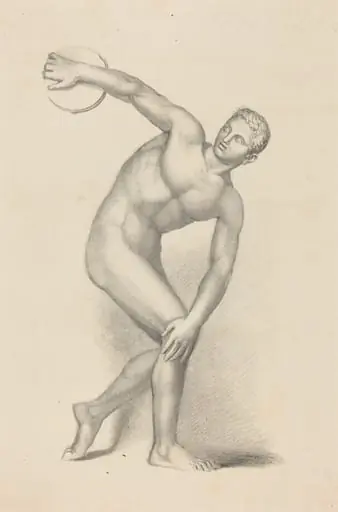
This print, titled *Discobole se Préparant*, is a paper impression created by Pierre Bouillon in 1810 as part of the second volume of *Musée des Antiques*.
This print, titled *Discobole se Préparant*, is a paper impression created by Pierre Bouillon in 1810 as part of the second volume of *Musée des Antiques*. It portrays a male figure in a dynamic, asymmetrical pose, suggesting motion before a throw. Though labeled as a discus thrower, the figure’s attire and stance evoke the appearance of a gladiator, blending classical athletic imagery with martial connotations.
Subject & Meaning
The figure is depicted in a moment of tension, one foot planted on a low block, the other wrapped in fabric, as if readying for action. The bent left arm and twisted torso imply preparation rather than release. While the title references Greek athletics, the muscular build and bare torso align more closely with Roman gladiatorial iconography, suggesting a fusion of classical ideals and contemporary fascination with ancient combat.
Technique & Style
Bouillon rendered the figure with precise linework and careful shading to emphasize anatomical detail and volume. The print’s clarity and controlled contrast reflect the engraving techniques common in early 19th-century antiquarian publications. His style favors dramatic poses and idealized musculature, characteristic of Neoclassical interest in the human form as a vessel of historical and moral virtue.
History & Provenance
The print was produced as part of a multi-volume series documenting classical sculptures from the French royal collection. Bouillon, a known illustrator of antiquities, contributed detailed engravings to this scholarly project. The work was not intended as original art but as a documentary record, intended for collectors and students of antiquity rather than the general public.
Context
In early 19th-century France, interest in classical antiquity surged following the Napoleonic campaigns and the reorganization of museum collections. Publications like *Musée des Antiques* sought to systematize and disseminate knowledge of ancient sculpture. Bouillon’s prints served both educational and aesthetic purposes, reinforcing cultural narratives that linked modern France to the grandeur of Rome and Greece.
Legacy
Though not widely exhibited today, Bouillon’s prints remain valuable as historical documents of how classical forms were interpreted in the early Romantic era. His blending of athletic and martial imagery reflects broader cultural ambiguities about identity, heroism, and the body in post-revolutionary France. The work endures as a quiet example of scholarly illustration shaping public perception of antiquity.
Artist & collection

Artist
Pierre Bouillon was a French painter and engraver. Born in Thiviers, he studied with the Académie-trained history painter Nicolas-André Monsiau. He was awarded the grand prize of the Institut de France in July 1797 for…

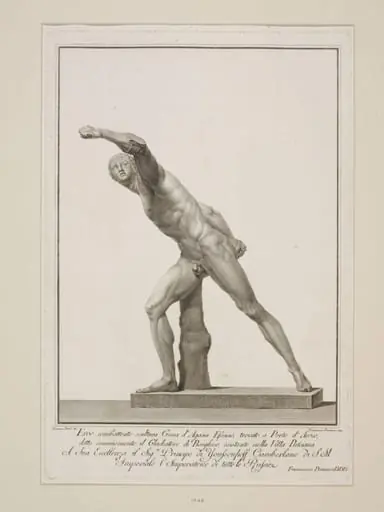
![The Borghese Gladiator, front view [plate 26], by François Perrier](https://artifactworldgallery.com/img/francois-perrier--the-borghese-gladiator-front-view-plate-26--5b649a5fe8c2f305-w320.webp)
![The Borghese Gladiator, back view [plate 29], by François Perrier](https://artifactworldgallery.com/img/francois-perrier--the-borghese-gladiator-back-view-plate-29--e76fdd1927ce2d52-w320.webp)
![The Borghese Gladiator, side view, turned to right [plate 28], by François Perrier](https://artifactworldgallery.com/img/francois-perrier--the-borghese-gladiator-side-view-turned-to-right-plate-28--d519e69b0c94bb6a-w320.webp)