Artwork
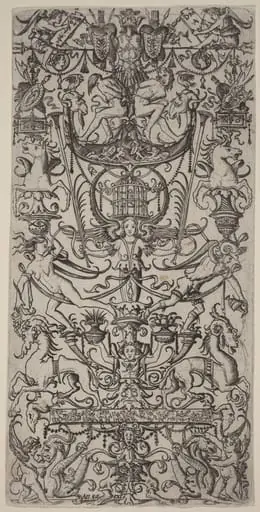
Ornament Panel: Triton and Two Infant Satyrs

Ornament Panel: Triton and Two Infant Satyrs is an ink print by the Renaissance artist Giovanni Pietro Birago. It dates from 1510 and is held in the collection of the National Gallery of Art.
About this work
Overview
Giovanni Pietro Birago’s engraving titled *Ornament Panel: Triton and Two Infant Satyrs* dates from around 1510. Executed as a narrow, decorative print, the composition is densely packed with interlacing motifs and mythological figures arranged in a vertical sequence.
Subject & Meaning
The upper register presents two winged beings—identified as Triton and a companion—grasping a circular shield and confronting each other.
The upper register presents two winged beings—identified as Triton and a companion—grasping a circular shield and confronting each other. Beneath them, a small figure blows a conch‑shaped horn while two chubby, goat‑legged satyrs frolic around a pedestal. A central vase holds additional miniature figures, and the lower section shows a reclining male figure accompanied by a shell, linking the scene to classical themes of sea deities and pastoral play.
Technique & Style
Birago employed the engraving process, incising the design into a metal plate with a burin to produce fine, linear detail. The work relies on crisp hatching and cross‑hatching to render shadows and texture, allowing the intricate foliage, scrollwork, and tiny figures to stand out against a tightly woven ornamental background.
History & Provenance
Created in the early sixteenth century, the print reflects the period’s fascination with decorative panels used for architectural framing or book illustration. While specific ownership records are scarce, the engraving is catalogued among Birago’s known output and survives in several museum collections that focus on Renaissance printmaking.
Artist & collection