Artwork
High Street, from Ninth Street, Philadelphia
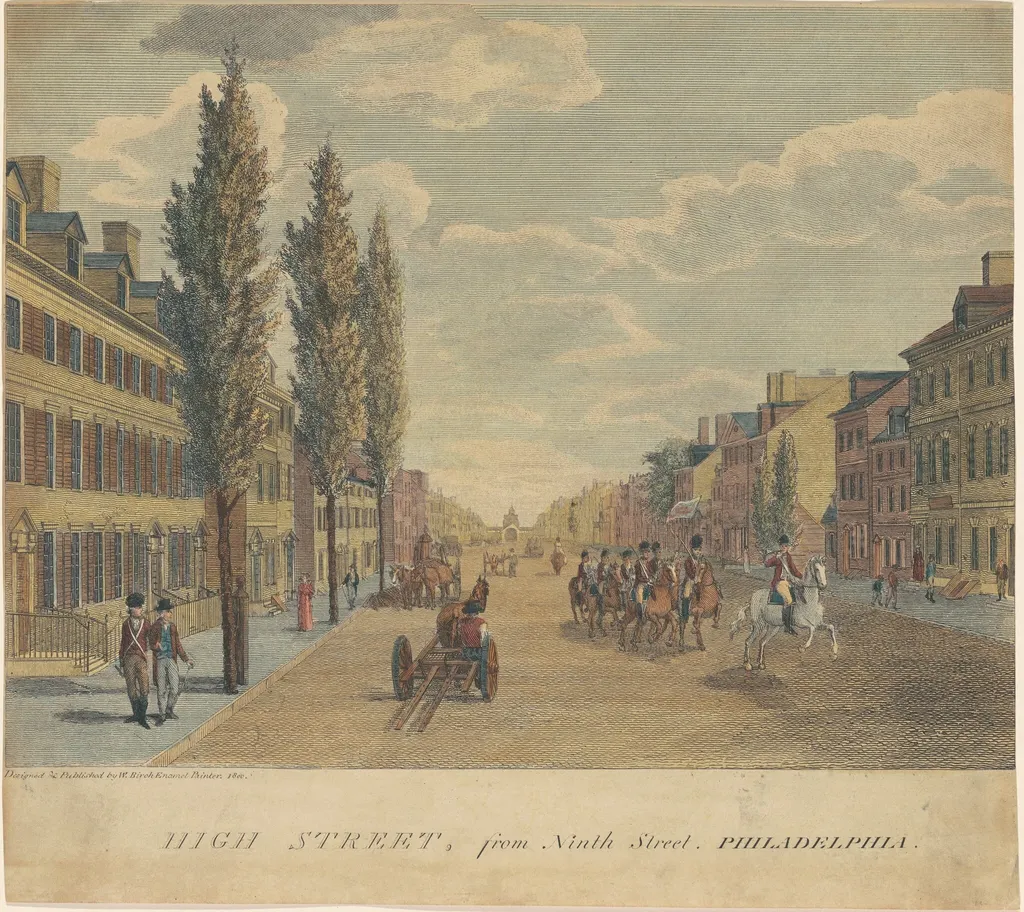
High Street, from Ninth Street, Philadelphia is an ink print by the Romanticist artist William Russell Birch. It dates from 1800 and is held in the collection of the National Gallery of Art.
About this work
This print shows a quiet Philadelphia street in 1800. Two-story brick houses line a dirt road. A lone horse stands near a post. Hand-colored ink gives the scene a soft glow.
The artist printed this from an engraved metal plate. He cut fine lines into the plate, then inked and pressed the paper. This method let him sell many copies.
Try looking up Birch, William Russell next.
Overview
The technique allowed for multiple impressions, making it accessible to a broader audience interested in the city’s emerging architecture and daily rhythms.
Created in 1800 by William Russell Birch, this hand-colored engraving captures a quiet stretch of High Street in Philadelphia, viewed from Ninth Street. Executed on wove paper using an engraved metal plate, the print was part of a series documenting urban life in early America. The technique allowed for multiple impressions, making it accessible to a broader audience interested in the city’s emerging architecture and daily rhythms.
Subject & Meaning
The scene depicts a modest urban street lined with two-story brick dwellings, reflecting Philadelphia’s residential character at the turn of the 19th century. A single horse near a post suggests quiet domestic life, while the absence of crowds or activity conveys a sense of stillness. The image serves as a record of the city’s built environment, emphasizing order and restraint rather than grandeur or spectacle.
Technique & Style
Birch used line engraving on copper, incising fine, precise marks to define architectural forms and textures. After inking the plate, he pressed it onto wove paper to produce the base image. Subtle hand-coloring with water-based inks added warmth to brick facades and sky, softening the starkness of the etched lines. This combination of mechanical reproduction and artisanal touch balanced accuracy with aesthetic appeal.
History & Provenance
The print was produced as part of Birch’s 'The City of Philadelphia' series, published between 1799 and 1800. It was among the first systematic visual records of American urban life, intended for both local residents and European audiences curious about the new republic. Original impressions were sold by subscription, and surviving examples are now held in major American collections, including the Philadelphia Museum of Art.
Context
In 1800, Philadelphia was the nation’s capital and a hub of commerce and civic life. Birch’s prints emerged during a period of growing interest in documenting American cities, as the young republic sought to define its identity. Unlike European urban views, these scenes emphasized modest scale and everyday detail, reflecting a distinctively American sensibility toward architecture and public space.
Legacy
Birch’s engravings established a precedent for American topographical printmaking. His method of combining precise draftsmanship with accessible reproduction influenced later artists and publishers documenting urban development. Though not widely known today, his work remains a vital visual archive of Philadelphia’s early 19th-century streetscape, offering insight into the nation’s architectural and social evolution.
Artist & collection

Artist
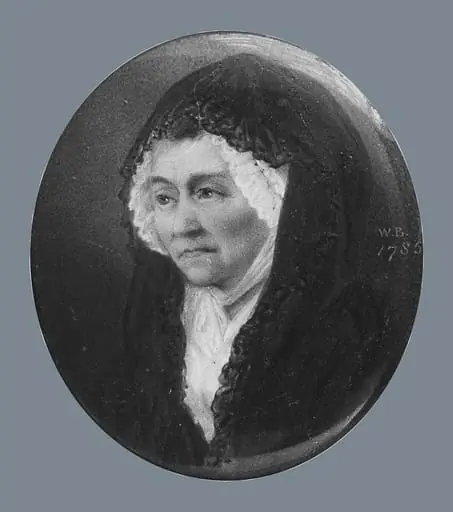
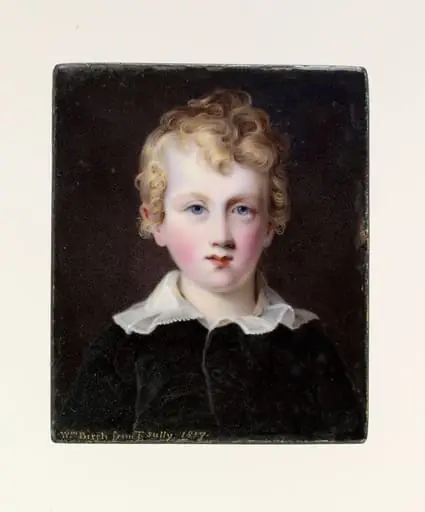
William Russell Birch (9 April 1755 – 7 August 1834) was an English miniature painter, enameler, and landscape engraver and designer.

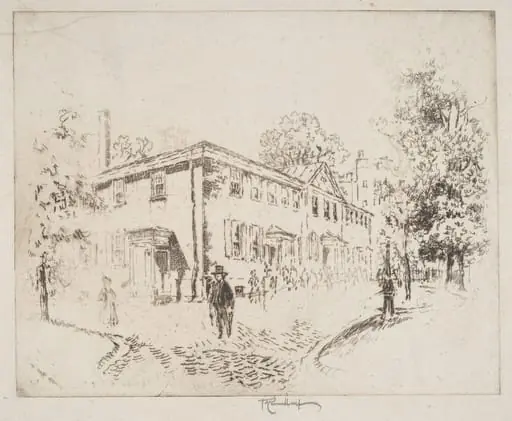 Fourth Street, Meeting House, Philadelphia
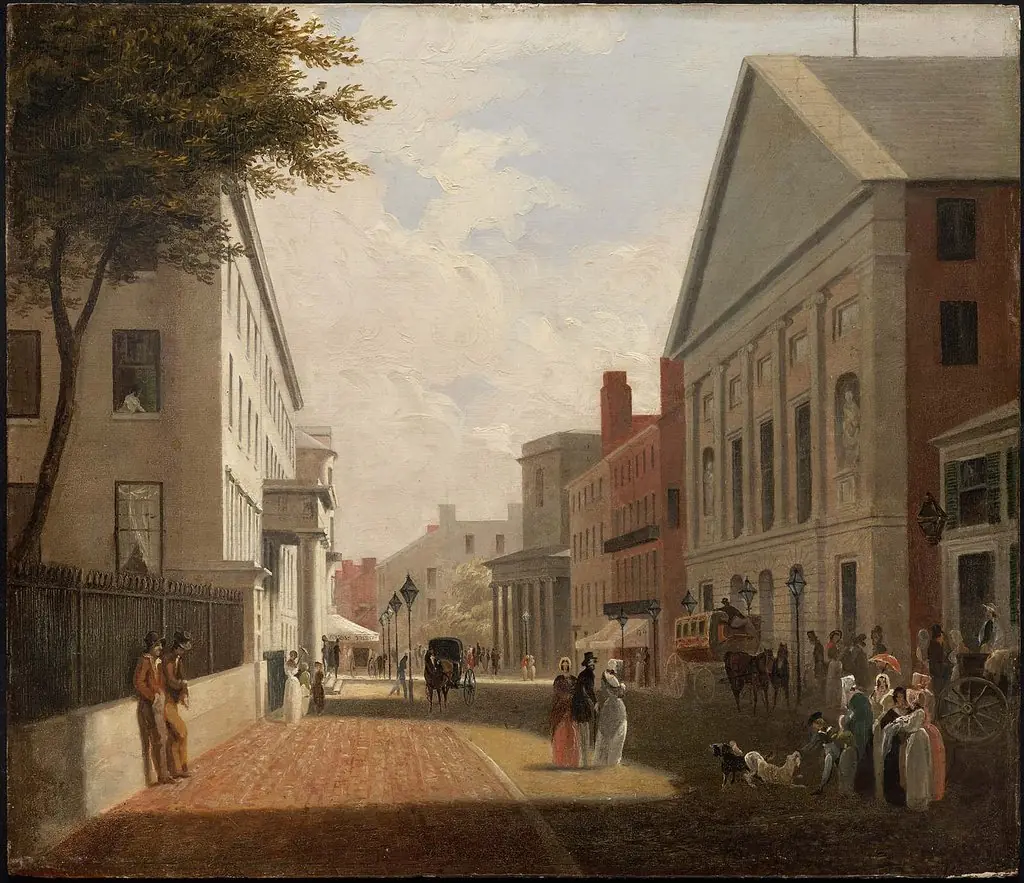 Tremont Street, Boston
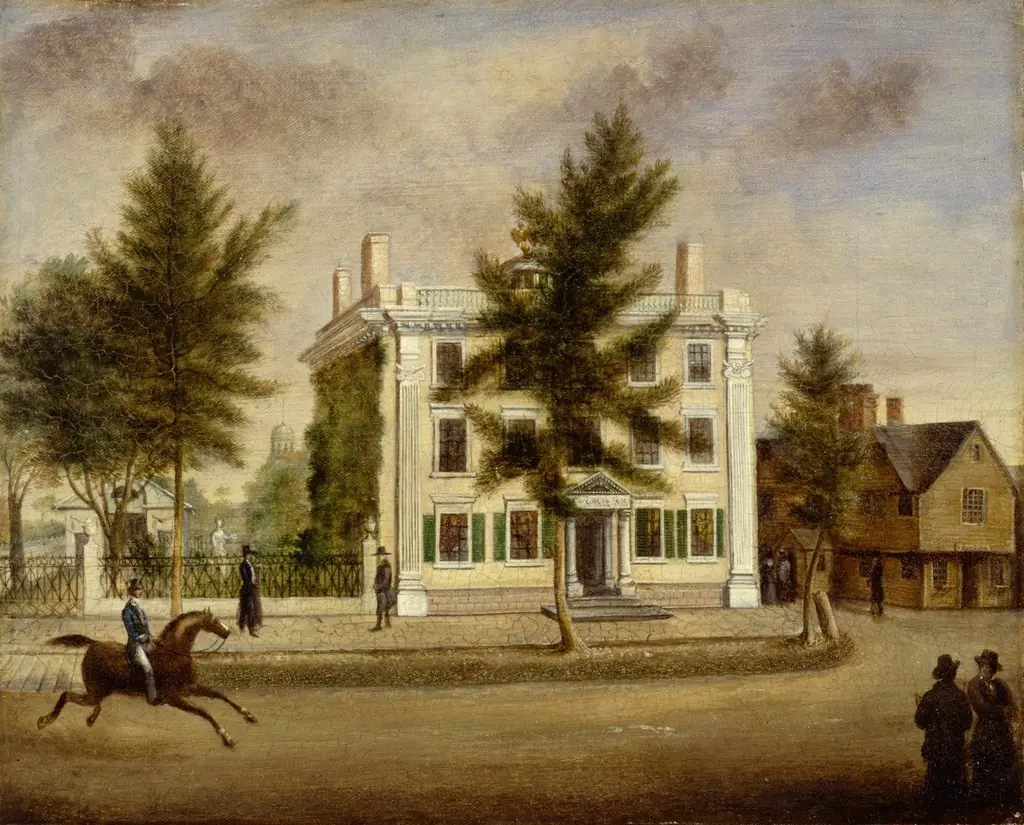 Pickman-Derby House, 70 Washington Street, Salem, Massachusetts
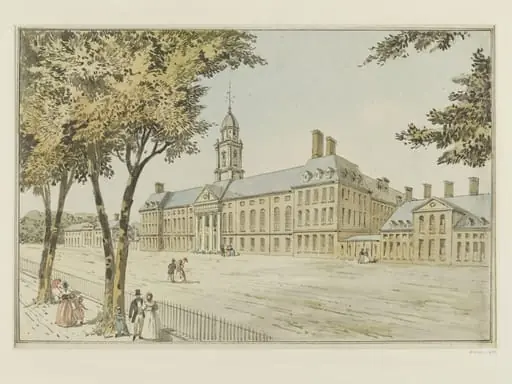 Chelsea Hospital
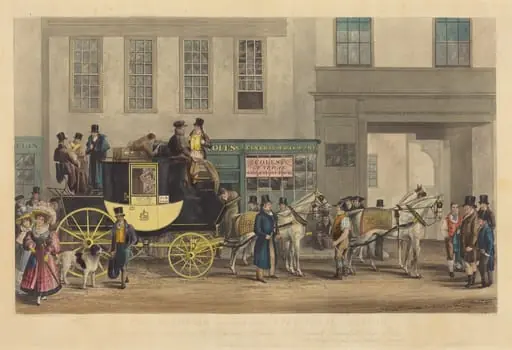 The Blenheim, Leaving the Star Hotel, Oxford
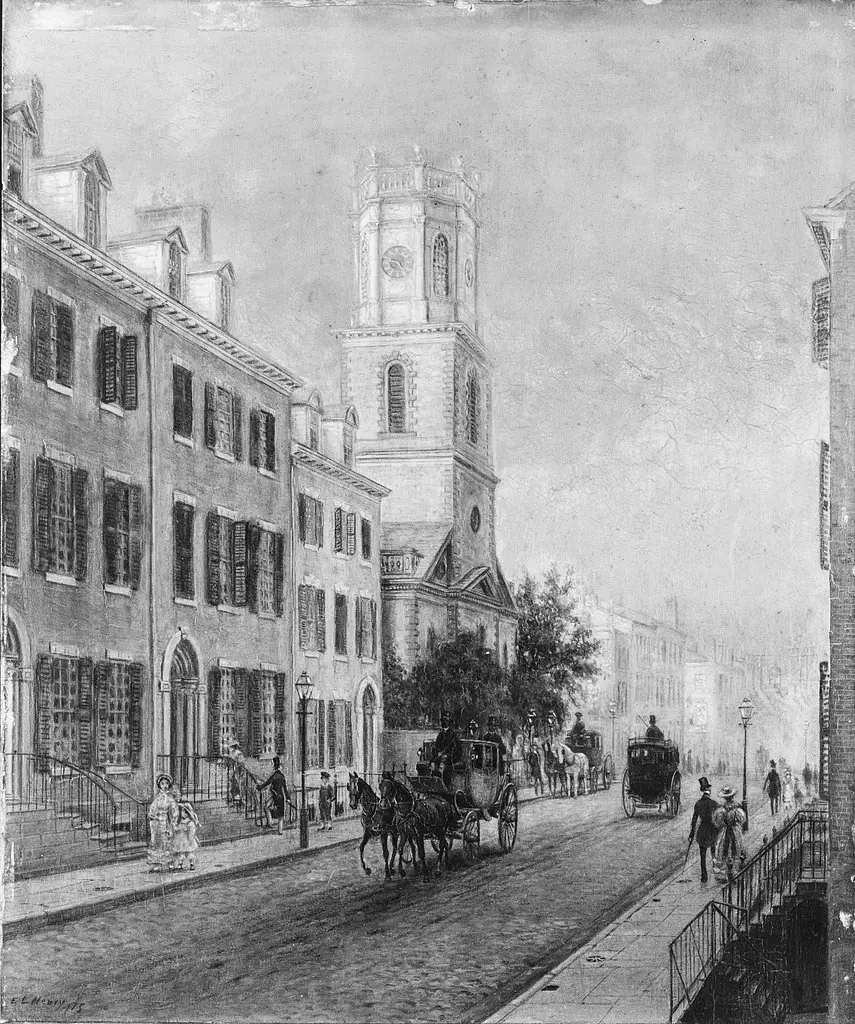 Saint George's Church, New York
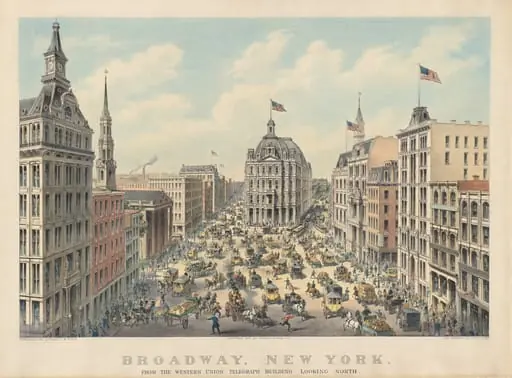 Broadway, New York: From the Western Union Telegraph Building Looking North
 Shop and Warehouse of Duncan Phyfe, 168–172 Fulton Street, New York City
 The Strand, with Somerset House and St Mary's Church
 Hot Corn Seller
 A View from an East Window in the Old Sugar House, No.3 Norris' Alley, Philadelphia
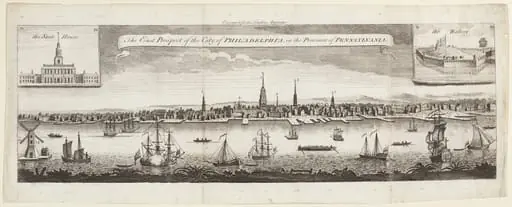 The East Prospect of the City of Philadelphia, in the Province of Pennsylvania