Artwork
Vespertilio murinus Linn
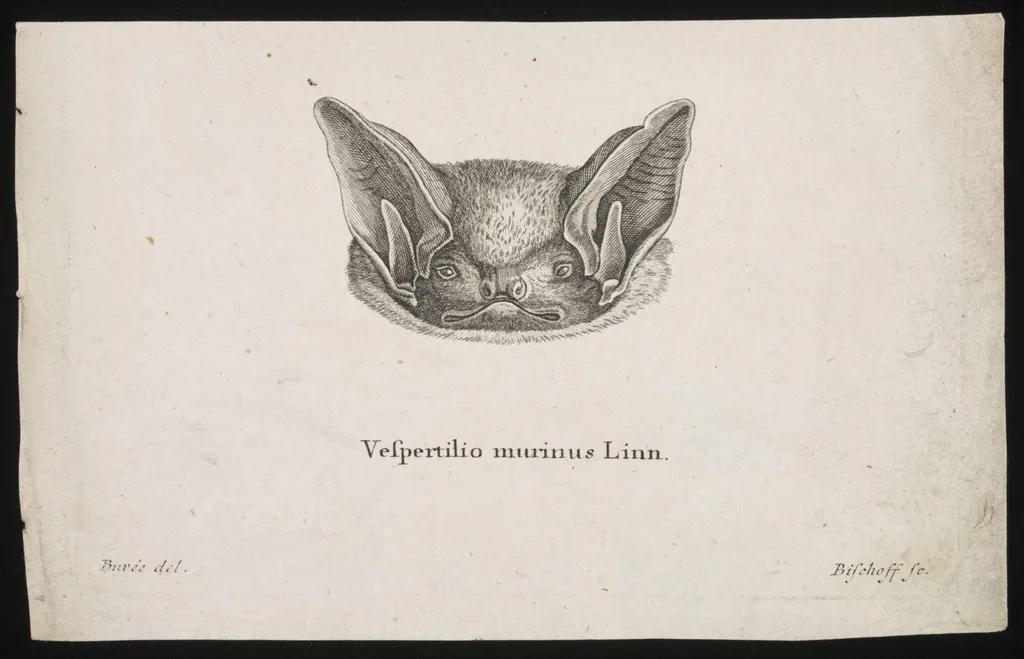
Vespertilio murinus Linn is a print by the Romanticist artist Bischoff. It dates from 1775 and is held in the collection of the Victoria and Albert Museum.
About this work
Overview
' The print’s format and detail suggest it was part of a natural history publication, likely extracted from a bound volume for study or display.
This black-and-white engraving presents a frontal view of a bat’s head, isolated from a larger illustration that originally showed the animal with fully extended wings. The lower section, now separated, retains the scientific label 'Vespertilio murinus Linn' and the engraver’s signature 'Bischoff fe.' The print’s format and detail suggest it was part of a natural history publication, likely extracted from a bound volume for study or display.
Subject & Meaning
The subject is the common pipistrelle bat, identified by its Linnaean name. The focused, unadorned depiction emphasizes anatomical accuracy over artistic flourish, reflecting the 18th-century scientific imperative to document species systematically. The bat’s large ears and forward-facing eyes are rendered with clinical precision, aligning with contemporary efforts to classify mammals through visual taxonomy rather than myth or symbolism.
Technique & Style
The image employs fine, controlled hatching to suggest the texture of fur, with delicate lines defining facial contours and ear membranes. The engraving’s clarity and restraint point to a methodical, almost topographical approach—typical of scientific illustration in natural history texts. The absence of shading or background isolates the subject, reinforcing its role as a specimen for study rather than a compositional element.
History & Provenance
The print likely originated from Johann Christian Daniel von Schreber’s multi-volume work on mammals, published between 1774 and 1804. The presence of the mark 'L1' in the upper-right corner indicates it was once part of a numbered plate in a bound volume. Its current fragmented state suggests later separation, possibly for individual use or sale, a common practice among collectors and institutions seeking specific plates.
Context
During the late 18th century, European naturalists increasingly relied on detailed visual records to support biological classification. Engravings like this one served as portable references for scholars, bridging the gap between field observation and published taxonomy. The inclusion of the engraver’s name, 'Bischoff fe.', reflects the growing recognition of artisan contributors to scientific knowledge, even as their work remained subordinate to the author’s authority.
Legacy
Though no longer part of its original volume, this fragment endures as an example of Enlightenment-era scientific illustration. Its survival in institutional collections underscores the enduring value of precise visual documentation in natural history. It remains a quiet testament to the collaborative labor of authors, engravers, and publishers who sought to systematize the natural world through image and text.
Artist & collection
Artist
Bischoff is a German surname. Notable people with the surname include:Amaury Bischoff, Portuguese-born French footballer Anna Catharina Bischoff (1719–1787), wife of pastor Lucas Gernler, known for her well-conserved…

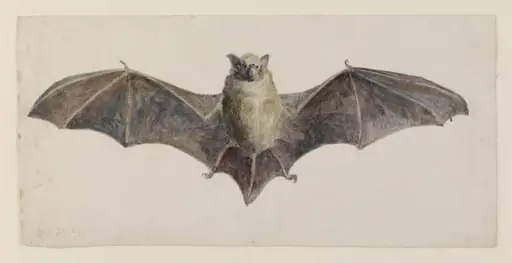 Front view of a bat
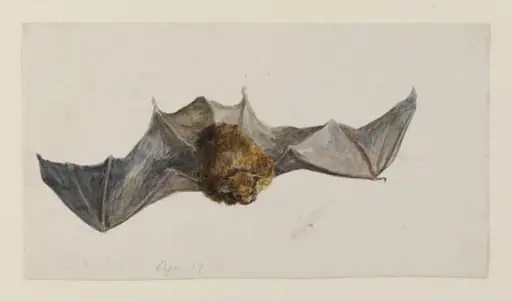 A bat seen from above
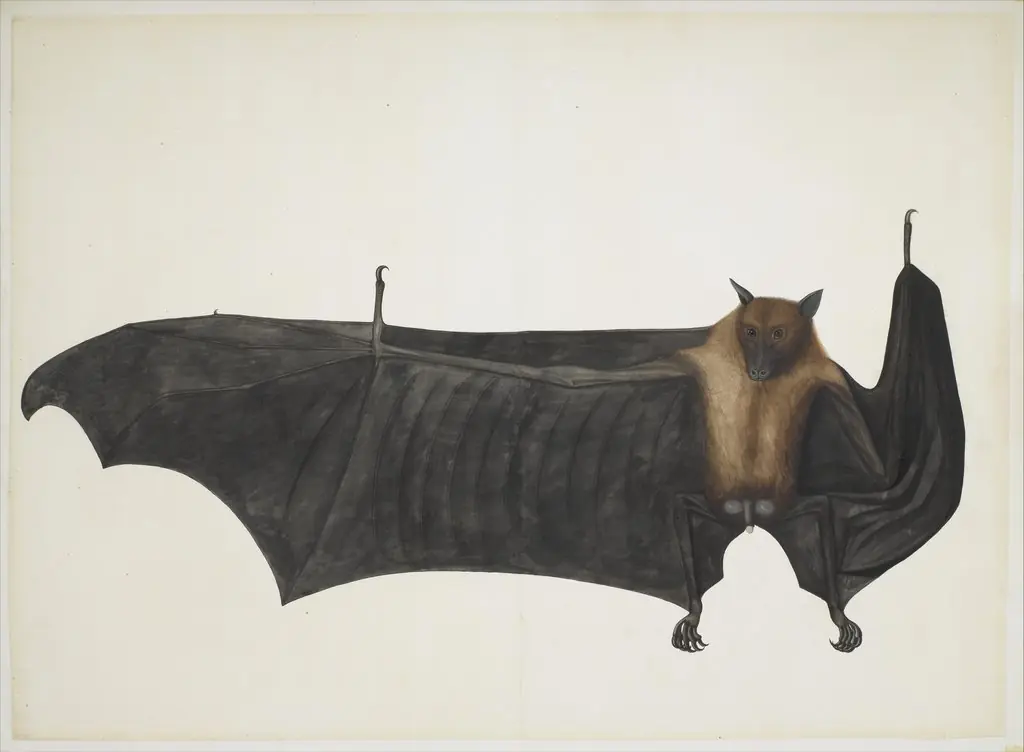 Great Indian Fruit Bat
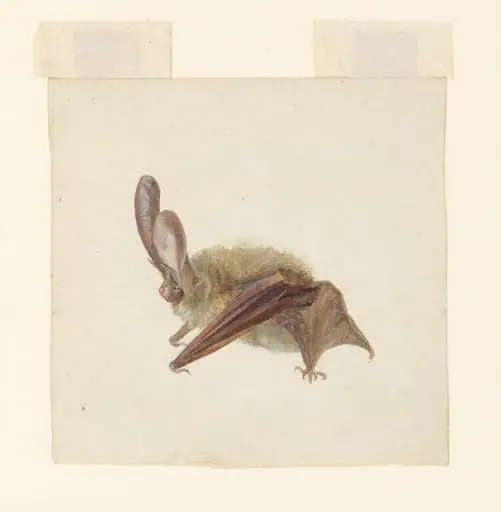 Side view of a bat with wings folded
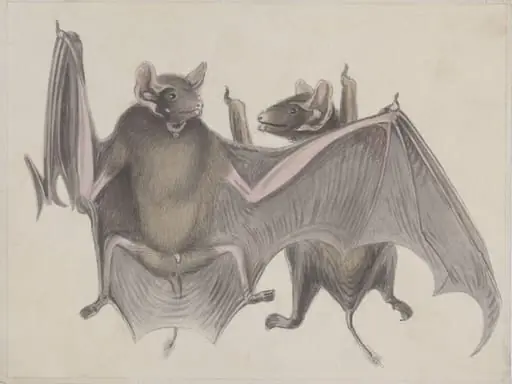 Two bats.
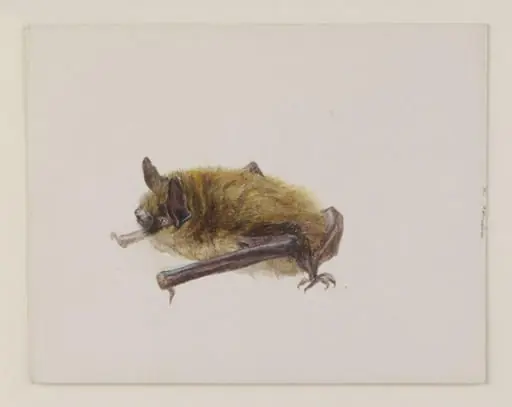 Side view of a bat with wings folded
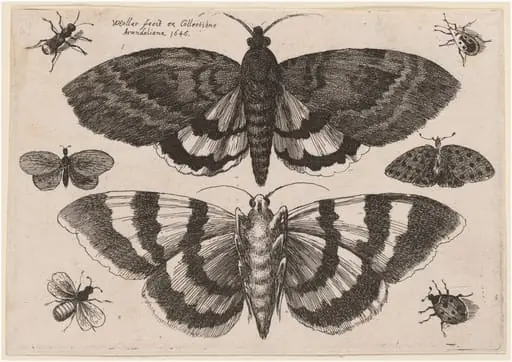 Two Moths and Six Insects
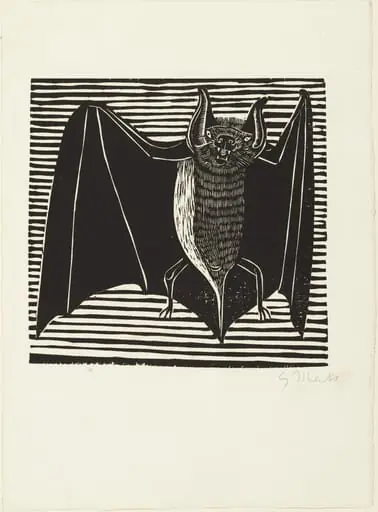 Untitled
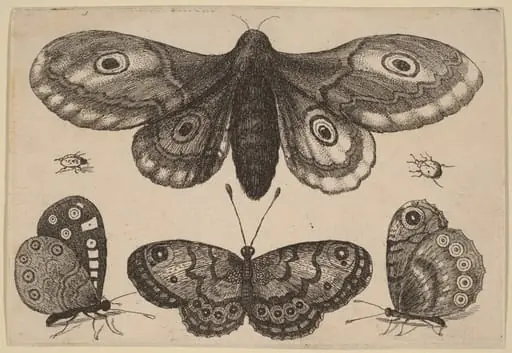 Moth, Three Butterflies, and Two Beetles
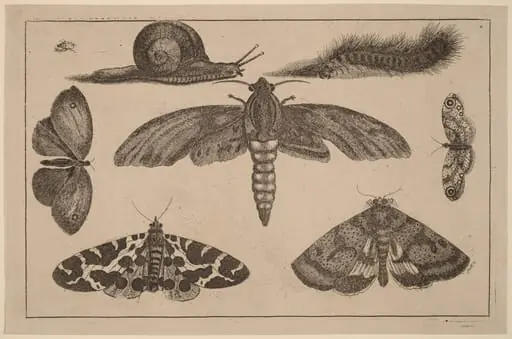 Six Insects, a Caterpillar, and a Snail
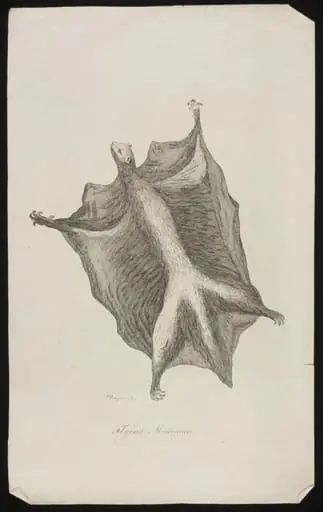 Flying Maucauco
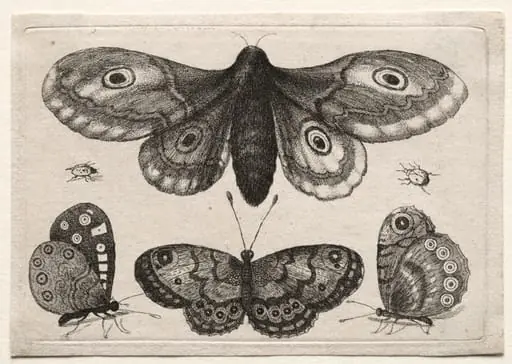 Muscarum Scarabeorum, vermiumque Variae Figure & Formae: A Moth, Three Butterflies and Two Beetles