Artwork
Two Moths and Six Insects
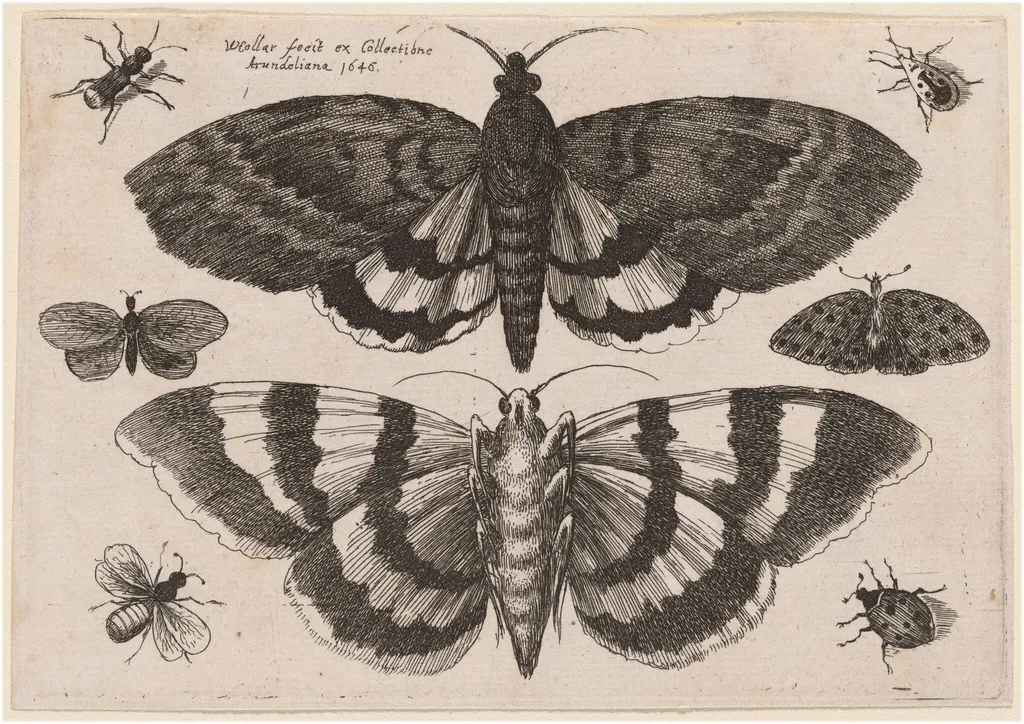
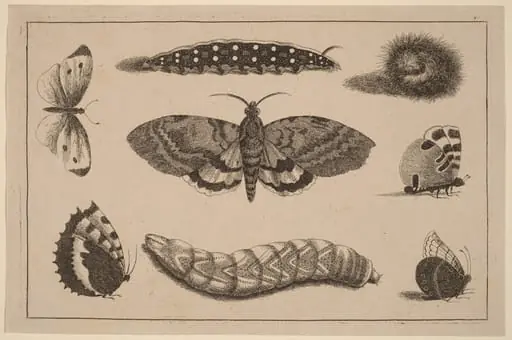
Two Moths and Six Insects is an ink print by the Baroque artist Wenceslaus Hollar. It dates from 1646 and is held in the collection of the National Gallery of Art.
About this work
The moths are large, with detailed wings and antennae, while the smaller bugs have simple, blocky shapes.
This drawing shows six insects and two moths, all sketched in black ink on light paper. The moths are large, with detailed wings and antennae, while the smaller bugs have simple, blocky shapes. Some insects look fuzzy, others smooth, and all are drawn with careful lines.
The artist focused on tiny details, like the moths’ feathery antennae and the insects’ segmented bodies. This was made in 1646 as a scientific study of bugs.
Next, look up etching to see how artists like this made precise prints.
Overview
Created in 1646 by Wenceslaus Hollar, this etching presents a focused study of eight insects—two moths and six smaller specimens—rendered with meticulous line work. Though Hollar is better known for topographical prints, this piece reflects his engagement with natural observation, executed in fine, controlled etching techniques on paper.
Subject & Meaning
The composition centers on the delicate anatomy of moths, their feathery antennae and scaled wings rendered with precision, alongside six other insects distinguished by varied textures and segmented forms. Rather than symbolic intent, the work functions as a scientific record, capturing biological detail for study, aligning with 17th-century interests in natural history and empirical observation.
Technique & Style
Hollar employed etching to achieve fine, linear clarity, using acid to bite intricate details into a metal plate. The contrast between the moths’ soft, textured wings and the smoother, blockier bodies of the smaller insects demonstrates his sensitivity to surface variation. Lines are deliberate and unembellished, prioritizing accuracy over ornamentation.
History & Provenance
Produced during Hollar’s time in England, the print emerged from a period when he regularly documented both urban scenes and natural specimens. While the original plate’s early ownership is undocumented, the work survives in multiple impressions held in institutional collections, reflecting its circulation among collectors of scientific imagery.
Context
In mid-17th-century Europe, detailed natural studies gained traction as part of broader scientific inquiry. Hollar’s etching aligns with contemporaneous works by naturalists and artists who sought to visually catalog biodiversity, often for private cabinets of curiosity or scholarly exchange, before the formalization of modern entomology.
Legacy
Though not widely exhibited today, the print remains a representative example of how printmakers contributed to early scientific documentation. Hollar’s precision in rendering minute biological forms influenced later natural history illustration, bridging artistic skill and empirical observation in pre-modern science.
Artist & collection
Artist
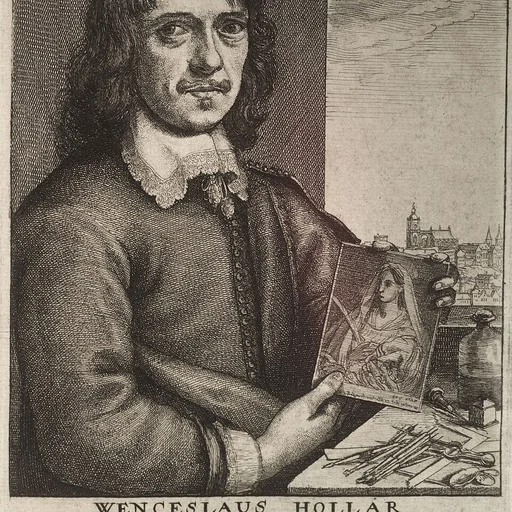
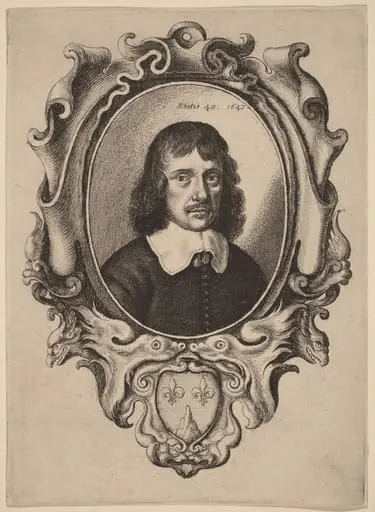
Wenceslaus Hollar (Czech: Václav Hollar (Czech pronunciation: ), German: Wenzel Hollar; 23 July 1607 – 25 March 1677) was a Czech engraver, etcher and painter.


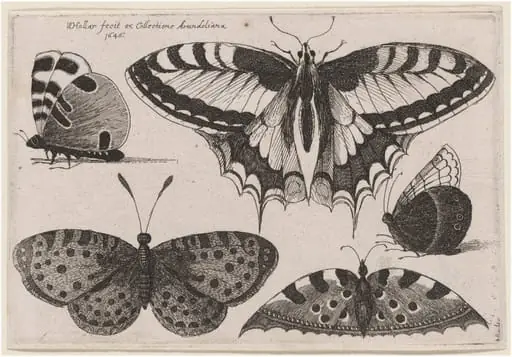 Three Butterflies and Two Moths
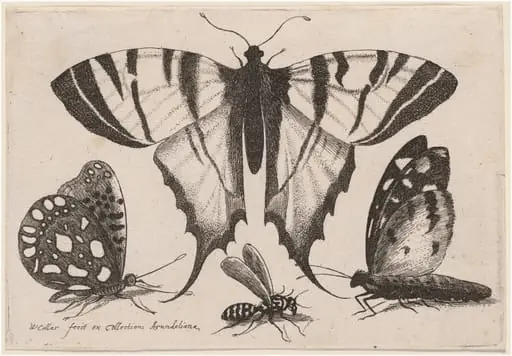 Two Butterflies, a Wasp, and a Moth
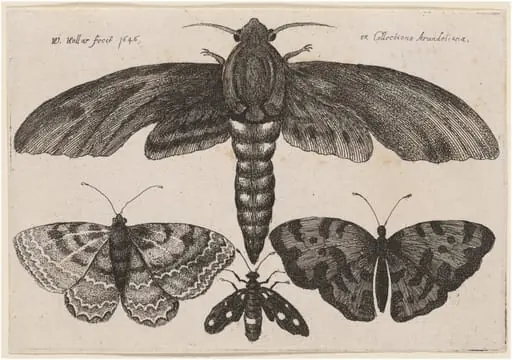 Moth and Three Butterflies
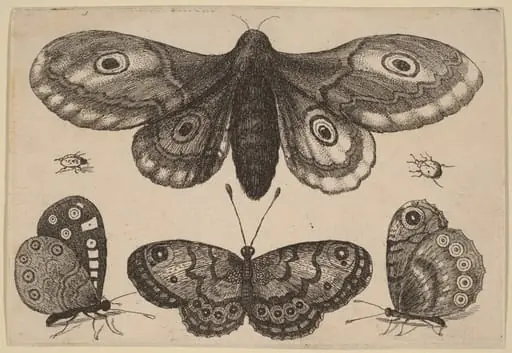 Moth, Three Butterflies, and Two Beetles
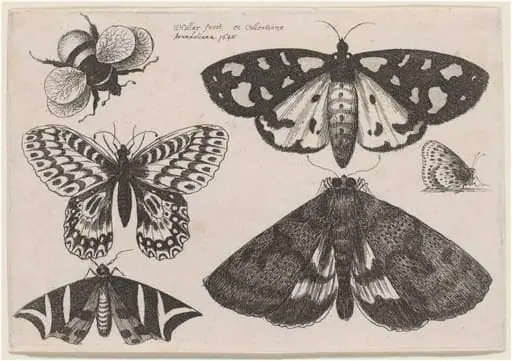 Three Moths, Two Butterflies, and a Bumble Bee
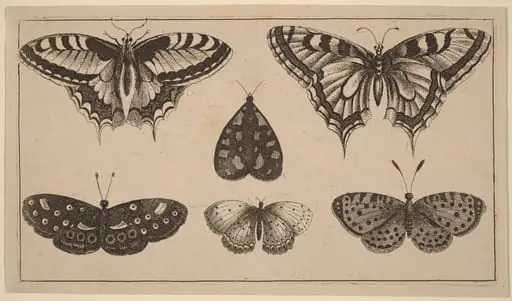 Five Butterflies and a Moth
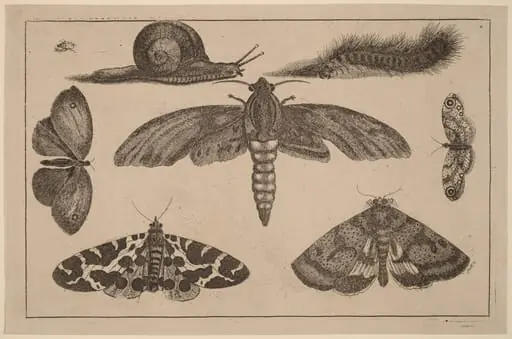 Six Insects, a Caterpillar, and a Snail
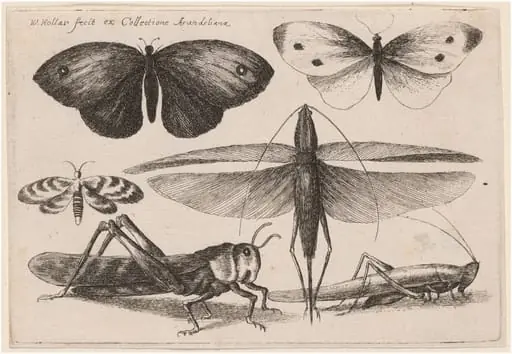 Six Insects
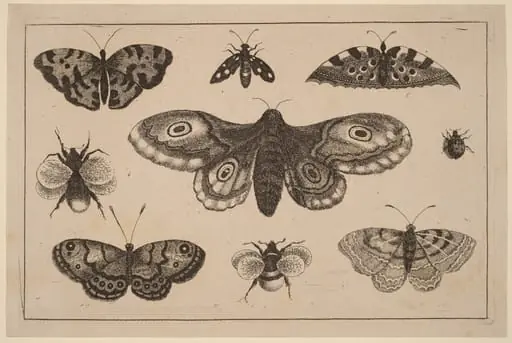 Moth, Butterflies, and Bees
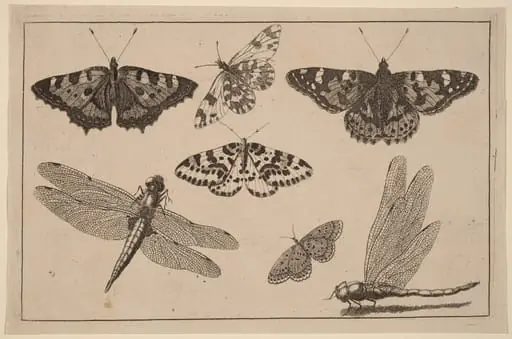 Two Dragonflies and Five Butterflies
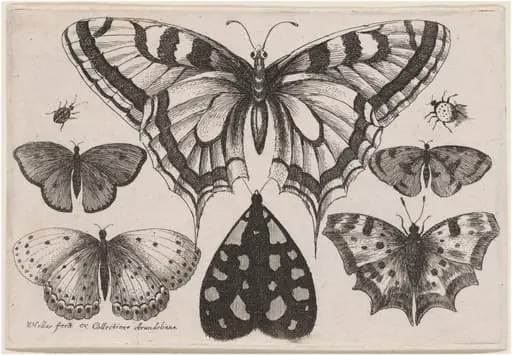 Five Butterflies, a Moth, a Beetle, and a Spider
 Three Caterpillars, a Moth, and Four Butterflies