Artwork
The Village Way, Winson
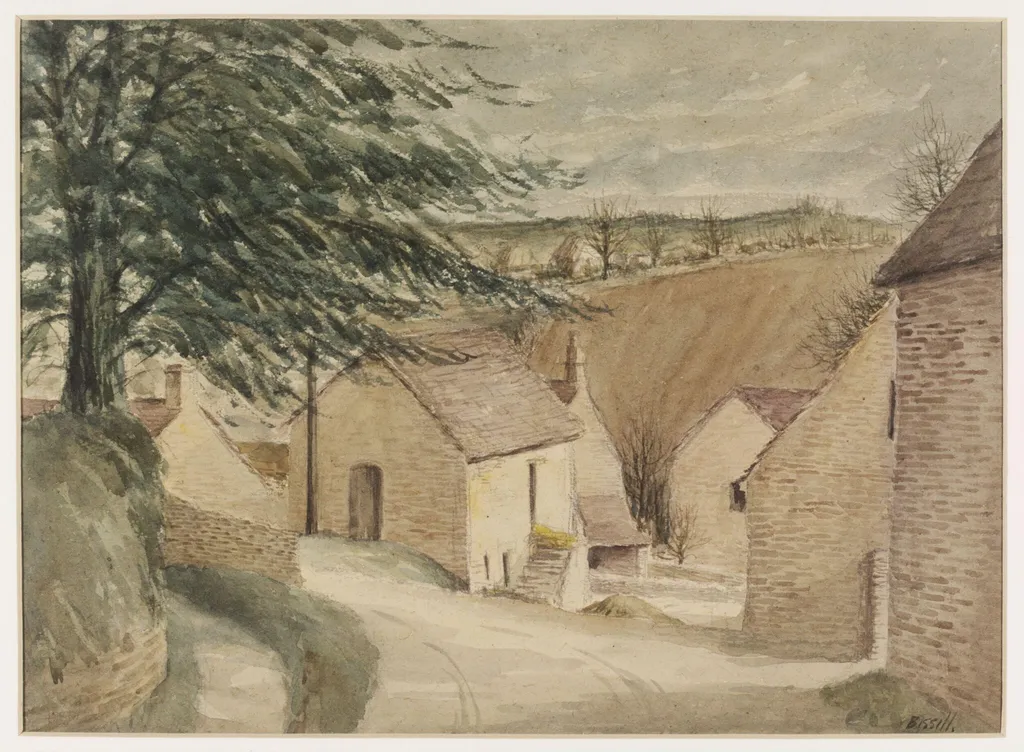
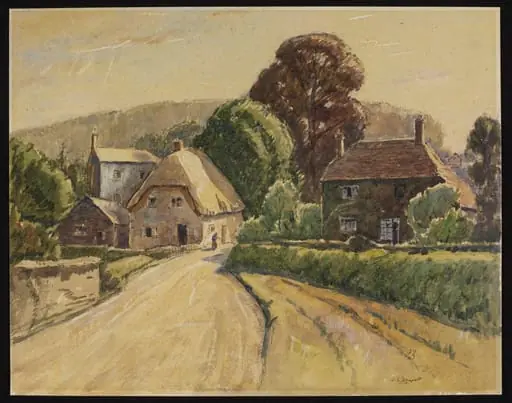
The Village Way, Winson is a watercolor work on paper by Bissill. It dates from 1940 and is held in the collection of the Victoria and Albert Museum.
About this work
Overview
The work was produced under wartime conditions to preserve visual records of English villages at risk from modernization and conflict.
The Village Way, Winson is a watercolour by artist Bissill, created in the early 1940s as part of the Recording Britain project. It captures a quiet rural road in Gloucestershire, framed by stone dwellings and a prominent evergreen tree. The work was produced under wartime conditions to preserve visual records of English villages at risk from modernization and conflict. Its modest scale and intimate perspective reflect the project’s focus on unassuming, everyday landscapes.
Subject & Meaning
The painting portrays a gentle bend in a country lane, with buildings clustered along its edge and a solitary tree anchoring the left side. Beyond, a bare hillside recedes into the distance under a muted sky. The scene holds no dramatic events or human figures, emphasizing stillness and continuity. It suggests a quiet resilience in rural life, offering a visual anchor to a national identity rooted in place rather than spectacle.
Technique & Style
Bissill employs delicate watercolour washes to suggest texture and depth without heavy detail. Soft, translucent layers build the forms of stone walls and foliage, while the road’s curve guides the eye naturally through the composition. The palette is restrained—earthy greys, muted greens, and pale browns—enhancing the sense of calm. Brushwork is controlled yet fluid, avoiding sharp definition in favour of atmospheric harmony.
History & Provenance
Created between 1940 and 1943, the painting belongs to the Recording Britain collection, initiated by the Pilgrim Trust and directed by Sir Kenneth Clark. The initiative commissioned artists to document landscapes vulnerable to wartime destruction or urban change. Bissill’s work was acquired directly through this scheme and later entered institutional holdings, preserving it as part of a broader effort to safeguard Britain’s visual heritage during crisis.
Context
During the Second World War, many British artists were employed not for propaganda but to record vanishing rural scenes. The Recording Britain project responded to fears that traditional village life and architecture would be lost to bombing or development. Bissill’s depiction of Winson aligns with this mission, offering a quiet counterpoint to wartime urgency—one that valued endurance over heroism.
Legacy
The painting remains part of a significant archival collection that documents Britain’s mid-20th-century landscape. While not widely exhibited, it contributes to scholarly understanding of how artists responded to social and environmental change under duress. Its preservation underscores the value placed on ordinary places as cultural artifacts, ensuring their visual memory endures beyond their physical survival.
Artist & collection
Artist
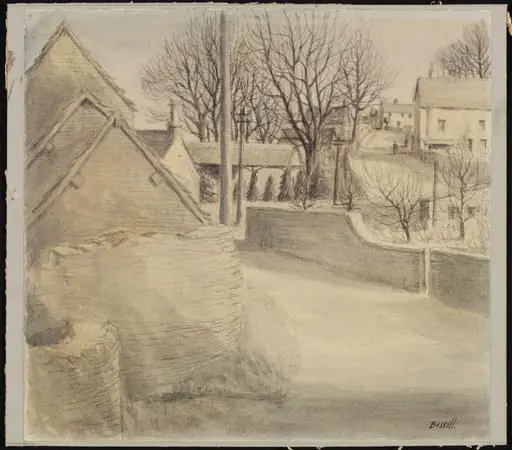
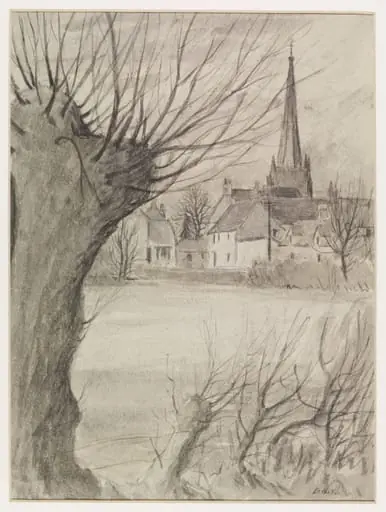
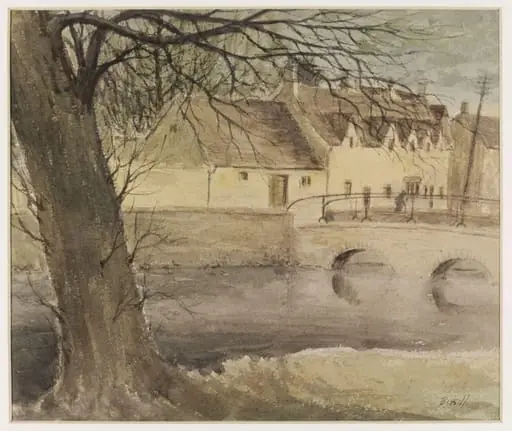
This artist created watercolors of English villages around 1940. They painted Quenington Village, The Village Way in Winson, Lechlade, The River Coln at Bibury, and Old Cottage in Ibthorpe. Close your eyes and picture…

 Woodford in the Avon Valley
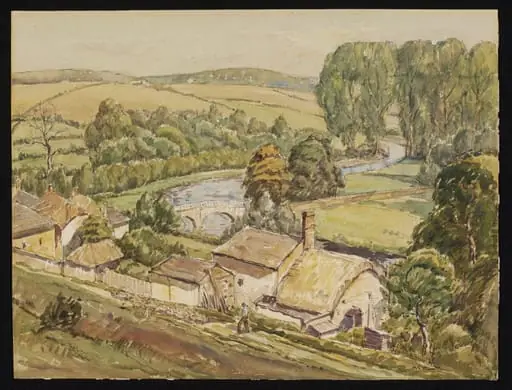 Woodford Bridge in the Avon Valley
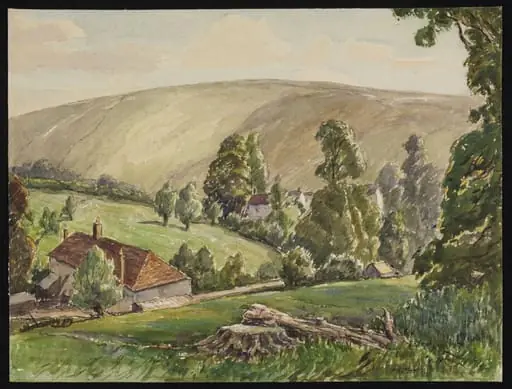 Bowerchalke
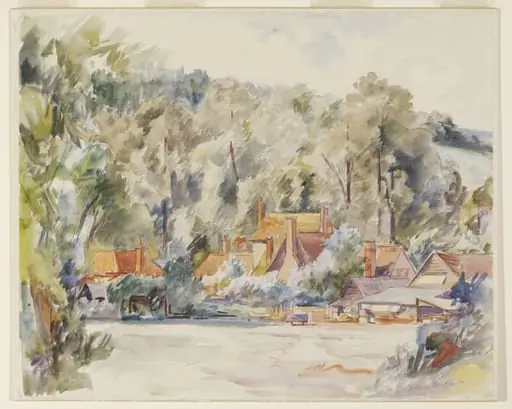 The Chequers Inn, Fingest
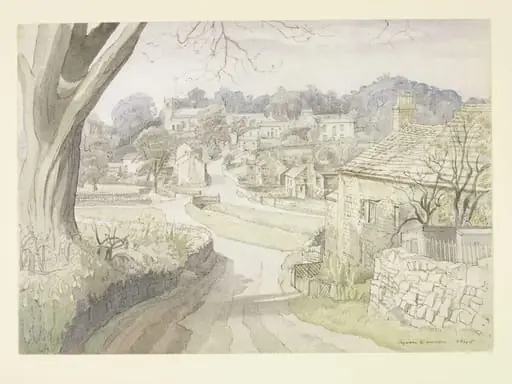 Downham Village, near Clitheroe, Lancashire
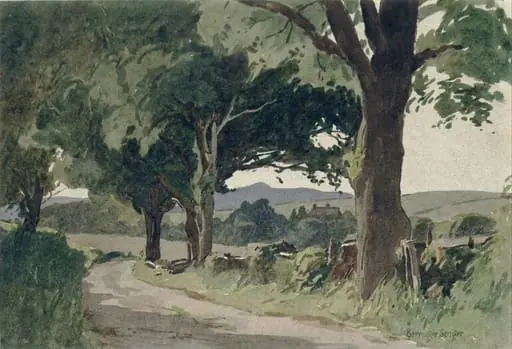 Untitled
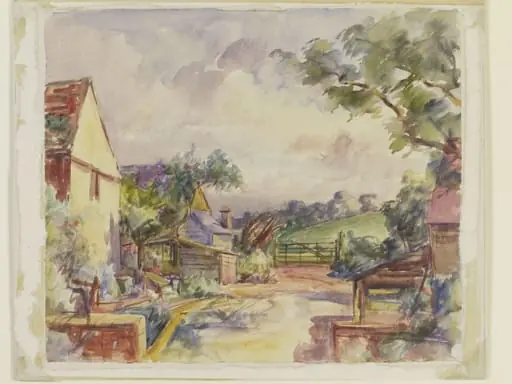 Glebe Farm, Fingest
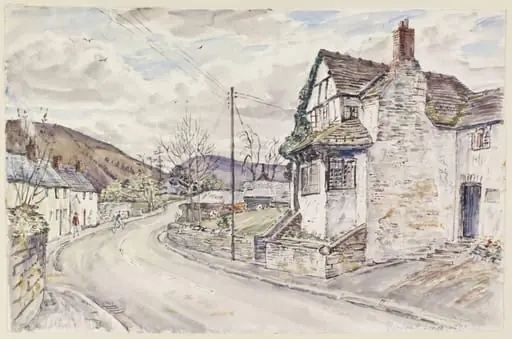 The Old Parsonage, New Radnor
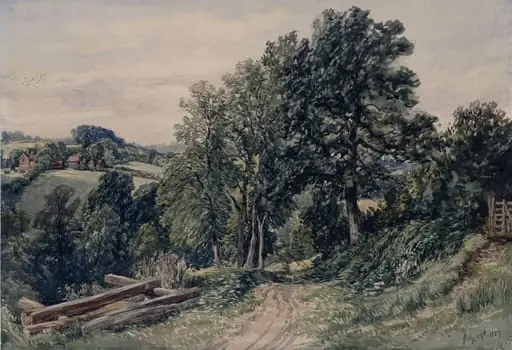 Landscape and cottages, with sawpit, Tedstone, Herefordshire
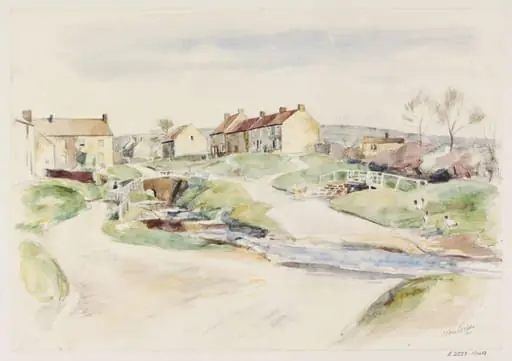 The lower ford, Hutton-le-Hole
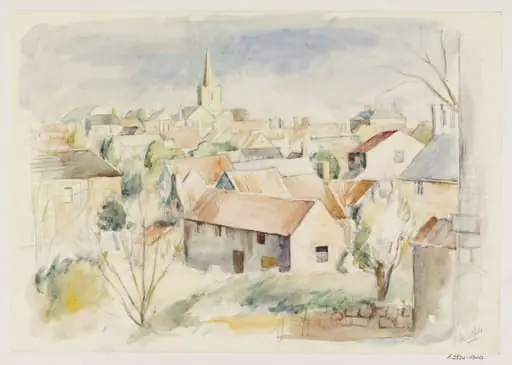 View of Pickering