Artwork
Le chêne au ravin (Oak Tree by a Ravine)
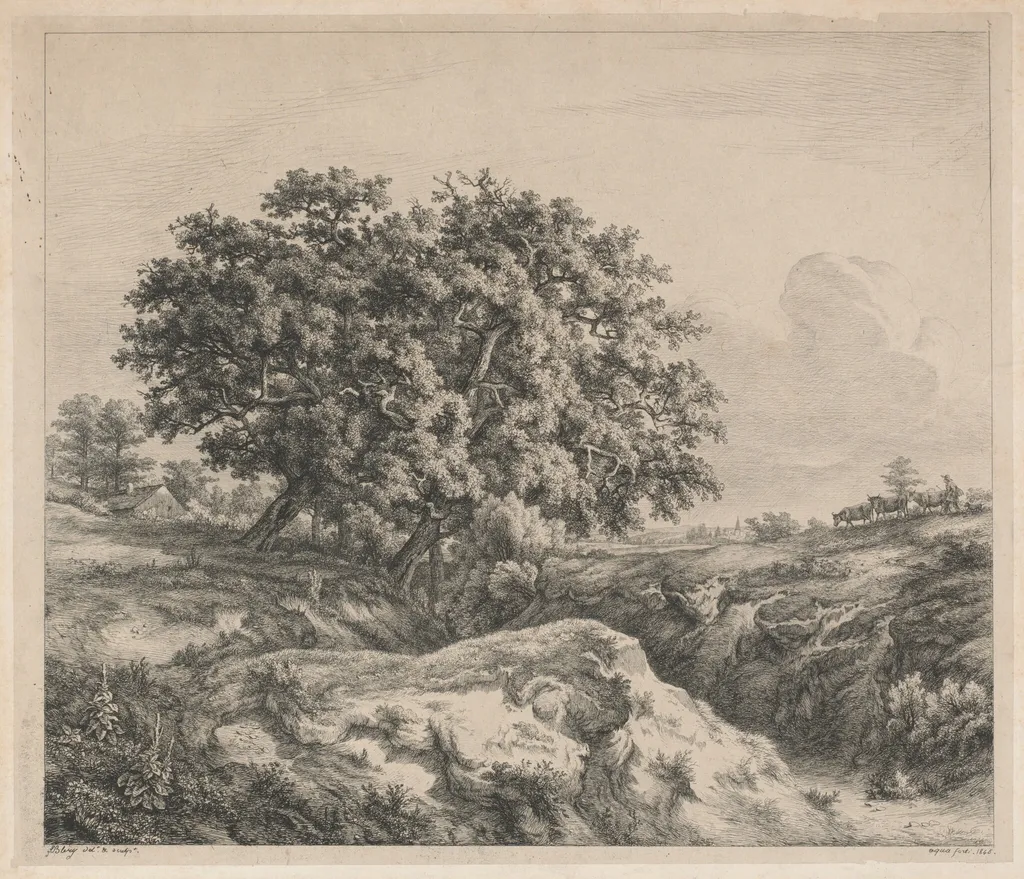
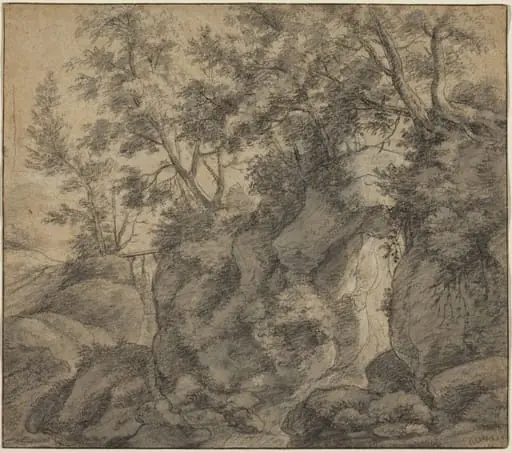
Le chêne au ravin (Oak Tree by a Ravine) is an ink print by the Romanticist artist Eugène Bléry. It dates from 1845 and is held in the collection of the National Gallery of Art.
About this work
Overview
Eugène Bléry’s 1845 print, titled *Le chêne au ravin* (Oak Tree by a Ravine), presents a solitary oak rooted in a stony gorge. The composition balances the massive trunk and sprawling branches against a muted sky, while distant structures and a road with horse‑drawn wagons hint at human presence beyond the natural foreground.
Subject & Meaning
The central oak dominates the scene, its twisted roots clinging to the surrounding rocks, suggesting resilience and the intertwining of nature and terrain. Small buildings and a roadway in the background provide a quiet contrast, implying a pastoral landscape where human activity remains peripheral to the enduring force of the tree.
Technique & Style
Executed as an etching on chine collé, the work relies on fine incised lines and varying densities of acid‑etched metal to render texture. Bléry’s careful shading models the bark’s roughness and the shadows cast by the rocks, while the delicate hatching conveys atmospheric depth and the faintness of the sky.
History & Provenance
Created in 1845, the print belongs to the mid‑nineteenth‑century French printmaking tradition, a period when artists explored the possibilities of etching for detailed landscape studies. The work is documented in several collections of Bléry’s prints, though its exact ownership trail after its initial publication is not extensively recorded.
Context
During the 1840s, French artists increasingly turned to realistic depictions of rural environments, reflecting broader Romantic interests in nature’s power and solitude. Bléry’s choice of a solitary oak within a rugged ravine aligns with contemporary themes of the sublime and the quiet dignity of the countryside.
Artist & collection


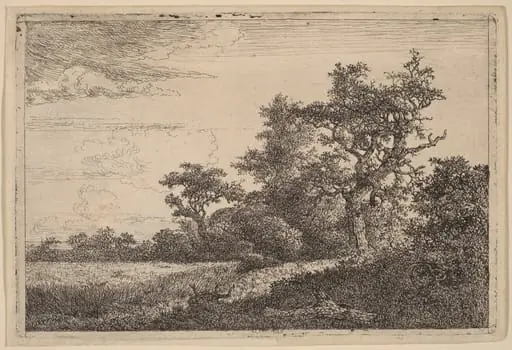 Grain Field at the Edge of a Wood (Corn Field)
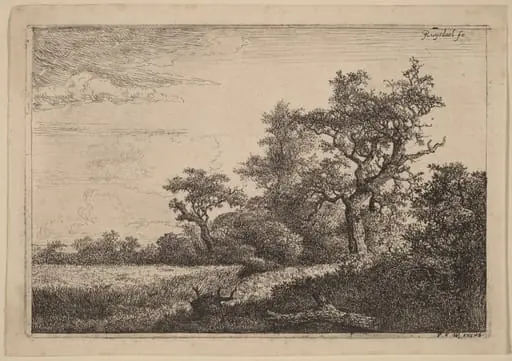 Grain Field at the Edge of a Wood (Corn Field)
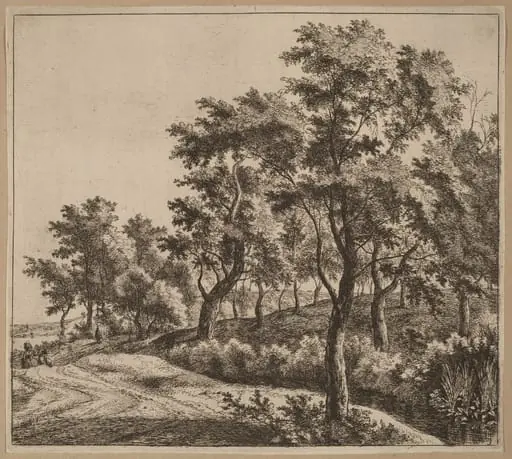
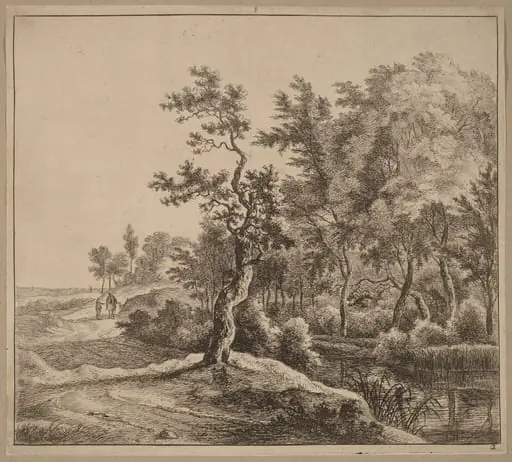 Landscape with a Winding Road
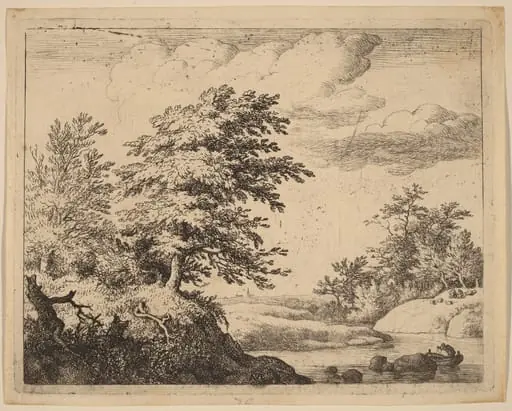
 Landscape with a Stream
 Winding River
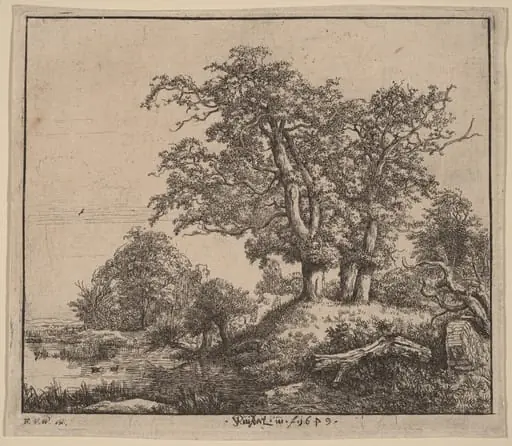 The Three Oaks
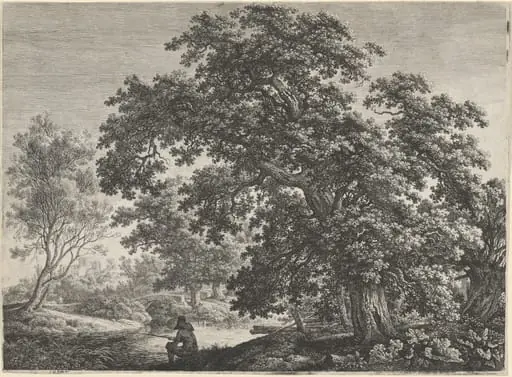 Giant Oak with a Seated Fisherman
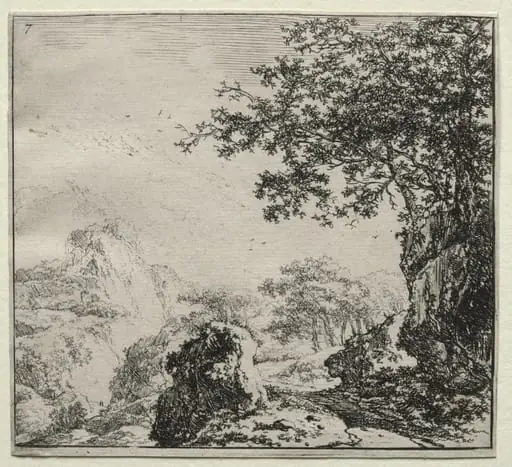 The Road near the Rocks
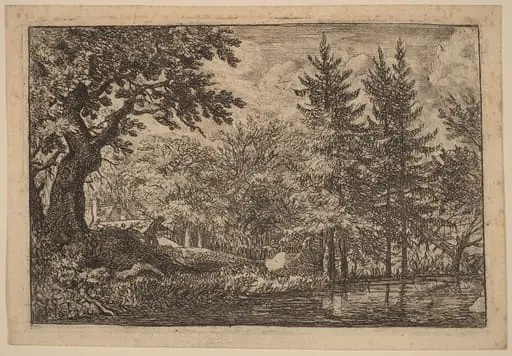 Fir Trees at the Water
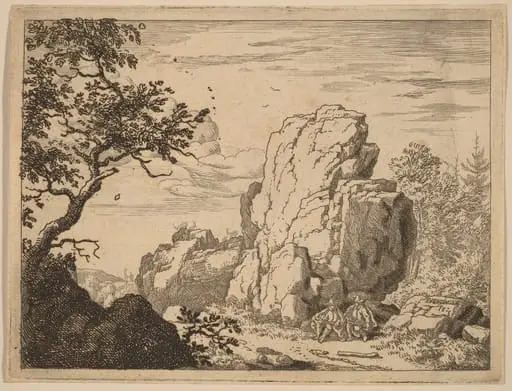 Two Men Seated at the Foot of a High Rock
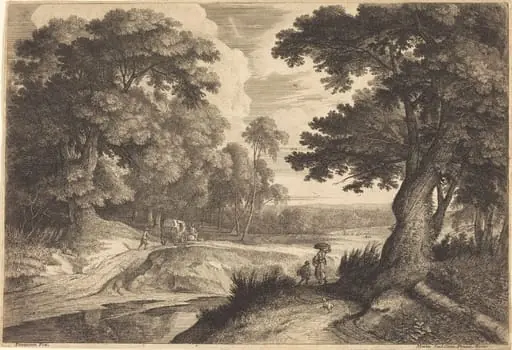 Edge of a Wood with Peasants Going to Market
 Landscape with a Wooded Ravine