Artwork
A Man Seen from Behind, Rising on Clouds
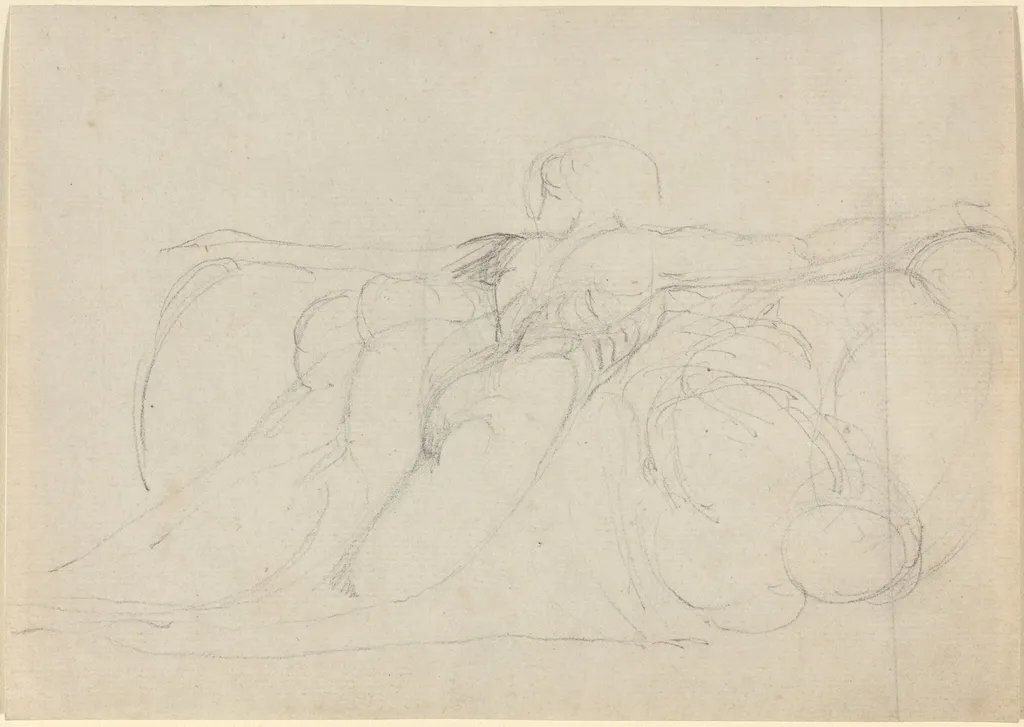
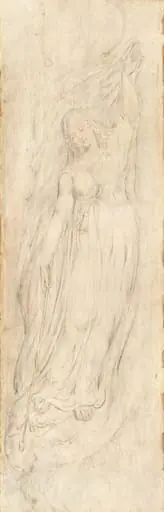
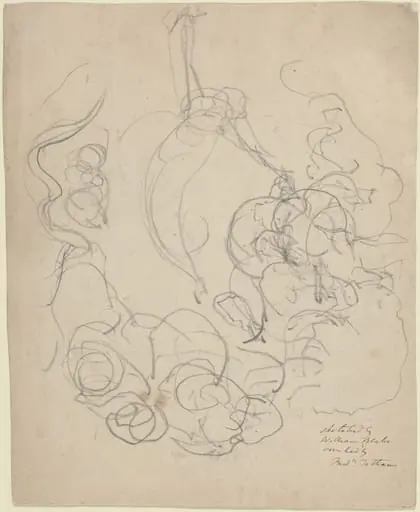
A Man Seen from Behind, Rising on Clouds is a graphite drawing by the Romanticist artist William Blake. It dates from 1794 and is held in the collection of the National Gallery of Art. Created around 1794, this graphite drawing on laid paper captures a solitary nude figure ascending through clouds, viewed from behind.
About this work
Overview
Created around 1794, this graphite drawing on laid paper captures a solitary nude figure ascending through clouds, viewed from behind.
Created around 1794, this graphite drawing on laid paper captures a solitary nude figure ascending through clouds, viewed from behind. Executed in London, it belongs to a series of intimate sketches William Blake produced during a period of intense personal vision. Unlike finished works, this piece prioritizes gesture and spiritual motion over detail, reflecting Blake’s belief in art as a conduit for inner revelation rather than external representation.
Subject & Meaning
The figure, stripped of identity and clothing, suggests a soul in transition—rising beyond the material world. Blake often used the human form to embody metaphysical states, and here, the upward motion through clouds implies spiritual ascent or divine awakening. The absence of facial features and contextual elements directs focus to the body’s dynamic posture, reinforcing his view that true vision transcends physical appearance.
Technique & Style
Blake employed loose, fluid graphite strokes that suggest rapid execution, emphasizing movement over precision. The lack of shading or fine detail aligns with his preference for expressive line over academic finish. The figure’s bent knees and forward-leaning stance convey momentum, while the clouds are rendered as sweeping, undefined masses—hallmarks of his method to evoke inner experience rather than observable reality.
History & Provenance
The drawing emerged during Blake’s most prolific phase of visionary work, shortly after he began producing his illuminated books. It remained in his possession until his death in 1827, likely kept among personal studies rather than displayed publicly. After his death, it passed through private collections before entering institutional holdings, where its significance as a key example of his sketch practice became more widely recognized.
Context
In late 18th-century England, artistic norms favored classical clarity and polished finish. Blake’s sketch, with its raw energy and symbolic intent, stood apart from prevailing tastes. His work was influenced by mystical traditions, biblical imagery, and radical political thought—all filtered through a deeply personal mythology. This drawing reflects his rejection of Enlightenment rationalism in favor of imagination as the highest form of truth.
Legacy
Though largely ignored in his lifetime, this drawing now contributes to the understanding of Blake as a pioneer of expressive drawing. Its emphasis on emotional resonance over technical refinement anticipated later Romantic and modernist approaches. Scholars recognize it as part of a broader body of sketches that reveal the private, unfiltered core of his visionary imagination, influencing artists who valued inner vision over external realism.
Artist & collection
Artist
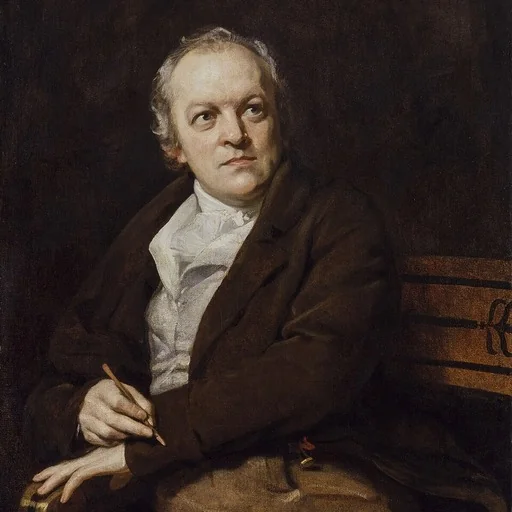
William Blake (28 November 1757 – 12 August 1827) was an English poet, painter and printmaker.

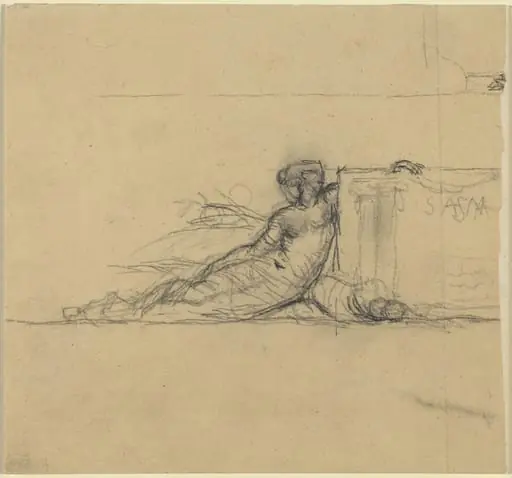 Seated Female Figure for "San Francisco"
![Sheet of Studies [recto and verso], by John Flaxman](https://artifactworldgallery.com/img/john-flaxman--sheet-of-studies-recto-and-verso--6fd1500085ec614c-w320.webp) Sheet of Studies [recto and verso]
Sheet of Studies [recto and verso]![Time's Triple Bow [recto], by William Blake](https://artifactworldgallery.com/img/william-blake--time-s-triple-bow-recto--dc15bf51bd241980-w320.webp) Time's Triple Bow [recto]
Time's Triple Bow [recto]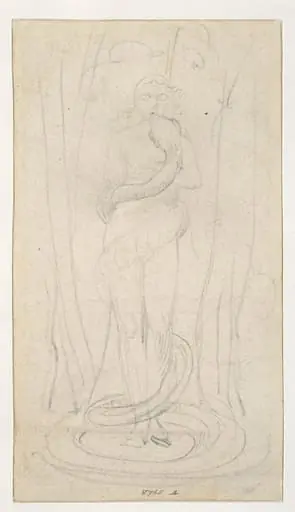 The serpent caressing Eve
 Two Greek Classical Figures
![Sheet of Studies [recto and verso], by John Flaxman](https://artifactworldgallery.com/img/john-flaxman--sheet-of-studies-recto-and-verso--af59e52d5279d768-w320.webp) Sheet of Studies [recto and verso]
Sheet of Studies [recto and verso]![Study of the "Ecorché" [recto], by Paul Cezanne](https://artifactworldgallery.com/img/paul-cezanne--study-of-the-ecorche-recto--1614b86d796e004d-w320.webp) Study of the "Ecorché" [recto]
Study of the "Ecorché" [recto]![Studies for a Monument with Angels Reaching Down to a Praying Figure [recto and verso], by John Flaxman](https://artifactworldgallery.com/img/john-flaxman--studies-for-a-monument-with-angels-reaching-down-to-a-prayin--9d789ab993a76a50-w320.webp) Studies for a Monument with Angels Reaching Down to a Praying Figure [recto and verso]
Studies for a Monument with Angels Reaching Down to a Praying Figure [recto and verso] Study after Ingres' 'Odalisque à l'ésclave'
 A Figure Ascending in a Glory of Clouds (?)