Artwork
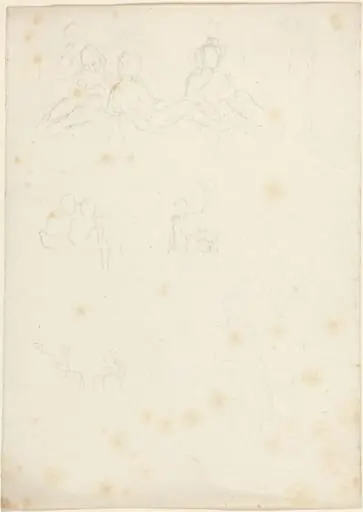
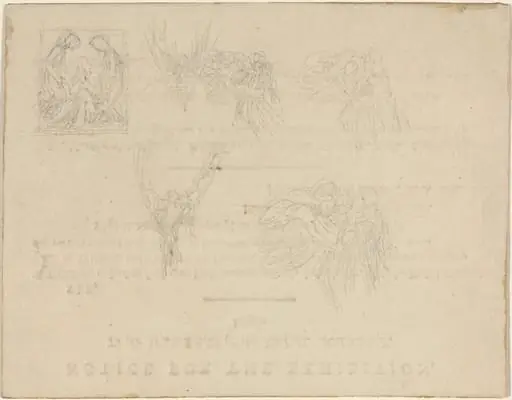
Sheet of Studies [recto and verso]
![Sheet of Studies [recto and verso], by John Flaxman, graphite, 1790](https://artifactworldgallery.com/img/john-flaxman--sheet-of-studies-recto-and-verso--6fd1500085ec614c-w1024.webp)
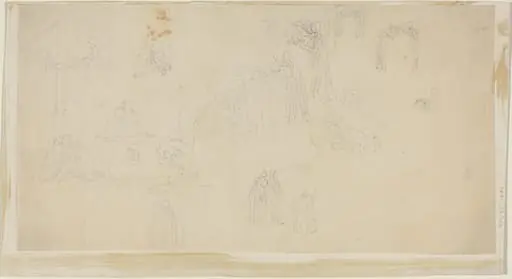
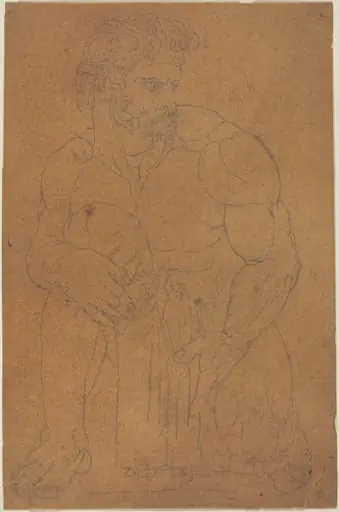
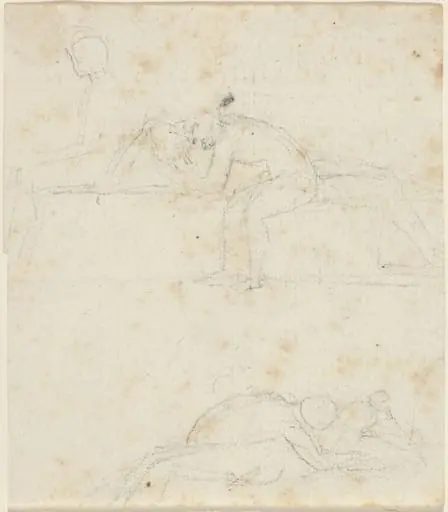
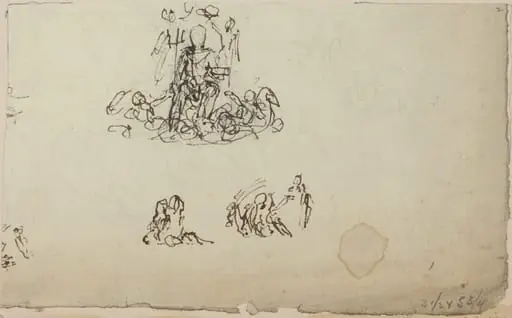
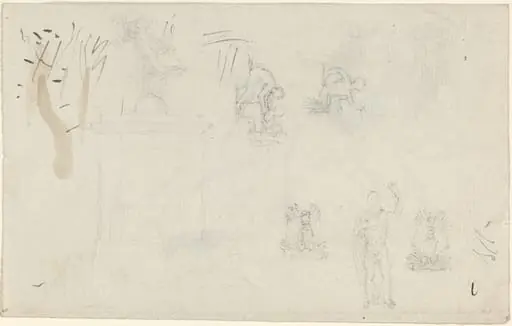
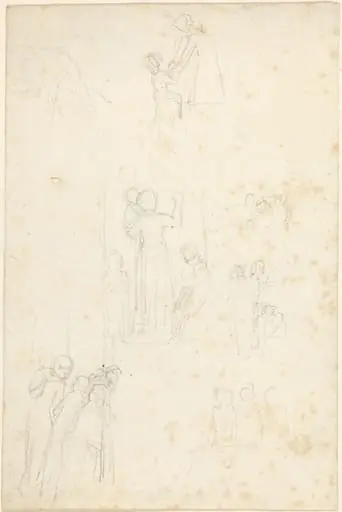
Sheet of Studies [recto and verso] is a graphite drawing by the Romanticist artist John Flaxman. It dates from 1790 and is held in the collection of the National Gallery of Art. This graphite drawing, dated 1790, presents a pair of figures in dynamic, overlapping poses, rendered with rapid, layered strokes.
About this work
Overview
The work functions as a working study, not a finished piece, revealing Flaxman’s habit of testing forms through immediate, physical engagement with the medium.
This graphite drawing, dated 1790, presents a pair of figures in dynamic, overlapping poses, rendered with rapid, layered strokes. Executed on a folded sheet, both recto and verso bear traces of repeated handling—creases, smudges, and pressure marks suggest frequent use. The work functions as a working study, not a finished piece, revealing Flaxman’s habit of testing forms through immediate, physical engagement with the medium.
Subject & Meaning
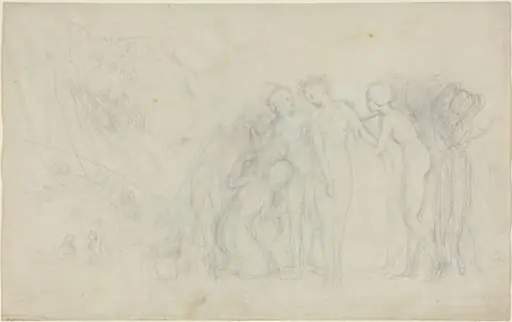
The figures appear engaged in a moment of physical and emotional intensity: one kneels, arms raised, while the other leans forward, hands extended. The composition suggests a gesture of supplication or embrace, though no specific narrative is identified. Flaxman often explored human interaction through simplified, archetypal forms, prioritizing expressive posture over individual identity, aligning with Neoclassical ideals of universal emotion.
Technique & Style
Flaxman employed a loose, economical line, using graphite to build form through weight and repetition rather than shading. The strokes are urgent and overlapping, indicating rapid execution. Edges are blurred by erasure or smudging, and the paper shows signs of physical wear, reinforcing the drawing’s role as a tool for exploration. His approach reflects a focus on contour and movement, honed through years of studying classical sculpture.
History & Provenance
Created during Flaxman’s return to England after his formative years in Rome, this sheet belongs to a period when he was deepening his engagement with classical themes for both public monuments and literary illustrations. The drawing likely served as preparatory material for commissions, including his later work on Homer and Dante. Its condition suggests it was kept in his studio, consulted and revised over time.
Context
Flaxman’s draftsmanship emerged from his early work with Josiah Wedgwood, where linear clarity was essential for transfer to ceramic reliefs. By 1790, he was shifting toward more expressive, emotionally charged compositions, bridging Neoclassical discipline with emerging Romantic sensibilities. This sheet reflects a transitional moment—structured yet spontaneous—where form serves inner feeling rather than idealized perfection.
Legacy
Flaxman’s studies like this one influenced later generations of draftsmen who valued line as a vehicle for emotional truth. His ability to distill complex gestures into economical strokes became a model for illustrators and sculptors alike. Though not widely exhibited in his lifetime, such sheets preserved the private rhythm of his creative process, offering insight into how classical ideals were reinterpreted through personal observation.
Artist & collection
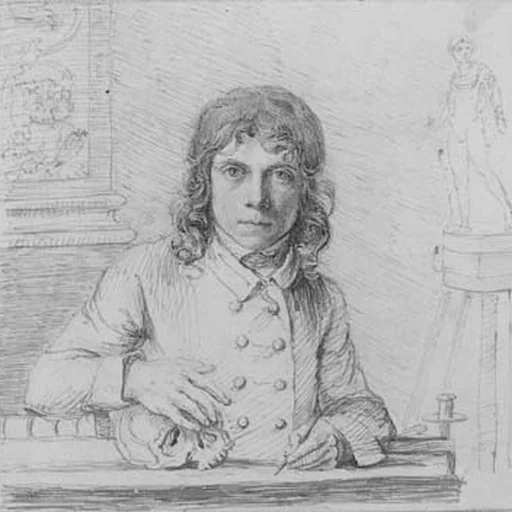
Artist
John Flaxman (6 July 1755 – 7 December 1826) was an English sculptor and draughtsman who was a leading figure in British and European Neoclassicism.

![Sheet of Studies [recto and verso], by John Flaxman](https://artifactworldgallery.com/img/john-flaxman--sheet-of-studies-recto-and-verso--af59e52d5279d768-w320.webp)
![Sheet of Studies [recto and verso], by John Flaxman](https://artifactworldgallery.com/img/john-flaxman--sheet-of-studies-recto-and-verso--37ffe1e79b52e688-w320.webp)
![Sheet of Studies [recto and verso], by John Flaxman](https://artifactworldgallery.com/img/john-flaxman--sheet-of-studies-recto-and-verso--624ac0ec758f08e5-w320.webp)