Artwork
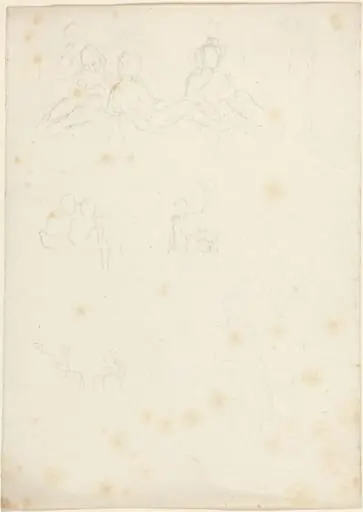
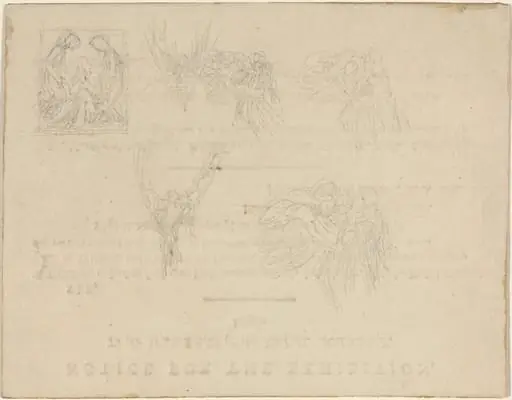
Studies for a Monument with Angels Reaching Down to a Praying Figure [recto and verso]
![Studies for a Monument with Angels Reaching Down to a Praying Figure [recto and verso], by John Flaxman, graphite, 1790](https://artifactworldgallery.com/img/john-flaxman--studies-for-a-monument-with-angels-reaching-down-to-a-prayin--9d789ab993a76a50-w1024.webp)
Studies for a Monument with Angels Reaching Down to a Praying Figure [recto and verso] is a graphite drawing by the Romanticist artist John Flaxman. It dates from 1790 and is held in the collection of the National Gallery of Art.
About this work
Overview
John Flaxman's 1790 graphite drawing, titled *Studies for a Monument with Angels Reaching Down to a Praying Figure*, comprises two compositions on opposite sides of a single sheet. Both sides present preliminary sketches for a funerary monument, a genre in which Flaxman was actively engaged during his Roman period.
Subject & Meaning
The compositions depict a group of angels extending their arms toward a kneeling, praying figure. The juxtaposition of celestial beings and a supplicant underscores the conventional Neoclassical interest in the dialogue between the divine and the mortal within commemorative sculpture.
Technique & Style
Executed in loose, rapid graphite strokes, the studies emphasize gesture and drapery over fine detail. The angels' wings and robes are rendered with sweeping, gestural lines that convey movement, while the praying figure is sketched more simply, reflecting the work's preparatory nature.
History & Provenance
Flaxman produced the drawing while residing in Rome, after an apprenticeship with Josiah Wedgwood and before establishing his reputation as a sculptor and draughtsman. The sheet forms part of his broader corpus of monument designs, which were circulated among patrons and collaborators in the late eighteenth century.
Context
The work belongs to the British Neoclassical tradition, which favored classical forms, restrained composition, and moralizing themes. Flaxman's focus on funerary monuments aligns with contemporary demand for commemorative art that combined classical motifs with personal devotion.
Artist & collection
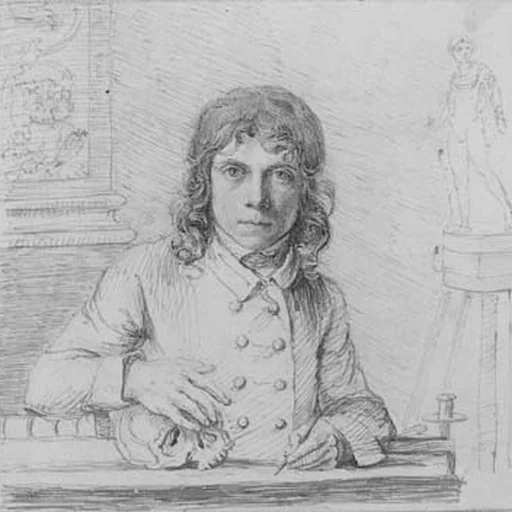
Artist
John Flaxman (6 July 1755 – 7 December 1826) was an English sculptor and draughtsman who was a leading figure in British and European Neoclassicism.

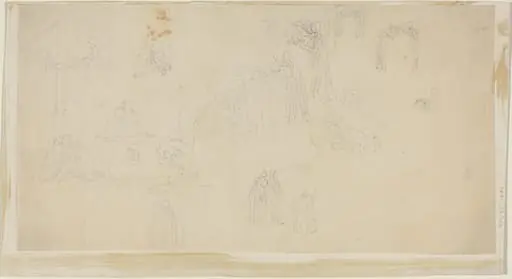
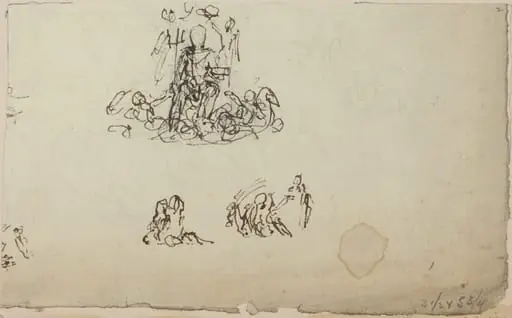
![Studies of Crowing Rooster and Reclining Figures [recto and verso], by John Flaxman](https://artifactworldgallery.com/img/john-flaxman--studies-of-crowing-rooster-and-reclining-figures-recto-and-v--6ae88f69b8f5a01b-w320.webp) Studies of Crowing Rooster and Reclining Figures [recto and verso]
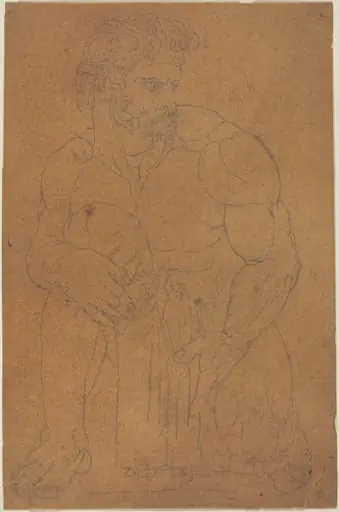
Studies of Crowing Rooster and Reclining Figures [recto and verso]![Studies for a Lunette [verso], by Charles Sprague Pearce](https://artifactworldgallery.com/img/charles-sprague-pearce--studies-for-a-lunette-verso--5d54507e74f08054-w320.webp) Studies for a Lunette [verso]
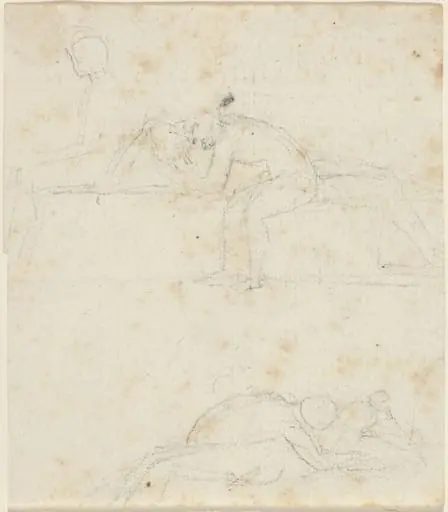
Studies for a Lunette [verso]![Time's Triple Bow [recto], by William Blake](https://artifactworldgallery.com/img/william-blake--time-s-triple-bow-recto--dc15bf51bd241980-w320.webp) Time's Triple Bow [recto]
Time's Triple Bow [recto]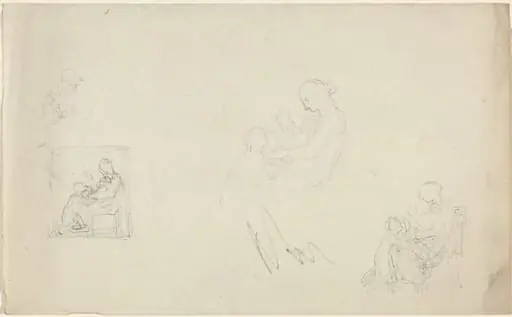 Four Studies of a Seated Woman with Children at Her Feet (Sketches for the Monument to Lady FitzHarris?)
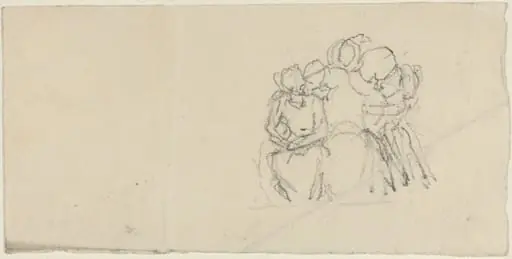 Group of Figures Surrounding Seated Figure
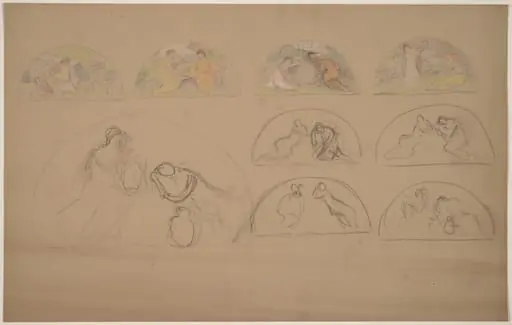 Studies for Lunettes
 Scene in a Palace of Justice
![Sheet of Studies [recto and verso], by John Flaxman](https://artifactworldgallery.com/img/john-flaxman--sheet-of-studies-recto-and-verso--acf1b2004c9fc50f-w320.webp) Sheet of Studies [recto and verso]
Sheet of Studies [recto and verso] Studies for a Panel