Artwork
A Resurrection Scene (The Gambols of Ghosts) [recto]
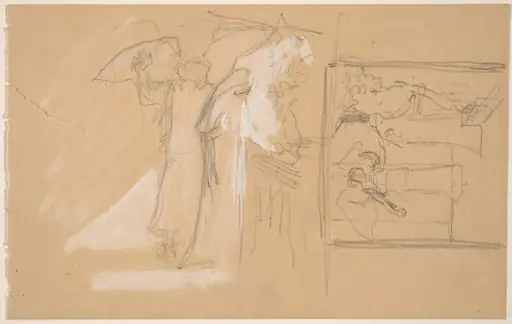
![A Resurrection Scene (The Gambols of Ghosts) [recto], by William Blake, graphite, 1806](https://artifactworldgallery.com/img/william-blake--a-resurrection-scene-the-gambols-of-ghosts-recto--f5621911b14e7435-w1024.webp)
A Resurrection Scene (The Gambols of Ghosts) [recto] is a graphite drawing by the Romanticist artist William Blake. It dates from 1806 and is held in the collection of the National Gallery of Art.
About this work
Overview
Created in 1806, *A Resurrection Scene (The Gambols of Ghosts)* is a graphite drawing by the English poet‑artist William Blake. Executed on paper, the work presents a gathering of ethereal figures suspended in space, rendered with swift, gestural lines that convey a sense of immediacy rather than finished composition.
Subject & Meaning
The composition portrays a host of spectral beings, some extending their arms upward, others tangled in swirling, loose forms. The arrangement suggests a supernatural revelry, aligning with Blake’s recurring interest in visionary and allegorical subjects that explore the boundaries between the material and the spiritual realms.
Technique & Style
Blake employed a rapid, sketch‑like approach, allowing graphite to flow in loose, unfinished strokes. The figures are outlined with minimal detail, emphasizing movement and the fleeting nature of the scene. This informal handling reflects Blake’s practice of using drawing as a preparatory or exploratory medium rather than a polished final product.
Context
At the time of its creation Blake was active in London, producing poetry, paintings, and prints that would later define the Romantic movement in visual art and literature. This drawing belongs to a period when he frequently produced studies that captured imaginative visions, serving as a visual counterpart to his poetic explorations of the supernatural.
Artist & collection
Artist
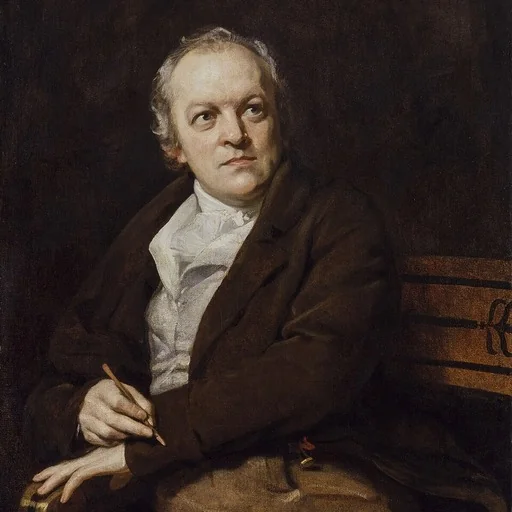
William Blake (28 November 1757 – 12 August 1827) was an English poet, painter and printmaker.

 An Angel Teaching a Daughter of Men the Secrets of Sin
 Untitled
 Study for "The Deluge"
![Time's Triple Bow [recto], by William Blake](https://artifactworldgallery.com/img/william-blake--time-s-triple-bow-recto--dc15bf51bd241980-w320.webp) Time's Triple Bow [recto]
Time's Triple Bow [recto]![Figure Studies [verso], by Valentine Cameron Prinsep](https://artifactworldgallery.com/img/valentine-cameron-prinsep--figure-studies-verso--ecadfdfaae5c079d-w320.webp) Figure Studies [verso]
Figure Studies [verso]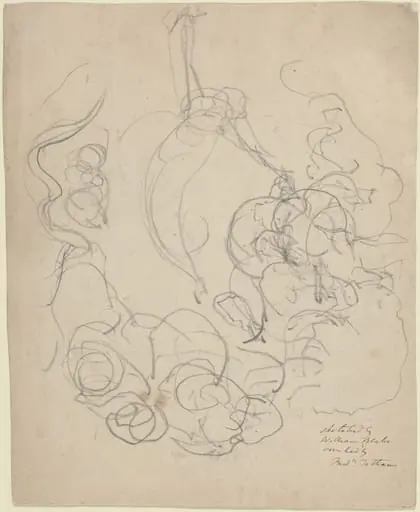 A Figure Ascending in a Glory of Clouds (?)
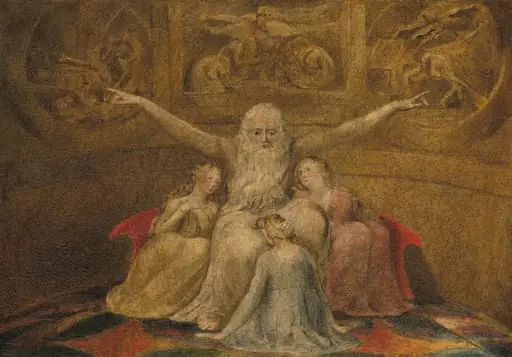
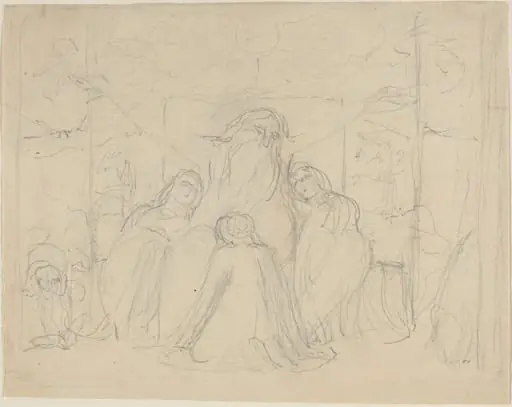 Job and His Daughters
![Study for "Variations in Blue and Green" [verso], by James McNeill Whistler](https://artifactworldgallery.com/img/james-mcneill-whistler--study-for-variations-in-blue-and-green-verso--5aa53b027843adac-w320.webp) Study for "Variations in Blue and Green" [verso]
Study for "Variations in Blue and Green" [verso]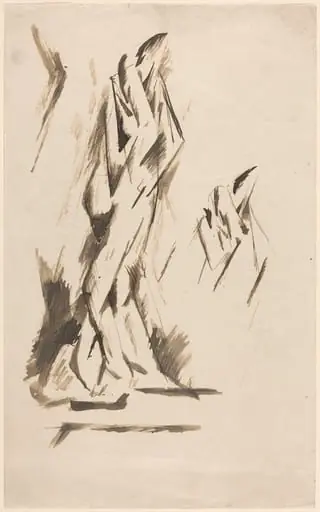 Lovers Embracing
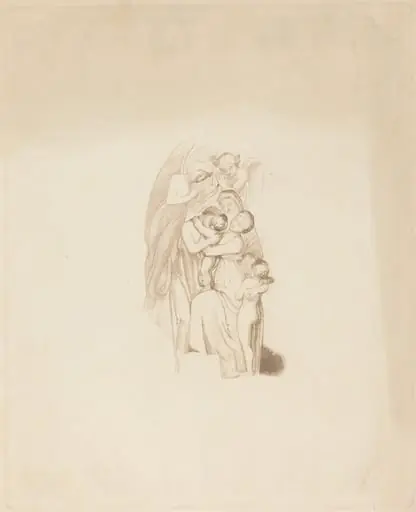 Holy Family? with Angels
 Studies for a Panel
![Studies for a Monument with Angels Reaching Down to a Praying Figure [recto and verso], by John Flaxman](https://artifactworldgallery.com/img/john-flaxman--studies-for-a-monument-with-angels-reaching-down-to-a-prayin--9d789ab993a76a50-w320.webp) Studies for a Monument with Angels Reaching Down to a Praying Figure [recto and verso]
Studies for a Monument with Angels Reaching Down to a Praying Figure [recto and verso]