Artwork
Untitled
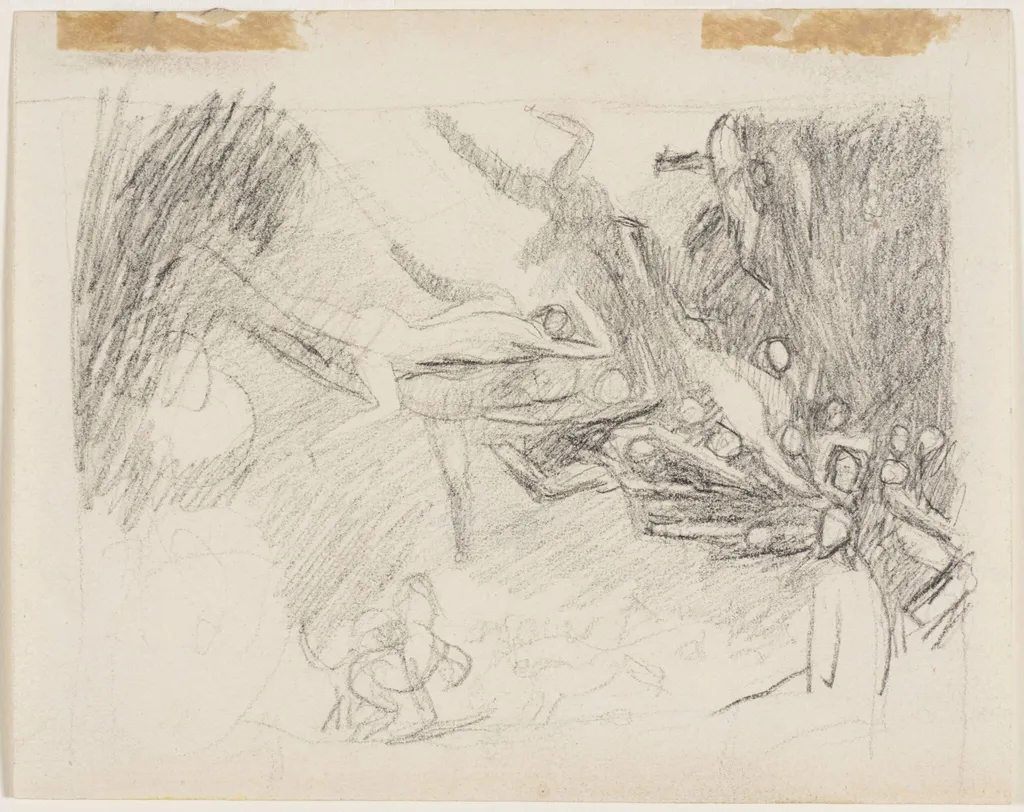
Untitled is a drawing by the Baroque artist George Romney. It dates from 1734 and is held in the collection of the Victoria and Albert Museum.
About this work
Overview
Rendered in ink and wash, it presents a tightly packed group of figures in motion, their bodies twisted and overlapping.
This untitled drawing by George Romney captures a moment of chaos from the Trojan War. Rendered in ink and wash, it presents a tightly packed group of figures in motion, their bodies twisted and overlapping. The composition lacks a detailed setting, focusing instead on human tension and physical strain. Blank space surrounds the scene, heightening its urgency and isolating the drama from any specific location.
Subject & Meaning
The scene alludes to the fall of Troy, likely depicting civilians or warriors in distress during its final moments. One figure raises arms in desperation, another collapses under unseen weight, suggesting vulnerability amid violence. Romney does not illustrate a named mythic event but evokes the universal anguish of war. The absence of clear identifiers invites interpretation beyond historical narrative, emphasizing emotional resonance over literal storytelling.
Technique & Style
Romney employs bold, fluid ink lines and layered washes to model form and suggest movement. Cross-hatching builds shadow and volume, particularly around torsos and limbs, while sparse details leave facial features and clothing ambiguous. The contrast between dense, dark areas and untouched paper enhances the sense of chaos. His method prioritizes expressive energy over precision, using minimal strokes to convey maximum dynamism.
History & Provenance
The drawing is part of Romney’s extensive body of preparatory sketches, likely made in the late 18th century during his engagement with classical themes. It was not intended as a finished work but as a study for larger compositions or personal exploration. Its survival reflects Romney’s habit of preserving informal drawings, which later gained scholarly interest for their insight into his creative process.
Context
Romney, primarily known as a portraitist, frequently turned to classical subjects in private work. During the Enlightenment, interest in ancient epics like the Iliad influenced British artists seeking moral and emotional depth. This drawing aligns with a broader trend of sketching mythological scenes not for public display but as exercises in human expression and compositional experimentation.
Legacy
Though never exhibited publicly in Romney’s lifetime, this drawing contributes to understanding his artistic range beyond portraiture. Later collectors and scholars recognized its expressive power, preserving it as evidence of his engagement with narrative and movement. It remains a quiet testament to how classical themes continued to inspire artists through informal, intimate study.
Artist & collection


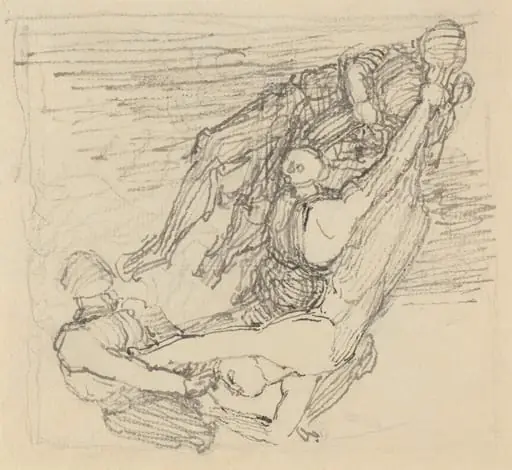 Figure Being Transported through the Air
![A Resurrection Scene (The Gambols of Ghosts) [recto], by William Blake](https://artifactworldgallery.com/img/william-blake--a-resurrection-scene-the-gambols-of-ghosts-recto--f5621911b14e7435-w320.webp) A Resurrection Scene (The Gambols of Ghosts) [recto]
A Resurrection Scene (The Gambols of Ghosts) [recto] Study for "The Deluge"
 An Angel Teaching a Daughter of Men the Secrets of Sin
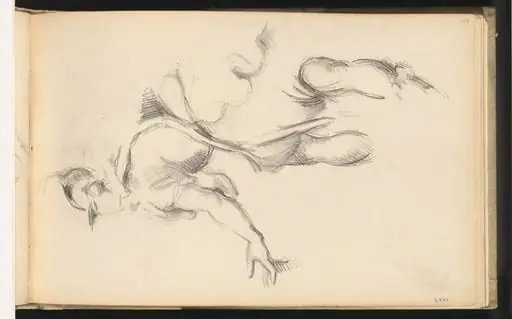 Study of the Allegorical Figure France in Rubens' "The Exchange of the Two Princesses"
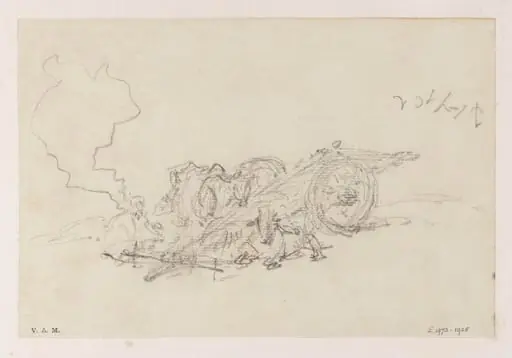 An Indian cart
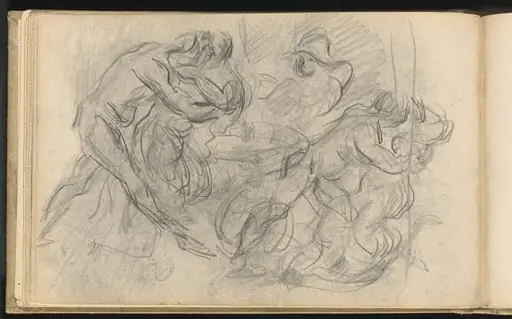 Carnival Scene
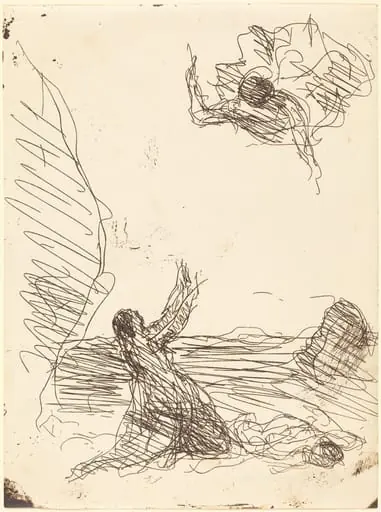 Hagar and the Angel (Agar et l'ange)
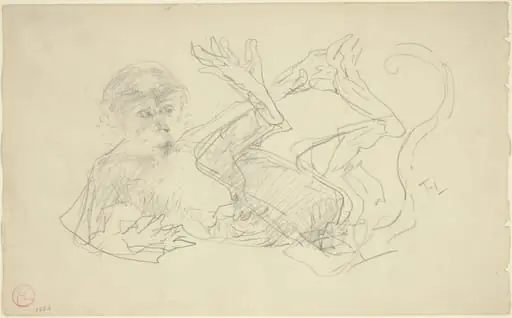 A Monkey Playing on His Back
![Study for "Shoeing Calvary Horses at the Front" [verso], by John Singer Sargent](https://artifactworldgallery.com/img/john-singer-sargent--study-for-shoeing-calvary-horses-at-the-front-verso--6f6d1a163e84e9ab-w320.webp) Study for "Shoeing Calvary Horses at the Front" [verso]
Study for "Shoeing Calvary Horses at the Front" [verso]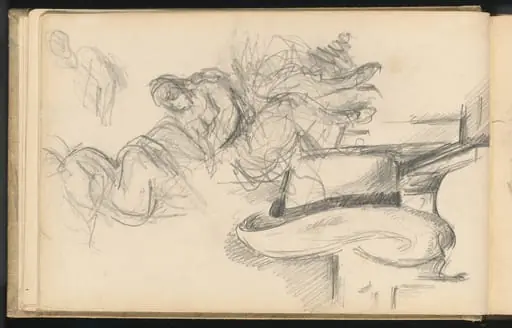 Studies Including a Straw Hat
![Sheet of Studies [recto and verso], by John Flaxman](https://artifactworldgallery.com/img/john-flaxman--sheet-of-studies-recto-and-verso--47b91b8b6f057ed6-w320.webp) Sheet of Studies [recto and verso]
Sheet of Studies [recto and verso]