Artwork
Canto II, Verse 471
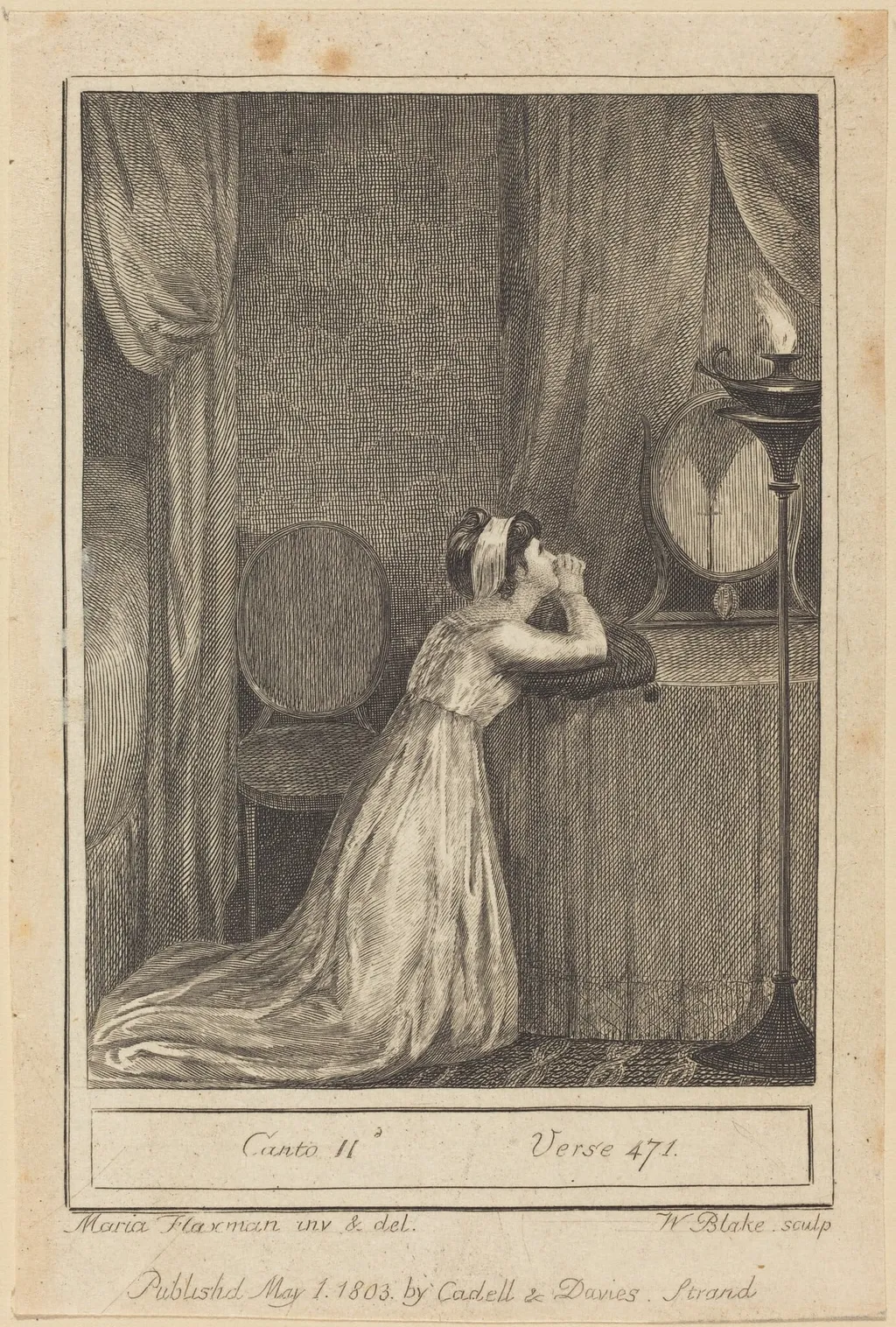
Canto II, Verse 471 is an ink print by the Romanticist artist William Blake. It dates from 1803 and is held in the collection of the National Gallery of Art.
About this work
Overview
Created in London, where he lived and worked his entire life, the piece belongs to his mature period and reflects his dual identity as poet and visual artist.
William Blake produced this engraving in 1803 as part of his illustrated series for Dante’s Divine Comedy. Created in London, where he lived and worked his entire life, the piece belongs to his mature period and reflects his dual identity as poet and visual artist. Though little recognized in his time, his prints like this one later gained scholarly attention for their intricate integration of text and image.
Subject & Meaning
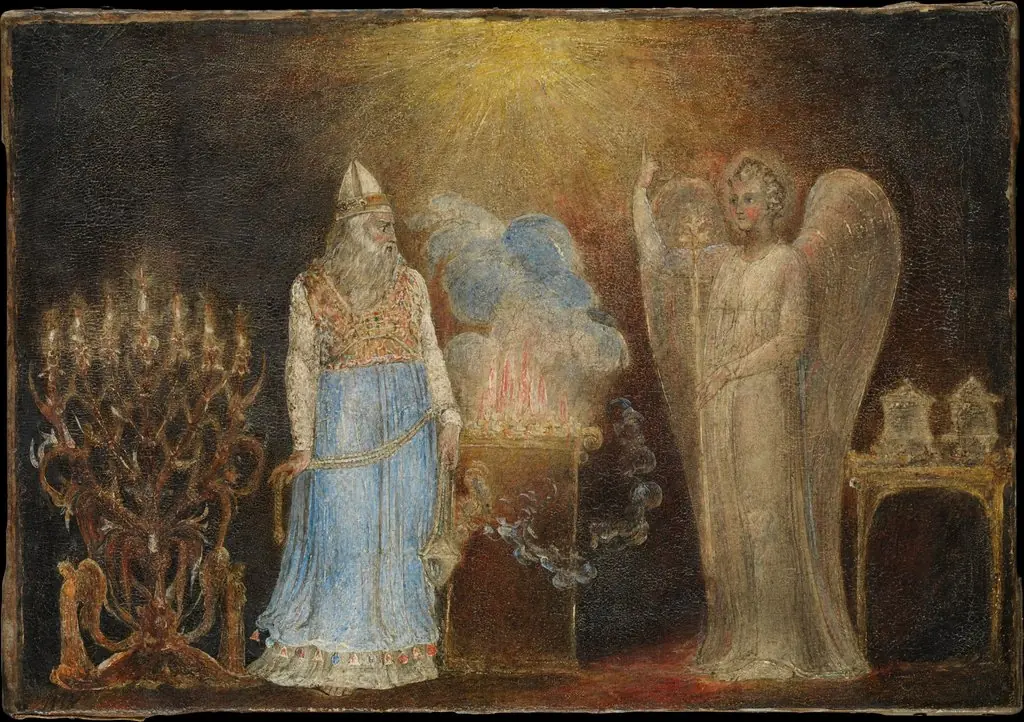
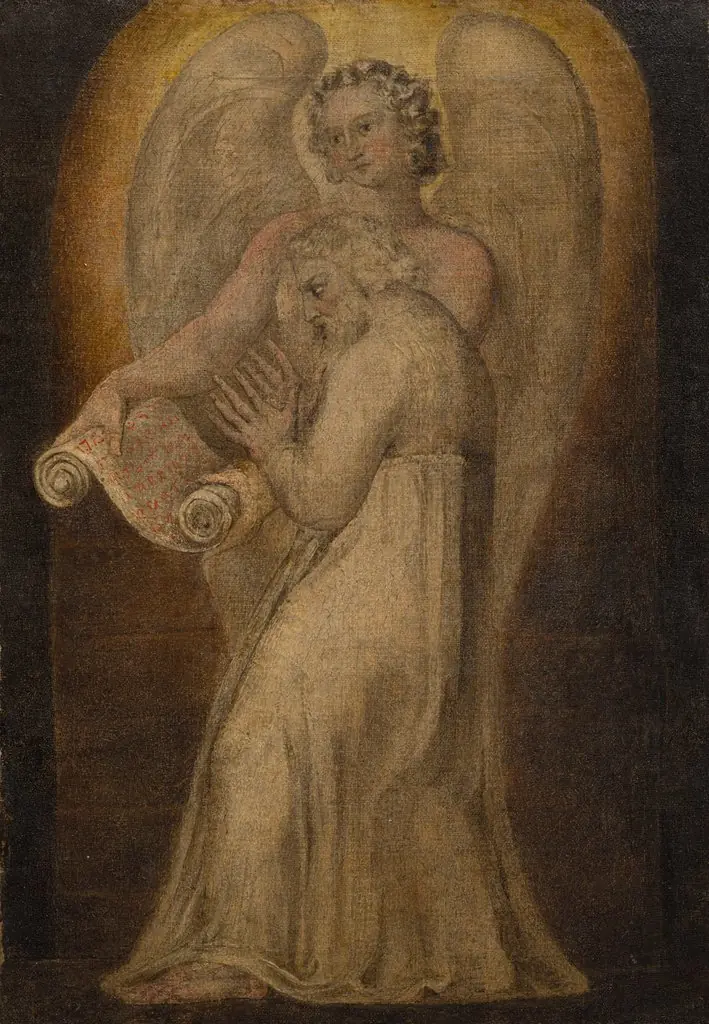
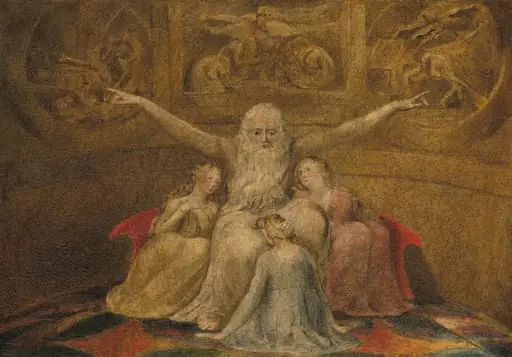
The scene depicts Dante, robed and kneeling, encountering Virgil in a dense, shadowed forest. This moment marks the beginning of their journey through Hell, as described in Canto II of the Inferno. Blake’s choice to render the encounter with such solemnity emphasizes spiritual awakening and the weight of divine guidance. The surrounding trees, inscribed with minute script, suggest hidden knowledge embedded in nature itself.
Technique & Style
Blake employed fine, incised lines typical of his relief etching method, creating a texture that feels both urgent and meticulous. The scratchy, angular strokes evoke the physical act of carving into metal, giving the image a tactile intensity. The contrast between the dark, tangled woods and the pale, bowed figure heightens the emotional gravity. Embedded letters in the bark merge visual and literary layers, a signature of his symbolic approach.
History & Provenance
This engraving was made during Blake’s extended project to illustrate Dante’s Divine Comedy, undertaken in the final years of his life. He completed only a handful of plates before his death in 1827. The work remained in private hands for decades, largely unseen by the public until later 19th-century collectors and scholars began to reassess his oeuvre. Its survival is rare among his experimental prints.
Context
Blake worked in isolation from mainstream artistic trends, rejecting the academic norms of his day. His engagement with Dante reflected his own spiritual and philosophical concerns, particularly the tension between divine justice and human suffering. While contemporaries favored neoclassical clarity, Blake pursued a visionary aesthetic rooted in personal myth and symbolic language.
Legacy
Though neglected in his lifetime, Blake’s Dante engravings, including this one, became touchstones for later Symbolist and modernist artists. Their fusion of poetic narrative with intricate visual symbolism influenced 20th-century illustrators and writers seeking alternatives to realism. Today, the work is studied for its unique synthesis of literary interpretation and handmade printmaking.
Artist & collection
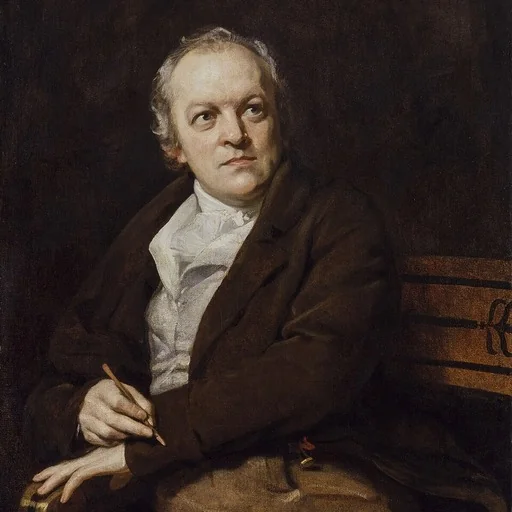
Artist
William Blake (28 November 1757 – 12 August 1827) was an English poet, painter and printmaker.