Artwork
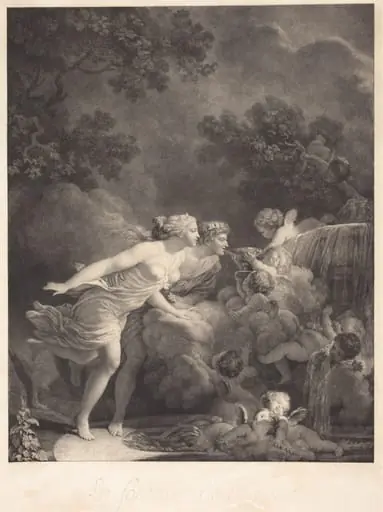
Le Baiser à la Derobée (The Stolen Kiss)
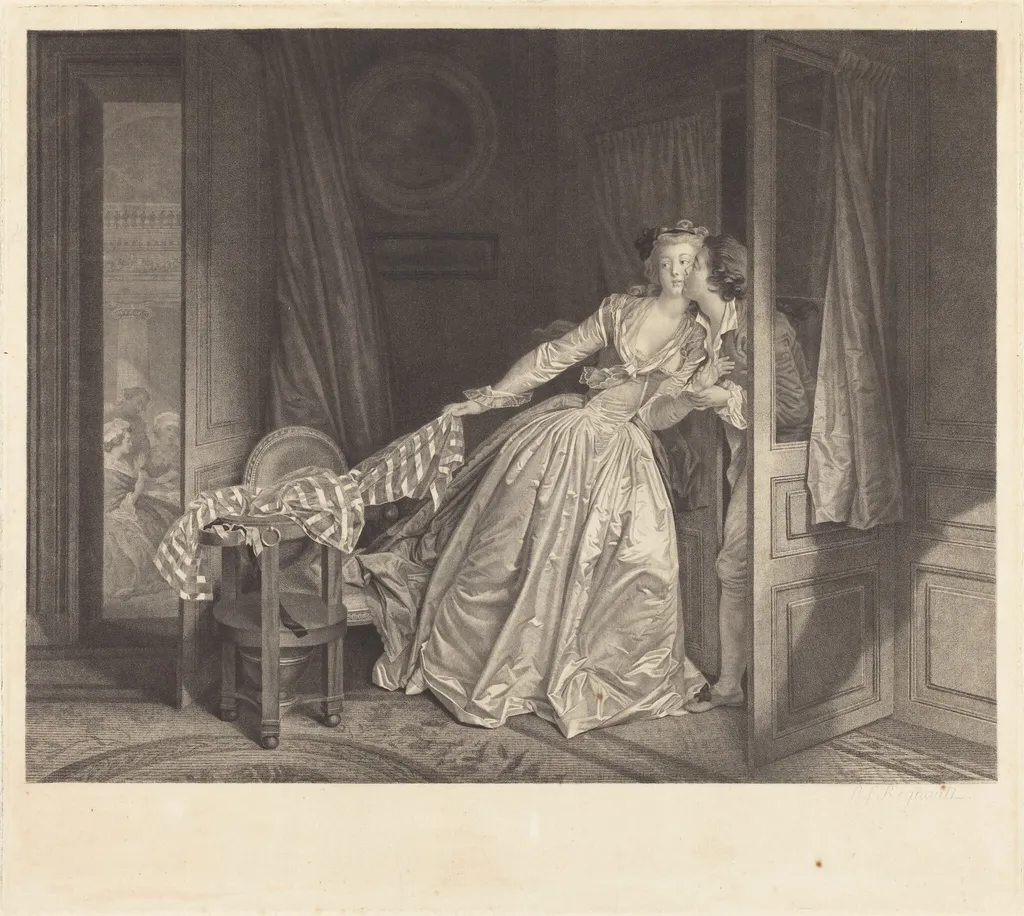
Le Baiser à la Derobée (The Stolen Kiss) is an ink print by the Baroque artist Nicolas François Regnault. It dates from 1778 and is held in the collection of the National Gallery of Art.
About this work
Overview
Nicolas François Regnault’s 1778 stipple etching titled Le Baiser à la Derobée, or The Stolen Kiss, presents a quietly intimate encounter captured in a single printed image. The work belongs to the genre of narrative prints that were popular in late‑eighteenth‑century France, using the delicate tonal qualities of stipple to render a scene of private intrigue.
Subject & Meaning
The juxtaposition of a playful gesture with the concealed setting suggests a moment of secret affection, hinting at themes of flirtation and social discretion.
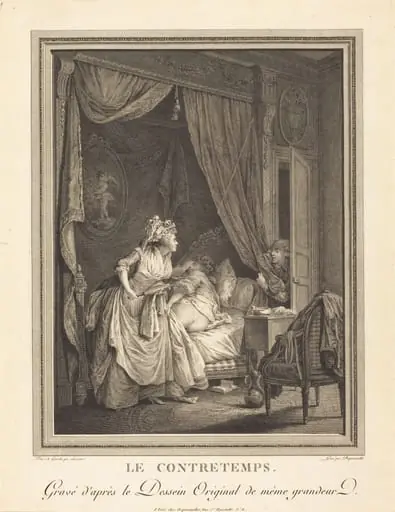
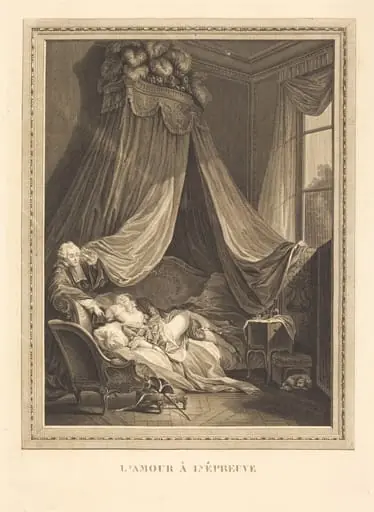
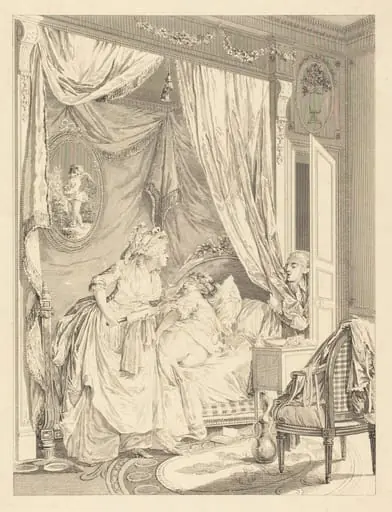
The composition depicts a woman in a flowing dress leaning over a chair to kiss a seated man whose back is turned toward her. The setting is a dim interior with heavy drapery, a small table, and a faded painting on the wall, while light filters from a doorway behind them. The juxtaposition of a playful gesture with the concealed setting suggests a moment of secret affection, hinting at themes of flirtation and social discretion.
Technique & Style
Regnault employed stipple etching, a method that uses a series of fine dots rather than lines to build tone. This approach allows for soft gradations of shadow and a velvety texture, especially effective in rendering the subtle play of light across the figures and the surrounding furnishings. The print’s delicate modeling emphasizes the intimacy of the scene while maintaining a clear narrative focus.
History & Provenance
Created in 1778, the print was produced as a proof before the title was engraved, indicating an early stage in the work’s publication process. While specific ownership records are scarce, the piece reflects the broader market for erotic and genre prints circulated among collectors and connoisseurs in pre‑Revolutionary France.
Context
During the late eighteenth century, French artists frequently explored private domestic moments, often with a moralizing or humorous undertone. Regnault’s choice of a clandestine kiss aligns with contemporary tastes for scenes that combined sensuality with a veneer of decorum, catering to an audience familiar with the conventions of salon culture and the burgeoning print market.
Legacy
Le Bisson à la Derobée exemplifies the technical possibilities of stipple etching and contributes to our understanding of genre imagery in the years preceding the French Revolution. Its nuanced handling of light and shadow continues to be referenced in studies of printmaking techniques and the social narratives embedded in eighteenth‑century visual culture.
Artist & collection