Artwork
Job and His Daughters
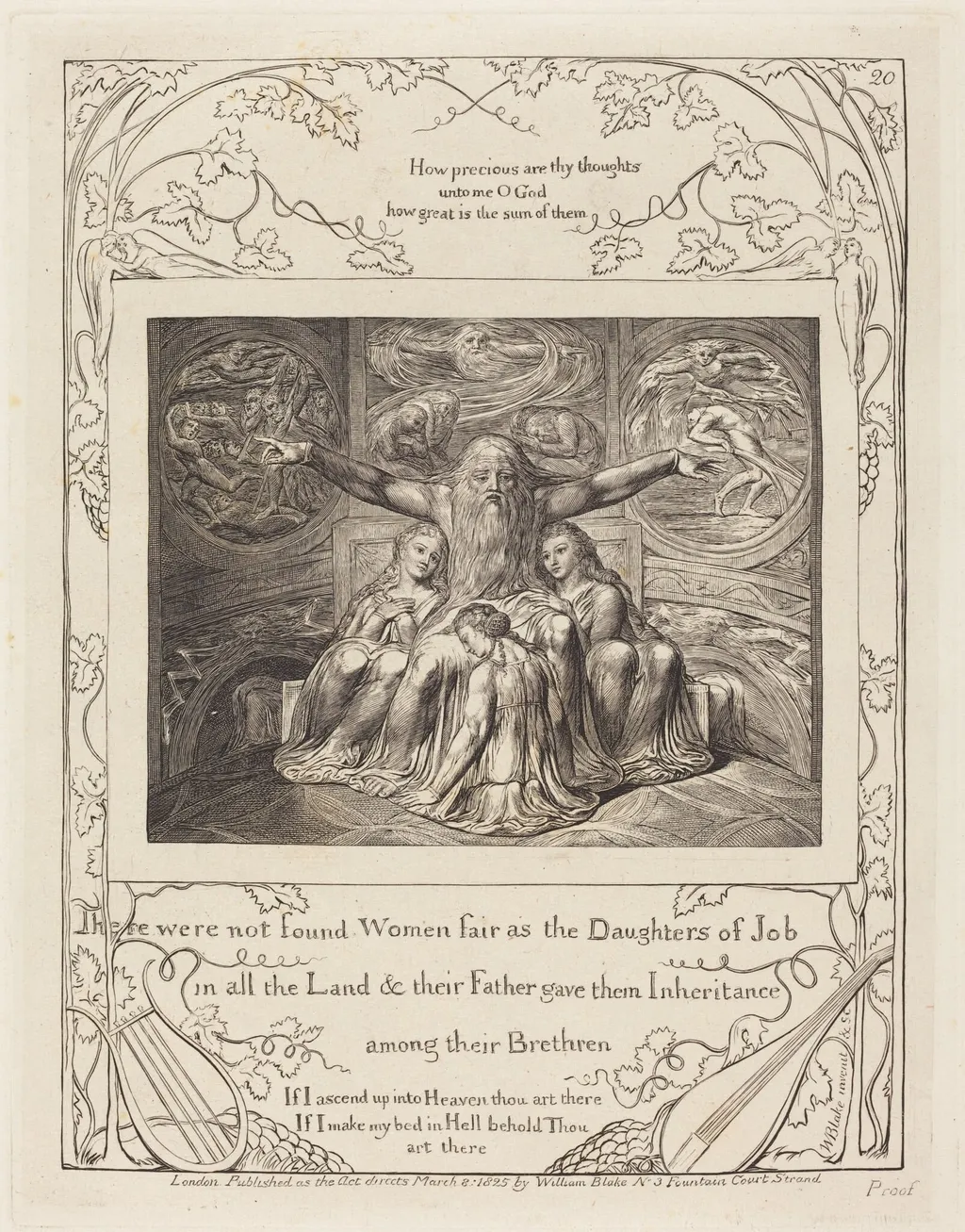
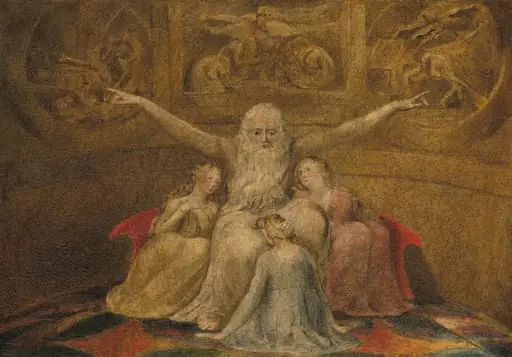
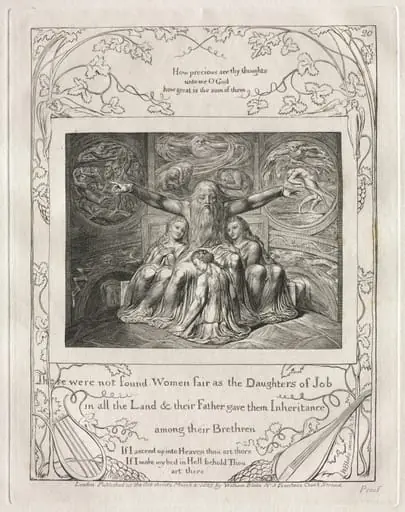
Job and His Daughters is an ink print by the Romanticist artist William Blake. It dates from 1825 and is held in the collection of the National Gallery of Art.
About this work
Overview
Created in 1825, this engraving by William Blake depicts the biblical figure Job seated between his two daughters. Executed on India paper, the image presents a dim, swirling atmosphere populated by floating forms, with the women holding a child and the elderly man extending his arms outward.
Subject & Meaning
The composition draws on the Book of Job, emphasizing themes of endurance and restoration after suffering. By placing Job amid his daughters and a newborn, Blake underscores familial renewal and the spiritual consolation that follows tribulation, reflecting his interest in biblical allegory as a vehicle for exploring inner resilience.
Technique & Style
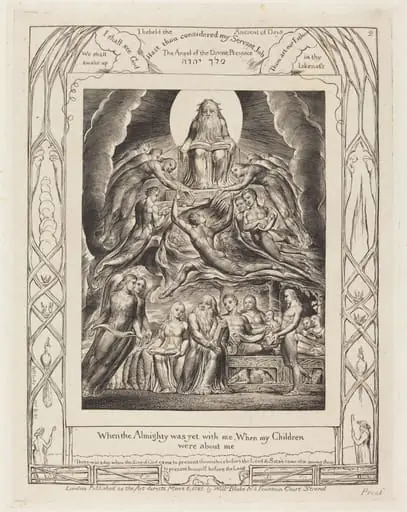
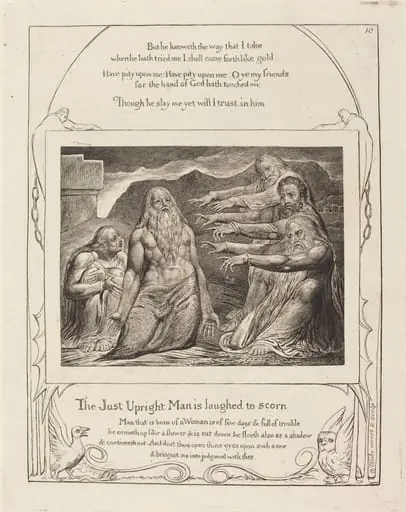
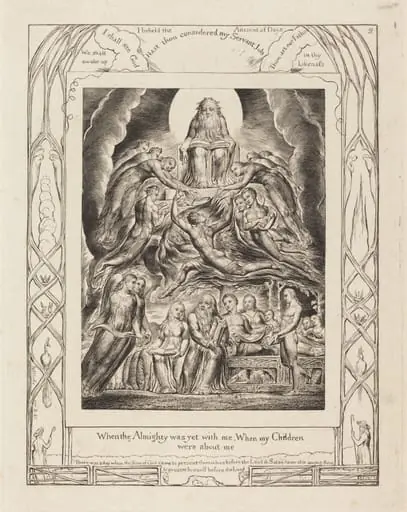
Blake employed his characteristic relief engraving method, incising fine lines that produce delicate tonal variations. The borders are adorned with intricate ornamental motifs and scriptural verses rendered in elaborate lettering, enhancing the work’s ornamental quality and reinforcing its devotional tone.
History & Provenance
Part of Blake’s later print output, this piece was produced during his final years in London, a period when his visionary and allegorical subjects became more pronounced. Though Blake’s prints were largely unnoticed in his lifetime, they later contributed to his reputation as a pivotal figure of Romantic art and literature.
Artist & collection
Artist
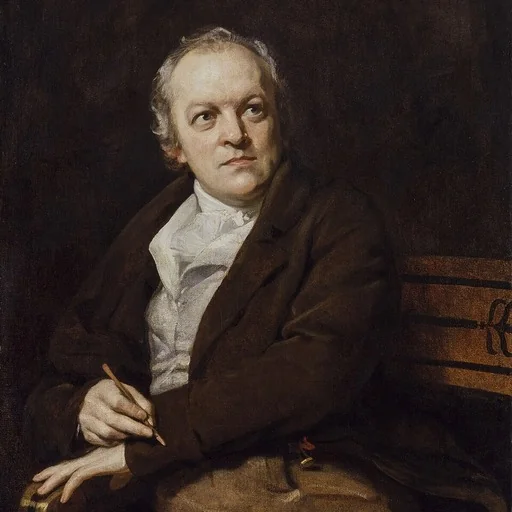
William Blake (28 November 1757 – 12 August 1827) was an English poet, painter and printmaker.