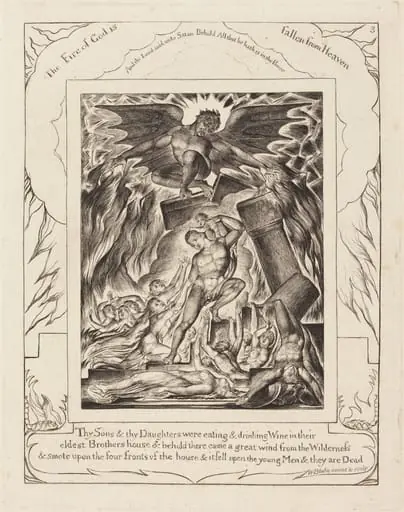
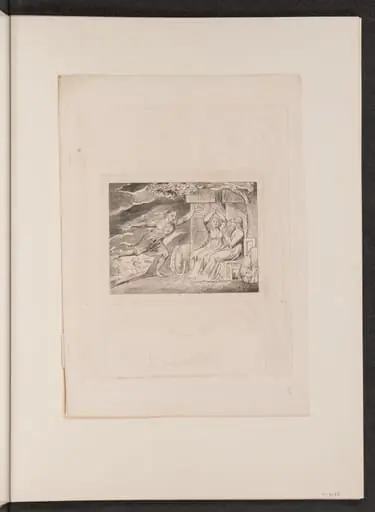
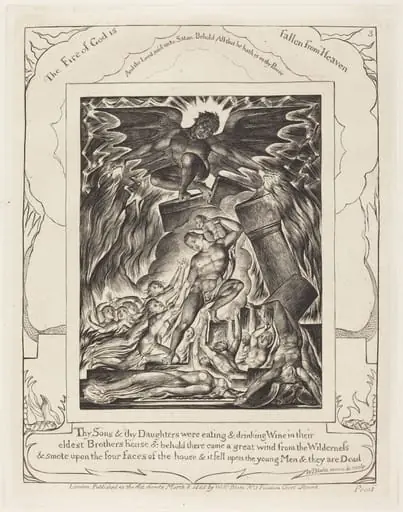
Artwork
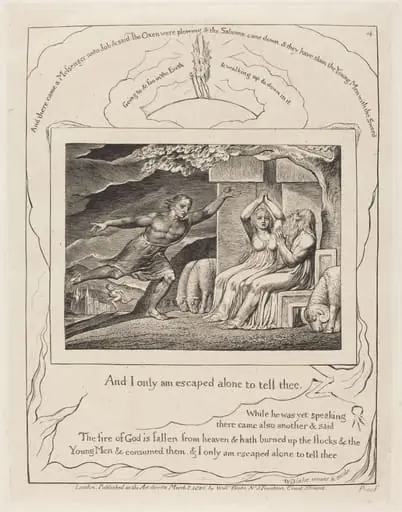
The Messengers Tell Job of His Misfortunes
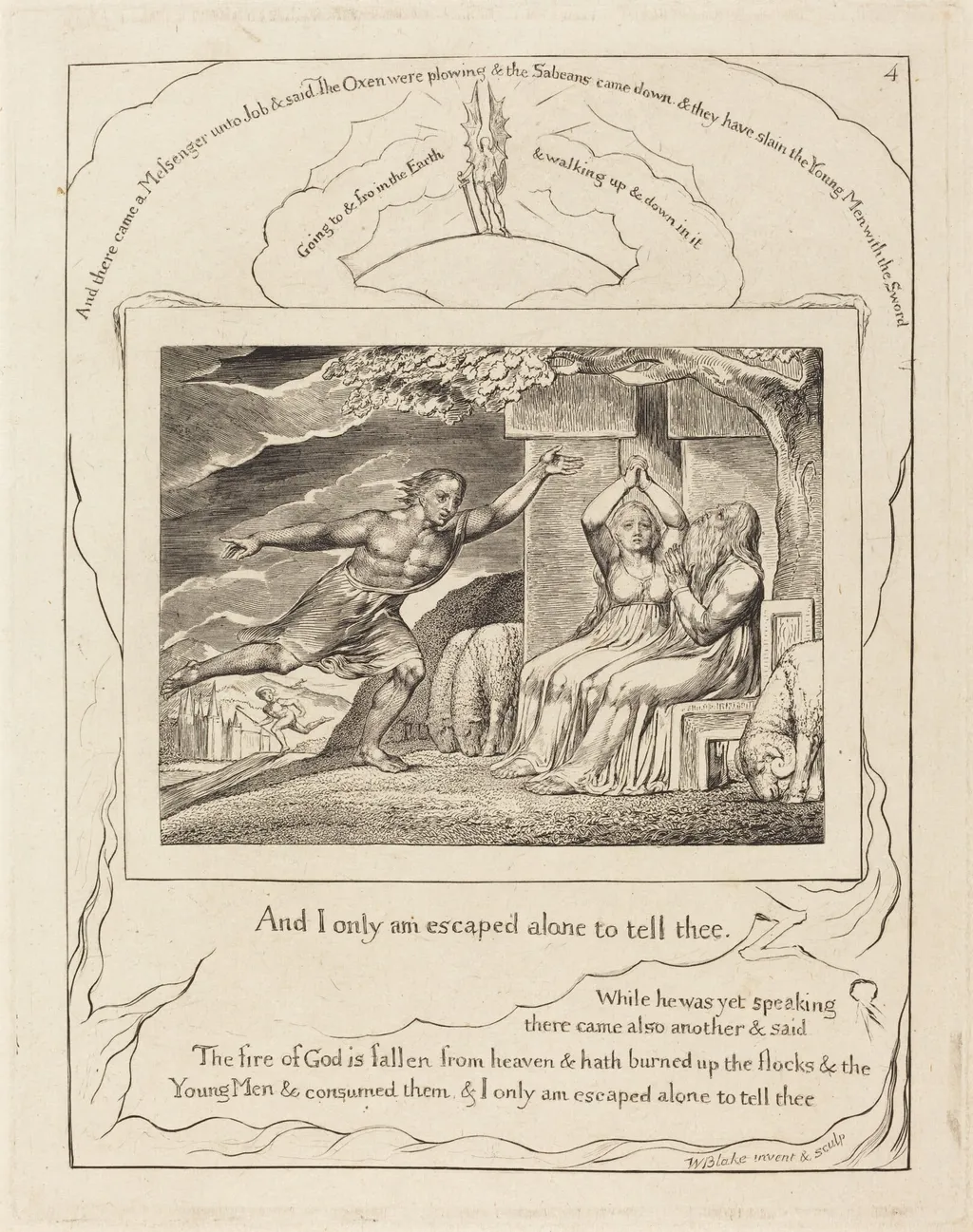
The Messengers Tell Job of His Misfortunes is an ink print by the Romanticist artist William Blake. It dates from 1825 and is held in the collection of the National Gallery of Art.
About this work
Overview
Created in 1825, *The Messengers Tell Job of His Misfortunes* is an engraving by the English poet‑artist William Blake. Executed during the later phase of his career, the print exemplifies Blake’s sustained interest in biblical narratives and his commitment to the print medium as a vehicle for complex, symbolic storytelling.
Subject & Meaning
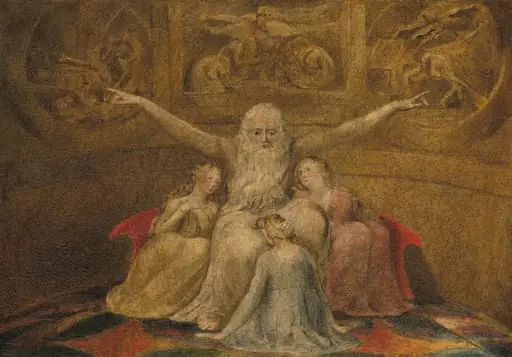
The composition depicts a dramatic moment from the Book of Job: three figures convey the prophet’s impending calamities. A winged, muscular messenger kneels on a crag, gesturing upward, while two startled individuals sit within a dim interior, one raising his arms in alarm. Beyond a window, a distant fire glows, underscoring the theme of divine trial and human suffering.
Technique & Style
Blake employed traditional copper‑plate engraving, using fine, intersecting lines to model shadow and depth. The dense hatching creates a stark chiaroscuro that heightens the emotional intensity of the scene. His characteristic blend of precise draftsmanship with visionary imagination is evident in the juxtaposition of the ethereal messenger and the earthy, tormented figures.
History & Provenance
The print was produced in Blake’s London workshop, where he managed the entire process from design to printing. Although not widely circulated in his lifetime, the work forms part of the corpus of Blake’s religious prints that were later collected by institutions and scholars interested in Romantic-era visual culture.
Artist & collection
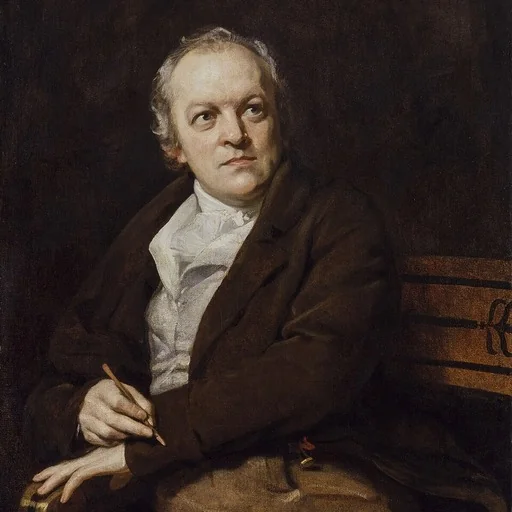
Artist
William Blake (28 November 1757 – 12 August 1827) was an English poet, painter and printmaker.