Artwork
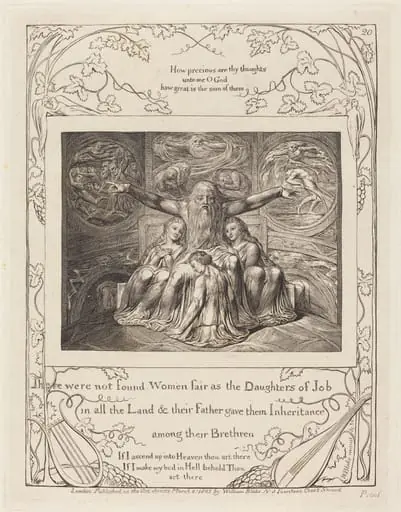
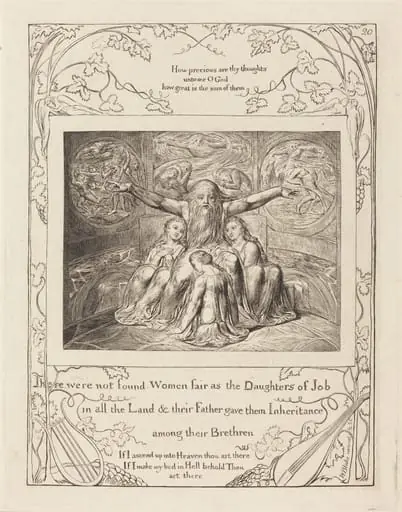
The Book of Job: Pl. 20, There were not found Women fair as the Daughters of Job
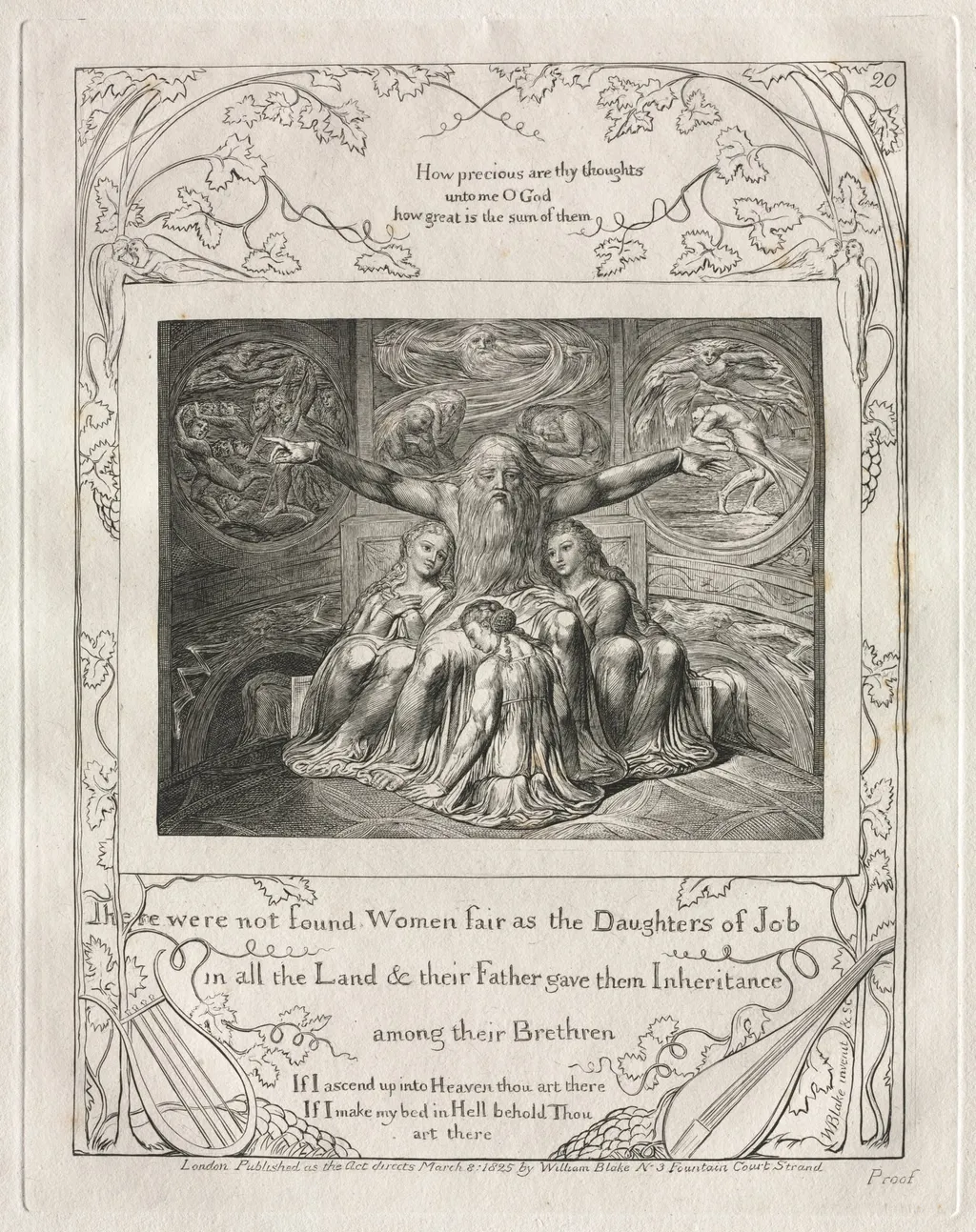
The Book of Job: Pl. 20, There were not found Women fair as the Daughters of Job is a work on paper by the Romanticist artist William Blake. It dates from 1825 and is held in the collection of the Cleveland Museum of Art.
About this work
Overview
The work reflects his lifelong fusion of poetry and visual art, presenting a moment of quiet restoration after Job’s trials.
Created in 1825, this engraving is the twentieth plate in William Blake’s illustrated series of the biblical Book of Job. Executed in relief etching, it forms part of a larger project Blake both designed and printed himself. The work reflects his lifelong fusion of poetry and visual art, presenting a moment of quiet restoration after Job’s trials. Though largely unrecognized in his time, the series stands as a profound meditation on suffering and divine grace.
Subject & Meaning
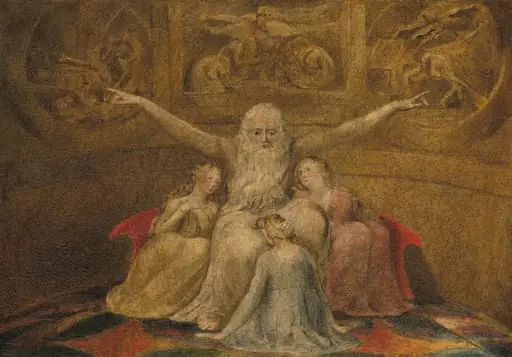
The scene depicts Job, now restored, seated with his three daughters and a young child, symbolizing renewed familial blessing. The biblical text references the daughters’ exceptional beauty, but Blake elevates the moment beyond physical description, framing it as spiritual renewal. Above, ethereal figures drift in the clouds, suggesting divine presence or celestial witnesses. The composition transforms a narrative detail into a vision of sacred harmony.
Technique & Style
Blake employed relief etching, a method he invented, allowing him to integrate text and image on a single plate. The figures are rendered with sharp outlines and strong chiaroscuro, isolating them against a dark, undefined background. Delicate scrollwork frames the composition, while inscribed verses in archaic script echo the texture of illuminated manuscripts. The contrast between the solid, grounded family and the floating spirits enhances the mystical tone.
History & Provenance
The complete series of twenty-one plates was produced in limited numbers, primarily for private patrons. Blake printed and hand-colored each impression himself, often varying tones and details. This particular plate was likely part of a small group bound into a volume for a collector, possibly the Reverend Joseph Thomas, who commissioned the work. Few complete sets survive, making each plate a rare artifact of Blake’s self-sufficient artistic practice.
Context
Created during the later years of Blake’s life, the Job series emerged from his deep engagement with biblical themes and his rejection of Enlightenment rationalism. While contemporaries like Turner pursued naturalism, Blake pursued symbolic vision, aligning with Romantic ideals of inner experience. His illustrations were not mere decorations but theological commentaries, resisting conventional religious imagery in favor of personal, visionary expression.
Legacy
Blake’s Job engravings influenced later generations of symbolist and mystical artists, admired for their integration of text, image, and spiritual narrative. Though overlooked in his lifetime, the series is now recognized as a pivotal achievement in British printmaking. Scholars value it not only for its technical innovation but for its uncompromising fusion of poetic and visual language, redefining the role of illustration in religious art.
Artist & collection
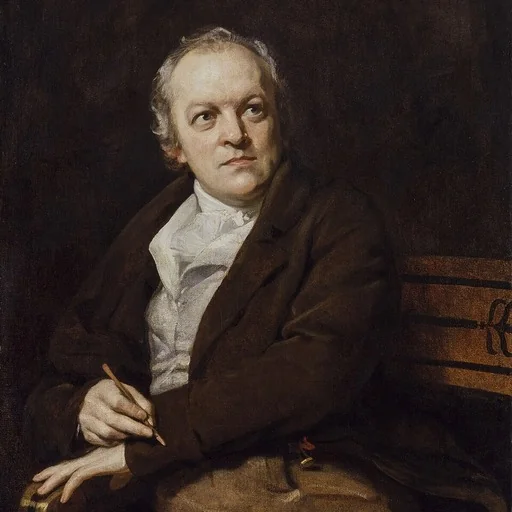
Artist
William Blake (28 November 1757 – 12 August 1827) was an English poet, painter and printmaker.

 Job and His Daughters
 Job and His Daughters
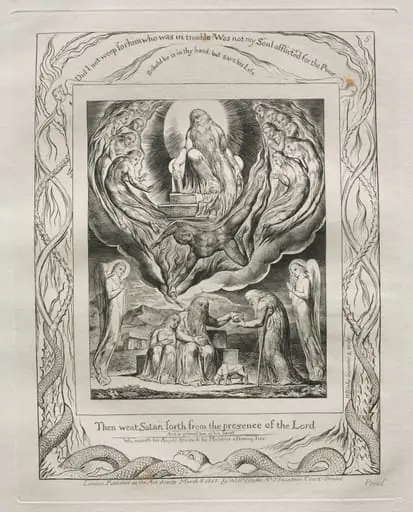 The Book of Job: Pl. 5, Then went Satan forth from the presence of the Lord
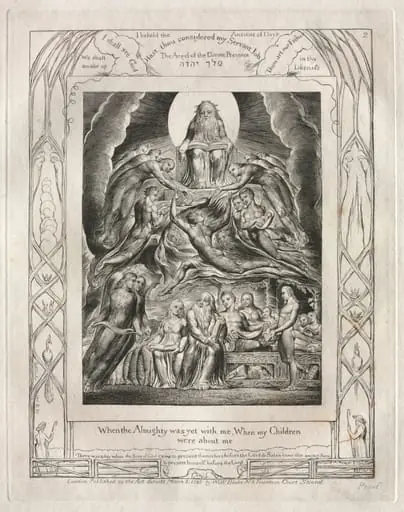 The Book of Job: Pl. 2, When the Almighty was yet with me, When my Children
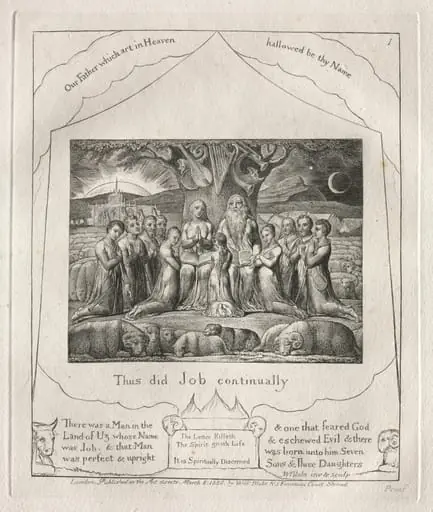 The Book of Job: Pl. 1, Thus did Job continually
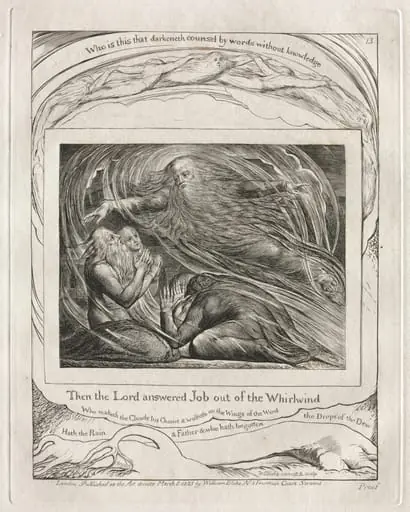 The Book of Job: Pl. 13, Then the Lord answered Job out of the Whirlwind
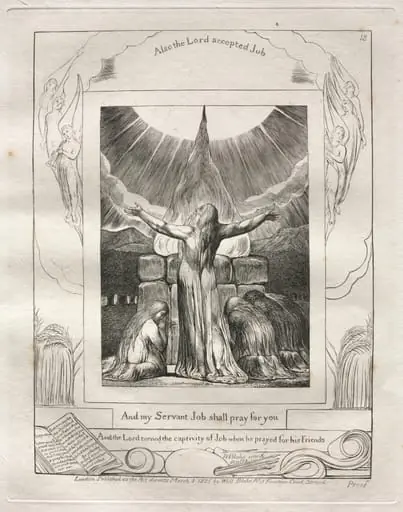 The Book of Job: Pl. 18, And my Servant Job shall pray for you
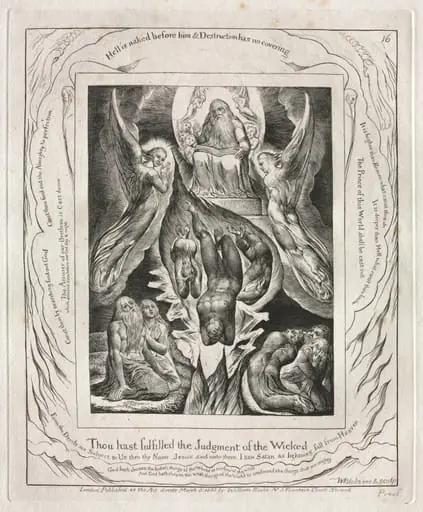 The Book of Job: Pl. 16, Thou hast fulfilled the Judgment of the Wicked
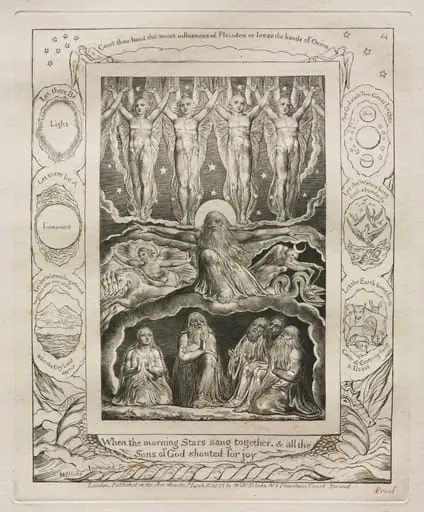 The Book of Job: Pl. 14, When the morning Stars sang together, and all the
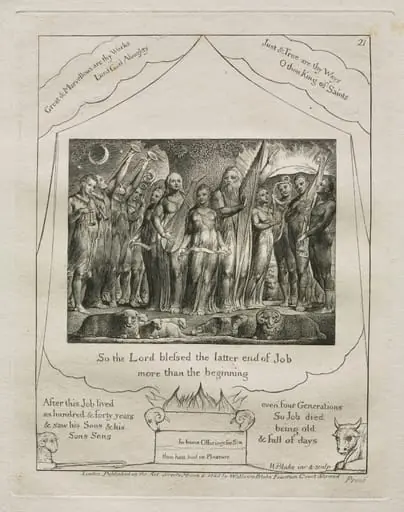 The Book of Job: Pl. 21, So the Lord blessed the latter end of Job
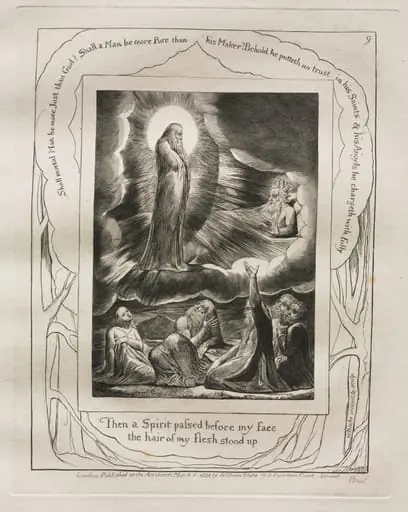 The Book of Job: Pl. 9, Then a Spirit passed before my face
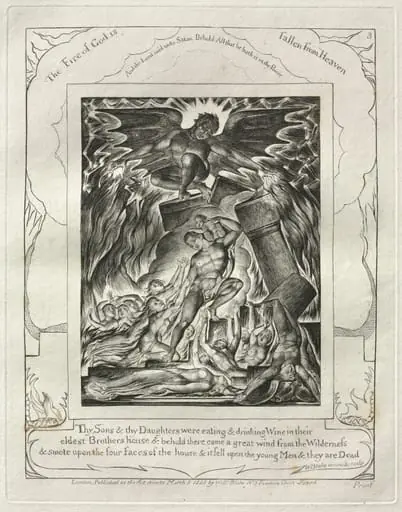 The Book of Job: Pl. 3, Thy Sons and thy Daughters were eating and drinking Wine in their