Artwork
Job and His Wife Restored to Prosperity
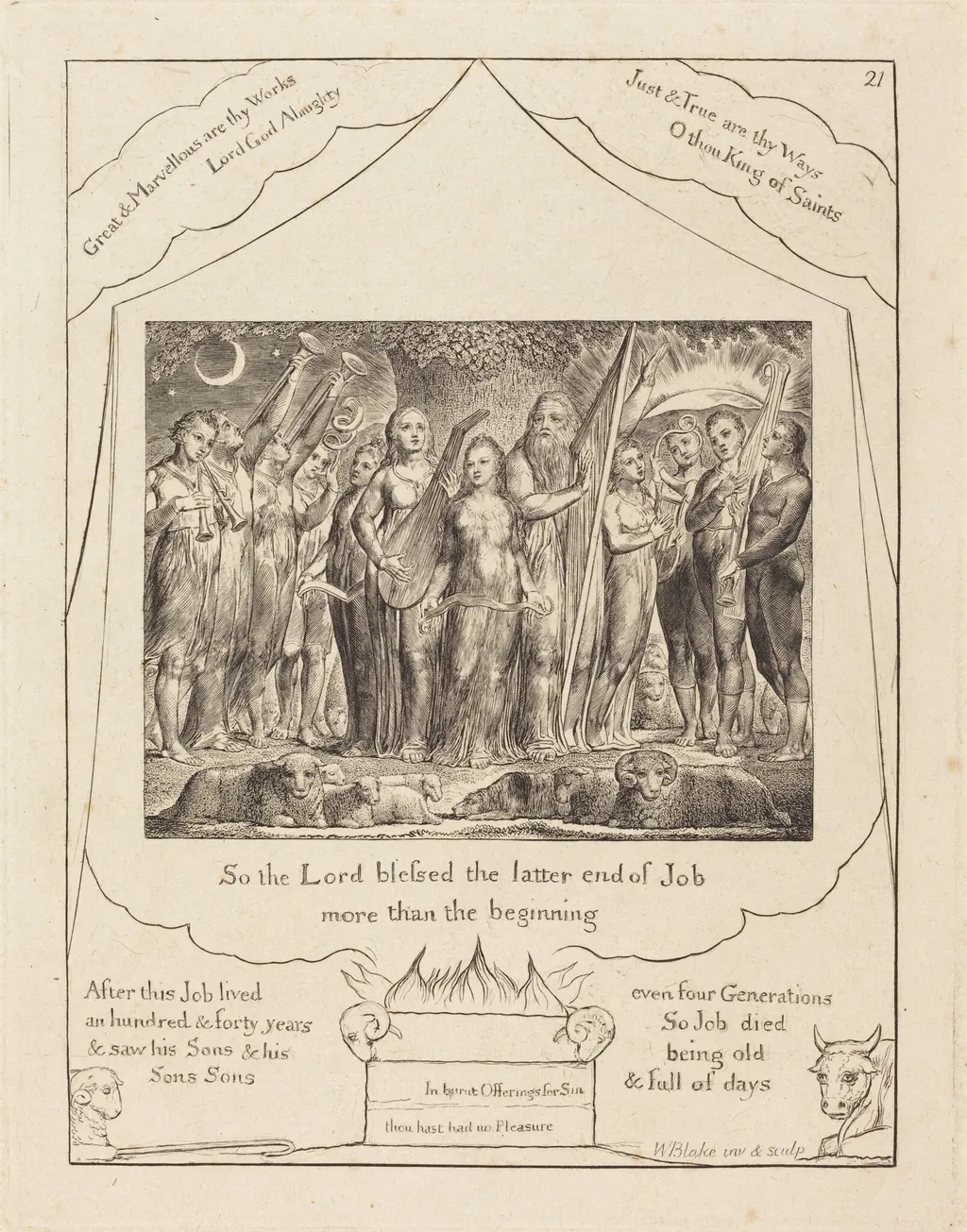
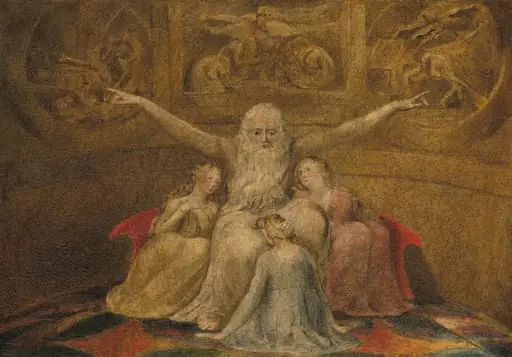
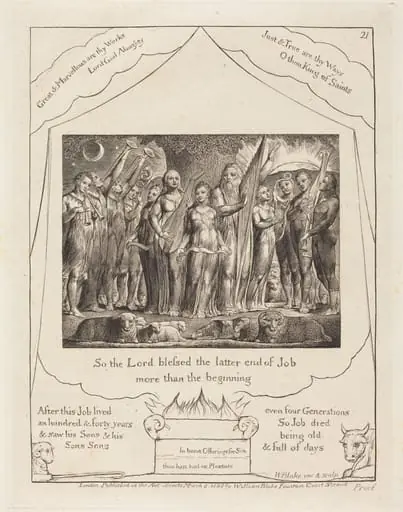
Job and His Wife Restored to Prosperity is an ink print by the Romanticist artist William Blake. It dates from 1825 and is held in the collection of the National Gallery of Art.
About this work
Overview
Job and His Wife Restored to Prosperity is an 1825 engraving by William Blake, exploring themes of faith and renewal through the biblical figure of Job.
Subject & Meaning
The print depicts Job and his wife following the restoration of their fortunes, symbolizing resilience and divine redemption. Surrounding figures, including those with tools and instruments, suggest a community reunited in prosperity.
Technique & Style
Blake employed fine lines and nuanced shading to achieve a near three-dimensional effect, characteristic of his meticulous printmaking technique.
History & Provenance
Created during the Romantic Age, this work reflects Blake's symbolic and imaginative approach, despite receiving little acclaim during his lifetime.
Context
Part of a broader biblical narrative, the engraving includes textual elements narrating Job's life, culminating in his blessed later years. Incorporating a tombstone and a cow's head, Blake layers the scene with additional symbolic depth.
Artist & collection
Artist
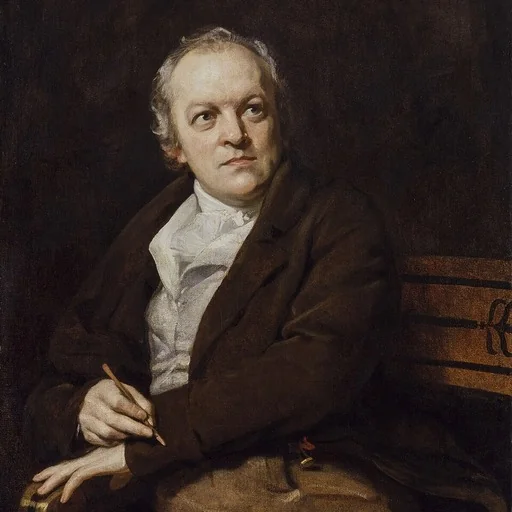
William Blake (28 November 1757 – 12 August 1827) was an English poet, painter and printmaker.