Artwork
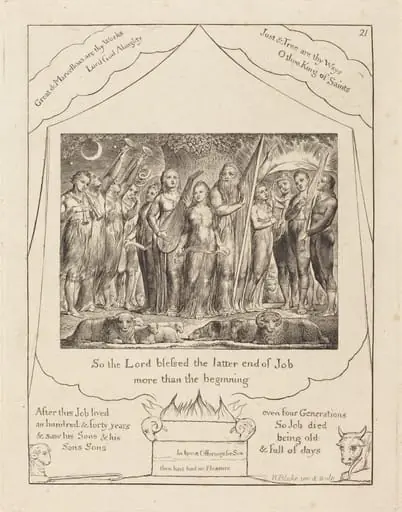
Job and His Family
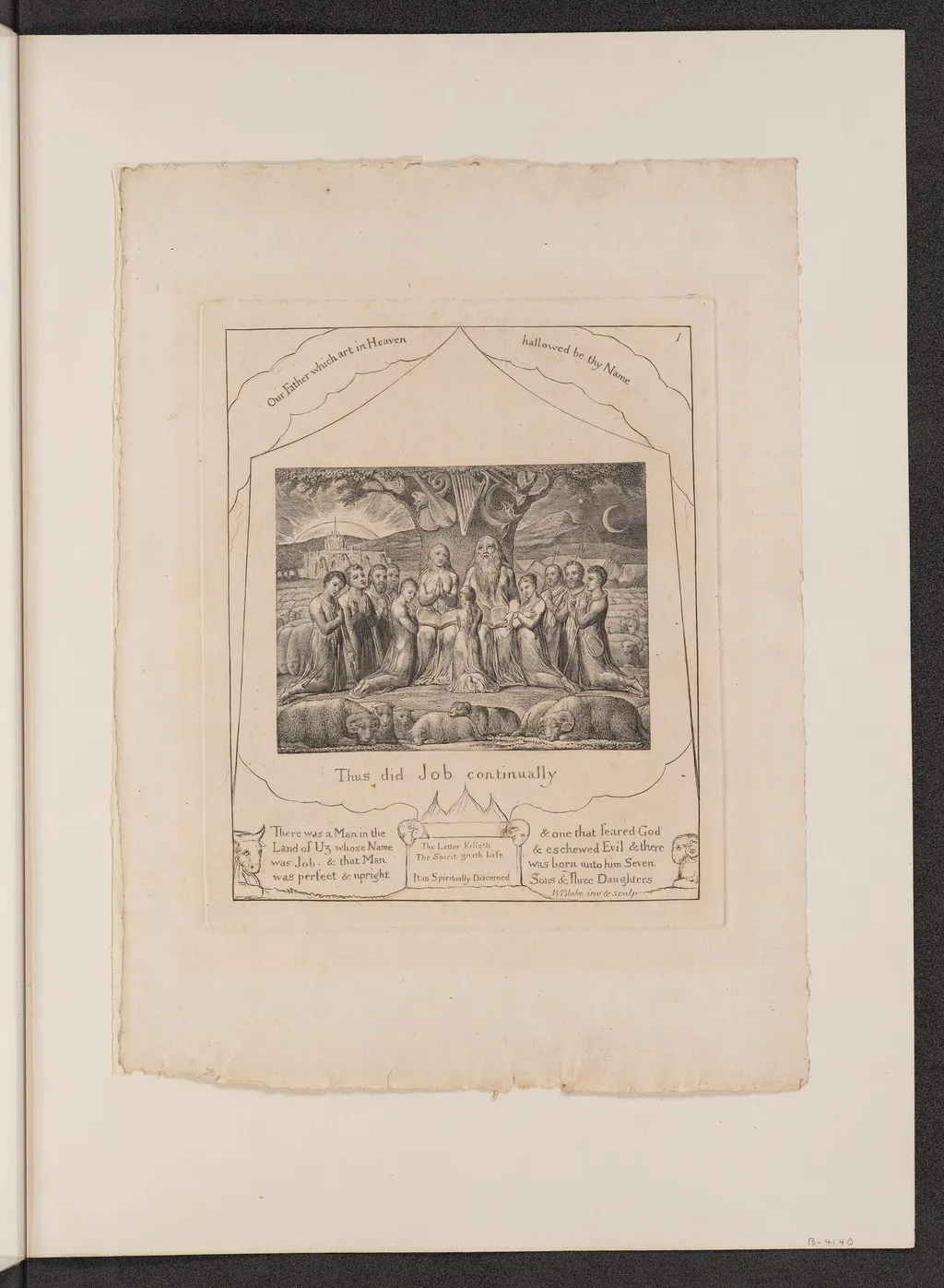
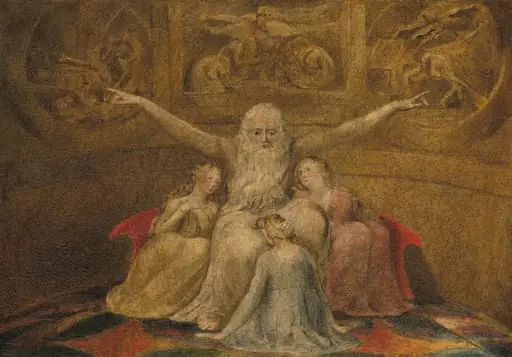
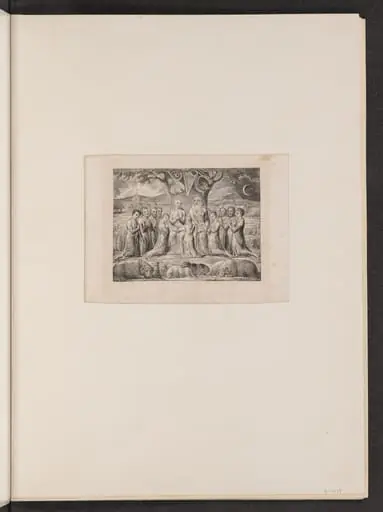
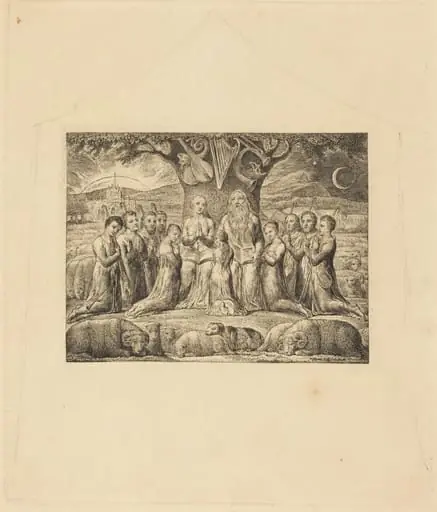
Job and His Family is an ink print by the Romanticist artist William Blake. It dates from 1825 and is held in the collection of the National Gallery of Art.
About this work
Overview
Created in 1825, *Job and His Family* is an engraving executed on thick paper. The work presents a small gathering of figures beneath a tree, set against a turbulent sky where a moon is partially visible. Text framing the image references the biblical figure Job, linking the visual scene to a narrative context.
Subject & Meaning
The composition depicts a group of individuals, some appearing despondent, others offering support, suggesting themes of suffering and communal endurance. The stormy backdrop and faint moon reinforce an atmosphere of trial, resonating with the biblical story of Job’s trials and the perseverance of his household.
Technique & Style
Blake incised the design into a metal plate, employing fine cross‑hatching to generate tonal variation. The sharp lines and dense hatching produce deep shadows that model the figures and landscape, characteristic of his printmaking approach that balances detailed line work with expressive chiaroscuro.
History & Provenance
The engraving was produced in London by William Blake, a poet, painter, and printmaker whose output straddles visual art and literature. Though not widely circulated in his lifetime, the piece now forms part of collections that document Blake’s contribution to Romantic-era print culture.
Artist & collection
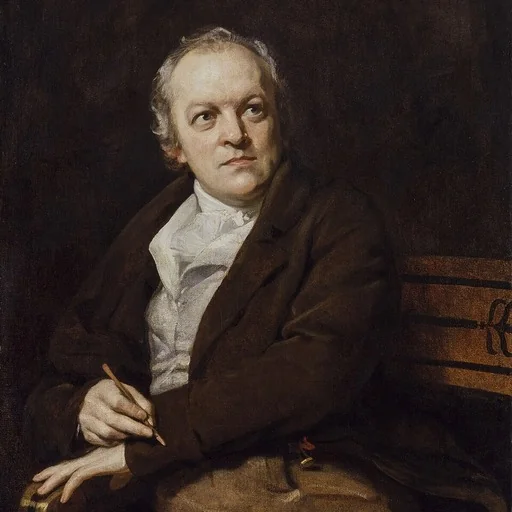
Artist
William Blake (28 November 1757 – 12 August 1827) was an English poet, painter and printmaker.