Artwork
The Circle of the Thieves; Agnolo Brunelleschi Attacked by a Six-Footed Serpent
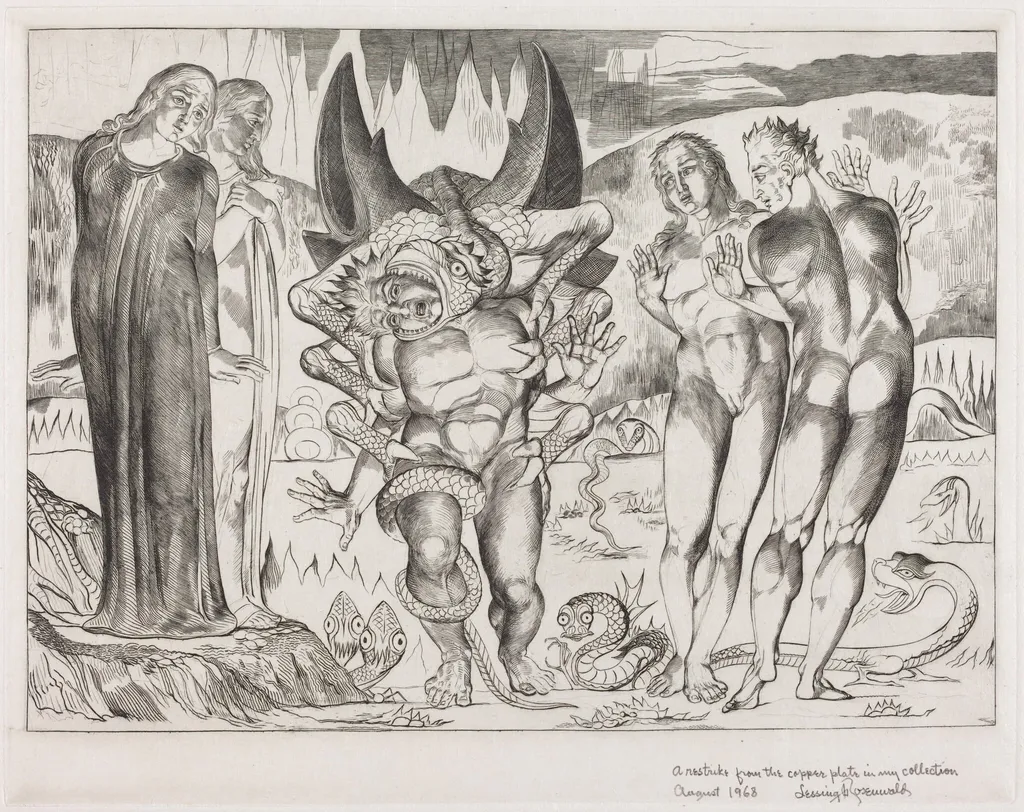
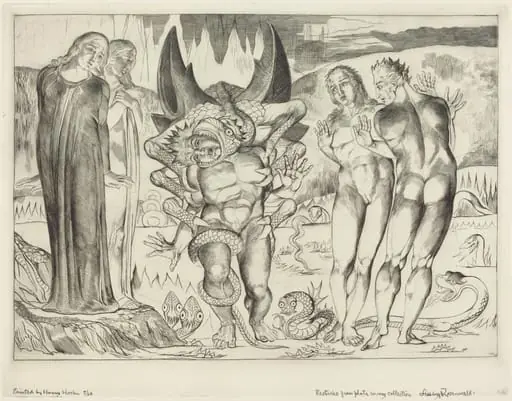
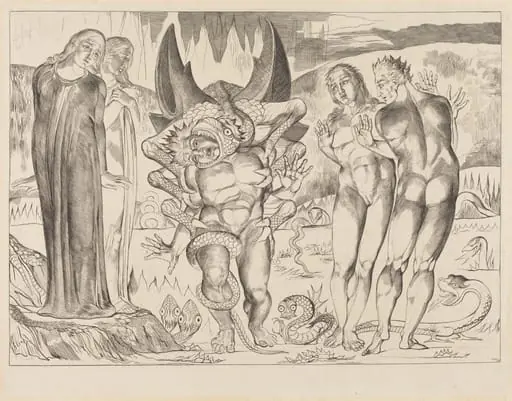
The Circle of the Thieves; Agnolo Brunelleschi Attacked by a Six-Footed Serpent is an ink print by the Romanticist artist William Blake. It dates from 1827 and is held in the collection of the National Gallery of Art.
About this work
Overview
In 1827 the English artist William Blake produced an engraving titled *The Circle of the Thieves; Agnolo Brunelleschi Attacked by a Six‑Footed Serpent*. The work is a restrike, meaning it was printed from an existing copper plate rather than cut anew. It presents a dramatic confrontation rendered in Blake’s characteristic linear vigor.
Subject & Meaning
The central figure, identified as the Renaissance architect Agnolo Brunelleschi, is shown recoiling as a six‑footed, serpentine creature coils around him. Around the pair, onlookers stand with expressions of alarm, suggesting a narrative of sudden peril and collective witness. The composition invites speculation about moral or allegorical readings, typical of Blake’s symbolic practice.
Technique & Style
Blake employs strong, decisive lines and dense cross‑hatching to model form and suggest movement. The contrast of dark shadows against lighter spaces creates a palpable depth, while the exaggerated musculature and twisted serpent convey kinetic energy. The engraving’s graphic intensity reflects Blake’s broader printmaking approach, which favored expressive line over subtle tonal gradation.
History & Provenance
Although the plate was originally cut earlier in Blake’s career, the surviving impressions date from the 1827 restrike, produced shortly before his death. The work circulated among Blake’s limited network of patrons and later entered museum collections, where it has been cited as an example of his late‑period print output.
Context
Blake’s fascination with mythic and historical figures often merged with his visionary imagination. By selecting Brunelleschi—a symbol of architectural innovation—and pairing him with a monstrous serpent, Blake juxtaposes human achievement against chaotic forces, echoing Romantic concerns about the tension between reason and the irrational.
Legacy
The engraving remains a reference point for scholars examining Blake’s later print practice and his engagement with historical subjects. Its bold graphic language continues to influence contemporary illustrators who explore the intersection of narrative drama and line‑based drawing.
Own this work as a print
Artist & collection

Artist
William Blake (28 November 1757 – 12 August 1827) was an English poet, painter and printmaker.




 The Circle of the Thieves; Agnolo Brunelleschi Attacked by a Six-Footed Serpent
 The Circle of the Thieves; Agnolo Brunelleschi Attacked by a Six-Footed Serpent
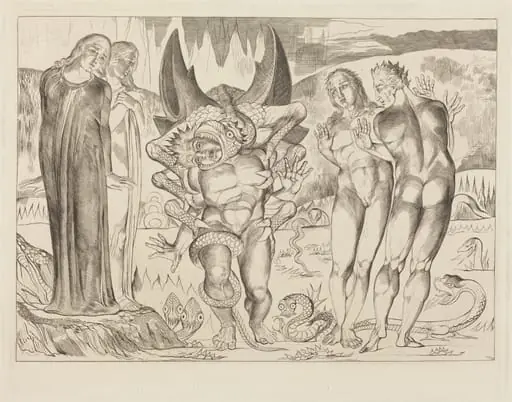 The Circle of the Thieves; Agnolo Brunelleschi Attacked by a Six-Footed Serpent
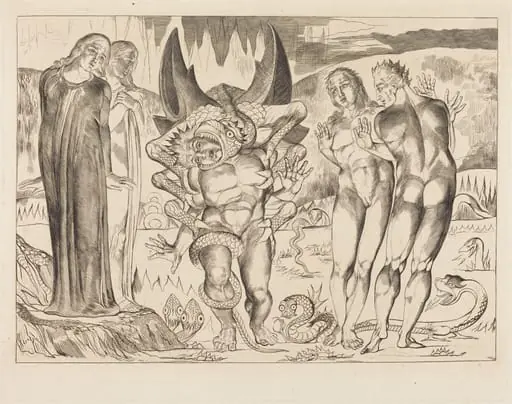 The Circle of the Thieves; Agnolo Brunelleschi Attacked by a Six-Footed Serpent
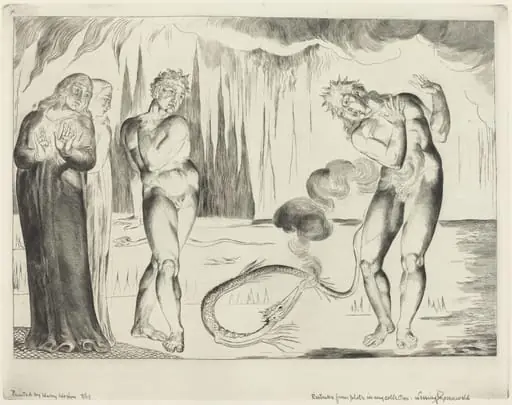 The Circle of the Thieves; Buoso Donati Attacked by the Serpent
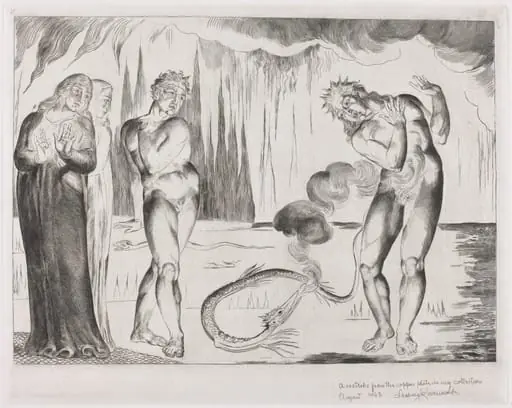 The Circle of the Thieves; Buoso Donati Attacked by the Serpent
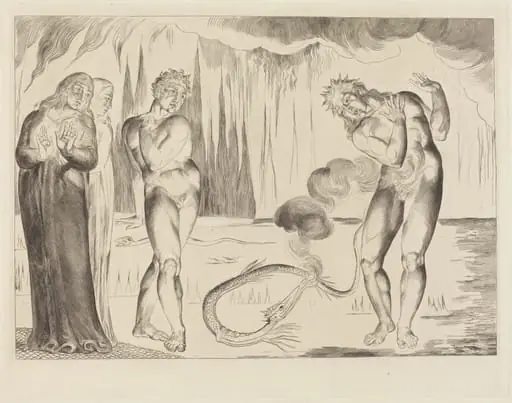 The Circle of the Thieves; Buoso Donati Attacked by the Serpent
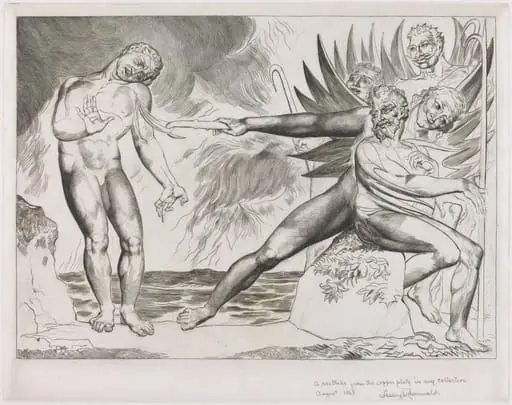 The Circle of the Corrupt Officials; the Devils Tormenting Ciampolo
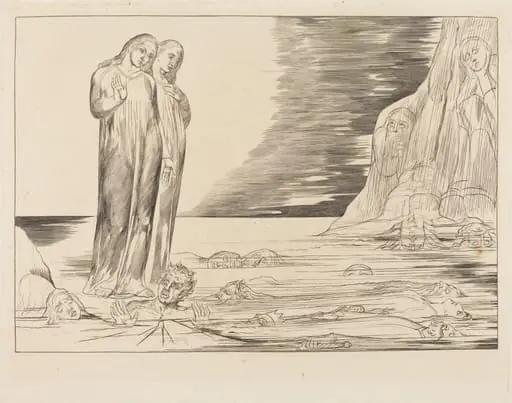 The Circle of the Traitors; Dante's Foot Striking Bocca degli Abbate
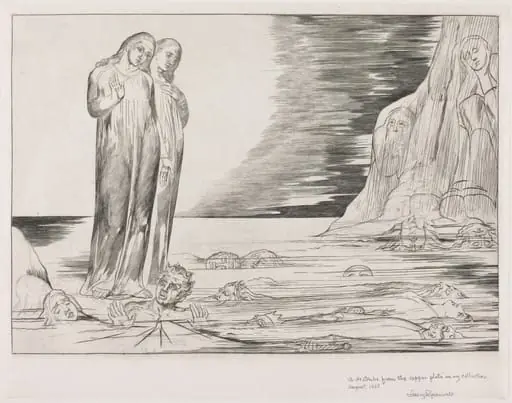 The Circle of the Traitors; Dante's Foot Striking Bocca degli Abbate
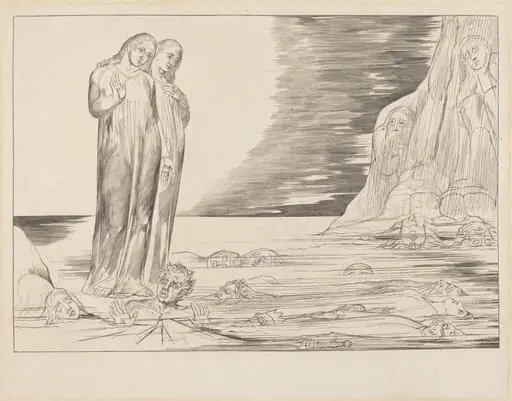 The Circle of the Traitors; Dante's Foot Striking Bocca degli Abbate
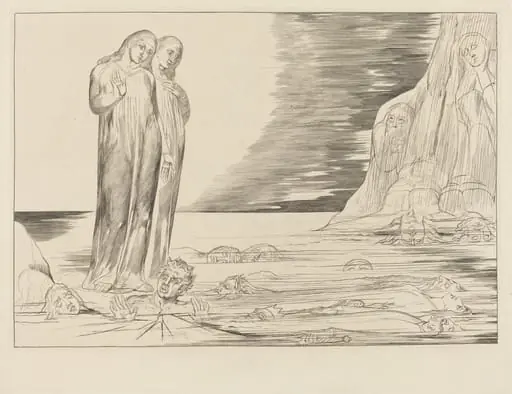 The Circle of the Traitors; Dante's Foot Striking Bocca degli Abbate