Artwork
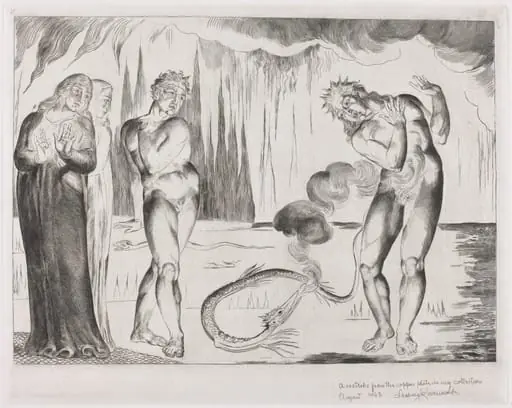
The Circle of the Thieves; Buoso Donati Attacked by the Serpent
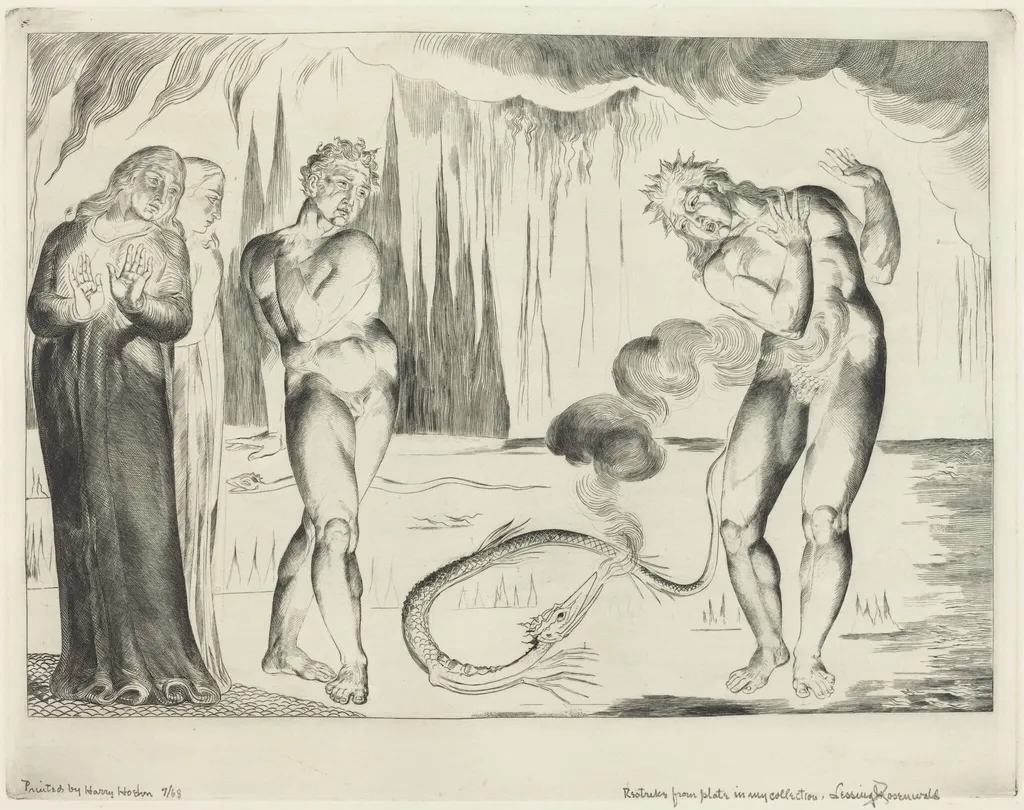
The Circle of the Thieves; Buoso Donati Attacked by the Serpent is an ink print by the Romanticist artist William Blake. It dates from 1827 and is held in the collection of the National Gallery of Art.
About this work
Overview
Created in 1827, this engraving is a posthumous restrike of William Blake’s design, produced shortly after his death.
Created in 1827, this engraving is a posthumous restrike of William Blake’s design, produced shortly after his death. It belongs to a series illustrating Dante’s Inferno, commissioned but never fully realized during his lifetime. Blake’s engagement with literary and spiritual themes is evident in this print, which translates a passage from the Divine Comedy into a dense, symbolic visual narrative. The work reflects his lifelong commitment to expressing inner visions through handcrafted printmaking.
Subject & Meaning
The scene depicts Buoso Donati, a historical Florentine figure condemned in Dante’s Inferno for theft, being attacked by a serpent in the eighth circle of hell. Two robed figures on the left, possibly souls or divine witnesses, observe in stillness. The writhing serpent, its tail coiled into a human-like form, embodies the corrupting nature of sin. Blake’s interpretation emphasizes spiritual torment over physical punishment, aligning with his view of sin as a state of the soul rather than a legal transgression.
Technique & Style
Blake employed fine, incised lines to render movement and tension, characteristic of his relief etching method. The stormy sky and jagged terrain are built from dense, swirling strokes, while the figures’ forms are sharply defined against the chaotic background. The serpent’s muscular coils and the subtle suggestion of a seated figure in its tail reveal Blake’s skill in embedding multiple layers of meaning within a single contour. His use of line conveys both physical struggle and metaphysical unease.
History & Provenance
The engraving was part of a set of illustrations Blake began in 1824 for Dante’s Divine Comedy, a project he pursued until his death in August 1827. Only a few plates were completed and printed during his lifetime; this image was among those struck posthumously from his original copper plates. The restrikes were made under the supervision of his wife, Catherine, and later collectors, preserving his vision despite his inability to finish the series.
Context
Blake’s Dante illustrations emerged during a period of intense spiritual and artistic reflection, as he sought to reconcile his mystical beliefs with classical literature. Unlike contemporaries who favored naturalism, Blake interpreted Dante’s hell as a psychological landscape. His visual language drew from medieval iconography, Renaissance composition, and his own symbolic system, positioning the work at the intersection of religious vision and literary exegesis.
Legacy
Though incomplete, Blake’s Dante series expanded the possibilities of printmaking as a vehicle for visionary art. His engravings influenced later Symbolist and mystical artists who valued inner meaning over literal representation. The restrikes ensured wider circulation of his ideas, cementing his reputation as a unique bridge between poetry, theology, and graphic art in the 19th century.
Own this work as a print
Artist & collection

Artist
William Blake (28 November 1757 – 12 August 1827) was an English poet, painter and printmaker.



 The Circle of the Thieves; Buoso Donati Attacked by the Serpent
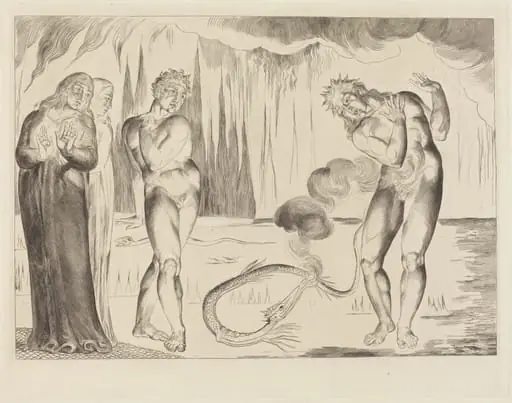 The Circle of the Thieves; Buoso Donati Attacked by the Serpent
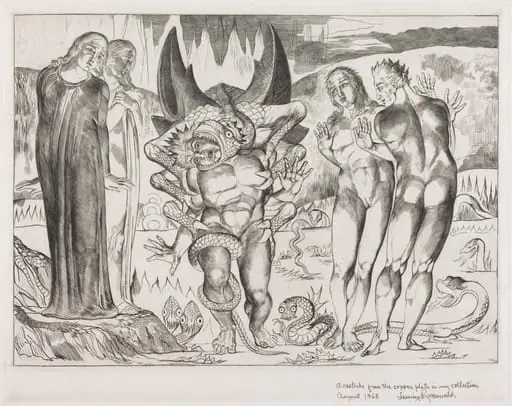 The Circle of the Thieves; Agnolo Brunelleschi Attacked by a Six-Footed Serpent
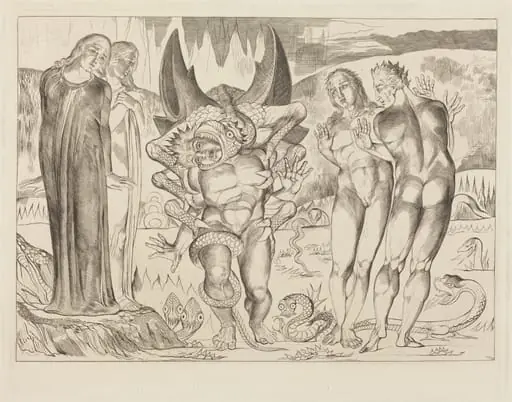 The Circle of the Thieves; Agnolo Brunelleschi Attacked by a Six-Footed Serpent
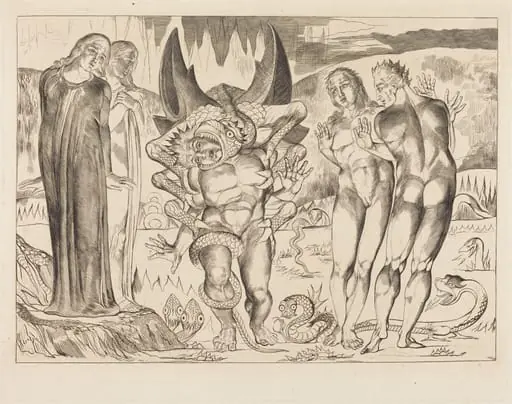 The Circle of the Thieves; Agnolo Brunelleschi Attacked by a Six-Footed Serpent
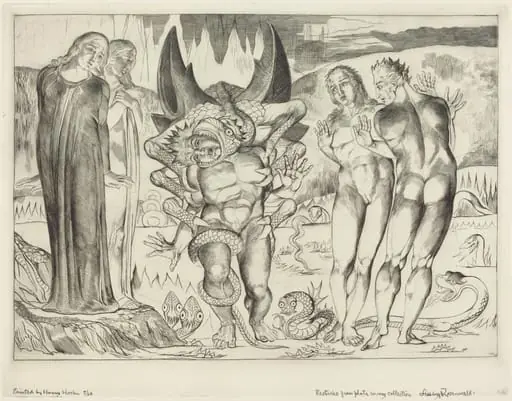 The Circle of the Thieves; Agnolo Brunelleschi Attacked by a Six-Footed Serpent
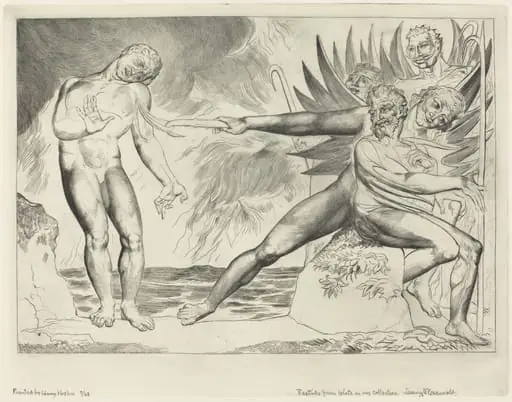 The Circle of the Corrupt Officials; The Devils Tormenting Ciampolo
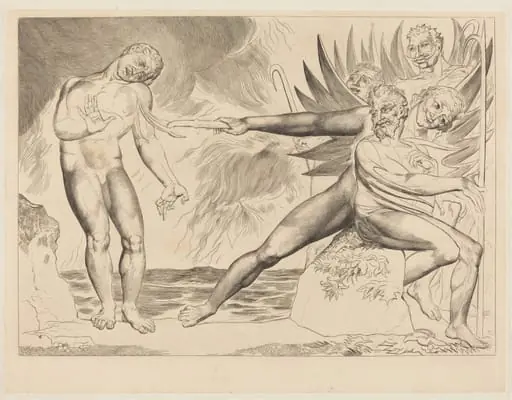 The Circle of the Corrupt Officials; the Devils Tormenting Ciampolo
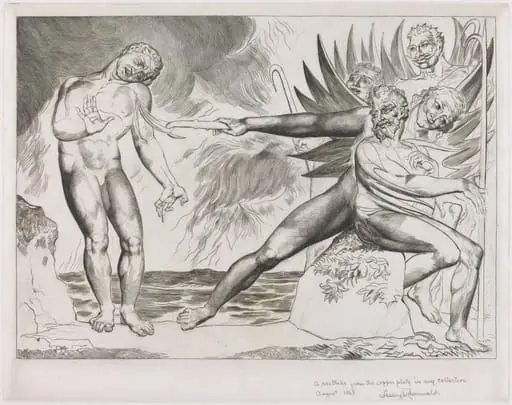 The Circle of the Corrupt Officials; the Devils Tormenting Ciampolo
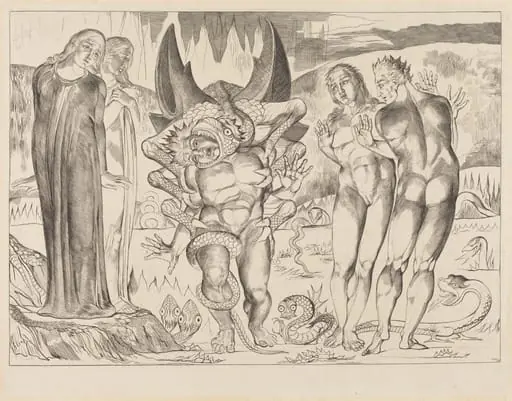 The Circle of the Thieves; Agnolo Brunelleschi Attacked by a Six-Footed Serpent
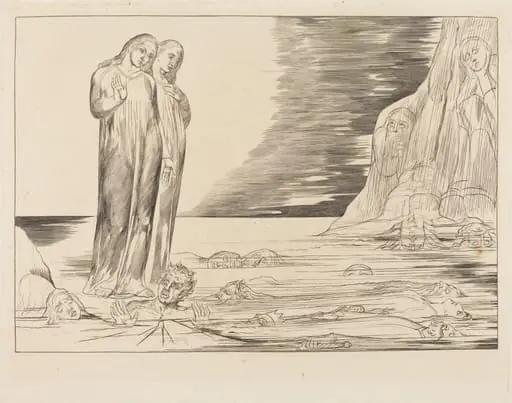 The Circle of the Traitors; Dante's Foot Striking Bocca degli Abbate
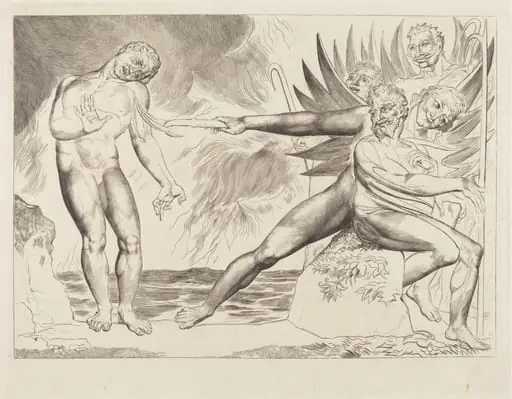 The Circle of the Corrupt Officials; the Devils Tormenting Ciampolo