Artwork
The Death of Saint Joseph
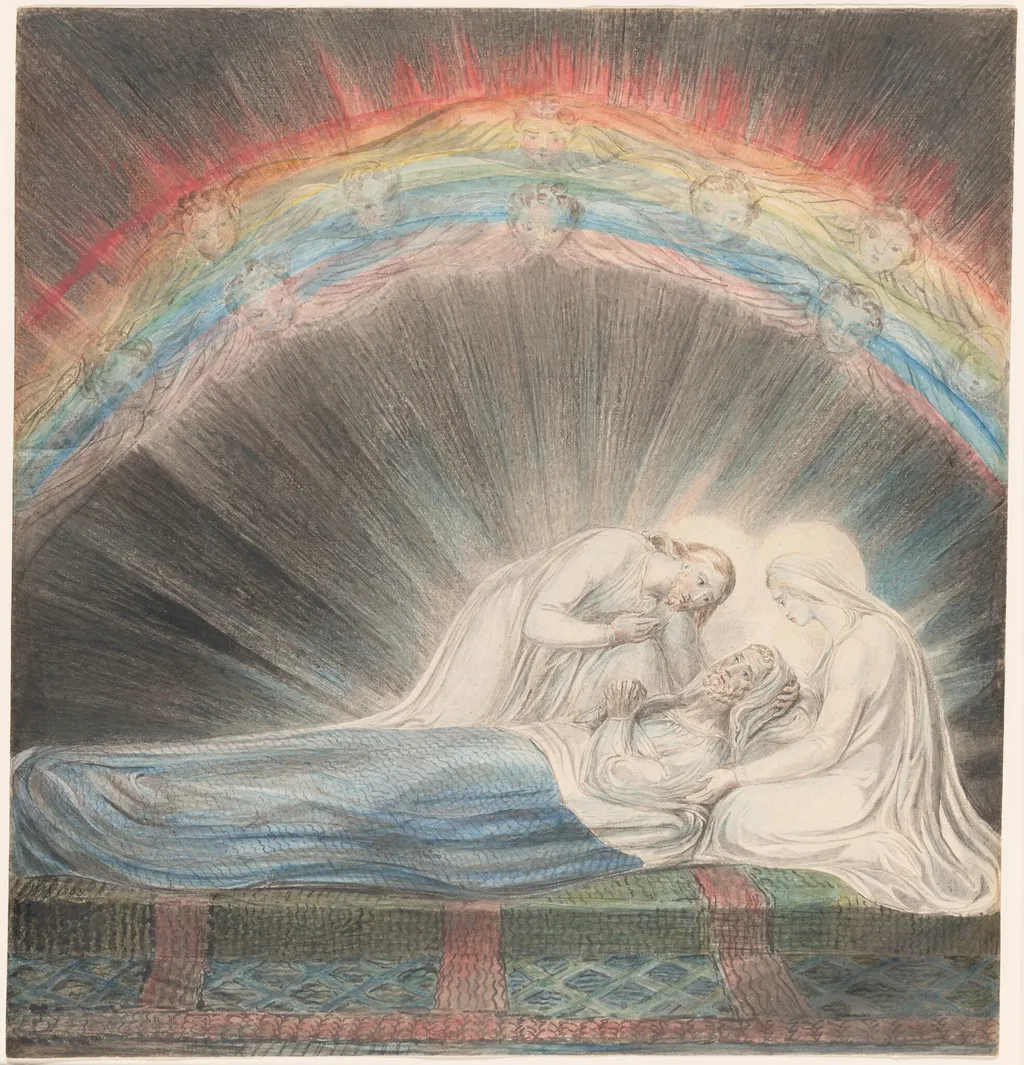
The Death of Saint Joseph is a graphite drawing by the Romanticist artist William Blake. It dates from 1803 and is held in the collection of the National Gallery of Art.
About this work
Overview
Created in 1803, *The Death of Saint Joseph* is a mixed-media drawing on wove paper that combines watercolor, graphite, and charcoal.
Created in 1803, *The Death of Saint Joseph* is a mixed-media drawing on wove paper that combines watercolor, graphite, and charcoal. The work portrays the biblical figure Saint Joseph at the moment of his passing, surrounded by mourners. Its palette is restrained, employing muted tones and delicate shading to convey a calm atmosphere. The piece originates from William Blake’s London studio, where he produced the majority of his visual output.
Subject & Meaning
The composition centers on Saint Joseph lying on a modest bed, draped in a blue blanket, while a man and a woman attend to him. Above the scene a rainbow spans the sky, terminating in small figures, a motif that may suggest divine promise or spiritual transition. The overall arrangement emphasizes quiet resignation and the comforting presence of loved ones at the threshold of death.
Technique & Style
Blake employs a layered approach: watercolor provides a soft wash of color, while graphite and charcoal introduce fine lines and subtle tonal variation. The drawing’s gentle contours and restrained shading reflect the Romantic interest in emotion and the inner life, yet its execution remains intimate, avoiding the dramatic chiaroscuro typical of later Romantic works.
History & Provenance
William Blake, known primarily as a poet and visionary artist, produced this work during a period when his art received little public attention. Although the drawing was not widely exhibited in his lifetime, it later entered collections that recognize Blake’s contribution to early 19th‑century British art. Its provenance traces back to Blake’s London workshop before passing through private hands to a museum collection.
Context
The early 1800s saw the emergence of Romanticism, a movement that valued imagination, individual feeling, and the sublime. Blake’s treatment of a religious subject through a personal, symbolic lens aligns with this ethos, distinguishing his work from the more conventional devotional images of earlier periods. The piece thus exemplifies the transitional character of British art on the cusp of Romantic expression.
Artist & collection
Artist
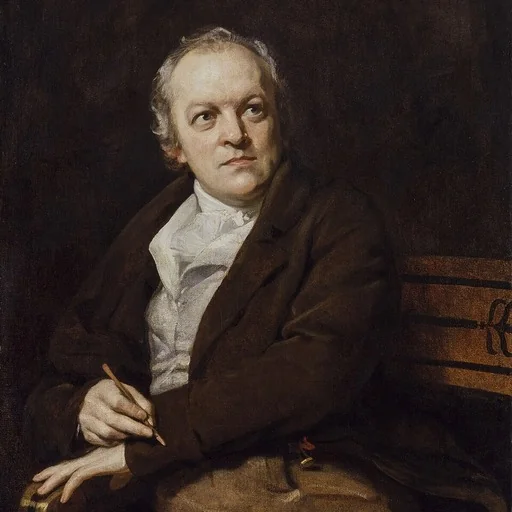
William Blake (28 November 1757 – 12 August 1827) was an English poet, painter and printmaker.

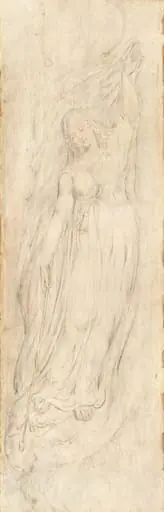
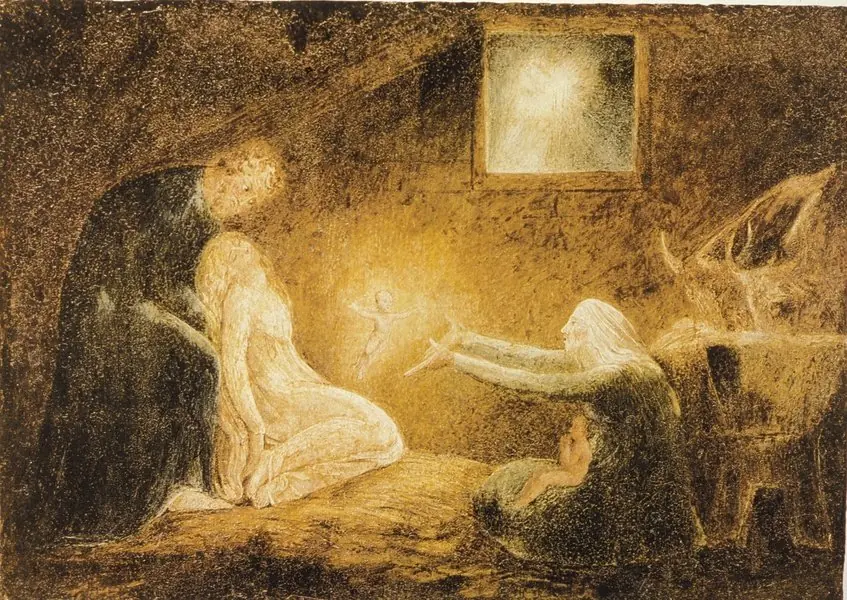
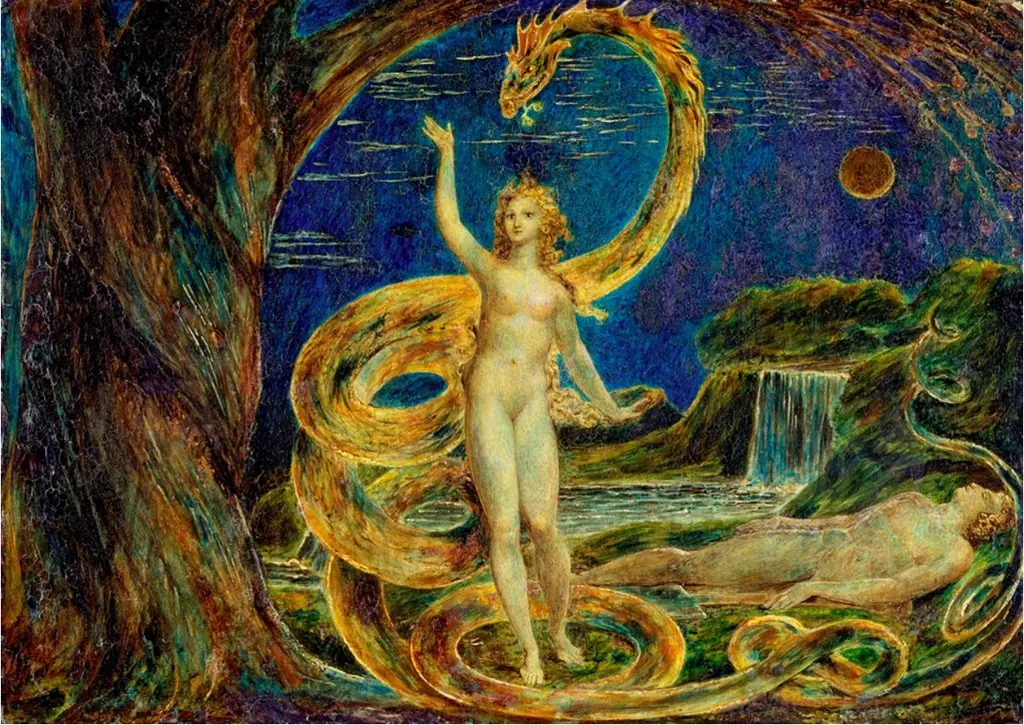
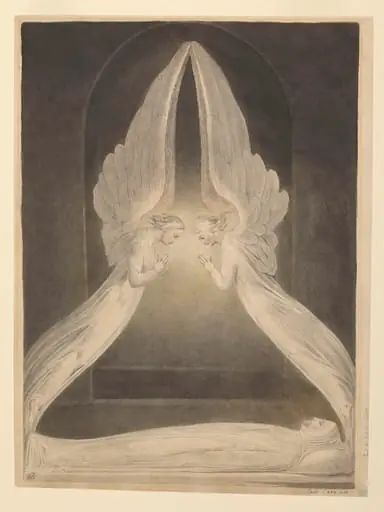 The Angels hovering over the body of Christ in the Sepulchre
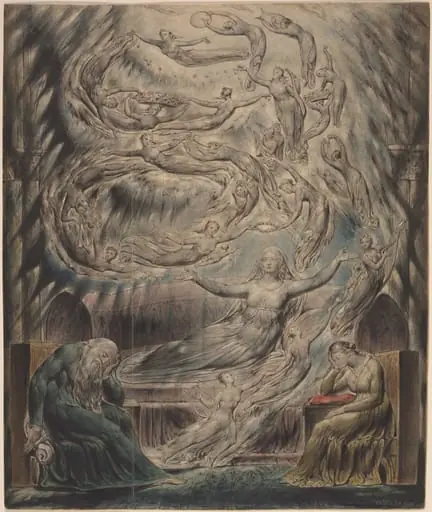 Queen Katherine's Dream
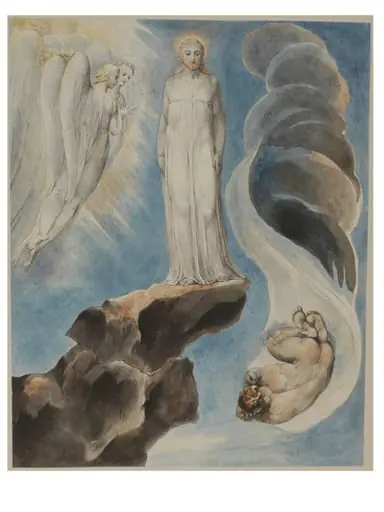 The Third Temptation
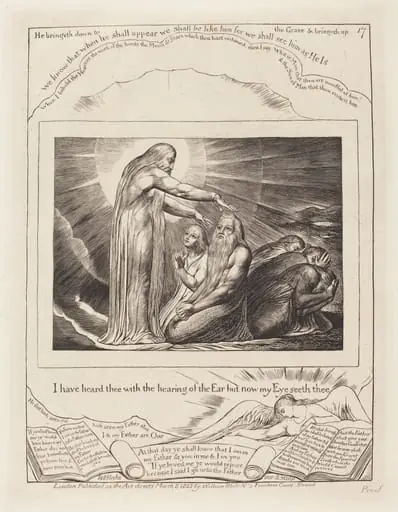 The Vision of God
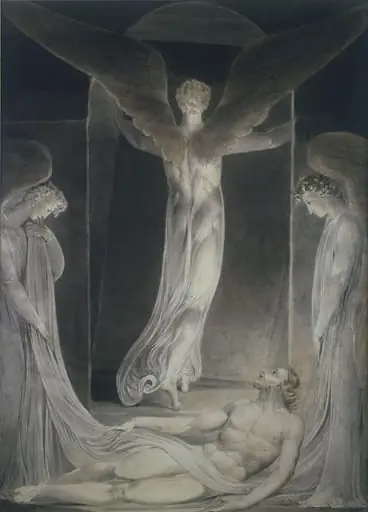 The Resurrection: The angel rolling away the stone from the sepulchre
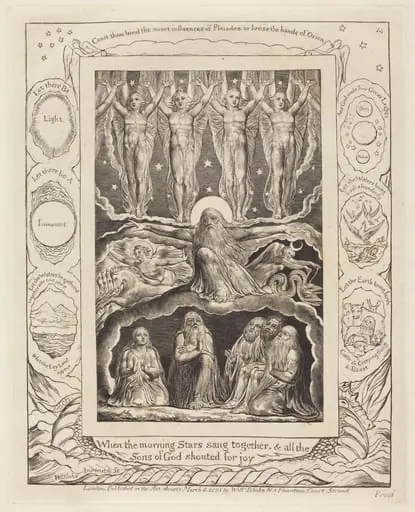 The Creation
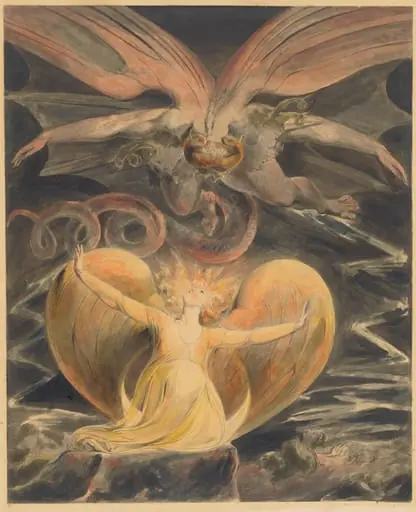 The Great Red Dragon and the Woman Clothed with the Sun
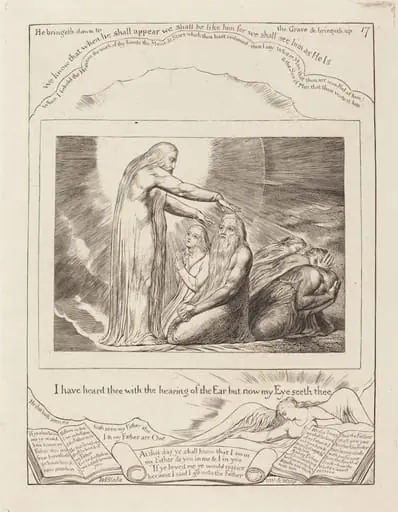 The Vision of God
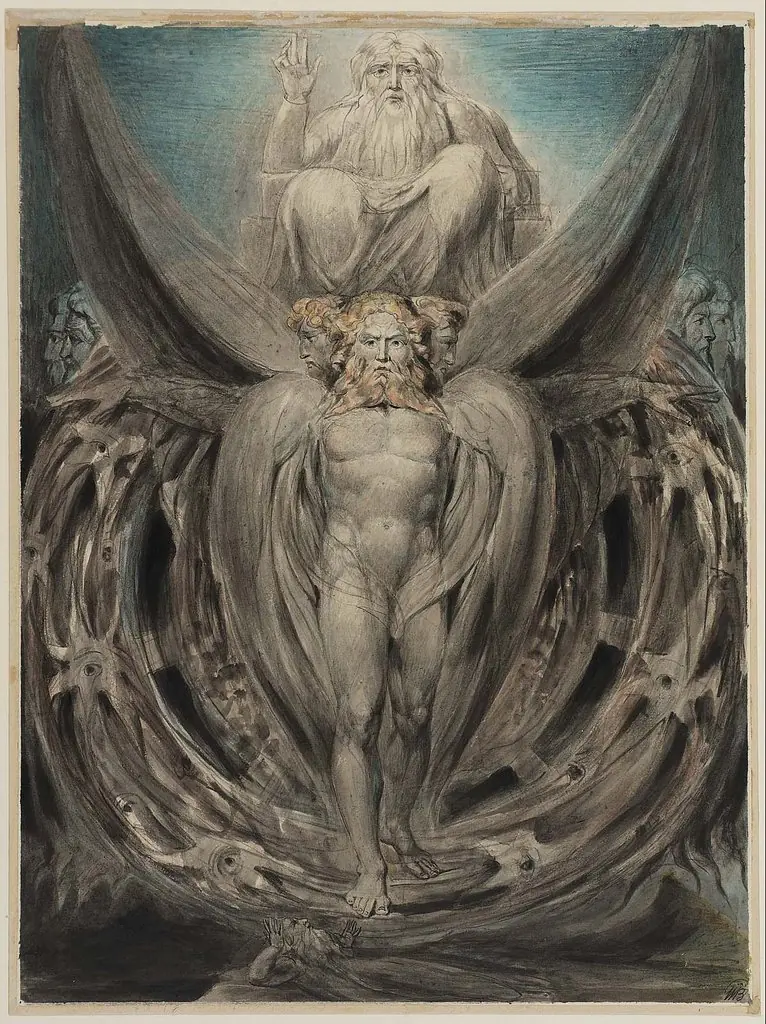 Ezekiel's Wheels
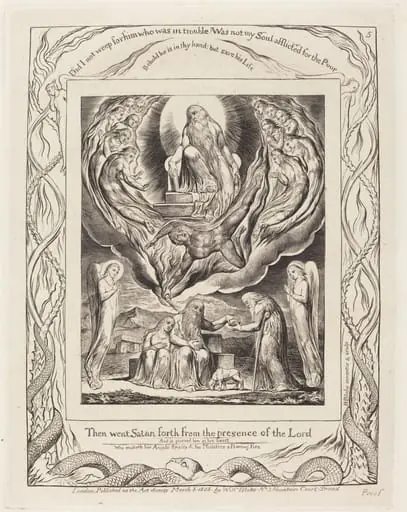 Satan Going Forth from the Presence of the Lord
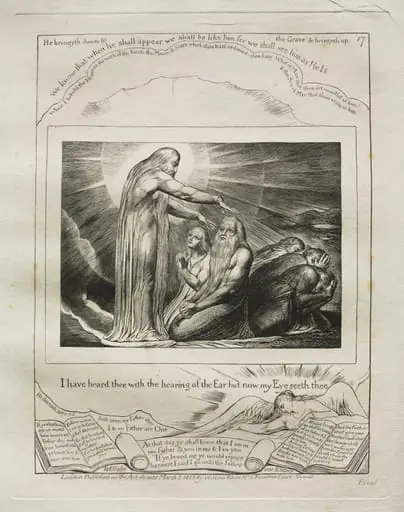 The Book of Job: Pl. 17, I have heard thee with the hearing of the Ear but now my Eye seeth thee
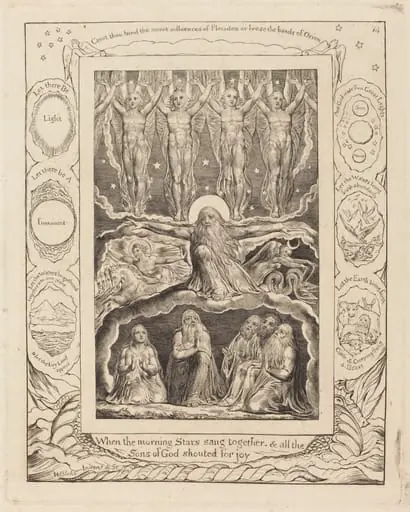 The Creation