Artwork
The Book of Job: Pl. 17, I have heard thee with the hearing of the Ear but now my Eye seeth thee
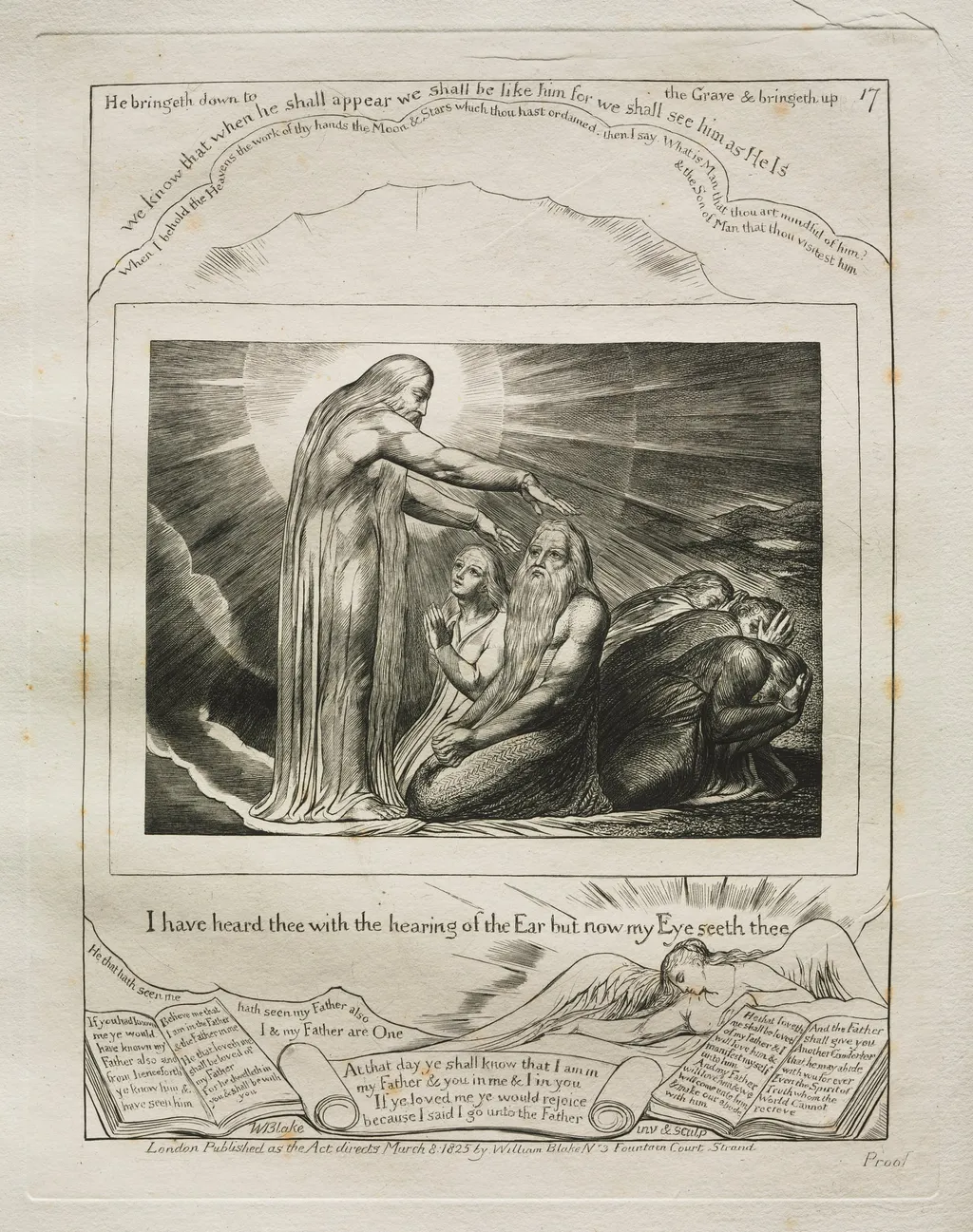
The Book of Job: Pl. 17, I have heard thee with the hearing of the Ear but now my Eye seeth thee is a work on paper by the Romanticist artist William Blake. It dates from 1825 and is held in the collection of the Cleveland Museum of Art.
About this work
Overview
Created in 1825, this print is the seventeenth plate in William Blake’s illustrated series of the biblical Book of Job.
Created in 1825, this print is the seventeenth plate in William Blake’s illustrated series of the biblical Book of Job. Executed in black ink on paper, it belongs to a late portfolio that synthesizes his poetic and visual vision. Blake, a lifelong Londoner, developed a unique method of relief etching to merge text and image, rejecting conventional boundaries between literary and artistic expression. The work is held in the collection of the Cleveland Museum of Art.
Subject & Meaning
The scene depicts Job’s spiritual revelation, drawn from Job 42:5, where he acknowledges direct divine encounter after enduring suffering. A towering figure, likely representing God, extends arms amid turbulent skies, while two smaller figures kneel in awe below. The upward gaze of the kneeling forms suggests transformation through revelation. The surrounding text, rendered as swirling clouds, becomes a visual manifestation of divine speech, blurring the line between scripture and vision.
Technique & Style
Blake employed relief etching, a method he invented, to hand-color and print each plate with precise control. Here, he used only black ink, relying on stark contrasts and fluid, expressive lines to generate emotional intensity. The text is not marginal but integrated into the composition, curling through the sky like wind or flame. The absence of color heightens the drama, emphasizing form and movement over naturalism, aligning with his symbolic, visionary approach.
History & Provenance
The plate was produced as part of a limited series commissioned by John Linnell, a patron and fellow artist who supported Blake in his final years. Only a small number of complete portfolios were printed and colored by Blake himself before his death in 1827. The Cleveland Museum of Art acquired its copy through documented provenance, preserving one of the few original impressions from the artist’s hand.
Context
Blake’s Job series emerged during a period of personal hardship and growing recognition among a small circle of Romantic-era intellectuals. While contemporaries pursued realism, Blake turned inward, rejecting Enlightenment rationalism in favor of spiritual symbolism. His illustrations of Job reflect his belief in divine revelation as a personal, transformative experience—contrasting with institutional interpretations of faith prevalent in early 19th-century Britain.
Legacy
Blake’s integration of text and image in the Job series influenced later artists and poets seeking to unify literary and visual expression. Though largely overlooked in his lifetime, his method of embedding scripture within visionary composition became a touchstone for 20th-century illustrators and conceptual artists. The series remains a key example of how printmaking could serve as a medium for profound philosophical and theological inquiry.
Artist & collection
Artist
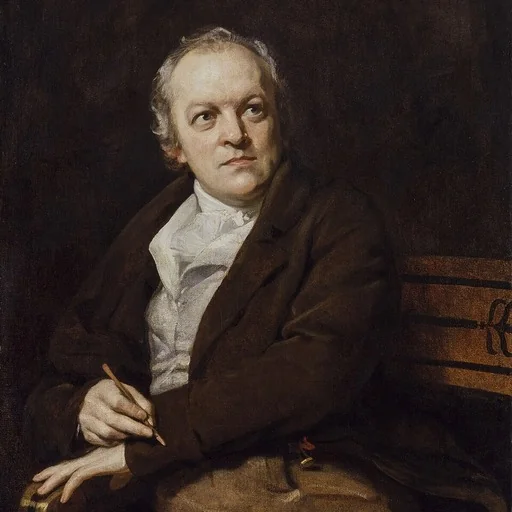
William Blake (28 November 1757 – 12 August 1827) was an English poet, painter and printmaker.

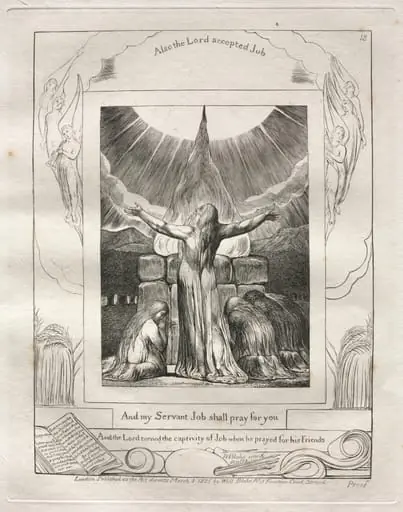 The Book of Job: Pl. 18, And my Servant Job shall pray for you
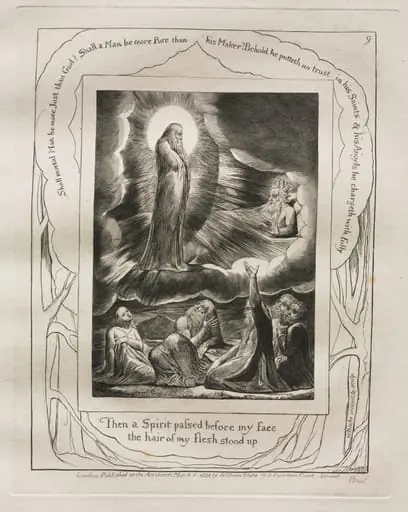 The Book of Job: Pl. 9, Then a Spirit passed before my face
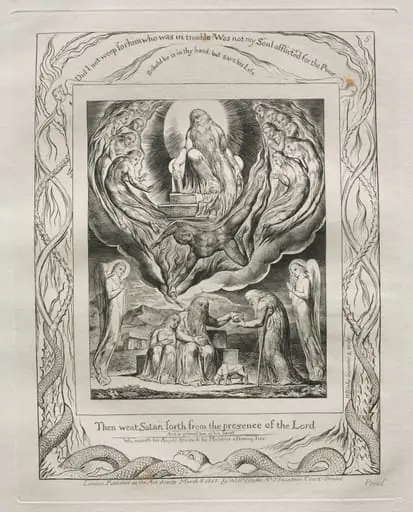 The Book of Job: Pl. 5, Then went Satan forth from the presence of the Lord
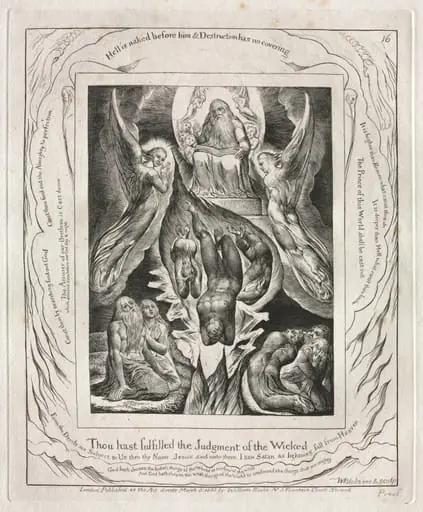 The Book of Job: Pl. 16, Thou hast fulfilled the Judgment of the Wicked
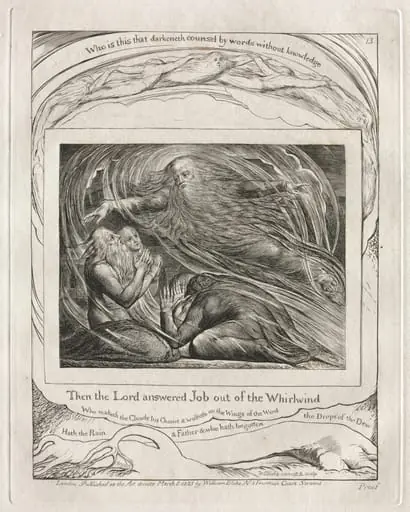 The Book of Job: Pl. 13, Then the Lord answered Job out of the Whirlwind
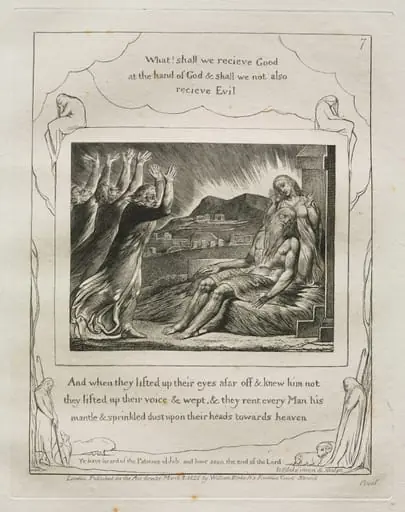 The Book of Job: Pl. 7, And when they lifted up their eyes afar off and knew him not
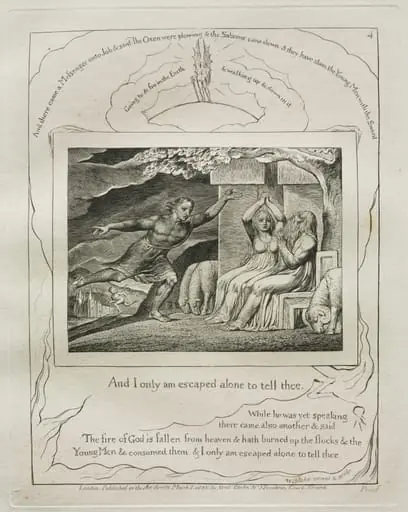 The Book of Job: Pl. 4, And I only am escaped alone to tell thee
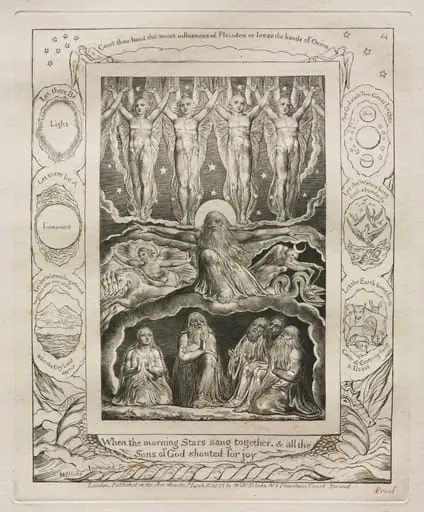 The Book of Job: Pl. 14, When the morning Stars sang together, and all the
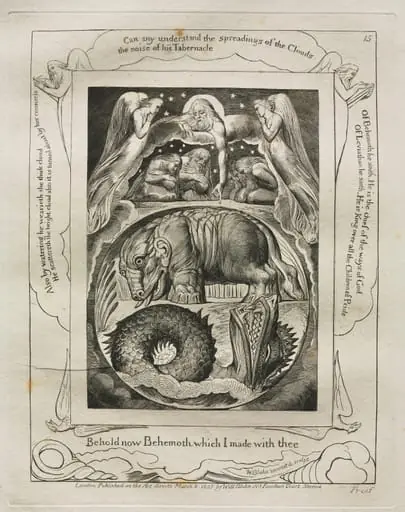 The Book of Job: Pl. 15, Behold now Behemoth which I made with thee
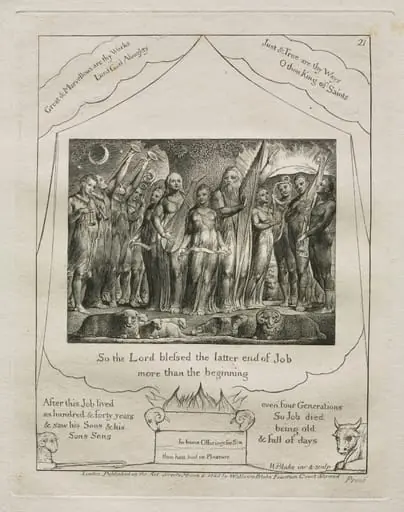 The Book of Job: Pl. 21, So the Lord blessed the latter end of Job
 The Book of Job: Pl. 1, Thus did Job continually