Artwork
The Creation
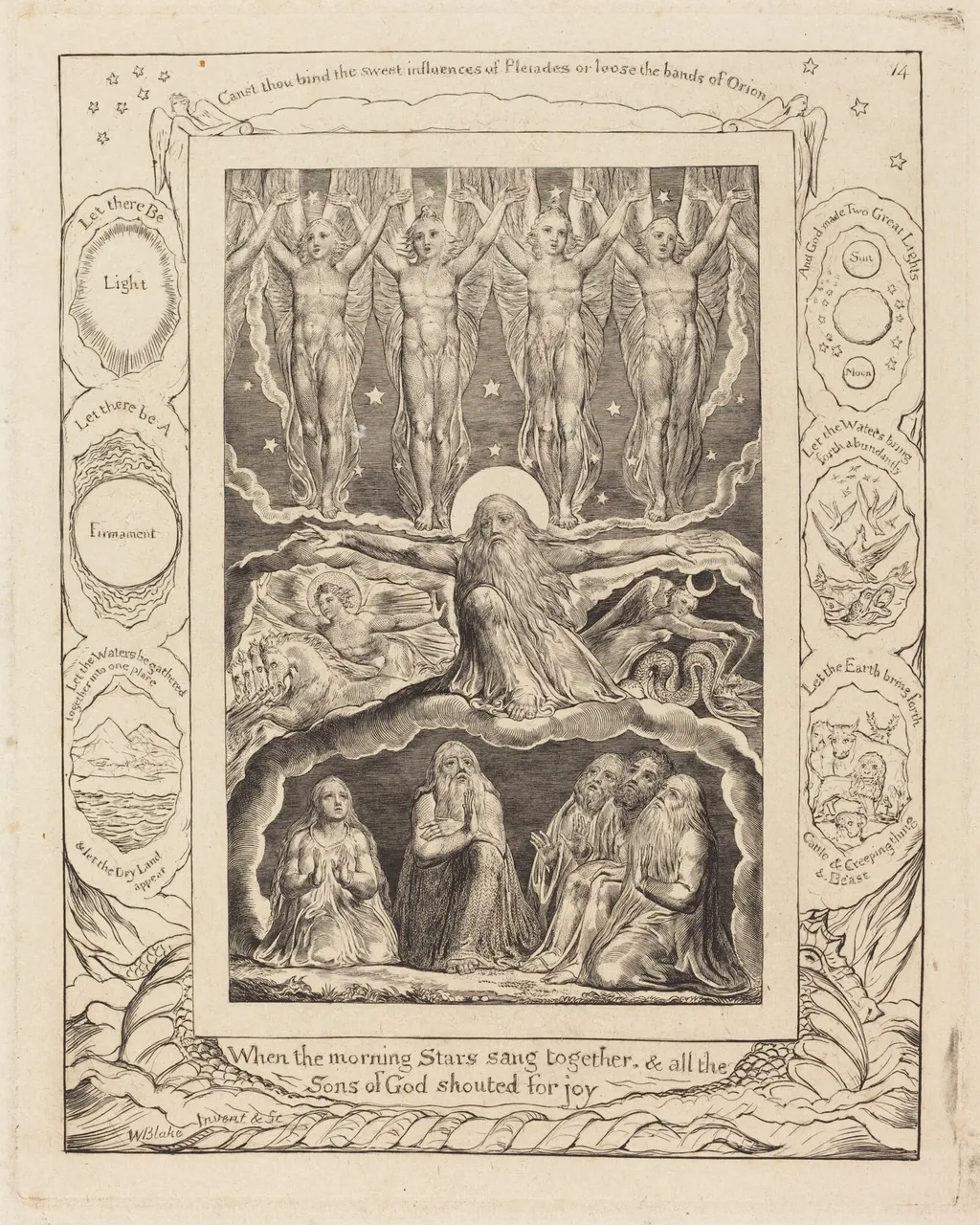
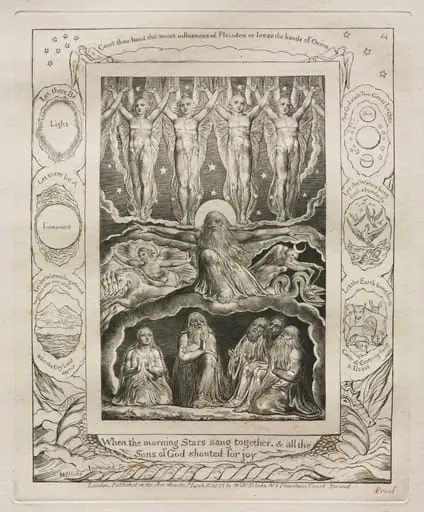
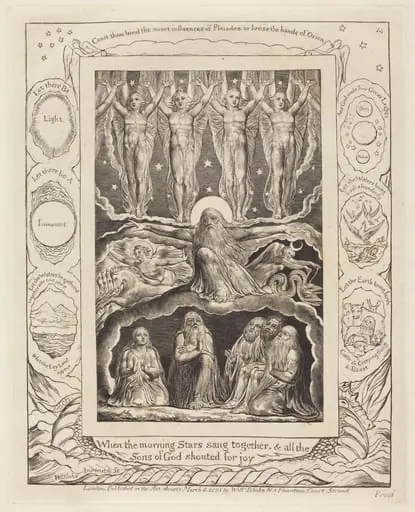
The Creation is an ink print by the Romanticist artist William Blake. It dates from 1825 and is held in the collection of the National Gallery of Art.
About this work
Overview
Though largely overlooked in his time, Blake’s prints reflect his unique vision, merging biblical narrative with symbolic abstraction.
Created in 1825, William Blake’s engraving *The Creation* is one of many printed works produced by the English artist, who combined poetry, painting, and printmaking in a deeply personal artistic practice. Though largely overlooked in his time, Blake’s prints reflect his unique vision, merging biblical narrative with symbolic abstraction. This piece is part of a series illustrating spiritual themes, executed through meticulous hand-engraved lines on copper plates.
Subject & Meaning
The image depicts a dual realm: celestial beings in a starlit expanse gesture toward creation, while three figures kneel below on a barren, shadowed earth. The contrast suggests divine action above and human reception below. Inscribed border texts from Genesis reinforce the moment of divine command—'Let there be Light' and 'Let the Waters be gathered'—positioning the scene as both theological and metaphysical, where imagination and scripture converge.
Technique & Style
Blake employed fine, controlled engraving lines to model form and depth, using cross-hatching and delicate stippling to render light and shadow. The celestial zone glows with intricate star patterns and swirling clouds, while the terrestrial plane remains dense and dark, enhancing the vertical divide. The border is densely packed with miniature scenes and scriptural phrases, integrating text and image as a unified visual language unique to his method.
History & Provenance
The engraving was produced during Blake’s later years, when he was working on illustrations for the Book of Genesis. It was printed in small numbers, likely for private patrons or close associates, as Blake rarely sought commercial success. Few impressions survive, and most are held in institutional collections, reflecting the limited circulation of his work during his lifetime and the posthumous scholarly interest it later garnered.
Context
Emerging in the Romantic period, Blake’s work diverged from prevailing artistic norms by prioritizing inner vision over naturalism. While contemporaries focused on landscape or historical narrative, Blake turned to myth and scripture as vehicles for spiritual inquiry. His integration of poetry and image, along with his rejection of industrial print methods, positioned him as an outlier in early 19th-century British art.
Legacy
Blake’s *The Creation* exemplifies his enduring influence on later artists who valued symbolic depth and handmade printmaking. Though unrecognized in his time, his fusion of text and image, along with his spiritual iconography, became foundational for 20th-century movements exploring the intersection of literature and visual art. Today, his prints are studied as complex meditations on perception, divinity, and human response.
Artist & collection
Artist
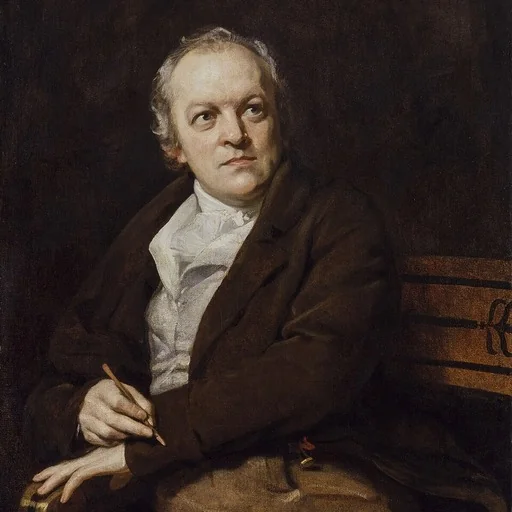
William Blake (28 November 1757 – 12 August 1827) was an English poet, painter and printmaker.

 The Book of Job: Pl. 14, When the morning Stars sang together, and all the
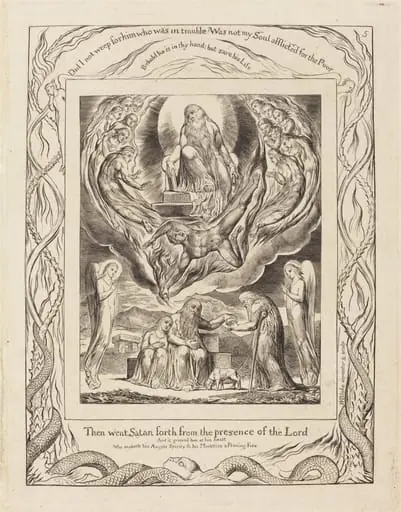 Satan Going Forth from the Presence of the Lord
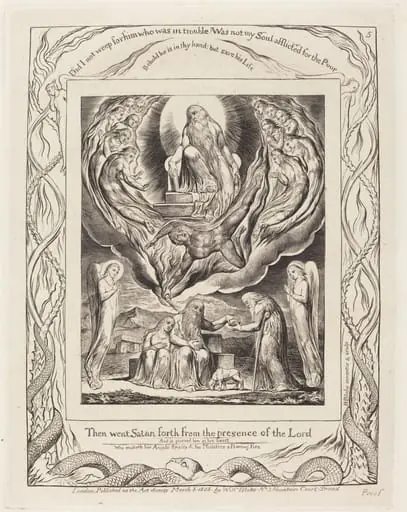 Satan Going Forth from the Presence of the Lord
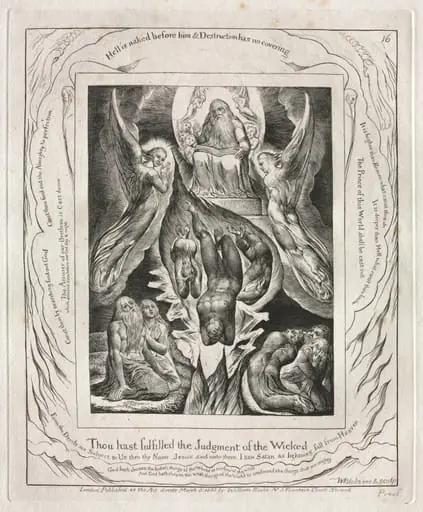 The Book of Job: Pl. 16, Thou hast fulfilled the Judgment of the Wicked
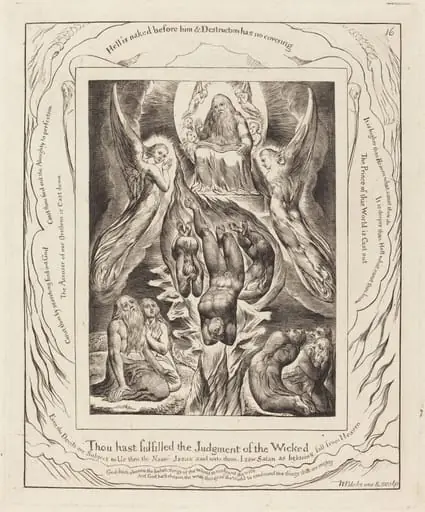 The Fall of Satan
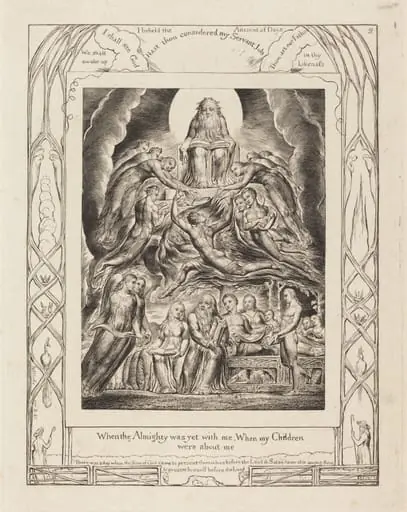 Satan Before the Throne of God
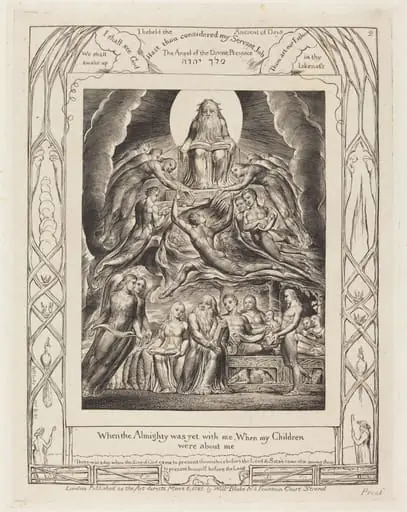 Satan Before the Throne of God
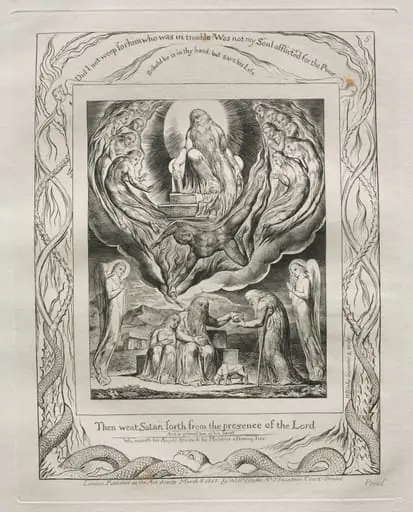 The Book of Job: Pl. 5, Then went Satan forth from the presence of the Lord
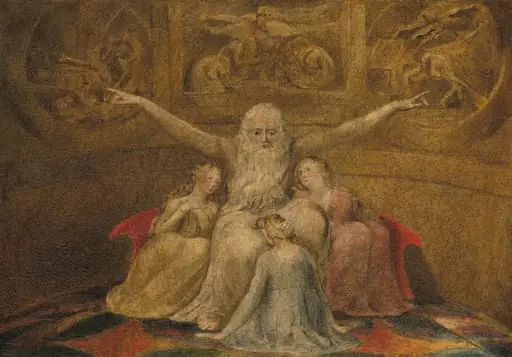
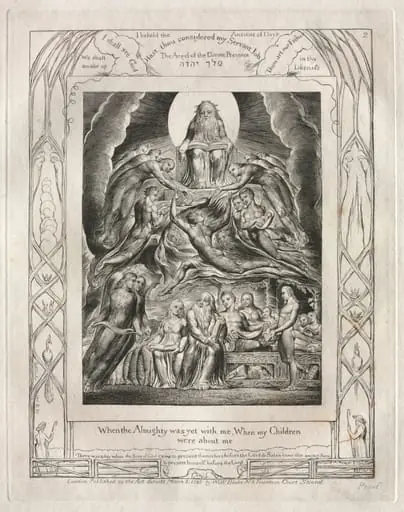 The Book of Job: Pl. 2, When the Almighty was yet with me, When my Children
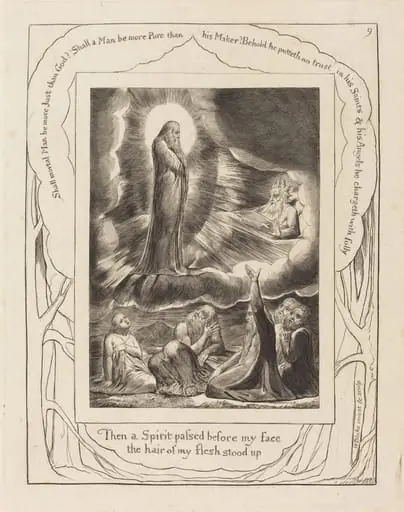 The Vision of Eliphaz
 The Fall of Satan
 The Creation